Supermedium scores $1.1M in seed funding for its web-first vision for virtual reality
 Supermedium, a recent Y Combinator graduate, wants a more open future for virtual reality, one that’s built on the web. The company launched earlier this year and now it’s raising some seed funding as it looks to keep things moving along.
Supermedium was founded by a couple of Mozilla alums that were behind some of the company’s foundational work on the WebVR standard. WebVR has been admittedly slow to catch on as major stakeholders have largely been looking to direct nascent attention toward their sandboxed platforms and stores rather than to something so democratic as a browser that can work with all major headsets.
The process of getting up-and-running in desktop WebVR might just mean navigating to a particular URL and tossing on your headset. It’s really not much more difficult than that, and Mozilla has already introduced some early projects that show just how simple it is. As more and more momentum aligns behind standalone systems, the Supermedium browser exists as a bespoke solution for VR devices that is structured around VR controls in VR environments.
The startup sees the shift to WebVR as an inevitability; now the company says their challenge is staying lean and keeping their noses to the ground in a bid to gather an early passionate base of users that can grow exponentially as more substantial hardware comes to market.
Right now, Supermedium is focusing on higher-end systems like the Rift and HTC Vive that support positional tracking and hand controllers.
Supermedium certainly has some tough challenges ahead as the startup looks to work its way into a tight niche and find ways to promote WebVR development, but the company has some key cross-platform strengths of the web moving with it, which shouldn’t be underestimated.
See the full story here: https://techcrunch.com/2018/07/24/supermedium-scores-1-1m-in-seed-funding-for-its-web-first-vision-for-virtual-reality/
RETINA Are Bringing Augmented Reality To Air Traffic Control Towers
 Funded by the European Union, the RETINA project has investigated the potential and applicability of synthetic vision tools along with the use of AR display techniques for air traffic control staff. “Built upon technology developed by the SESAR project, RETINA aimed to enhance sight capabilities and situational awareness of air traffic controllers in control towers, allowing them to better manage traffic especially when bad weather sets in,” Said Professor Sara Bagassi, reports pddnet.
This is handled via head-mounted displays (HMDs) which display over the actual ‘out-of-the-window’ view and leverage the technology to superimpose the required information to the wear all while allowing them to maintain their view of the busy airport environment.
The validation campaign for the project was completed in the VR and Simulation Laboratory at the University of Bologna, Italy.
See the full story here: https://www.vrfocus.com/2018/07/retina-are-bringing-augmented-reality-to-air-traffic-control-towers/
Curious Directive Presents New Augmented Reality Show GASTRONOMIC
 Experimental theatre-makers curious directive's new show, Gastronomic is an Augmented Reality dining experience set on board an Airbus A380. The show places the audience on a long-haul flight where passengers are looked after by three chefs. 40 audience members are treated to a five-course tasting menu, all simultaneously with their own in-flight screen.
As we fly over oceans, deserts and rainforests, food accompanies stories about why and how these chefs came to be here.
The cast includes Janet Etuk (Love, NT), Georgina Strawson (Frogman, curious directive) and Craig Hamilton (Jubilee, Chris Goode & co.) with dramaturgical support from National Theatre Immersive Storytelling Studio and dramaturgie by Stewart Pringle.
See the full story here: https://www.broadwayworld.com/westend/article/Curious-Directive-Presents-New-Augmented-Reality-Show-GASTRONOMIC-20180720
7 great AR education apps for parents, teachers and students
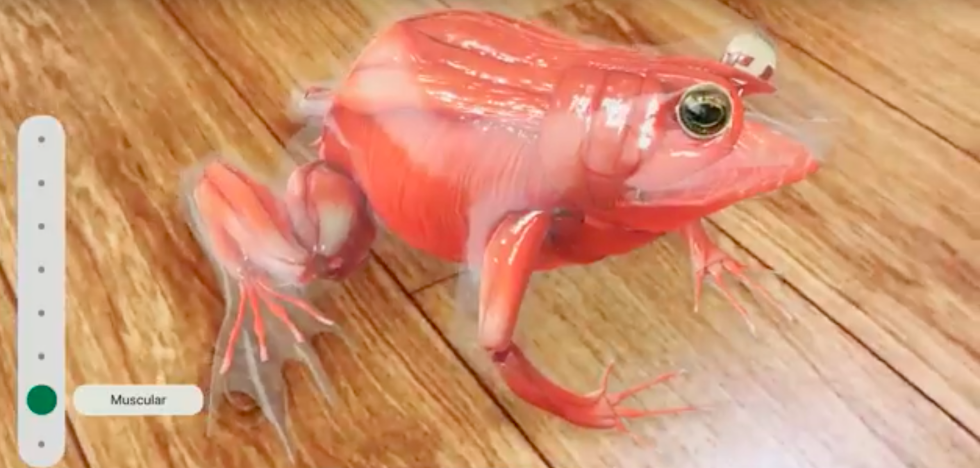 See the full story here: https://www.gearbrain.com/7-ar-education-apps-teachers-2587980109.html
Q&A: UCLA’s Eugene Volokh on the Law of Virtual and Augmented Reality
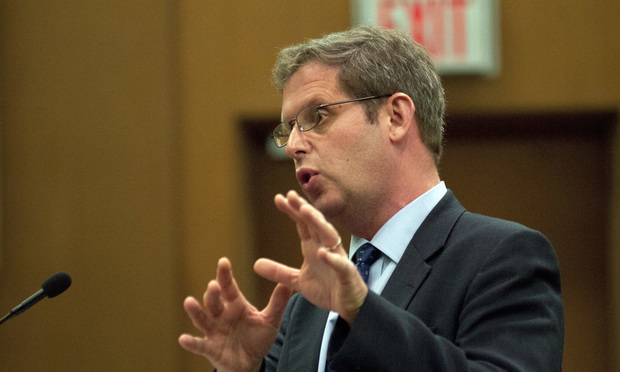
Eugene Volokh in Atlanta, Ga., on October 7, 2014.
What about these future public spaces being owned by private companies? What sorts of trouble does that pose?
I think it’ll cause a lot of complexity. A lot will depend on whether we’ll see something like the Google or Facebook effect, where one private institution is going to get by far the dominant share of the market the way Google has with search. The more we see that, the more I think we’ll see people worry about antitrust dimensions, that the magnitude of the private power that will be somewhat not checked by the judiciary.
I’m not terribly worried, but many people are, and I think it’s something we ought to consider. I think it’s important to preserve private enterprises’ ability to provide various features and to make choices with what is its own property. But at the same time, it is true when the private entity gets powerful enough, we might be concerned enough about the private power as we are about the government power.
Then there’s going to be concerns about company misuse of that [data], but also anything that a private entity captures, the government is going to have access to as well. So they say you know this person is accused of being a drug dealer. We notice he spends a lot of his time in VR, maybe he’s making and arranging some deals in VR. He’s not delivering the drugs there, but could certainly work out the arrangements. Let’s subpoena all of the records of the VR company, of everybody he’s talked to and even the recordings of that.
See the full story here: https://www.law.com/therecorder/2018/07/19/vrs-open-call-to-litigation-qa-with-uclas-eugene-volokh-on-future-law-403-18570/?slreturn=20180623175123
IBM thinks blockchains can help reduce carbon emissions
 It’s turning carbon credits into crypto-tokens—part of a scheme to create a massive marketplace of novel digital assets.

Unfortunately, purchasing “high quality” carbon credits is a complex, cumbersome process that has to be done in over-the-counter transactions, which slows down the market for them, says Jim Procanik, executive director of the Veridium Foundation. Blockchain technology, he says, is a “perfect background for creating a more liquid and transparent marketplace.”
That’s why Veridium has teamed with IBM to “tokenize” carbon offset credits using the Stellar blockchain. Its token, which is slated to launch later this year, will be backed by a basket of different carbon assets verified by third parties according to international standards. Some of those credits will come from Veridium’s sister company, InfiniteEARTH, which already has an established business selling carbon credits to companies that want to offset their carbon footprints.