It can a long time to animate cartoons -- just ask the Rick and Morty team. But what if you could ask computers to do some of the lifting? They just might. Researchers have produced an AI system, Craft, that automatically produces The Flintstones scenes based on text descriptions. The team trained Craft to recognize elements from the classic cartoon by feeding it more than 25,000 three-second clips, each of which included descriptions of who was in the scene and what was happening. From there, the AI only needed a line or two referencing a scene to stitch together characters, backgrounds and props.
19Apr/18Off
Tangible and Social: Virtual Reality at Tribeca Immersive

null
Tribeca Immersive includes a Virtual Arcade of VR experiences (Apr. 20-28), along with a festival of films shot in 360 degrees. Both are running at the same time at TFF this month (Apr. 18-29), and will give even hardcore VR users an excuse to leave home and experience these site-specific installations at the festival’s headquarters. ...
Another VR experience that addresses social themes while still pushing the use of technology is “The Day the World Changed,” which takes place in a recreation of Hiroshima. Gabo Arora, co-creator of the project, said it is a “social interactive Virtual Reality documentary” which addresses nuclear weapons and allows users to experience life in Hiroshima the day of the atomic bombing at the end of World War II. Rather than being a passive, lonely experience, Arora pointed out that this is a rare example of a VR experience for multiple simultaneous users. “You’re doing this with three other people, so the whole concept of going through a documentary inside the documentary with other people who are also avatars gives it a whole new relationship of what a shared experience with history can be.”
Penrose Studios has made some of the longest VR experiences at previous Tribeca Immersive events, and this year they return with “Arden’s Wake: Tide’s Fall,” which has a running time of a whopping 30 minutes. Eugene Chung of Penrose said of it, “When making narrative VR experience it is crucial never to forget that you are creating for the viewers. We are always thinking about the consumer experience here at Penrose, and with a 30-minute experience, we are currently pushing the limits and the boundaries of VR stories.”
Among these lofty projects are some outright silly uses of VR, too. People who come to the Virtual Arcade will find the farcical “Vacation Simulator,” by Owlchemy Labs. ... “At Owlchemy, we’ve always sprinted in the opposite direction of the expected… We’re using this limitless, incredible technology to simulate a satirical vacation with a bunch of floating robots.”
See the full story here: http://www.downtownexpress.com/2018/04/18/tangible-and-social-virtual-reality-at-tribeca-immersive/
19Apr/18Off
With this tool, AI could identify new malware as readily as it recognizes cats
 This week, the cybersecurity firm Endgame released a large, open-source data set called EMBER (for “Endgame Malware Benchmark for Research”). EMBER is a collection of more than a million representations of benign and malicious Windows-portable executable files, a format where malware often hides. A team at the company also released AI software that can be trained on the data set. The idea is that if AI is to become a potent weapon in the fight against malware, it needs to know what to look for.
“It’s a game of whack-a-mole,”...
EMBER is meant to help automated cybersecurity programs keep up.
Instead of a collection of actual files, which could infect the computer of any researcher using them, EMBER contains a kind of avatar for each file, a digital representation that gives an algorithm an idea of the characteristics associated with benign or malicious files without exposing it to the genuine article.
19Apr/18Off
Alphabet’s Eric Schmidt says Silicon Valley will need ‘AI principles’ before working with US military
 Testifying before the House Armed Services Committee on Tuesday, Schmidt said that AI would be useful for “defensive and perhaps offensive purposes” in warfare, and developing the technology would have to be done with the help of the private sector. When asked by Rep. Elise Stefanik (R-NY) how this would work considering the “reluctance” of tech companies to work with the Department of Defense, Schmidt suggested that firms will need to agree between themselves on acceptable norms.
“The industry is going to come to some set of agreements on AI principles — what is appropriate use, what is not — and my guess is that there will be some kind of consensus among key industry players on that,” said Schmidt.
Google has said that the technology it is helping to develop is for “non-offensive uses only” and is intended to flag images captured by surveillance drones for human inspection. However, there is no clear line between this use case and one that will result in fatalities. The Pentagon states that Project Maven’s computer vision tech is intended for deployment in war zones like Iraq and Syria.
see the full story here:
18Apr/18Off
Apple Files a Patent for Augmented Reality to Enhance Driver Safety
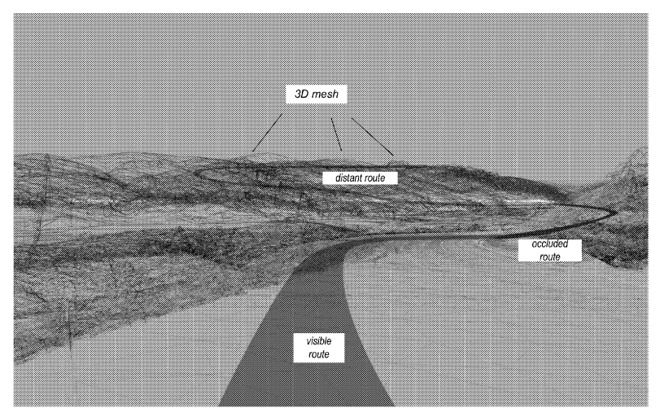 Software giant Apple has filed a patent dubbed "adaptive vehicle augmented reality (AR) display using stereographic imagery". The patent details an under-development technology which will utilize a pre-generated 3D model of the world to aid an augmented reality system which will deliver 3D content for its users.
See the full story here: http://www.futurecar.com/article-2164-1.html
18Apr/18Off
Snapchat Introduces 3 New Capabilities of Its Augmented Reality Lenses With ‘Shoppable AR’
 The camera company is introducing three new features, dubbed “Shoppable AR,” to its augmented reality lenses: the “website,” which lets consumers tap a button and open up a webpage that can promote a product or sign-up page; a “video” option, allowing users to watch a trailer or how-to shorts; and “install,” which prompts users to install an app (or open it, if the user already has it on their phone).
With the website tool, Snapchat is trying to show both Wall Street and Madison Avenue that it can lead in social commerce. (Or at least until Facebook decides to rip it off.)
The camera company is introducing three new features, dubbed “Shoppable AR,” to its augmented reality lenses: the “website,” which lets consumers tap a button and open up a webpage that can promote a product or sign-up page; a “video” option, allowing users to watch a trailer or how-to shorts; and “install,” which prompts users to install an app (or open it, if the user already has it on their phone).
With the website tool, Snapchat is trying to show both Wall Street and Madison Avenue that it can lead in social commerce. (Or at least until Facebook decides to rip it off.)
See the full story here: http://www.adweek.com/digital/snapchat-introduces-3-new-capabilities-of-its-augmented-reality-lenses-with-shoppable-ar/
18Apr/18Off
FoxNext to Open ‘Alien: Descent’ Location-Based Virtual Reality Experience
 Fans can grab their weapons at the first installation of Alien: Descent, a free-roaming virtual reality experience at The Outlets at Orange in Orange County, Calif., that opens April 26, the so-called Alien Day celebration of the Fox franchise.
FoxNext Destinations and Pure Imagination Studios have created the multiplayer experience based on the Alien property. Additional locations will be added.
It's enabled by wireless technology developed by Pure Imagination, which allows up to four guests to move about untethered in this VR world, without the use of PC backpacks or wires. Each guest is armed with a prop weapon and motion-tracking sensors on their arms and legs. Environmental effects and motion platforms are designed to further simulate a descent into the heart of the Alien threat.
“VR attractions bring together immersive entertainment with social experiences that can’t be replicated in the living room. The rich storytelling opportunities in the Alien universe makes it a perfect fit for cutting-edge destination entertainment,” said Salil Mehta, president of FoxNext.
See the full story here: https://www.hollywoodreporter.com/behind-screen/foxnext-open-alien-descent-location-based-virtual-reality-experience-1103584