Disney’s Latest Research Project Can Turn Scripts Into Virtual Reality
 Disney Research has been working on a way to turn natural language scripts into virtual reality (VR) pre-visualizations. While currently focusing on VR story creation, the tool could ultimately be used for traditional filmmaking as well, said Disney Research digital platforms group lead Sasha Schriber during a talk at the Virtual Reality Developers Conference (VRDC) in San Francisco Monday.
“It goes from script to storyboard to animation in real-time,” said Schriber.
Project Cardinal’s software can ingest scripts and turn them into simple animations, which can then be manually manipulated by filmmakers. Creatives can also integrate voice recordings on the spot, and then preview scenes directly in VR while wearing a headset, giving a vantage point that’s similar to being on scene with the actors of a movie.
See the full story here: http://variety.com/2018/digital/news/disney-research-cardinal-previz-vr-1202730650/
Tobii and Qualcomm bring eye tracking to VR/AR headsets
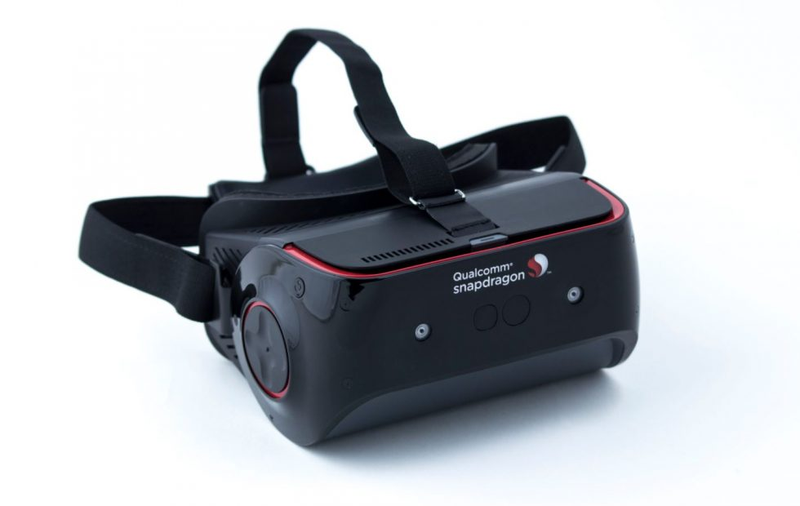 Qualcomm has announced that it plans to integrate Tobii’s eye-tracking technology directly into its Snapdragon 845 VR headsets. The two companies will create a full reference design and development kit for the Snapdragon 845 Mobile VR Platform.
The eye-tracking hardware follows where a user is looking and uses that information to enhance the experience.
See the full story here: https://www.virtualreality-news.net/news/2018/mar/16/tobii-and-qualcomm-bring-eye-tracking-vrar-headsets/
A Mix of ‘Sensuality and Espionage’: Inside Perry Farrell’s $90M Kind Heaven Project
 Farrell is one several creative forces behind Kind Heaven, a new immersive entertainment property set to open in 2019 that transports visitors to Southeast Asia without having to leave the Las Vegas Strip. The $90 million project developed in conjunction with Caesars Entertainment and Immersive Artistry’s Cary Granatcombines film and holographic special effects to recreate streetscapes and holy temples in Thailand, Vietnam, Nepal and Hong Kong. Granat was founder and former CEO of Walden Media, which produced the Chronicles of Narnia film seriesand is former president and COO of Miramax/Dimension Films.
“You start the experience by boarding a train near Caesars that takes you to Bangkok at one in the morning,” Granat explains. “You’re walking through actual night markets, buying food, getting all the scents and smells. And then you go through a forest and experience the beauty of Katmandu in Nepal. It’s really the best of South East Asia combined with incredible music from 130 artists.”
...you’re basically walking through a 90-minute show routed in mythology and original content. When you’re within the complex, you’re free to roam around and discover hidden alleyways, visit nightclubs and eat from Hong Kong-style street food vendors. There will be improvisational actors, musicians, acrobats and comedians, combining elements of sensuality and espionage into an experience that will be a first of its kind.
We’ll outfit visitors with a variety of RFID devices to create a cashless environment to shop and eat without taking out your wallet. And we’ll accept cryptocurrencies and all different kinds of payments. So you can walk into a jewelry boutique or noodle house and your wristband will keep track of purchases.
There’s two different experiences -- one for families in the day and one for adults only at night. So during the day you can learn more about the traditions and cultures of Southeast Asia, then in the evening it becomes an adults-only experience with street walkers, nightclubs and sake bombs. Anyone who has traveled to Hong Kong knows it’s a much different city when the sun goes down.
See the full story here: https://www.billboard.com/articles/business/8247386/perry-farrell-las-vegas-kind-heaven-project-southeast-asia
Magic Leap to Offer “Deep Dive” on AR Game Design at GDC
 At GDC 2018 next week in San Francisco, Magic Leap will present an hour long sponsored session titled The World is Your Playground: Deep Dive on Developing for Spatial Computing. The session pulls together the company’s chief content officer, Rio Caraeff, interaction director, Aleissia Laidacker, director of interaction lab, Brian Schwab, and creative director, Jeremy Vanhoozer, for a look at the creative possibilities of AR and spatial computing:
Join four well-known developers, now at Magic Leap, as they discuss how storytelling, art, interactions and more can be brought to life using spatial computing. Attendees will be introduced to the concept of spatial computing, where tech is able to detect and respond to the environment, creating a seamless blend of the real and the digital, offering new potential for game experiences. They will learn best practices from the developers and designers building the platform and defining the medium. And they will be encouraged to bring their existing knowledge and experience to take on the opportunities and challenges presented by the development of games on this next computing platform.
The web can be weaponised – and we can’t count on big tech to stop it
 It’s dangerous having a handful of companies control how ideas and opinions are shared. A regulator may be needed
Google Maps Helps Develop Real-World Gaming Experiences
 Google is enabling game developers to create “Pokémon Go”-like experiences in which game elements are embedded into real-world maps using the new Google Maps API and the Unity game engine. Over 200 games are already in development. Next Games is developing a game based on the popular TV series “The Walking Dead,” and NBCUniversal and Ludia will release a “Jurassic World Alive” location-based game for mobile. Because Google Maps updates in real time, developers can create gaming experiences with a sharp eye on reality.
According to VentureBeat, the new Google Maps application programming interface (API) will make it “much simpler to create games based on real-world locations — yet animated in reimagined ways such as a medieval fantasy or bubble gum candy land or a zombie-infested apocalyptic city.”
Developers have the ability to transform buildings, roads and parks into game objects, adding any number of features to make them unique to the gaming world they’re creating.
“With Google Maps data integrated into Unity, we were able to focus our time and energy on building detailed virtual experiences for our users to find virtual dinosaurs in the real world,” said Alexandre Thabet, CEO of Ludia.
Google plans to demo the new Google Maps API combined with Unity tech at next week’s Game Developers Conference in San Francisco.
See the full story here: http://www.etcentric.org/google-maps-helps-develop-real-world-gaming-experiences/