Will.i.am releases augmented reality app to go with his graphic novel
 Masters of the Sun: The Zombie Chronicles, published by Marvel Comics, is about a hip-hop group from East Los Angeles who decide to take on an ancient, alien god who transforms drug dealers and gangsters into zombies. The story mixes Egyptology and L.A. gang culture, and the first issue was released back in August, co-written by Benjamin Jackendoff and illustrated by Damion Scott.
“We did the book first for the traditionalists, and will expand upon it with augmented reality and then virtual reality,” will.i.am said while speaking with Business Insider.
The augmented reality app is currently available on iOS and Android and goes for $2, and you need to own the graphic novel in order to use it.
See the full story here: https://www.digitaltrends.com/movies/william-augmented-reality-app-graphic-novel/
IU-based startup launches high-tech system for virtual, augmented reality developers
 "I created cy.PIPES to easily plug-and-play the user's choice of 4-D effects devices along with the Unity game engine. Dynamic factors like wind direction are automatically computed with cy.PIPES, and effects are rendered to users as they would expect from the virtual environment they are immersed in," Frend said. "I wanted to prove it is possible to easily and inexpensively hook up environmental conditions to virtual and augmented reality systems."
Frend's research on cy.PIPES was published in a 2015 issue of the SPIE Electronic Imaging publication track. It was named Best Research Demonstration at IEEE VR 2016 and is being used by IUPUI informatics students and at the University of Louisiana at Lafayette.
Frend submitted an invention disclosure to the IU Innovation and Commercialization Office, which has applied for patent protection. He started CyUtil after he licensed the intellectual property from the IU ICO.
See the full story here: https://phys.org/news/2017-11-iu-based-startup-high-tech-virtual-augmented.html
Departing Hulu VR VP Noah Heller Launches L.A. Tech Fund 3Rodeo

One of the key executives behind Hulu’s virtual reality (VR) push has left the company, and is now starting a Los Angeles-based tech fund: Noah Heller, Hulu’s VP of business development for emerging technology and VR, left Hulu this month. His new gig: 3Rodeo, an early stage venture fund that wants to help local entrepreneurs to not only get the money, but also the advice they need to get their startups off the ground.
Heller is running 3Rodeo as managing partner, and is being joined by RYOT Studio co-founder Molly DeWolf Swenson and former Picasa CEO Lars Perkins, both in the capacity of venture partners. “We’ve seen a lot and we built a lot before,” said Heller about the team’s combined entrepreneurial experience.
See the full story here: http://variety.com/2017/digital/news/hulu-exec-noah-heller-departure-1202621074/
SingularityNet: Converging AI & Blockchain for the greater good
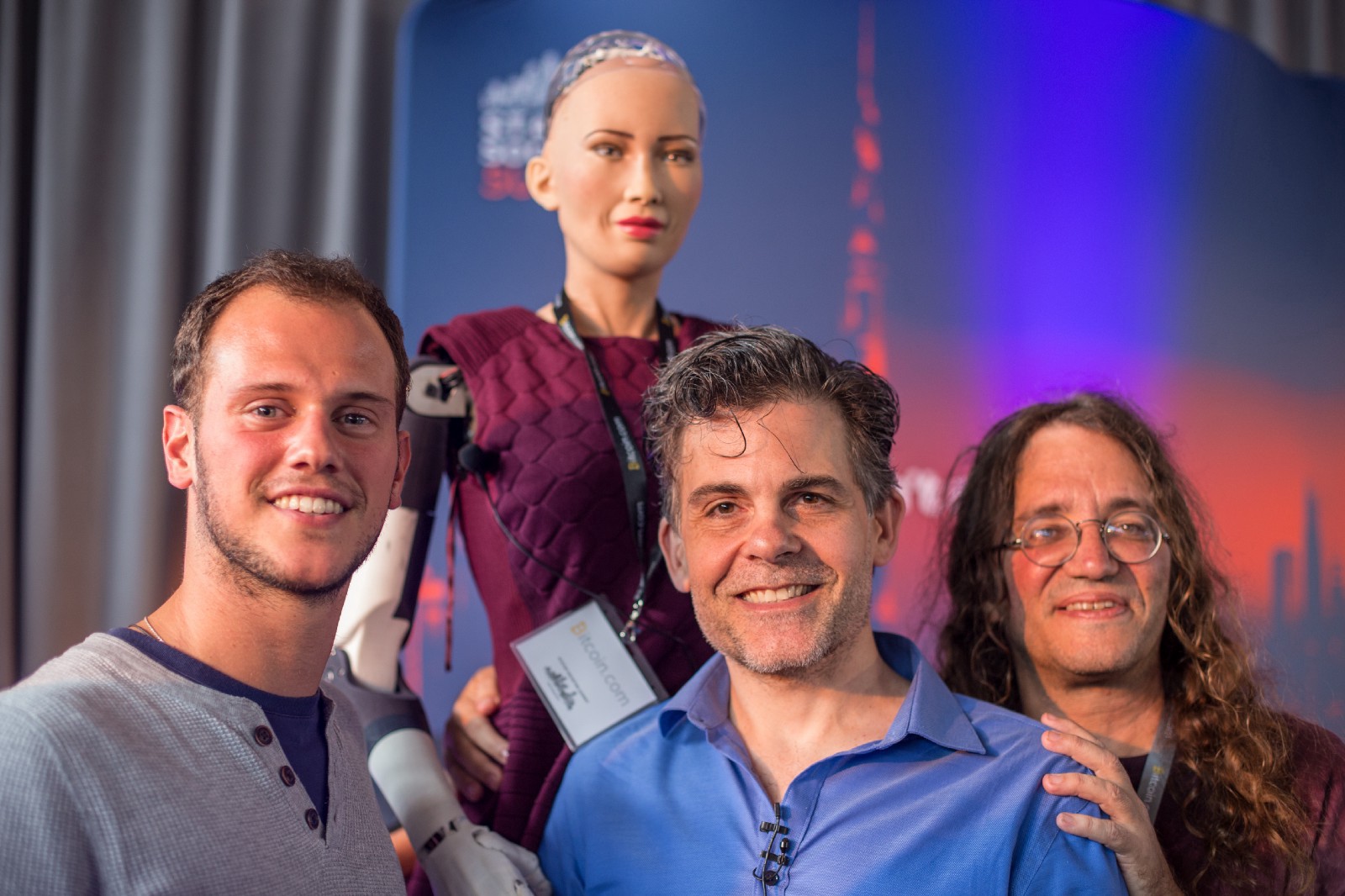 ...AI is currently dominated by a few giant corporations who want to monopolize AI and maximize their own share value, at the individual’s expense. But they can only do so because there is no efficient, network alternative available to the general public.
This has to change, and that is why Ben Goertzel, David Hanson, and I are creating SingularityNET, a protocol that allows anyone monetize AI algorithms at scale in a permissionless market.
SingularityNET is a collaborative effort that brings several teams of different expertises, backgrounds, and walks of life together, including:
- Hanson Robotics — the world’s most advanced robotic company in the world
- OpenCog — global open-source software initiative aimed at building AGI
- Novamente — an AI-based R&D and consulting company
- Vulpem Ventures — a blockchain and cybersecurity agency
We envision a future AI economy that is pervasive and sustainable, in which the immense knowledge and wealth that AI creates is distributed to all sentient beings .
See the whole story here: https://becominghuman.ai/announcing-my-next-big-adventure-716806c88be9
Quantum encryption is now fast enough for voice calls
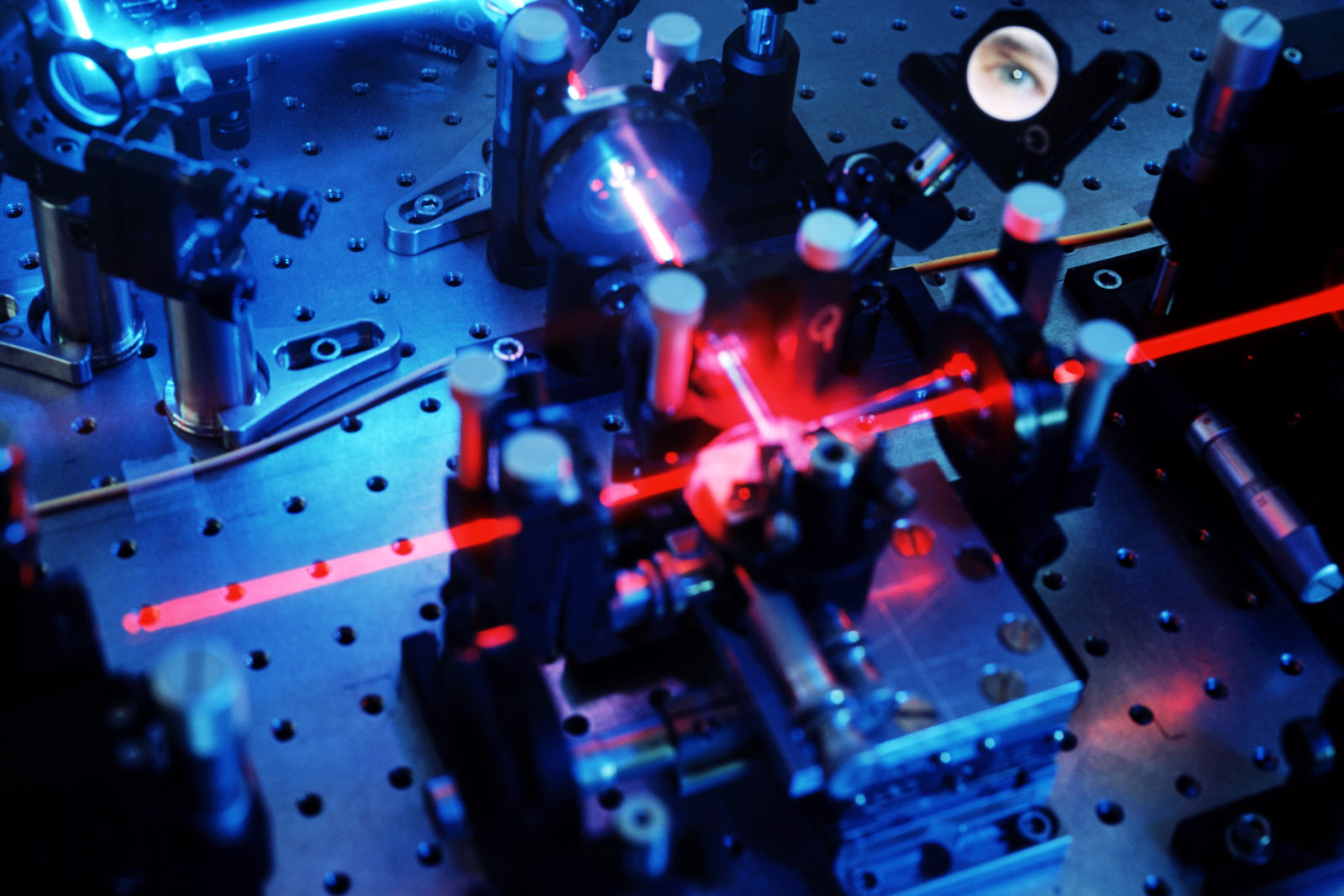
Quantum cryptography. Eye of an observer reflected in a mirror in quantum cryptography apparatus. Quantum cryptography is based on the principle of entanglement, a property of a pair of particles in which a change to one has an instantaneous effect on the other, no matter how far apart they are. Cryptography in this case refers to the encoding of data so that only specified targets can access it. If the sender and the receiver of the data share entanglement then any data is only readable by them alone. This is more secure than existing encryption methods, most of which rely on mathematical algorithms. Photographed at the lab of Anton Zeilinger at Vienna University, Austria.
...researchers have developed a quantum encryption key distribution system that promises to be five to 10 times faster than existing methods, or roughly on par with conventional encryption when run in parallel. The trick was to cram more data into each photon.
Normally, you can only encode one bit per photon by using a weak laser. The team discovered that it could encode two bits by tweaking the release time of photons and using high-speed photon detectors to track these changes. Effectively, they're giving photons properties they couldn't have before.
There's a lot of effort left before this becomes practical, not the least of which is the size: a transmitter/receiver combo would be about as large as a computer. It's more realistic than you might think, mind you. All the parts beyond the single-photon detector are readily available, and it could even be used for "free space" (read: over the air) transmissions. Eventually, there may be a time when you could hold a secure voice chat knowing that even the most determined spy couldn't listen in.
See the full story here: https://www.engadget.com/2017/11/26/scientists-develop-fast-quantum-encryption/
Professor Vikram Explains the Integration of Mixed Reality/Augmented Reality/Virtual Reality into Various Technologies
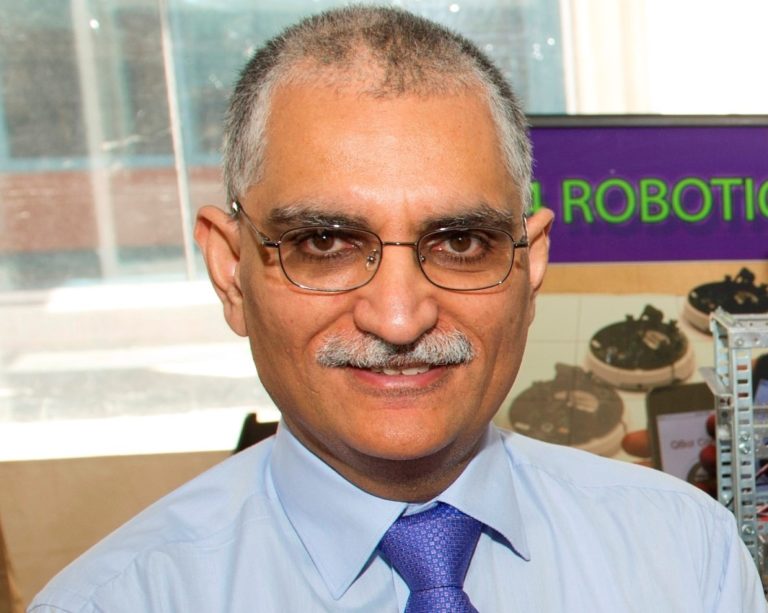 IEEE Senior Member Vikram Kapila, Professor, Department of Mechanical and Aerospace Engineering Director, Mechatronics, Controls, and Robotics Laboratory New York University, Tandon School of Engineering
IEEE Transmitter: How can MR/AR/VR benefit the world’s next leaders in research and teaching, medicine and exploration (e.g. space, underwater, archaeology)?
Professor Kapila: The MR/AR/VR technologies can benefit the world’s next leaders by allowing their frictionless integration in applications that employ convergent-technologies, e.g., robotics, computer vision, machine learning, additive manufacturing, among others. Similar to open-source hardware and software platforms such as Arduino, Raspberry Pi, ROS, OpenCV, etc., development, dissemination, and deployment of corresponding open-source hardware and software for MR/AR/VR can enable researchers from disparate domains to explore these technologies.
Compelling use-cases will further showcase broad utility of these technologies to potential users. These technologies can of course facilitate highly intuitive, natural, and immersive telerobotics which is highly relevant to remote exploration in space, underwater, and archaeology; remote observation of land and sea creatures without human invasion of their natural habitat; as well as in surgery. MR/AR/VR have myriad applications in education, for example, laboratory education, anatomy, astronomy, engineering graphics, spatial relations, etc. Moreover, in a manufacturing environment, maintenance workers can benefit from the MR/AR/VR technologies during inspection and repair operations.
See the full story here; https://transmitter.ieee.org/professor-vikram-explains-integration-mixed-reality-augmented-reality-virtual-reality-various-technologies/