A Historic Neil Young Concert, Captured by a Crowd
 On Jan. 7, Tom Adams went to see a Neil Young concert at Carnegie Hall by himself. It wasn't until days later that he made a connection with a group of other fans who attended. Like him, they had all secretly videotaped the solo acoustic performance, part of a four-night stand by Mr. Young, in his first return to the famed New York venue since 1973.
On Tuesday, Mr. Adams uploaded to YouTube a video of the entire two-hour show, which he had stitched together from footage captured by fellow concertgoers seated around the theater. Most of the video was shot by Mr. Adams, a video producer from Williamsburg, Mass., on a compact Canon camera perched on the railing in front of his $150 mezzanine seat (102, Row AA). All the videos were edited to match a single audio recording made at the concert, which Mr. Adams downloaded from an anonymous source on an online-sharing site.
Read the full story here: http://online.wsj.com/news/articles/SB10001424052702303448204579338600817194242
Sony Closes Technologies Unit, Lays Off Its President
[Philip Lelyveld comment; this impacts a number of my friends. I hope that they all find new and interesting challenges soon.]
The latest layoffs also hit Home Entertainment Group and Imageworks VFX unit.
As part of its ongoing efforts to cut back the size of its workforce, Sony Pictures Entertainment closed down Sony Pictures Technologies today, laying off Chris Cookson, who has served as president of the unit since 2008. New cuts were also made in the Home Entertainment Group and at Imageworks, the studio’s VFX house.
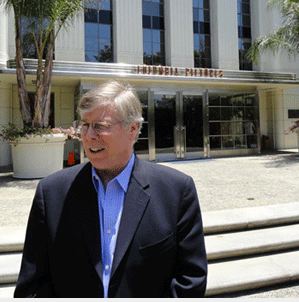 The latest round of lay-offs brings the number of jobs that the studio has eliminated since SPE headsMichael Lynton and Amy Pascal began cost-cutting measures last fall to around 50.
"As part of the Company’s previously announced efforts to evolve its operations, Sony Pictures Entertainment is absorbing the functions of Sony Pictures Technologies into various core businesses. Regrettably, Chris Cookson will leave the Company as a result. In related moves, SPE has streamlined technology groups across its businesses to accelerate creative and technological innovation. The entire Company wishes to express its deep gratitude to Chris, his team, and the other groups involved in these changes,” Sony spokesman Charles Sipkins said in a statement.
Cookson’s team led the studio’s efforts to implement initiatives like UltraViolet and digital distribution and had been overseeing the transition to 4k, 3D and digital file-based workflows throughout the company.
On Jan. 21, the studio also held a staff meeting, announcing that it intends to move more of the Imageworks workforce to its Vancouver, Canada, facility.
See the full story here: http://www.hollywoodreporter.com/news/sony-closes-technologies-unit-lays-673386
London Eye Links Record Number of Streams
 For one night only, the London Eye hosted a rotating array of simultaneous music tributes to Britain’s club culture that were live-DJ'd and podcast - one per pod; how appropriate (warning; this is a technical article).
Read the full story here: http://www.tvtechnology.com/article/london-eye-links-record-number-of-streams/222947
Perseverance and Disrupting Big Tech
[Philip Lelyveld comment: this author basically says that, if you have a disruptive technology and hang in there (with enough VC funding), you will win out over the incumbents. I'd add the research of his colleagues Brynjolfsson and McAfee who found that start-ups can act quickly, but if the incumbents can survive, they have the resources to later overpower the upstarts. The disruption occurs, but the winner can be either the upstart or the incumbent - depending on who executes a strategy better.]
 I was talking with a founder/CEO of an enterprise startup about what it is like to disrupt a sizable incumbent. In the case we were talking about the disrupting technology was losing traction and the incumbent was regaining control of the situation, back on their feet, and generally felt like they had fended off the "attack" on a core business. This causes a lot of consternation at the disrupting startup as deals aren't won, reviews and analyst reports swing the wrong way, and folks start to question the direction. If there really is a product/market fit and the technology improves things, then hold on and persevere because almost always the disruption is still going to happen.
See the full story here: http://www.linkedin.com/today/post/article/20140119170759-2293107-perseverance-and-disrupting-big-tech?curator=MediaREDEF
Around the World, Net Neutrality Is Not a Reality
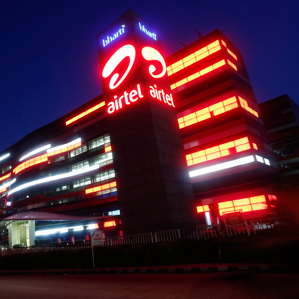 But in the emerging economies of the world, that’s pretty much how things already work, thanks to a growing number of deals Google and Facebook have struck with mobile phone carriers from the Philippines to Kenya.
In essence, these deals give people free access to text-only version of things like Facebook news feeds, Gmail, and the first page of search results under plans like Facebook Zero or Google Free Zone. Only when users click links in e-mails or news feeds, go beyond the first page of search results, or visit websites by other means do they incur data charges (see “Facebook and Google Create Walled Gardens for Web Newcomers Overseas”).
...
But the existence of a free and dominant chat, e-mail, search, and social-networking service makes it awfully hard for any competitor to arise. And Susan Crawford, visiting professor of law at Harvard University and a co-director of Harvard’s Berkman Center for Internet & Society, calls it “a big concern” that Google and Facebook are the ones becoming the portal to Web content for many newcomers.
“For poorer people, Internet access will equal Facebook. That’s not the Internet—that’s being fodder for someone else’s ad-targeting business,” she says. “That’s entrenching and amplifying existing inequalities and contributing to poverty of imagination—a crucial limitation on human life.”
...
How things unfold in the developing world may have a bigger impact on the future of the Internet. Worldwide, the number of smartphones is projected to double from 1.5 billion last year to three billion in 2017. Most of those 1.5 billion new phones—and new Internet access—will be in the developing world.
Report: LA Startups Raised Over $1B in 2013
See the full story and an enlarged version of the info graphic here: http://www.dmwmedia.com/news/2014/01/16/report-la-startups-raised-over-1b-in-2013