A World Without Maps
Phil Lelyveld comment; I have always loved maps, GIS, and graphic representations of real world space. This article reports on an art exhibit which describes the evolution of ancient maps from descriptions of global power relationships to representations of the real world.

See the full story here: http://online.wsj.com/news/articles/SB10001424052702304106704579137923797635300
MIT Invents A Shapeshifting Display You Can Reach Through And Touch
Created by Daniel Leithinger and Sean Follmer and overseen by Professor Hiroshi Ishii, the technology behind the inFORM isn't that hard to understand. It's basically a fancy Pinscreen, one of those executive desk toys that allows you to create a rough 3-D model of an object by pressing it into a bed of flattened pins. With inFORM, each of those "pins" is connected to a motor controlled by a nearby laptop, which can not only move the pins to render digital content physically, but can also register real-life objects interacting with its surface thanks to the sensors of a hacked Microsoft Kinect.
To put it in the simplest terms, the inFORM is a self-aware computer monitor that doesn't just display light, but shape as well. Remotely, two people Skyping could physically interact by playing catch, for example, or manipulating an object together, or even slapping high five from across the planet. Another use is to physically manipulate purely digital objects. A 3-D model, for example, can be brought to life with the inFORM, and then manipulated with your hands to adjust, tweak, or even radically transform the digital blueprint.
EXCLUSIVE: EXECS DISCUSS SECOND SCREENS AT BROADBANDTVCON
November 12, 2013
The BroadbandTVCon broadband TV and multi-screen summit took place at Hollywood & Highland on November 5-6. Executives from a range of companies including AOL, AT&T, CBS, Dijit Media, Omelet, Ooyala, Unicorn Media, Watchwith and Yahoo! gathered to offer their impressions regarding the direction of second screen apps, the impact of mobile devices, the growing influence of millennials and the subsequent changes to content and advertising.
 Ooyala’s Sudhir Kaushik noted that 67 percent of U.S. consumers get their content on devices other than TVs, and that advertising is considered content. Content that loses value when it is not watched live (for example: sports, news) is driving the audience to want to watch content across devices, he added.
Chuck Parker, Unicorn Media’s chief revenue officer, noted that smartphones are never shared, and tablets are rarely shared. As TV Anywhere and second screen apps proliferate, it will become increasingly easier to track individual viewing behavior.
Amazon gets 150 percent more revenue from customers after they sign up for Amazon Prime, explained Brent Imai, executive director of original content development at AT&T U-Verse. The winners in the content space will be a few players who use content to sell something else, he argued.
Ran Harnevo, who leads the AOL On Network, said that 70 percent of their content views come from collaborator sites and sources other than the AOL On site. You can’t do everything yourself, he said. The content must find the audience, not the other way around.
Regarding content licensing rules and restrictions, Omelet co-founder Steven Amato said that his staff of millennials works together to find the content that they personally want to watch, regardless of the source.
Harnevo also noted that Web content must be authentic and true to the medium. There is a new storytelling language emerging. No laugh tracks, he said.
Dijit Media CEO Jeremy Toeman said that millennials build relationships as a blend of offline and online interactions. That is why personal talking-head programs like “Young Hollywood” or “The Young Turks” can be wildly successful.
Adam Besserman, head of west coast development at Yahoo!, added that user behavior varies by platform. You must program differently for Yahoo!, Hulu and YouTube.
Celebrities must have their own digital footprints. Lifecaster and YouTube comedian iJustine (Justine Ezarik), with 16.3 million Twitter followers, is a new kind of celebrity. Nicole Richie has a committed audience of 4.5 million Twitter followers and 10 million Instagram followers, yet most mainstream media is not aware that she is more than Paris Hilton’s ex-BFF.
 CBS Interactive’s Jeff Shultz made three points about second screens: 1) second screen supports engagement, 2) second screen has become the first screen for millennials, and 3) second screen interface makes content discovery easier. TV Guide Mobile is one of the most widely used apps in the world. Their data shows that most users make use of it more than 20 times a month. Because second screen apps like TV Guide Mobile provide additional information, they blur the line between augmenting content and discovery.
It is difficult for second screen development to keep up with the hype, added Zane Vella, CEO and co-founder of San Francisco-based Watchwith. Influential voices can amplify the impact of second screen successes and failures. The emergence of second screen needs to be looked at as the modern equivalent of the transition from radio to TV.
Second screen application development, like software development, is an iterative process. The app is released, consumer feedback — including A/B testing data — is gathered, and the app is modified. Vella said that ‘iteration’ is a hard concept for traditional media people to accept. They are used to ending their development cycle with a finished product.
For more information on the summit, visit the BroadbandTVCon site.
See the original post here: http://www.etcentric.org/exclusive-execs-discuss-second-screens-at-broadbandtvcon/#more-68098
Meet Sense, 3D Systems’ Cheap, Dead-Simple 3D Scanner For The Masses
 But here’s the most curious thing about the Sense: everything from the price point to its no-nonsense design to CEO Avi Reichental’s address laden with social media friendly instances of “Sense speak” make it clear that 3D Systems is still intent on trying to crack the consumer market. That’s not exactly unfamiliar territory for the company — it started rolling out a line of consumer-centric 3D printers two years ago, but the cheapest of them still costs a whopping $1,299.
That stands in stark contrast to the hefty price tag of Makerbot’s flagship Replicator 2, but even that lowered price barrier is enough to ensure that mass-market adoption of 3D printers (and the devices that support them) is still a ways off.
See the full story here: http://techcrunch.com/2013/11/10/meet-sense-3d-systems-cheap-dead-simple-3d-scanner-for-the-masses/?ncid=tcdaily
Amazon’s new graphical cloud helps make desktops obsolete
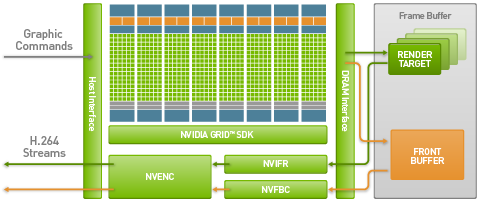 Starting at $0.65 per hour you’ll be able to run in the Amazon cloud DirectX, OpenGL, CUDA, and OpenCL applications and services. The base g2.2xlarge instance comes with 15 gigs of memory, 60 gigs of local storage, an Intel Sandy Bridge processor running at 2.6 GHz (26 compute units) and a single NVIDIA Kepler GK104 graphics card with 1536 CUDA cores.
It’s pretty obvious to me that this graphical cloud will be useful for things like encoding and transcoding video and audio, especially for those who don’t need to do it very often, but the bigger question is whether it’s enough to kill most desktop computing? I suspect it is, though maybe not in exactly the way people expect.
Read the full story here: http://www.cringely.com/2013/11/06/amazons-new-graphical-cloud-helps-make-desktops-obsolete/