Founder and entrepreneur Adam Mosam said the news aired on the network will come from legacy outlets and commissioned freelance reporters. Additionally, the AI will generate its own reporting from public records and government documents. ...
AI network to launch on streaming by February
The creators Mosam and film producer Scott Zabielski said they plan to launch Channel 1 AI for free with ad-supported streaming on apps by February.
Users users will be able to access the network through the services Crackle or Tubi. ...
Questions raised about AI's journalistic integrity
Channel 1 has raised concerns about the accuracy and journalistic integrity of AI generated reporting.
LAist Associate Editor Aaricka Washington said the promotional video shows how easy it will be for AI news to spread misinformation. ...
Pope Francis on Thursday called for a binding international treaty regulating artificial intelligence's development and advancement, warning it could lead to a "technological dictatorship" if left unchecked.
Francis delivered the warning as part of his annual Message for the World Day of Peace, as he said any benefit of technological research should be determined by how it helps in bringing peace and common good to the world along with the "service of the integral development of individuals and communities." ...
He specifically cited the threat posed by AI when deployed "in campaigns of disinformation that spread false news and lead to a growing distrust of the communications media, noting that while AI can produce coherent texts there "is no guarantee of their reliability."
Francis added that misuse of AI can also contribute to threats to peace, including "discrimination, interference in elections, the rise of a surveillance society, digital exclusion and the exacerbation of an individualism increasingly disconnected from society."
... Marvin Gaye said it best: “Ain’t nothing like the real thing.” But it might not be so when it comes to concerts. Research shows that our social responses to avatars are comparable to those observed during real-world interactions, even when the avatar is controlled by AI, or its appearance deviates significantly from what we expect. ...
Moments shared in VR, for example, are stored in our autobiographical memory, the same place as lived experiences. In this way, virtual reality concerts are not just moving images on a screen. To your brain, that virtual stage dive just happened.
Even if you’re not strapping on an immersive headset, watching virtual avatars on a flat screen can stir emotions similar to those elicited in immersive VR....
These platforms also empower audiences to set their own boundaries. For the more than 40% of women who have reported sexual harassment at live music events, being able to block users or set interpersonal distances with other avatars by clicking a button means a safer fan experience. ...
More than half of millennials and Gen Zers report having an interest in attending a virtual concert. ...
“NeuralDisplay” could make AR less squinty, blurry, and nausea-inspiring
... Microdisplay manufacturer KOPIN, of Westborough, Mass., working in partnership with MIT’s Computer Science & Artificial Intelligence Laboratory, may have a solution: the NeuralDisplay. It combines eye-tracking with machine learning to compensate for a user’s vision on-the-fly without additional optics. ...
The first NeuralDisplay is a 1.5-inch square micro-OLED with a resolution of 3,840 x 3,840 and a maximum brightness of 10,000 candelas. These specifications place it in league with other leading micro-OLED, like Sony’s 1.3-inch 4K micro-OLED. It also has an unusual quad-pixel arrangement that places red, blue, and green sub-pixels alongside a fourth pixel containing a pixel imager. ...
The pixel imager ... has a different task: to measure the light reflected by the user’s eyes. ... to deduce details about a user’s eyes, including the direction of their gaze, their eye position in relation to the screen, and the dilation of their pupils. ...
Those measurements feed into an AI model that learns to compensate for the quirks of each user’s vision by adjusting the brightness and contrast of the display. ...
The NeuralDisplay isn’t a panacea, its makers confess, and its ability to compensate for near or farsightedness is uncertain. ...
... “It really shows that these models are not going to be reliable in the long run if they learn from post-LLM age data—without being able to tell what data has been machine-generated, the quality of the outputs will continue to decline,” says Catherine Flick, a professor of ethics and games technology at Staffordshire University.
The reason for that decline is the recursive nature of the LLM loop—and exactly what could have caused the snafu with Grok. ...
Winterbourne’s issues with Grok are just the tip of the iceberg. A visual representation of the damage that model collapse can have has been demonstrated by researchers at Stanford University and the University of California, Berkeley, who fed generative AI image creators with AI-generated output. The distortions and warping that happened turned perfectly normal human faces into grotesque caricatures, as the model begins to break. The fun “make it more” meme that has circulated on social media, where users ask AI image generators to make their output more extreme, also highlights what can happen when AI begins to train itself on AI-generated output. ...
“Each generation of a particular model will be that much less reliable as a source of true facts about the world because each will be trained with an ever less reliable data set,” says Mike Katell, ethics fellow at the Alan Turing Institute. “ ...
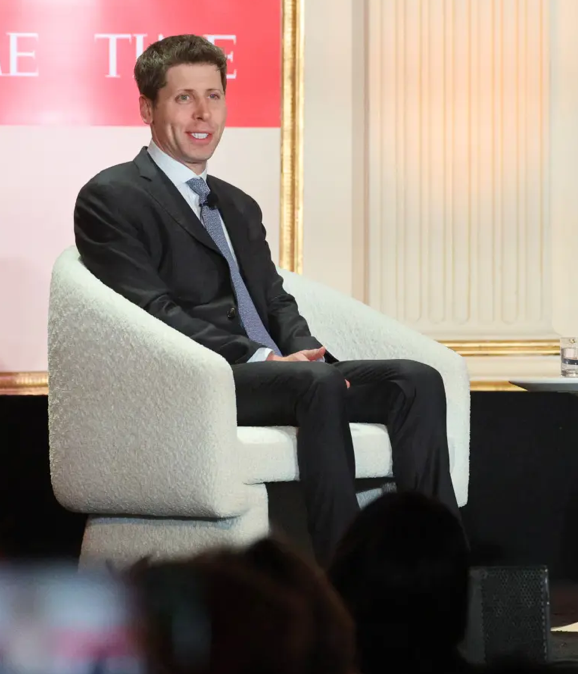
... Altman admits that there are challenges that demand close attention. One particular concern to be wary of, with 2024 elections on the horizon, is how AI stands to influence democracies. Whereas election interference circulating on social media might look straightforward today—“troll farms…make one great meme, and that spreads out”—Altman says that AI-fueled disinformation stands to become far more personalized and persuasive: “A thing that I’m more concerned about is what happens if an AI reads everything you’ve ever written online … and then right at the exact moment, sends you one message customized for you that really changes the way you think about the world.” ...
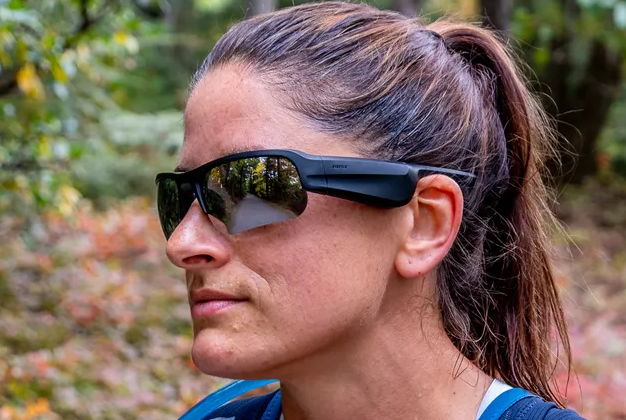
Bose is discontinuing its Frames line of audio smart glasses, which will no longer be available by the end of this year. ...
The first iteration of Bose Frames was pitched as a pair of smart glasses with audio-based augmented reality — a showcase for Bose AR. You could receive GPS audio directions, for example, and there was a smattering of audio-based story games. ...
It’s even more disappointing because this past year has seen a mini-resurgence in smart glasses with the second-gen Ray-Ban Meta smart glasses and the third-gen Amazon Echo Frames. However, both those glasses do more than the Bose Frames. ...
The Bose Frames may have had good audio, but that alone simply wasn’t enough.
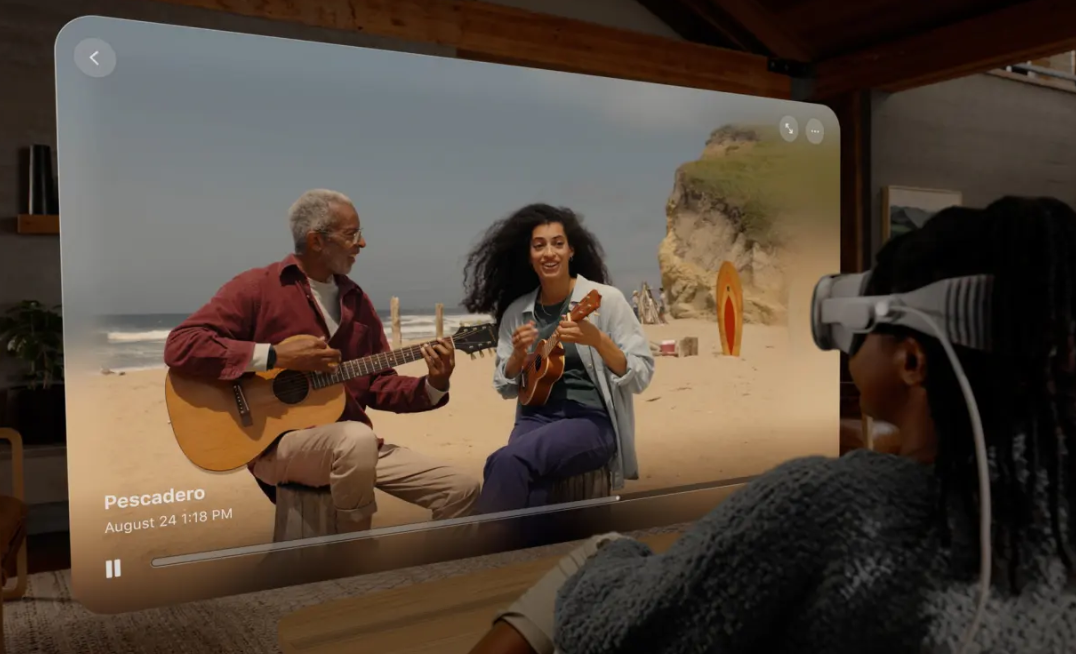
... Apple rolled out iOS 17.2 today, giving iPhone 15 Pro and iPhone 15 Pro Max users the ability to record spatial videos. The new feature lets users film in three dimensions and experience their favorite memories and special moments on Apple Vision Pro, the upcoming mixed-reality headset.
In order to create a three-dimensional video, Apple explains that the iPhone uses both the main and ultrawide cameras when recording. This is then saved as a single file within a new album in the Photos app titled “Spatial.” The videos will also sync across devices with iCloud. Spatial videos are captured in 1080p resolution at 30 frames per second.
Spatial video recording can be enabled in Settings by toggling on “Spatial Video for Apple Vision Pro” in the Camera section under Formats. Apple suggests holding the iPhone in landscape orientation for optimal results. ...
The AI Act takes a “risk-based approach” to products or services that use artificial intelligence and focuses on regulating uses of AI rather than the technology. The legislation is designed to protect democracy, the rule of law and fundamental rights like freedom of speech, while still encouraging investment and innovation.
The riskier an AI application is, the stiffer the rules. Those that pose limited risk, such as content recommendation systems or spam filters, would have to follow only light rules such as revealing that they are powered by AI.
High-risk systems, such as medical devices, face tougher requirements like using high-quality data and providing clear information to users.
Some AI uses are banned because they’re deemed to pose an unacceptable risk, like social scoring systems that govern how people behave, some types of predictive policing and emotion recognition systems in school and workplaces. ...
The AI Act won’t take effect until two years after final approval from European lawmakers, expected in a rubber-stamp vote in early 2024. Violations could draw fines of up to 35 million euros ($38 million) or 7% of a company’s global revenue. ...
... Watch for companies with the best blend of prompt applications for storytelling ...
What is undeniable, however, is that the expertise for targeting the appropriate demographic for the content will be critical, and businesses that possess that capability will be the winners. We will also see the rise of even more powerful algorithms that help match content with viewers that rivals even the best of today’s current streaming market.
Watch for entertainment conglomerates that can create the best systems to manage their internal data ...
Watch for stunning startups ...
The worst place to be is in the middle. If you don’t have the corporate size to drive large scale and you don’t have the nimbleness and agility of a startup, the middle is a very, very dangerous place. No one wins in that space, ever.” ...
Additional narratives to note
There were also several discussions around DEI as it pertain to ethics, biases, investors, and founders. ...
Many consistently ask about guardrails to which there is are industry-wide answers for such questions at the moment. Companies that figure out such solutions just may actually become the most valuable yet in this powerful new sector.