MOOCs and the Gartner Hype Cycle: A very slow tsunami
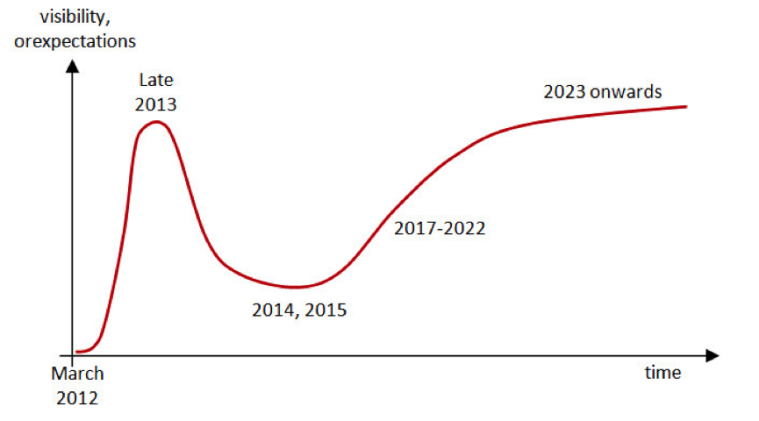 Assuming that you’re an academic and you weren’t planning to retire in the next decade, what then? There’s no simple answer to that; however, knowing that your institution is not going to die next year, but will probably become terminally ill in the next decade, should both sharpen your thoughts and give you some time to develop some strategies for co-existing with the MOOCs.
See the full story here: http://pandodaily.com/2013/09/13/moocs-and-the-gartner-hype-cycle-a-very-slow-tsunami/
Cryptographers Have an Ethics Problem
 [Philip Lelyveld comment: Technology is morally neutral. You cannot know the moral purposes for which it will be used when you are teaching it to others. It is important to have a moral code overlay. It is also important to have ideas about enforcement and penalties when the code is violated. This story doesn't go there.]
...I noticed a poster taped to the wall—the kind put up to inform or inspire students. It was the code of ethics of the Association for Computing Machinery, the world’s largest professional association of computer scientists.
The code is a list of 16 “moral imperatives.” Two items immediately jumped out:
1.3 - Be honest and trustworthy.
1.7 - Respect the privacy of others.
This got me thinking. It looks as if the code-breakers at the National Security Agency—and possibly the academics that often assist them—are in clear, dramatic breach of their own profession’s code of conduct.
Clear Channel-Warner Music Deal Rewrites the Rules on Royalties
[Philip Lelyveld comment: this marks another step in transitioning from the old to the new distribution business model.]
Clear Channel Communications announced a deal late last week with the Warner Music Group through which Warner’s acts will collect royalties when their songs are played on Clear Channel’s 850 stations. This will mark the first time that the music label and its acts — which include Bruno Mars, CeeLo Green, Coldplay and Green Day — will collect payments from Clear Channel. In exchange for the deal and promotion for its acts, Clear Channel will receive a favorable rate for online streaming.
See the full story here: http://www.nytimes.com/2013/09/13/business/media/clear-channel-warner-music-deal-rewrites-the-rules-on-royalties.html?_r=0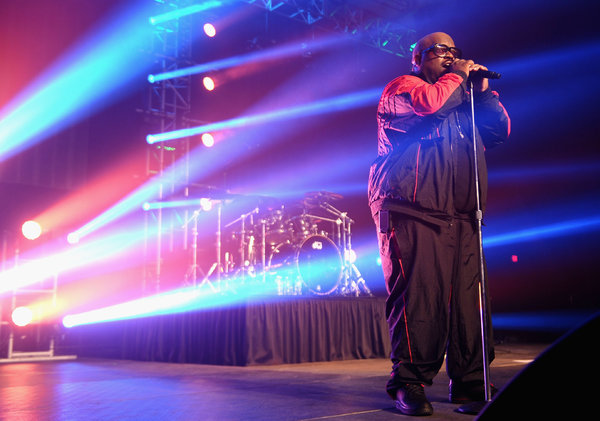
Disney’s Second Screen Live asks moviegoers to bring their iPad this time (video)
Disney has created an iPad app for viewers to download before they get to the theater, which mirrors apps we've seen for home viewing with synchronized games, sing-a-longs and trivia. That's no coincidence, since the movie's return to theaters is timed ahead of its Blu-ray release on October 1st.
See the full story here: http://www.engadget.com/2013/09/11/disney-second-screen-live-ipad-theater-little-mermaid/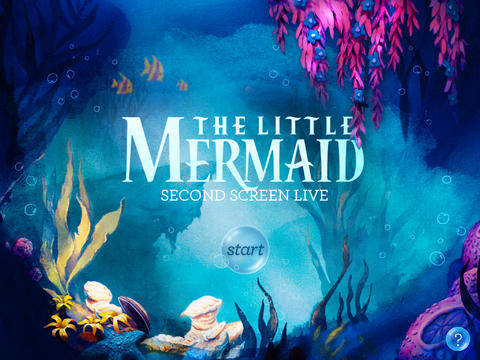
MOVIE SERVICE M-GO UNVEILS PERSONAL CARDS, CONSIDERS LIVE TV
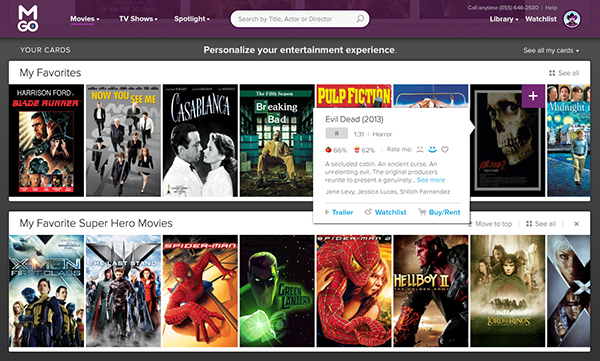 According to M-GO CEO John Batter, what sets his platform apart from similar services such as iTunes, Amazon, Vudu and CinemaNow is personalization. To meet the demands of its customers’ multi-dimensional tastes, the company is launching a series of new features through M-GO Plus, including new means of discovering, browsing, curating and managing content.
Similar features will be available in the future on M-GO’s mobile and connected TV apps. Batter told GigaOMthat M-GO is also considering a locker service as well as live TV.
“At the same time, he warned that getting deals for live TV content is anything but easy, something that competitors like Intel Media and Sony are currently experiencing as well.
Read the full story here: http://www.etcentric.org/movie-service-m-go-unveils-personal-cards-considers-live-tv/#more-64641
Bringing ‘The Matrix’ to the NFL
 In its 2013 NFL season inaugural telecast of the Cowboys/Giants game on NBC Sunday Night Football, Sept. 8, NBC Sports debuted 360-degree instant replays, using freeD technology developed by Replay-Technologies. The multicamera system—two camera setups, each consisting of 12 cameras at opposite ends of the field—installed at AT&T Stadium in Dallas allowed color commentator Cris Collinsworth to show replays within the 20-yard lines from every possible camera angle.
Read the full story here: http://www.tvtechnology.com/article/bringing-‘the-matrix-to-the-nfl/221089
ABC executive: second screen apps can be a distraction
 Second-screen apps used to be all the rage with TV executives just a few years ago, but Disney’s Digital EVP Albert Cheng’s network is moving away from the idea to complement shows with second screen experiences. “It’s not a game that we want to be in,” said Cheng at the Next TV Summit in San Francisco Wednesday.
ABC did a number of tests with second-screen applications that pushed out contextual information for shows like Grey’s Anatomy, and Cheng said that one of the lessons learned during those tests was that it just doesn’t matter enough to viewers. “It was interesting to viewers, but not essential,” he said. What’s more, when engagement did happen, it ended up taking people’s attention away from the show’s story. “Second screen becomes a distraction,” Cheng said.
He acknowledged that second-screen apps can work for some kinds of content, including sports, news, reality programming and awards shows. However, ABC’s main moneymaker is serialized content, so it just didn’t seem like a winning proposition, and monetization through ads seemed difficult. At some point ABC had to decide how to make money with the second screen, recalled Cheng, adding: “The answer is, you don’t.”