At the RSA security conference in San Francisco last month, Mayank Upadhyay, a principal engineer at Google who specializes in security, became the first person at Google to speak in public about that research. He said that using personal hardware to log in would remove the dangers of people reusing passwords or writing them down. He also thought people would feel some familiarity with the approach. “Everyone is familiar with an ATM. What if you could use the same experience with a computer?”
See the full story here: http://www.technologyreview.com/news/512051/google-wants-to-replace-all-your-passwords-with-a-ring/?utm_campaign=newsletters&utm_source=newsletter-daily-all&utm_medium=email&utm_content=20130312
[Philip Lelyveld comment: Bruce literally wrote the books on a) cryptography and b) why it gives a false sense of security. In this brief article he gives his informed assessment of what is real and what is manufactured in the current cyber-attack / espionage environment.]
Cyber-espionage is old news. What’s new is the rhetoric, which is reaching a fever pitch right now.
Unfortunately, both the reality and the rhetoric play right into the hands of the military and corporate interests that are behind the cyberwar arms race in the first place. There is an enormous amount of power at stake here: not only power within governments and militaries, but power and profit amongst the corporations that supply the tools and infrastructure for cyber-attack and cyber-defense. The more we believe we are “at war” and believe the jingoistic rhetoric, the more willing we are to give up our privacy, freedoms, and control over how the Internet is run.
See the full story here: http://www.technologyreview.com/view/512386/danger-lurks-in-growing-new-internet-nationalism/?utm_campaign=newsletters&utm_source=newsletter-daily-all&utm_medium=email&utm_content=20130312
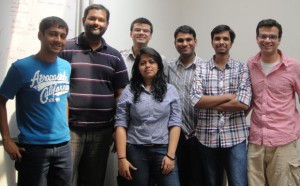 Sunglass enables this collaboration by giving a cloud-based environment to design firms to where the designers can logon to work and manage a model.
Coming together, DIYROCKETS and Sunglass are announcing a partnership to launch an open source competition to create 3D printed rocket engines through collaborative design where Sunglass will be providing the collaboration platform. The competition opened for registration at South by Southwest (SXSW) on March 9, and challenges makers, designers and space entrepreneurs to create open source rocket engines that will serve the growing market for small payload delivery into low earth orbit and ultimately, disrupt the space transportation industry.
“We were told that people would never give us money, that we priced it way too expensively … the fact that it was leaky was viewed as silly, the fact that you could do a workaround was viewed as silly. We did that on purpose. If you like it so much that you’re willing to do a hack around a URL just to get a peek under our dress … eventually you’re going to give us some money.”
See the full story here: http://paidcontent.org/2013/03/10/finding-out-who-your-real-friends-are-how-david-carr-views-paid-content/?utm_source=General+Users&utm_campaign=db5aa8f2c9-c%3Amed+d%3A03-12&utm_medium=email
Digital Cinema Distribution Coalition announced that it has reached agreements with five movie studios to provide digital delivery services to theaters in North America. The DCDC satellite and terrestrial digital distribution network will deliver feature, promotional, pre-show and live digital cinema content from Lionsgate, Universal Pictures, Disney, Warner Bros. and Paramount Pictures.
“DCDC is creating a technological superhighway,” added Cinemark CEO Tim Warner. “It’s one port access to thousands of screens, for both movies and alternative content, from all content providers.”
See the full story here: http://www.hollywoodreporter.com/news/five-studios-sign-satellite-movie-426659
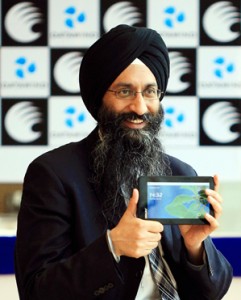 DataWind began winning attention last year when it struck a deal to supply India’s government with 100,000 of its Aakash 2 tablets, for roughly $40 each, by this March 31. That tablet works only near Wi-Fi points, but DataWind also sells an $83 commercial version called Ubislate 7C+, which comes with an unlimited mobile data plan for around $2 per month. Within 18 months, Tuli says, he hopes to bring the price of a basic tablet down to $25 and make the Internet connection free.
Hardware has gotten cheap enough that restaurants or resorts should be giving customers tablets to walk away with for free. Hardware is becoming a customer-acquisition tool.
Our assessment was that when the cost of purchasing PCs fell to within 20 percent of monthly salary, you started to see them in every home. In a place like India, there are about billion people for whom $50 meets that criterion.
Nobody focuses on the problem of creating apps for somebody whose monthly income is $200. Those people are not part of the computer age or the Internet age; most of them are not literate. So we run app competitions in India to try to get people thinking from that perspective.
Berlin-based startup iversity, founded in 2011 to offer online collaboration tools for learning management, has relaunched itself as a platform for massive open online courses. Its first batch of MOOCs are due to go live around September/October, at the start of the winter study term, with a view to steadily expanding the number of courses offered on its platform and ramping up student numbers from the initially expected six-digits.
In order to encourage institutions and academics to kickstart its platform business, iversity has launched a competition — under the grand title of MOOC Production Fellowship and in partnership with German education think tank Stifterverband – asking for MOOC concepts to be submitted. The competition runs to the end of April. Ten winners will be chosen and will each receive a grant of €25,000 to produce their course in time for iversity’s inaugural winter term.
”We became convinced that the MOOCs phenomenon is not just your regular hype but a very substantive trend or new business that’s emerging.”
According to Riecke, iversity is looking at three likely business models:
- certification fees for students — these won’t be implemented this year, says Riecke, but will be coming to iversity in 2014
- licensing fees — where physical universities pay iversity to license courses to replace some of the classes they conduct (likely for introductory courses, freeing the university’s staff up for more in-depth teaching)
- recruiting fees — generated by providing a “recruiting intelligence” service to employers based on students’ performance in relevant classes
See the full story here: http://techcrunch.com/2013/03/11/iversity-moocs-pivot/?ncid=tcdaily
Home entertainment: A new television standard called Ultra HD is four times sharper than today’s best HDTVs. But providing content in this new format poses daunting technical challenges. And does anyone really need it anyway?
But who actually needs a super-sharp 4K television? The resolution of even an HDTV set with 1,080 progressively scanned lines (ie, continuously from top to bottom) is wasted on the vast majority of viewers. Most people sit too far from the screen to be able to see the detail it offers. A study done some years ago found the median eye-to-screen distance in American homes to be nine feet (2.7 metres). But researchers reckon that, given the human eye’s limited acuity, people even with 20/20 vision should sit no farther than 1.8 times the width of the screen away from it, if they are to distinguish the detail displayed.
At a distance of nine feet, even an existing HDTV set would need to have a screen of around 70 inches across the diagonal for viewers to benefit from the resolution they have paid for. With anything smaller at that distance, details simply blur into one another. There is no question that, with twice the resolution horizontally and vertically, a 70-inch Ultra HD screen would be pretty impressive from nine feet away, and would still provide resolvable detail at up to twice that size.
The best guide is the penetration of HDTV. America’s first nationwide broadcast in digital high-definition was John Glenn’s lift-off in the space shuttle Discovery in 1998. It took another dozen years for HDTV to go mainstream. By that reckoning, it is likely to be 2025 before Ultra HD is in half of all American homes.
Read the full story here: http://www.economist.com/news/technology-quarterly/21572921-home-entertainment-new-television-standard-called-ultra-hd-four-times-sharper
The root of the problem lies in China's contempt for intellectual property. Most video and software consumed in China is pirated, and it is widely rumored that the People's Liberation Army runs the trade. In his new book China Airborne, Fallows calls China "a culture of copying." The idea of a global free market enriching all is not what businesspeople there are after. "Everyone is grabbing everything they can," a top Chinese professor told Fallows.
See the full story here: http://www.hollywoodreporter.com/news/cybersecurity-hollywood-targeted-by-chinese-425984
If you’re not familiar, Upworthy adds splashy headlines to photos and videos it culls from across the internet, and encourages viewers to share them on Facebook and other social media sites. This is akin to what sites like BuzzFeed do but with two major differences: Upworthy doesn’t have advertising and it focuses exclusively on political and social issues like gender equality and climate change.
See the full story here: http://paidcontent.org/2013/03/06/how-the-fastest-growing-media-site-could-help-democrats-win-the-next-election/?utm_source=General+Users&utm_campaign=2ebb34d5ea-c%3Amed+d%3A03-07&utm_medium=email
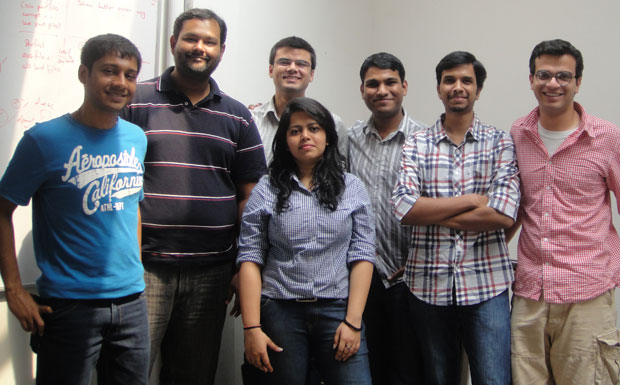 Sunglass enables this collaboration by giving a cloud-based environment to design firms to where the designers can logon to work and manage a model.
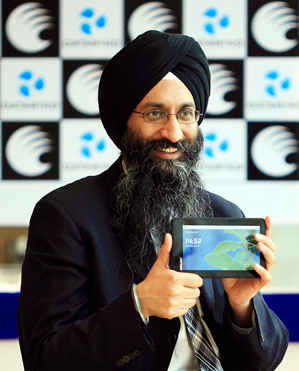 DataWind began winning attention last year when it struck a deal to supply India’s government with 100,000 of its Aakash 2 tablets, for roughly $40 each, by this March 31. That tablet works only near Wi-Fi points, but DataWind also sells an $83 commercial version called Ubislate 7C+, which comes with an unlimited mobile data plan for around $2 per month. Within 18 months, Tuli says, he hopes to bring the price of a basic tablet down to $25 and make the Internet connection free.