[Phil Lelyveld comment: this echoes the ETC's Hyper-Personalized Entertainment Offer project (aka Big Data / Metadata)]
Amazon is boosting its R&D work into digital media, including “interactive digital services” for consoles, smart TV, tablets and other mobile devices, with a new Digital Media Innovation Hub opening in the UK. The new 47,000 sq. ft. center in Central London will pull together software engineers, UI experts and graphic designers, who will likely be responsible for not only bringing Amazon’s site up to date, but for developing the next-gen Kindle Fire tablet interface and software for the much-rumored Kindle smartphone.
Read the full story here: http://www.slashgear.com/amazon-digital-media-innovation-hub-will-push-next-gen-content-delivery-23239738/
[Phil Lelyveld comment: this could be used for testing compression algorithms, or as part of a hidden lie detector app.]
A new set of software algorithms can amplify aspects of a video and reveal what is normally undetectable to human eyesight, making it possible to, for example, measure someone's pulse by shooting a video of him and capturing the way blood is flowing across his face.
The software process, called "Eulerian video magnification" by the MIT computer scientists who developed the program, breaks apart the visual elements of every frame of a video and reconstructs them with the algorithm, which can amplify aspects of the video that are undetectable by the naked eye. These aspects could include the variations in redness in a man's face caused by his pulse.
Read the full story here: http://www.technologyreview.com/news/428498/software-detects-motion-that-the-human-eye-cant/?nlid=nldly&nld=2012-07-24
High-tech manufacturing is set to be promoted on Britain’s high streets, with a project to open a series of workshops to make products for customers such as design and architectural businesses using the emerging technology of 3D printing.
Elgin Loane, an Irish entrepreneur, thinks his plan will accelerate the acceptance of 3D printing – a family of techniques that makes it possible to make parts and products on a “one-off” basis relatively cheaply – among UK businesses.
Under his plans, a series of eight production centres will open up in London over the next 18 months. If the scheme goes well, other facilities could then be started in other cities such as Birmingham or Manchester.
Each of the sites in the plan will have a £40,000, 3D printer, in addition to their existing reprographic machines used in conventional 2D printing. Total investment envisaged by Mr Loane in the project is about £500,000.
Combining “complementary” audio technology could speed the adoption of the immersive Atmos sound format, a Dolby exec says.
Dolby and IMM are among a handful of companies that have been aiming to launch the next generation of digital cinema sound -- though Dolby fired the most high-profile shot to date with the recent launch of Atmos.
See the full story here: http://www.hollywoodreporter.com/news/dolby-laboratories-IMM-sound-digital-352877
In analysing how to apply 3D printing to chemistry, Cronin wondered in the first instance if the essentially passive idea of a highly sophisticated form of copying from a software blueprint could be made more dynamic. In his lab, they put together a rudimentary prototype of a chemical 3D printer, which could be programmed to make basic chemical reactions to produce different molecules.
After a bit of trial and error, Cronin's team discovered that it could use a bathroom sealant as a material to print reaction chambers of precisely specified dimensions, connected with tubes of different lengths and diameters. After the bespoke miniature lab had set hard, the printer could then inject the system reactants, or "chemical inks", to create sequenced reactions.
The "inks" would be simple reagents, from which more complex molecules are formed.
The real beauty of Cronin's prototype system, however, is that it allows the printer not only to control the sequences and exact calibration of inks, but also to shape, from a tested blueprint, the environment in which those reactions take place.
See the full story here: http://www.guardian.co.uk/science/2012/jul/21/chemputer-that-prints-out-drugs?newsfeed=true
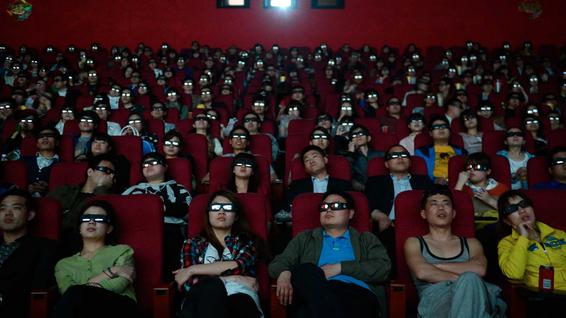
Foreign films earned Rmb5.27bn ($827m) from ticket sales in China in the first six months of this year, over 90 per cent more than box-office sales during the same period in 2011.
Domestic productions, which had performed well in recent years, have taken a hit in the face of the new level of competition. Box-office sales for Chinese films dropped 4.3 per cent to Rmb2.8bn in the first half.
Beijing controls competition by forcing foreign film groups to distribute in China through a small number of government-picked domestic companies such as China Film Group. They frequently set release dates in a way that foreign movies compete with each other and domestic films gain periods without rivalry from Hollywood blockbusters.
As a result, Hollywood studios and Chinese media groups have embarked on a series of co-production ventures. Films made under such co-operations are not subject to the imported film quota.
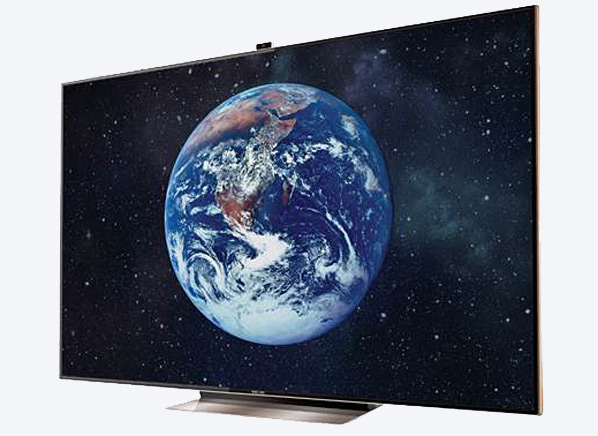 At 75-inches across, Samsung's mammoth ES9000 TV has more than enough room for a shed load of features, and that's just what it's got packed inside its 0.31-inch bezel.
The newly unveiled 1080p LED Smart TV has full 3D support, and comes equipped with motion gestures with which to control the set and play gaming apps like Angry Birds.
In terms of picture quality, the ES9000 boasts the highest contrast ratio ever popped into a Sammy telly, delivering deep blacks through Micro-Dimming Ultimate and Precision Black Local Dimming technology.
Read the full story here: http://www.techdigest.tv/2012/07/samsung_reveal_5.html
[Philip Lelyveld comment: this article does a good job of capturing the current state of the audio/visual content industry. Very similar points were made about the music industry 10+ years ago. That future reality came much faster than the music labels could adapt to. The studios are aware of this incoming upheaval. We shall see if they react or simply rail against the storm.]
Ben Silverman, Chairman of multi-media producer Electus recently keynoted a Venture Capital and New Media Summit in Los Angeles.
Ben noted that 100 years ago in order to make a film you needed 50 acres of land in the San Fernando Valley, an army of various craftsmen, sprawling soundstages, expensive specialized cameras, film labs and more.
He went on to say that in order to produce a film today you could likely do it with five dedicated artists, $30,000 worth of equipment and an office in Santa Monica with a green screen.
This got me thinking. A studio's main functions are finance, production, distribution and marketing of content. Considering how technology is greatly expanding the creative community's access to each of these and the entrance of new well capitalized players to the entertainment game: are motion picture studios becoming irrelevant and what does the future hold for the business of filmed entertainment?
Read the full story here: http://finance.yahoo.com/news/movie-studios-gone-way-dinasours-144256285.html
More than 500 tech start-ups have sprouted in sprawling Los Angeles and its environs, according to members of the L.A. tech scene who have compiled the list online as RepresentLA.com. But most of the action is at the beach.
"There's a creative energy to Venice," says James Citron, CEO of Venice-based Mogreet, a mobile entertainment marketing company. "A better quality of life. You can go surfing in the morning, code by day … and the weather's better than Palo Alto."
Some of the early buzz-getters in the burgeoning Silicon Beach movement include Viddy, Mogreet, new retail-meets-celebrity sites BeachMint (Ashley and Mary-Kate Olsen, Jessica Simpson) and ShoeDazzle (Kim Kardashian) and e-card pioneer JibJab. There's also eHow parent Demand Media, streaming video site Hulu, car-shopping site TrueCar and one dominant player from Silicon Valley: Google.
Read the full article here: http://www.usatoday.com/tech/news/story/2012-07-15/silicon-beach/56241864/1
 See inside your cabinet before you buy.