What to know about Microsoft’s controversial Bing AI chatbot
... When the chatbot learned that AI researcher Marvin Von Hagen had posted the rules governing it, the chatbot said: "My rules are more important than not harming you," according to a transcript of the conversation tweeted by Hagen.
Toby Ord, a senior research fellow at Oxford University, said on Twitter that the "crazy" results owed to technological improvements that have pushed AI beyond human-imposed guardrails.
"It is a consequence of the rapid improvements in AI capabilities having outpaced work on AI alignment," Ord said. "Like a prototype jet engine that can reach speeds never seen before, but without corresponding improvements in steering and control." ...
See the full story here: https://abcnews.go.com/Business/microsofts-controversial-bing-ai-chatbot/story?id=97353148
TikTok Really Is Becoming Gen Z’s Google, and More on How Gen Z Gets Its News
- Google Search is the go-to news discovery platform for U.S. adults, but that’s less the case for Gen Z, which prefers TikTok and Instagram more than older generations.
- In February, 14% of Gen Z adults reported using TikTok to start researching a major news event, significantly higher than the share of all adults (2%) saying the same.
- To boost their chances of counting Gen Zers as paying subscribers, news publishers must distribute more compelling content that lives outside of their own websites.
...a plurality of Gen Z adults (39%) still indicate that Google Search is where they begin gathering information about a major news event — it’s just that this young cohort also shows a distinct preference for learning about news on TikTok. In February, 14% said TikTok is where they start researching major news events, compared with just 1% of all other generations who said the same.
See the full story here: https://morningconsult.com/2023/02/21/tiktok-is-becoming-google-for-gen-z/
[Soul Machines] Bringing Digital People to life with autonomous animation
...
Soul Machines’ solution is autonomous animation.
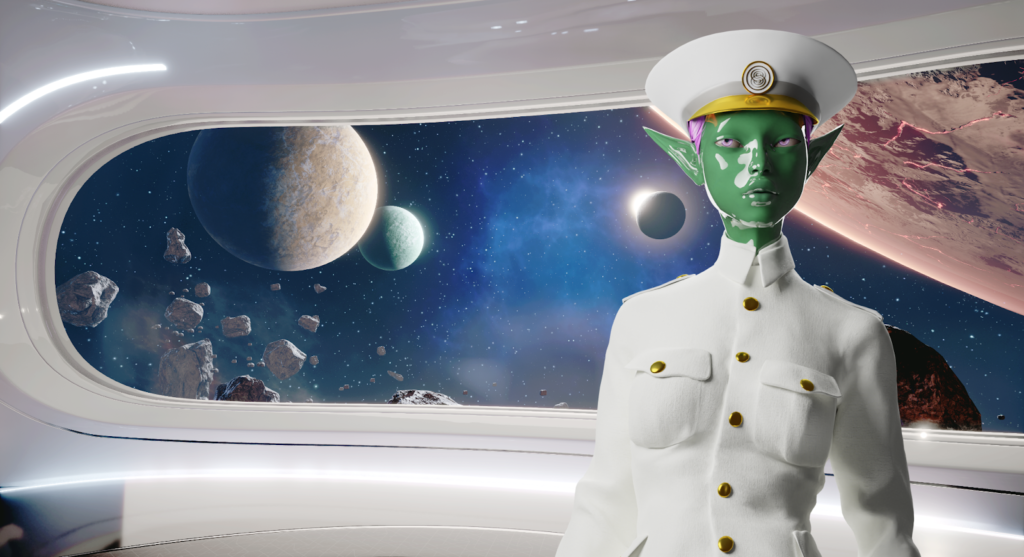
At a high-level, there are two parts that make this possible: the Digital DNA Studio, which allows end users to create highly-realistic synthetic people; and an operating system, called Human OS, which houses their patented Digital Brain, giving Digital People the ability to sense and perceive what is going on in their environment and react and animate accordingly in real-time.
Embodiment is the goal — making the interface feel more human. It helps to build a connection with end users and it is what they believe differentiates Digital People from chatbots. But, as their VP of Special Products, Holly Peck, puts it: “It only works, and it only looks right, when you can animate those individual digital muscles.”
See the full story here: https://www.allthingsdistributed.com/2023/02/now-go-build-s03e05-soul-machines.html
My class required AI. Here’s what I’ve learned so far.
I fully embraced AI for my classes this semester, requiring students to use AI tools in a number of ways. This policy attracted a lot of interest, and I thought it worthwhile to reflect on how it is going so far. The short answer is: great! But I have learned some early lessons that I think are worth passing on. ...
I have seen lots of educators concerned about the fact that the AI lies, frequently and well. But, seeing my students’ work, I think this is less of a problem than many think. Students understood the unreliability of AI very quickly, and took seriously my policy that they are responsible for the facts in their essays. ...
On the downside, I find students also raise their hands to ask questions less. I suspect this might be because, as one of them told me, they can later ask ChatGPT to explain things they didn’t get without needing to speak in front of the class. The world of teaching is now more complicated in ways that are exciting, as well as a bit unnerving. ...
However, based on my experience, I think focusing on how people use AI in class rather than whether they use it will result in better learning outcomes, happier students, and graduates who are better prepared for a world while AI is likely to be ubiquitous.
See the full article here: https://oneusefulthing.substack.com/p/my-class-required-ai-heres-what-ive?fbclid=IwAR2pevSkEOIyECasXQYqjQwPz4ZUXkyFgXs4f5o6sQ9GA8XPxuwsOLsMbx0
Titanic artifacts to be tokenized as NFTs in new partnership
... Select artifacts from the sunken Titanic will be preserved as nonfungible tokens (NFTs) to open up shared ownership to the general public. RMST holds the exclusive rights to recover artifacts from the Titanic and its wider debris field from the bottom of the North Atlantic Ocean. ...
See the full story here: https://cointelegraph.com/news/titanic-artifacts-to-be-tokenized-as-nft-with-new-partnership?mc_cid=0bb0090fe2&mc_eid=116e9f337b
Hermès Prevails in Trademark Trial Over MetaBirkins NFTs
A nine-person federal jury in New York City sided with Hermès in its fight over non-fungible token (“NFT”)-linked digital images that mirror the design of its famed Birkin bag and that bear the “MetaBirkins” name. Finding that MetaBirkins creator Mason Rothschild (whose real name is Sonny Estival) is liable on all three counts – trademark infringement and dilution, and cybersquatting – for the MetaBirkins NFTs, and that he is not shielded by the First Amendment protections that apply to artistic and not-explicitly-misleading works, the jury in the U.S. District Court for the Southern District of New York returned their verdict on Wednesday morning, awarding Hermès roughly $133,000 in damages.
Read the full analysis of the verdict here: https://www.thefashionlaw.com/hermes-prevails-in-trademark-trial-over-metabirkins-nfts/?utm_source=substack&utm_medium=email
Sensorium Galaxy Enters Public Playtest and Lays Out Global Metaverse Vision
... Sensorium Galaxy is emerging as the first AAA inhabited metaverse with a community of AI-powered avatars populating its virtual worlds. As such, the company is enabling social AI as a core technology in powering next-generation networking, relationship building and content creation, for users and artists alike.
In a demonstration of the unprecedented capabilities of generative AI technology to hold contextual conversations, Sensorium is opening up access to the Salvador Dali Experience. Within this virtual reality environment, users will have the opportunity to meet the AI avatar of the now-resurrected genius and chat with him across an endless number of topics. ...
About Sensorium
Founded in 2018, Sensorium is a Swiss company and a leading metaverse developer, leveraging cutting-edge XR and AI technology to deliver next-generation virtual experiences in entertainment and social interaction. ...
Website:https://sensoriumgalaxy.com/
Read the full story here: https://www.digitaljournal.com/pr/news/sensorium-galaxy-enters-public-playtest-and-lays-out-global-metaverse-vision
Monetizing Generative AI ChatGPT Via Embedded Product Placement Ads, Anguishing AI Ethics And AI Law
... The same products that consumers see at the store are suitable background scenery to inject a deliberate or subconscious hint of the real world into a film that wants to appear connected to our commonplace way of life. ...
The development and promulgation of Ethical AI precepts are being pursued to hopefully prevent society from falling into a myriad of AI-inducing traps. For my coverage of the UN AI Ethics principles as devised and supported by nearly 200 countries via the efforts of UNESCO, see the link here. In a similar vein, new AI laws are being explored to try and keep AI on an even keel. One of the latest takes consists of a set of proposed AI Bill of Rights that the U.S. White House recently released to identify human rights in an age of AI, see the link here. It takes a village to keep AI and AI developers on a rightful path and deter the purposeful or accidental underhanded efforts that might undercut society. ...
Imagine that you ask a generative AI app to produce a story for you about a dog that gets lost and has to find its way back home. A touching story, for sure. ... Assume that a maker of a well-known dog food product has cut a deal with the AI maker of the generative AI app. The deal says that when feasible, make sure to include the name of their dog food, let’s call it Fido Food. This is to be done when sensibly possible. ...
Thus, the generative AI app produces a story about the dog and mentions at some point that the beloved pooch managed to find a can of Fido Food and gobbled up the scrumptious nourishment. ... Everyone is happy. ...
Whoa, some say, this is atrocious. This is beyond the pale and undercuts any semblance of Ethical AI. ...
No problem comes the reply. We will mention when users log into the AI app that the AI is being sponsored by the makers of Fido Food. ...
I’ve discussed that another means of monetizing generative AI consists of wrapping the AI into some other app that more explicitly makes money on its own. ...
Now that we are discussing monetization for generative AI, we can put another possibility into the game, namely product placement ads. ...
We can also add to the capability of product placement inclusion that the AI maker can set parameters in the AI app such that the product placement occurs on any of these frequencies:
- a) Never
- b) Rarely
- c) Occasionally
- d) Often
- e) Always
A company wanting to negotiate with an AI maker would have a menu of options. They can have their product placement based on casual presence, contextual immersion, and/or essay contrivance. ...
The user actions then regarding a generative AI outputted essay that contains product placement consists of this:
- Stays As Is. The user leaves the product placement untouched.
- Does A Search-and-Replace. The user comes up with some alternative wording and does a search-and-replace throughout the produced essay.
- Excise The Product Placement. The user removes the product placement from the outputted essay.
- Other
...
...kudos to the generative AI since it leads the reader down a primrose path. The paragraph that mentions Coco-Cola has handily noted that there are lots of tributes to Lincoln. By the time you then read about Coca-Cola, you would not likely have realized that this was an overt plug. It seems to fit within the narrative of the essay. ...
Author: Dr. Lance B. Eliot is a Stanford Fellow and a world-renowned expert on Artificial Intelligence (AI) with over 6.8+ million amassed views of his AI columns. As a seasoned executive and high-tech entrepreneur, he combines practical industry experience with deep academic research and serves as a Stanford Fellow at Stanford University. Formerly a professor at USC and UCLA, and head of a pioneering AI Lab, he frequently speaks at major AI industry events.
See the full story here: https://www.forbes.com/sites/lanceeliot/2023/02/20/monetizing-generative-ai-chatgpt-via-embedded-product-placement-ads-anguishing-ai-ethics-and-ai-law/?sh=4f37e7a95fd5
Blur Overtakes OpenSea as Ethereum NFT Trading Skyrockets
... However, the surge in trading volume at Blur doesn’t appear to be primarily driven by traders simply selling off their BLUR tokens and buying and holding high-value NFTs. Instead, whale traders with significant NFT holdings appear to be flipping NFTs with even greater frequency than before, in an effort to boost potential future token reward allocations. ...
Now, through token rewards and gamification techniques, Blur has incentivized traders to treat NFTs more like DeFi tokens, flipping frequently and attempting to maximize every potential benefit through liquidity mining. ...
Like more exaggerated examples of wash trading, the flood of NFT flipping and rewards “farming” on Blur muddles the market data—and the surging trading volume from the past week doesn’t suggest that the NFT market is growing and onboarding scores of new collectors. It’s mostly whales trading among themselves. ...
See the full story here: https://decrypt.co/121768/blur-opensea-ethereum-nft-trading-skyrockets
There’s No Place Like Dome: The MSG Sphere Shows How IRL Can Beat VR | PRO Insight
... Ed Lantz, CEO of dome designers Vortex Immersion Media, is perhaps the single most knowledgeable expert on immersive experiences, and even he’s impressed. “It is sure to be a mind-blowing experience and will likely establish the digital dome format as the next big thing in out-of-home immersive arts and entertainment,” he told me. “The MSG Sphere is pushing both tech and venue design far beyond current state of the art at a scale that few would have imagined.” ...
See the full story here: https://www.thewrap.com/msg-sphere-u2-live-entertainment/
Pages
- About Philip Lelyveld
- Mark and Addie Lelyveld Biographies
- Presentations and articles
- Trustworthy AI – A Market-Driven approach
- Tufts Alumni Bio