In 1597, the world’s first opera was performed in Florence, Italy. More than 400 years later, the venerable art form is still being presented in largely the same form, with the world’s best-trained singers and symphony musicians performing without amplification in large theatrical halls. ...
...Opera Hack, an “ideation summit” created by San Diego Opera in 2019. ...
On Nov. 8, San Diego Opera announced the winners of its third Opera Hack contest. Three ideas created by experts from the arts and technology industries won $5,000 grants to continue developing their ideas. These winning concepts could someday lead to opera productions featuring technology used in role-playing and virtual reality video games, as well as the motion-capture techniques used in movies. ...
The Baroque Reality team, which includes three opera singers, aims to produce an abridged and female-centric version of Handel’s 1735 baroque opera “Alcina” that would use both mixed and augmented reality technology to enhance storytelling. ...
Metropolis 3.0
The opera will feature technological tools that include motion capture, augmented reality, production mapping, motion tracking and live video.
PO(pera)V
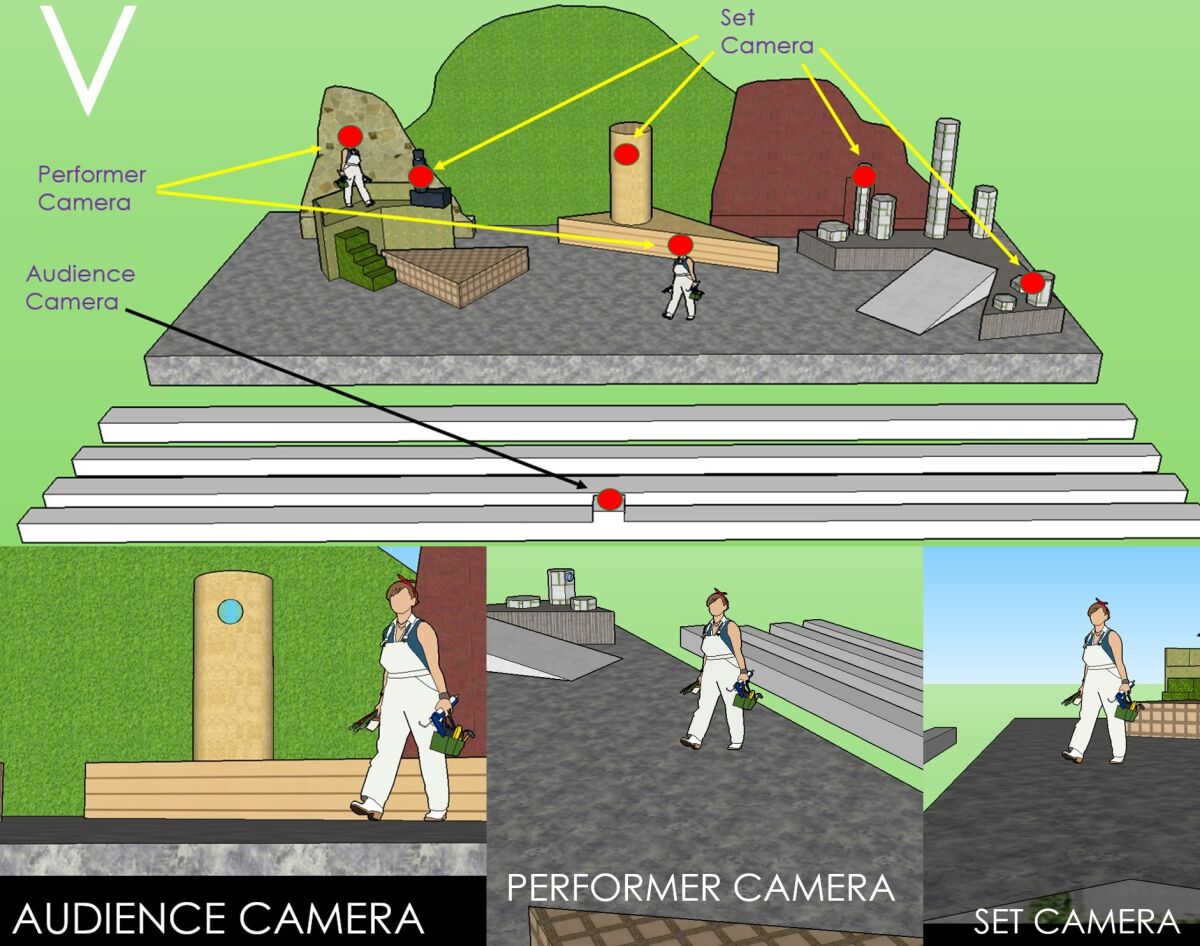
Mechanical engineer Nam Nguyen’s immersive performance-capture concept would allow audience members to watch an opera from multiple perspectives, ranging from a technology-free view from their seat in the auditorium to the perspectives of what the singers are seeing from the stage.
Scientist is expected to take a year-long sabbatical from University of California, Berkeley to lead the new Institute of Data Science at Hong Kong University
Ma, who says he likes to challenge himself ‘every 5 years’, will head the body which is looking to become a global leader in the field
Generative AI also raises numerous questions about what constitutes original and proprietary content. Since the created text and images are not exactly like any previous content, the providers of these systems argue that they belong to their prompt creators. But they are clearly derivative of the previous text and images used to train the models. Needless to say, these technologies will provide substantial work for intellectual property attorneys in the coming years. ...
It may soon be standard practice, for example, for such systems to craft most or all of our written or image-based content — to provide first drafts of emails, letters, articles, computer programs, reports, blog posts, presentations, videos, and so forth. No doubt that the development of such capabilities would have dramatic and unforeseen implications for content ownership and intellectual property protection, but they are also likely to revolutionize knowledge and creative work. ...
Nvidia has announced several significant advances and partnerships to extend the Omniverse into scientific applications on top of high-performance computer (HPC) systems. This will support scientific digital twins that join together data silos currently existing across different apps, models, instruments and user experiences. This work will expand upon Nvidia’s progress in building out the Omniverse for entertainment, industry, infrastructure, robotics, self-driving cars and medicine.
The Omniverse platform uses special-purpose connectors to dynamically translate and align 3D data from dozens of formats and applications on the fly. Changes in one tool, application or sensor are dynamically reflected in other tools and views that look at the same building, factory, road or human body from different perspectives.
LG Display has unveiled a stretchable display form factor it says surpasses existing foldable and rollable technology. Based on a highly resilient film-type substrate made of silicon used in contact lenses, LG’s 12-inch prototype stretches to up to 14 inches. The stretchable display uses a MicroLED light source with full-color RGB and resolution of 100ppi that LG says “competes with most existing monitors.” It’s spring-wired frame gives it the durability to withstand repetitive changes to form as well as significant external impact, LG adds, describing a consistency “similar to that of a rubber band.”
The self-proclaimed “international narcissist” Me the Drag Queen will be hitting the stage at The George performing a double act called Zizi & Me with their deepfake clone.
In honour of this year’s Science Week theme, ‘Infinite Possibilities’, project artist Jake Elwes paired up with Me the Drag Queen to use artificial intelligence to create a clone of the drag queen through video-to-video synthesis. To achieve this, they used film footage of the performer to train a programme to create a virtual body that can be controlled by feeding it new reference movements.
This unique performance is aiming to use cabaret and musical theatre to challenge narratives surrounding artificial intelligence and society. The show will be accompanied by an informative talk by Jake Elwes about what artificial intelligence can teach us about drag, and what drag can teach us about artificial intelligence.
... The companies in this year's program focus on a range of technologies in areas such as augmented reality (AR), non-fungible tokens (NFTs) and artificial intelligence (AI) virtual characters. ...
Disney has always used new technology to enable world-class storytelling and to help redefine and advance entertainment. As the company focuses on its next-generation storytelling efforts, Disney will continue to explore how these types of new canvasses and techniques can help create connected experiences across physical, digital and virtual worlds. ...
Inworld AI: Inworld allows users to create interactive, AI-driven characters for immersive experiences. Today, Inworld announced that it is in conversations with ILMxLAB, Lucasfilm's immersive storytelling studio, to build developer tools for creating characters at scale in immersive worlds. Additionally, Inworld is exploring the development of an AI personality for Disney Star's DisneyStarverse platform. At today's Demo Day, Inworld demonstrated a 'Droid Maker' prototype that the company created in collaboration with ILMxLAB. ...
Polygon: Polygon is a business layer for blockchain technology that allows developers and enterprises to build Web3 experiences. Polygon is working with Disney on developing a proof of concept for exclusive digital collectibles to recognize Disney employees during special occasions.
Red 6: Red 6 is an AR company that has created a patented headset and interface that works outdoors in dynamic, high-performance environments. Walt Disney Imagineering and Industrial Light & Magic (ILM) are exploring opportunities to bring this technology into our story-driven environments for next generation experiences of the future. ...
... A large language model trained in 2019 might assign a higher probability to Theresa May than Boris Johnson when prompted. Who is the Prime Minister of the United Kingdom? ...
... fine-tuning on a single sample tends to overfit, even when the distance between the pre-and post-fine-tuning parameters is limited. ...
Researchers present a bi-level meta-learning objective for determining a model initialization for which standard fine-tuning on a single edit example yields valuable modifications.
While practical, the computational requirements of learning such an editable representation make scaling to large models difficult, where fast, effective edits are most required. Researchers describe a computationally efficient learning-based alternative, but their experiments fail to edit huge models. As a result, they devise a method for producing reliable, local, and general edits while efficiently scaling to models with over 10 billion parameters. When given the standard fine-tuning gradient of a given correction as input, their approach trains lightweight model editor networks to produce edits to a pre-trained model’s weights, leveraging the gradient as an information-rich starting point for editing. ...
This work’s main contribution is a scalable algorithm for fast model editing that can edit huge pre-trained language models by leveraging the low-rank structure of fine-tuning gradients. They conduct empirical evaluations on various language-related tasks and transformer models, demonstrating that MEND is the only algorithm capable of consistently editing the most significant GPT-style and T5 language models. Finally, their ablation experiments illustrate the impact of MEND’s key components, demonstrating that MEND variants are likely to scale to models with hundreds of billions of parameters. The code implementation is freely available on GitHub.