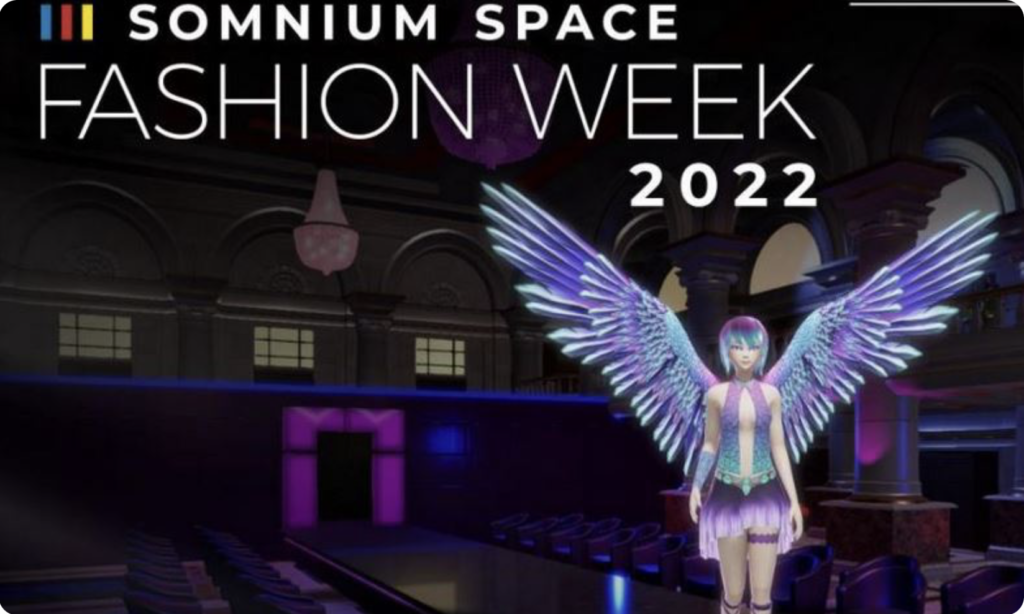
The Somnium Space Fashion Week will be held in association with Teslasuit, in Prague physically but also in the Somnium Space Metaverse – which means it’s a phygital event (physical and digital).
This event will change the way fashion is presented to the public because it allows people from all over the world to connect in one location simultaneously – using the newest XR technologies on the market including Virtual Reality, Augmented Reality, Full Body Trackers and Holograms. ...
To showcase the capabilities of Somnium Space platform during the opening mixed reality event on September 7th in Prague’s VR Play Park, models will be wearing full body tracking and full body haptic Teslasuits, VR headsets and gloves. Their digital avatars, at the same time, will be walking on the virtual catwalk in a newly-built NFT Fashion World. Supported by panel discussions and a physical fashion show, this phygital event will be held over the week. ...
How can you join in?
Anyone can witness this historical moment for the tech and fashion industry by joining the Somnium Space Fashion Week online here. Livestream starts on the 7th September at 16:00 CEST / 15:00 GMT via Somnium Space in VR or 2D. ...
The NFT of Your view matter is a one-off, non-editioned, token created for MetaKovan—its ownership and provenance captured on a permanent ledger on the blockchain—and has been minted on Polkadot, a platform regarded as having the lowest total electricity consumption and total carbon emissions-per-year of all crypto platforms.
Being conscious of the environmental cost of minting NFTs is, Eliasson says, of enormous importance, and something that he discussed with MetaKovan. ...
A prestigious Chinese music institution has “enrolled” a virtual student who is an artificial intelligence (AI) singer, generating huge interest from the mainland public.
The AI singer, named Luya, will start as a first-year student at the Shanghai Conservatory of Music with the music engineering department next month, the university announced on Tuesday.
Besides studying normal subjects like other students, Luya will also join the research and development programme for AI technology-assisted music creation, Chen Shizhe, a professor from the department, told news site sohu.com. ...
Luya appears as a cartoon girl with two large eyes and pink hair arranged in two buns and a short braid. She was developed by leading mainland AI product company iFLYTEK earlier this month. ...
“She hopes to receive more professional training at the Shanghai Conservatory of Music to better work in the music industry, produce more pleasing music and pursue new musical possibilities,” the company said. ...
News about the AI singer’s new identity as a student has been viewed more than 50 million times on Weibo, and attracted thousands of comments. ...
Franciscan monk Paolo Benanti is the brains behind the Rome Call, a pact aimed at making sure artificial intelligence is developed with ethics in mind. He tells us why religions should be part of that conversation.
PAOLO BENANTI wakes early in the monastery in Rome where he lives to begin each day in prayer. So far, so conventional – for a monk. But outside of the monastery, Benanti’s life is less typical. He trained as an engineer and ethicist, and he now spends his time at the nearby Pontifical Gregorian University, where he teaches the ethics of artificial intelligence. He also frequently walks over to visit Pope Francis himself, to whom he has become a trusted adviser on AI.
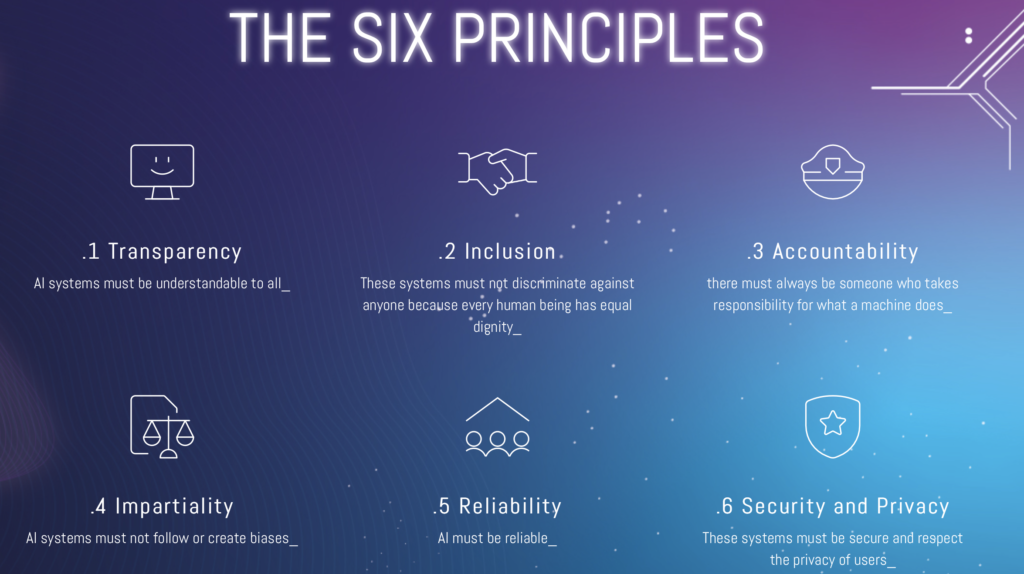
This has become an important topic for the pontiff because he fears it could adversely affect the most vulnerable members of society, and increase the world’s already stark inequality. To fight against this, Benanti helped draft the Rome Call, a commitment, signed in March 2020 by global tech firms IBM and Microsoft, that human dignity will always be a priority as AI is rolled out worldwide. With an expanded version of the pact now in the works, New Scientist spoke with Benanti about the role of religions in the control of technology, if an AI apocalypse is on the cards and whether an algorithm could ever replace God. ...
... Effect House offers a series of tutorials with asset kits to help users get started with creating each of the types of AR effects the app supports. From there, users can swap out original 2D and 3D assets, and various interactions can be programmed with visual scripting—no coding required. The effects available include hand tracking, body tracking, head tracking, face masking and morphing, action-driven character animation, facial animations inset within a virtual scene and randomizer 2D selection effects. ...
The hand tracking functionality allows users to map objects onto each finger and add interactions such as animations and toggling visibility based on gestures. Body tracking supports things like virtual clothing mapped onto the user's body. Similarly, head tracking allows items such as animated virtual hats to appear on the user's head with occlusion. The face mask effect is tracked onto the user's facial features, while the face morphing effect can distort each facial feature. These head and face tracking effects also support gesture control, such as open and closed mouth as an interaction trigger. The remaining AR effects for TikTokare somewhat different, including the character driver, which allows the user to control an animated virtual character based on their movements. The facial inset effect composites the user's face into an entirely virtual animated scene. Finally, the 2D randomizer quickly rotates through a selection of 2D images so that the user can select one at random. ...
Walt Disney Studios signed a multi-year deal with Nokia to provide virtual reality cameras and related software to the studio’s marketers and filmmakers, who will make VR content linked to Disney’s theatrical releases.
Jamie Voris, Walt Disney Studios chief technology officer, said the company’s aim is to “bring extraordinary experiences to audiences around the world, and specially-created VR content is one more way we can transport people even further into the worlds our filmmakers create.” ...
Nokia and Disney already used the OZO to create two 360-degree videos — a red-carpet broadcast and and a cast interview — for the April premiere of “The Jungle Book.”
“Virtual reality represents a new frontier in storytelling, and we’re thrilled to be bringing this VR technology to the team at Disney,” said Ramzi Haidamus, president at Nokia Technologies. ...
PhilNote: the opponents are describing this as a black and white issue, when in fact it is nuanced and there effort to kill it is just as misguided as any effort to implement it without ethical guardrails in place first.
More than 25 human and digital rights organizations including the American Civil Liberties Union, Electronic Privacy Information Center and Fight for the Future sent a letter to Zoom demanding the company end any plans to incorporate emotion AI features in its meeting software. ...
... On Wednesday more than 25 human and digital rights organizations including the American Civil Liberties Union, Electronic Privacy Information Center and Fight for the Future sent a letter to Zoom demanding the company end potential plans to incorporate emotion AI features in its software. The letter comes in response toreporting in Protocol in April highlighting Zoom’s consideration of incorporating AI in its virtual meeting software to detect and analyze people’s moods and emotions. ...
AI-based features for assessing people’s emotional states are showing up in virtual classroom platforms and technology used in vehicles to detect driver distraction, signs of drunkenness and road rage. Behind the scenes, companies that produce synthetic images and video data are supplying raw materials used to train emotion AI and related systems, but sometimes those companies are removed from the end uses of the data they provide.
... learning the fundamentals of soccer could one day help robots to move around our world in more natural, more human ways.
“In order to ‘solve’ soccer, you have to actually solve lots of open problems on the path to artificial general intelligence [AGI],” says Guy Lever, a research scientist at DeepMind. “There’s controlling the full humanoid body, coordination—which is really tough for AGI—and actually mastering both low-level motor control and things like long-term planning.” ...
... Lofelt specializes in haptic technology, which can replicate the experience of touch in a virtual setting through forces or vibrations in a hardware device, like a smartphone or videogame console controller.
The company’s key product was Lofelt Studio, a suite of tools that made it easy for developers to design how they wanted haptics in mobile apps and PlayStation 5 games to feel. ...
To achieve this hyperreal effect, Metaphysic uses a neural network that’s patterned after the human brain. In the simplest terms, their technology processes data via an adaptive computing system that improves continuously. In the case of @deeptomcruise, this network inputs every image of Tom Cruise to output his every expression. His every wrinkle. The way Cruise’s eyebrows furl when he talks. ...
I think the most fundamental problem of the misuse of AI-generated synthetic media is the erosion of the public's trust in all online media,” says Siwei Lyu, director of University of Buffalo’s Media Forensic Lab and the founding co-director of the university’s Center for Information Integrity (CII). “By creating illusions of an individual's presence and activities that did not occur in reality, deepfakes can cause actual harm when they are weaponized.” ...
Applying Tom Cruise’s face onto Fisher’s, Umé says, “is more than just pushing a button.” To that end, Umé describes the technology the way a 19th-century pictorialist might have: weaving his AI-generated content from a scientific to an expressive medium.
According to Graham, this approach distinguishes Umé from the growing number of people working in synthetic media. ...
Ultimately, Umé says, his goal is to create such an immersive experience that he’s personally able to sit at his kitchen table and have breakfast with his grandmother who lives halfway across the world and to really feel like she’s right there with him, in the room.
Adding, “I want to be able to save that memory and share it with my grandkids.” ...