Apple buys startup that makes music with artificial intelligence
... Technology developed by AI Music can create soundtracks using royalty-free music and artificial intelligence, according to a copy of its now-defunct website. The idea is to generate dynamic soundtracks that change based on user interaction. A song in a video game could change to fit the mood, for instance, or music during a workout could adapt to the user’s intensity. ...
While relatively small, the deal is one of the tech giant’s few acquisitions in the past year. Apple’s last reported purchase was also for a music company: Primephonic. That startup ran a classical music streaming service that Apple intends to turn into an app tied to Apple Music this year. ...
See the full story here: https://www.livemint.com/companies/news/apple-buys-startup-that-makes-music-with-artificial-intelligence-11644278429572.html
Meta moves to tackle creepy behaviour in virtual reality
... Meta has now announced a new feature, Personal Boundary, which begins rolling out on 4 February. It prevents avatars from coming within a set distance of each other, creating more personal space for people and making it easier to avoid these unwanted interactions.
It stops others "invading your avatar's personal space", said Meta.
"If someone tries to enter your Personal Boundary, the system will halt their forward movement as they reach the boundary." ...
See the full story here: https://news.yahoo.com/virtual-reality-creepy-behaviour-abuse-140447911.html

An Artist Placed a Cube Made From $11.7 Million Worth of Gold in Central Park—Protected By Its Own Security Detail
The German artist Niclas Castello is, of course, launching a cryptocurrency alongside the physical work.
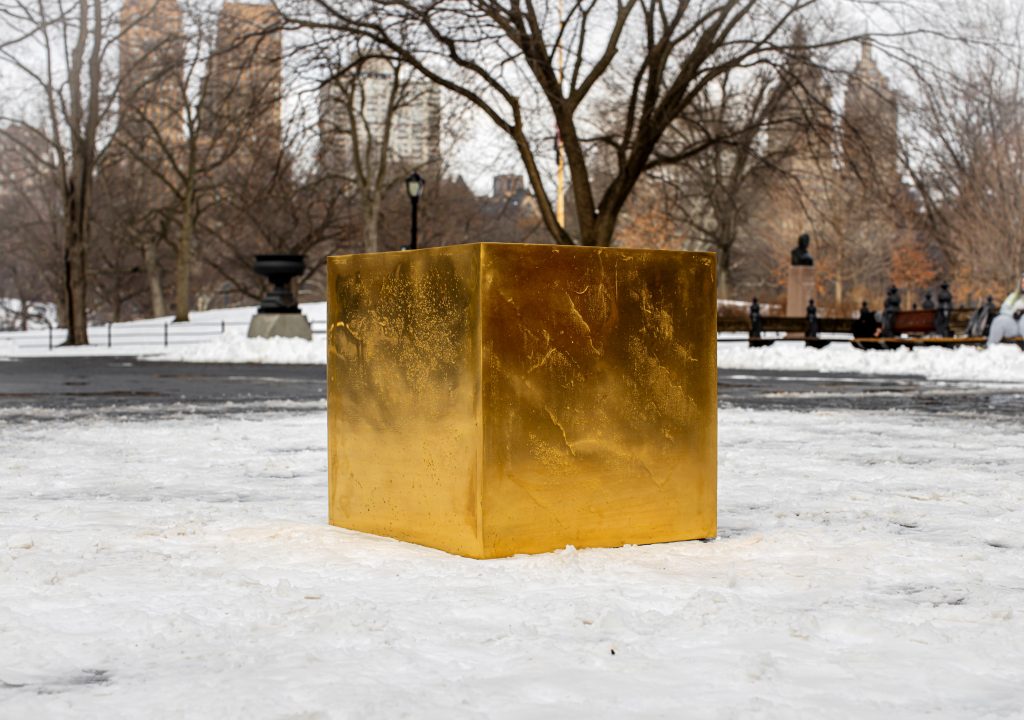
This morning, joggers in New York’s Central Park may have come across a curious, rather illustrious sight. A cube composed of 400 pounds (186 kilograms) of pure 24-karat gold, conceived by the German artist Niclas Castello who has billed it as a conceptual “socle du monde” (base of the world) sculpture for our time, was wheeled out to the Naumburg Bandshell this morning at around 5 a.m.
Although the work is not for sale, according to the artist’s team, based on the current price of gold at $1,788 per ounce, its material worth is around $11.7 million. Flanked by a heavy security detail, the 410-pound work is set to be displayed in the park until the day’s end. ...
See the full story here: https://news.artnet.com/art-world/solid-gold-cube-central-park-2067281?utm_content=buffer4691f&utm_medium=social&utm_source=twitter.com&utm_campaign=news&fbclid=IwAR2-W0bSOdFl4nOqrcszxLdxRQVIreyWiEcCS8wIWILbbMfevIlK7XSDiho
Mozilla is shutting down its VR web browser, Firefox Reality
Mozilla is instead directing users who still want to utilize a web browser in VR to Igalia’s upcoming open source browser, Wolvic, which is based on Firefox Reality’s source code. This browser will be available for download starting next week, so users won’t have to go without — they’ll just have to make the switch. ...
Igalia touts its commitment to the XR space — XR being the umbrella term that covers both virtual reality and augmented reality and similar technologies. But its own announcement hints that the company felt Mozilla’s efforts on this front had stalled, noting how it’s excited to take up the experiment and “continue this work as a complete project.” ...
Initially, the Wolvic browser will run on Oculus, HTC Vive Focus, Pico Interactive, Daydream, Huawei VR Glasses and open source Lynx devices. However, the browser that launches next week will still be in a “beta” phase as it works to transition some of the features Mozilla had previously provided over to its own browser. ...
See the full story here: https://techcrunch.com/2022/02/03/mozilla-is-shutting-down-its-vr-web-browser-firefox-reality/

22 Augmented Reality Trends to Keep an Eye on for 2022
PhilNote: Tom Emrich has created another excellent list of trends to watch.
#11 More capture stages, advancements in software, and solutions aimed at the mainstream set volumetric video up for its best year yet
#16 AR experiences anchored in space incentivize users to safely return to parks, stadiums, malls, museums and more
Ethics & Human Impact
#22 As AR gets more contextual concerns around privacy and safety become an even greater priority to address
See the long article here: https://www.linkedin.com/pulse/22-augmented-reality-trends-keep-eye-2022-tom-emrich/?trk=eml-email_series_follow_newsletter_01-hero-1-title_link&midToken=AQG9gi1ZLqruRw&fromEmail=fromEmail&ut=2X2FQeYwvn5G81
Forget Meta’s Sleek Virtual Reality. Maybe The Metaverse Is Fun, Friendly, 8-Bit — And Already Here
Welcome to Gather Town, the $700 million low-res online universe spreading like wildfire across Silicon Valley, college campuses and, soon, a workplace near you.
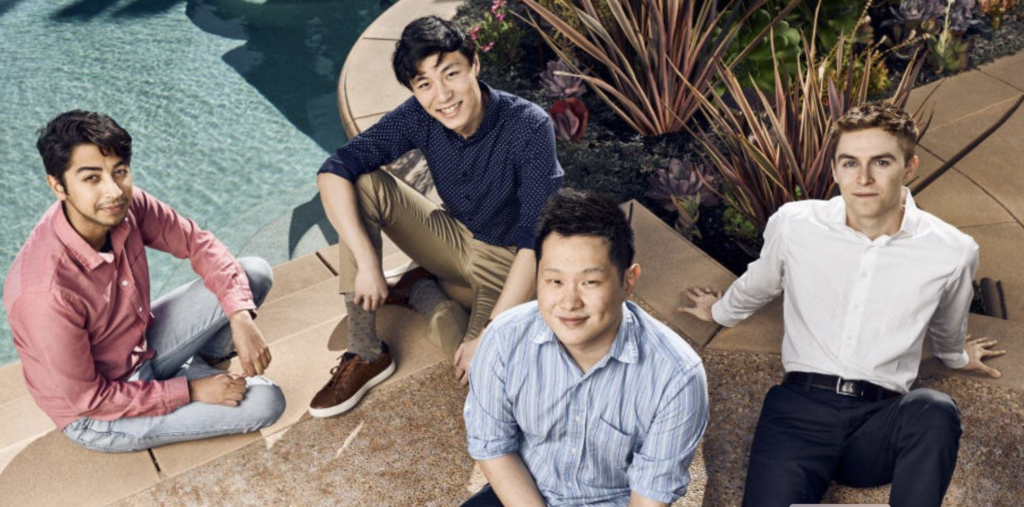
When Phillip Wang was pitching Gather, his six-month-old startup, to VCs in late 2020, he would invite them up to the rooftop above his office. The space is a sweet spot to discuss a deal, illuminated by the neon green lights of a sprawling city framed by clouds in pink and orange hues. Best of all, he could brag to potential investors about the price. For a company Gather’s size—25 employees at the time—it ran just $175 a month to rent the entire building. That’s because the office is virtual, existing entirely inside the app the company created. These days, with new coronavirus variants delaying many employees’ return to physical spaces, 100,000 people make their daily commute by logging onto Gather’s website. More than 15 million people have used it at least once—many for virtual conferences but also for birthday parties, rock concerts and weddings.
“A lot of people think about the metaverse as sci-fi, like it’s five to seven years away,” says Wang, whose words come tumbling out at triple speed. “They imagine these dystopian worlds owned by large tech companies.”
To the spiky-haired 23-year-old CEO, the metaverse is already here, and it’s rather friendly and welcoming. Instead of a sleek alternate reality, Gather’s virtual world is decidedly low-res, evoking the nostalgic feel of a 20-year-old Pokémon video game. Users move their 2D avatars around with the arrow keys on their keyboard, panning into and out of video chat conversations as they stroll past other folks. Whether it’s simply a more interactive Zoom or a cornerstone of our collective future, Gather has the attention of Silicon Valley. Founded by four recent grads (all still 26 or younger) at the onset of the pandemic, the startup has rapidly grown to 75 employees and is backed by top-tier venture capitalists who have invested $77 million, most recently in November at a $700 million valuation. Gather declined to disclose revenue, but Forbes estimates it booked more than $10 million last year, its first full year of operation. ...
They released the first version in May 2020. It spread quickly across colleges. A University of Chicago professor and students recreated their school so that people could study together or meet up around campus; members of the physics faculty were soon discovered playing poker in a lounge. Silicon Valley leaders were quick to notice. ...
See the full story here: https://www.forbes.com/sites/kenrickcai/2022/02/02/the-future-is-low-res/?sh=45ba0ed24444