Entertainment center or intellectual incubator? Arena STEM attempts both at Garden State Plaza
...Just opened at Westfield Garden State Plaza in Paramus, N.J., is Arena STEM, an education, entertainment, and retail center whose goal is to expose children to technology in fun and interactive ways. The center contains a Virtual Reality Pavilion, a DJI Robomaster Battlefield, a Drift Track, and a Drone Field and Aqua Zone.
Arena STEM offers individual instructions and classes, does birthday parties, and hosts private events accommodating up to 100 guests. ...
"It’s a fun destination that utilizes STEM principles and fosters critical thinking and innovation," said Arena STEM CEO Sergei Manevich. ...
See the full story here: https://www.chainstoreage.com/entertainment-center-or-intellectual-incubator-arena-stem-attempts-both-garden-state-plaza

Inside the secret world of U.S. intelligence with Stanford scholar Amy Zegart
“Spy-themed entertainment has become adult education and appears to be influencing how Americans think about hot-button intelligence issues,” said Zegart, a senior scholar at the Freeman Spogli Institute for International Studies (FSI) and the Morris Arnold and Nona Jean Cox Senior Fellow at the Hoover Institution.
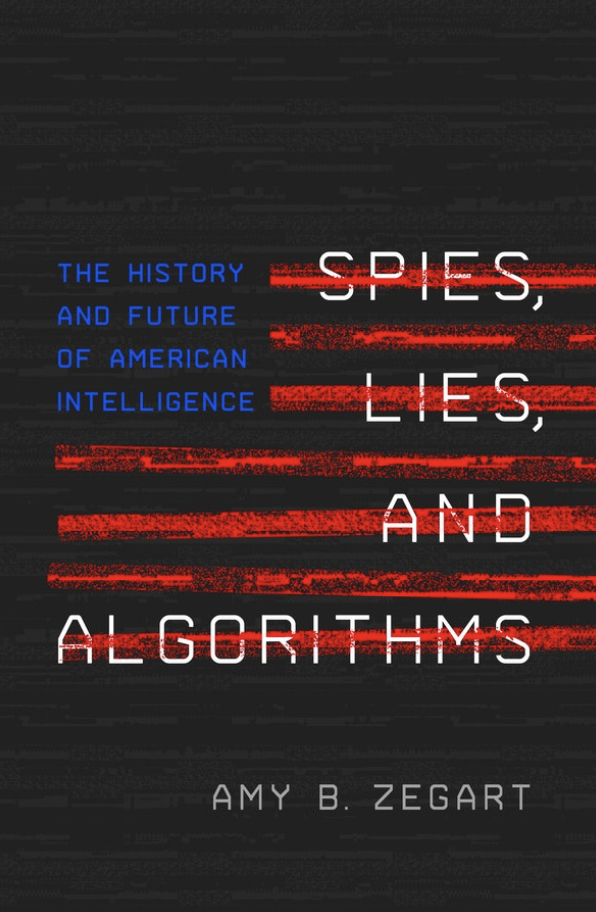
In Spies, Lies, and Algorithms: The History and Future of American Intelligence (Princeton University Press, 2022), Zegart also traces how American espionage has evolved over the centuries and what’s at stake in its future as technology rapidly changes and transforms all aspects of government and society. ...
When Zegart showed up to teach on the first day of her class, she expected protestors outside her classroom and empty seats inside. Instead, it was standing room only, with students eager to learn more about U.S. intelligence, Zegart recalled. ...
Zegart found that those who watched the TV show 24 – which frequently depicted the use of violence and torture to extract information from terror suspects – were statistically more likely to approve of waterboarding and justify other extreme forms of counterterrorism methods, like rendition, than those who didn’t tune in to spy-themed dramas. ...
Over the following years, Zegart has seen a similar lack of understanding among policymakers about how intelligence agencies operate. For example, in 2009 during the confirmation hearings for Leon Panetta to become the next director of the CIA, Zegart noticed members of the Senate Intelligence Committee using 24plotlines in the questions they posed to the nominee. ...
Understanding intelligence in a digital age ...
Intelligence is no longer shrouded in classified files at Langley; it’s found online in public spaces like Google Earth, where anyone can uncover government secrets hidden in plain sight. For example, thanks to the thousands of satellite images readily available, Stanford scholars – not special agents with security clearances – were able to sleuth out nuclear programs in Iran and North Korea. ...
When Russia invaded Ukraine in 2014, the most important intelligence about the annexation didn’t come from classified information, it came from selfies that Russian soldiers posted on social media with Ukrainian highway signs in the background, she pointed out. ...
Simultaneously, intelligence agencies themselves have also had to balance the advantages and disadvantages that new technologies, like artificial intelligence, quantum computing and social media, offer in gathering intelligence around the world. ...
“It’s an unnatural act for secret agencies to be public, but it’s really important for the American people to understand what they do,” Zegart said.
See the full story here: https://news.stanford.edu/2022/01/31/inside-secret-world-u-s-intelligence/
How Facebook Is Morphing Into Meta
While some workers were excited about Meta’s pivot, others questioned whether the company was hurtling into a new product without fixing issues such as misinformation and extremism on its social platforms. Workers were expected to adopt a positive attitude toward innovation or leave, one employee said, and some who disagreed with the new mission have departed. ...
Facebook’s pivot to the metaverse started in its top ranks. In September, Mike Schroepfer, the long-serving chief technology officer, said he would step down by the end of 2022. In his place, Mr. Zuckerberg appointed Andrew Bosworth, known as “Boz,” who has for the past few years led development on products like the Oculus headsets and Ray Ban Stories smart glasses. ...
The two had met at Harvard in an artificial intelligence class, when Mr. Zuckerberg was a student and Mr. Bosworth was a teacher’s assistant.
See the full story here: https://www.nytimes.com/2022/01/31/technology/facebook-meta-change.html

‘Virtual influencers’ are here, but should Meta really be setting the ethical ground rules?
Earlier this month, Meta announced it is working on a set of ethical guidelines for “virtual influencers” – animated, typically computer-generated, characters designed to attract attention on social media. ...
A competitive industry specialising in the production, management and promotion of virtual influencers has already sprung up, although it remains largely unregulated. ...
So far, India is the only country to address virtual influencers in national advertising standards, requiring brands “disclose to consumers that they are not interacting with a real human being” when posting sponsored content. ...
Indeed, despite their short lifespan, virtual influencers already have a history of overt racialisation and misrepresentation, raising ethical questions for producers who create digital characters with different demographic characteristics from their own.
But it’s far from clear whether Meta’s proposed guidelines will adequately address these questions. ...
Becky Owen, head of creator innovation and solutions at Meta Creative Shop, said the planned ethical framework “will help our brand partners and VI creators explore what’s possible, likely and desirable, and what’s not”.
This seeming emphasis on technological possibilities and brand partners’ desires leads to an inevitable impression that Meta is once again conflating commercial potential with ethical practice. ...
See the full story here: https://theconversation.com/virtual-influencers-are-here-but-should-meta-really-be-setting-the-ethical-ground-rules-175524

A Decade After SOPA/PIPA, It’s Time to Revisit Website Blocking
The core argument against the House and Senate bills known as the Stop Online Piracy Act and Protect IP Act, respectively (SOPA/PIPA), was that blocking piracy websites would undermine the Internet’s technical foundations. But it was a canard. ...
Not all content on the Internet deserves to exist and be protected by law. Many countries have shown it is possible to take reasonable, targeted measures against illegal material without undermining their commitment to “a free and open Internet.”
It is a false binary to suggest the Internet can only be completely free or closed. What matters is what and how some things are blocked, where the lines are drawn, and how they are overseen by courts.
Courts in Australia, the European Union, and elsewhere have demonstrated that website blocking is a fair, effective, and proportionate tool to target major piracy sites and that it does not undermine human rights, free speech, or net neutrality.
