Henry Kissinger and Eric Schmidt take on AI
The Age of AI. By Henry Kissinger, Eric Schmidt and Daniel Huttenlocher. Little, Brown and Company; 272 pages; $30. John Murray; £20
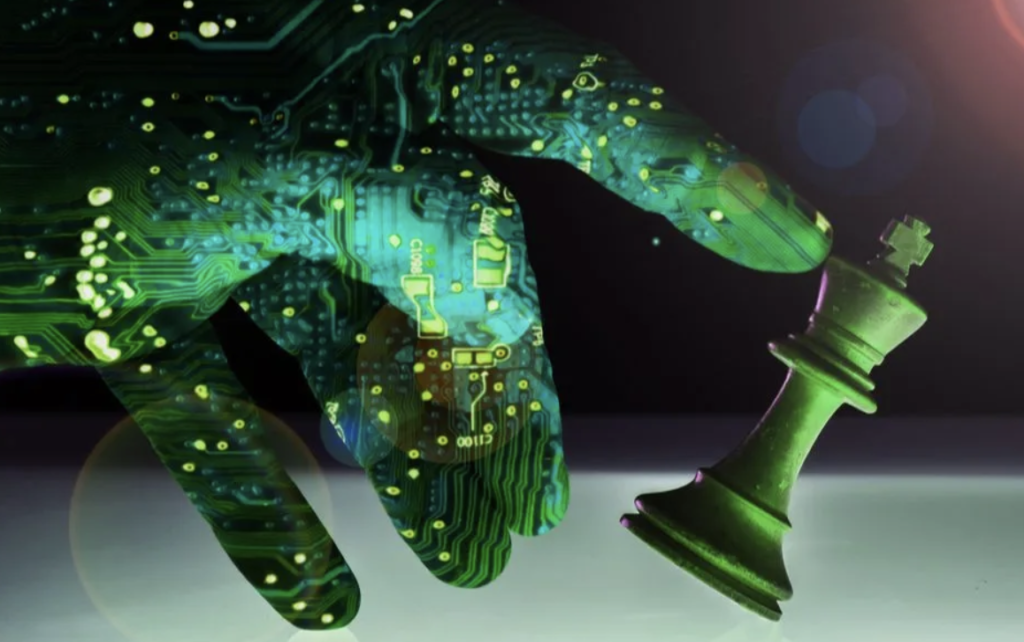
Behind the success was a deeper truth: the algorithm was able to spot aspects of reality that humans had not contemplated, might not be able to detect and may never comprehend. The implications of this general development for science, business and warfare—and indeed, for what it means to be human—are the subject of these ruminations by Henry Kissinger, America’s pre-eminent living statesman, Eric Schmidt, the former boss of Google, and Daniel Huttenlocher, an expert on artificial intelligence (ai) at mit.
In their telling, the most important way that ai will change society is by redefining the basis of knowledge. “Whether we consider it a tool, a partner, or a rival, [ai] will alter our experience as reasoning beings and permanently change our relationship with reality,” the authors write.
...A winning manoeuvre may be horrific yet inscrutable, ...
If an ai co-pilot or surgical robot experiences an emergency, who should seize the controls, the human operator or the algorithm? The book calls for a “partnership” between people and machines, but is silent on how to achieve it. ...
See the full story here: https://www.economist.com/books-and-arts/2021/11/20/henry-kissinger-and-eric-schmidt-take-on-ai

Gemini Raises $400 Million To Build A Metaverse Outside Facebook’s Walled Garden
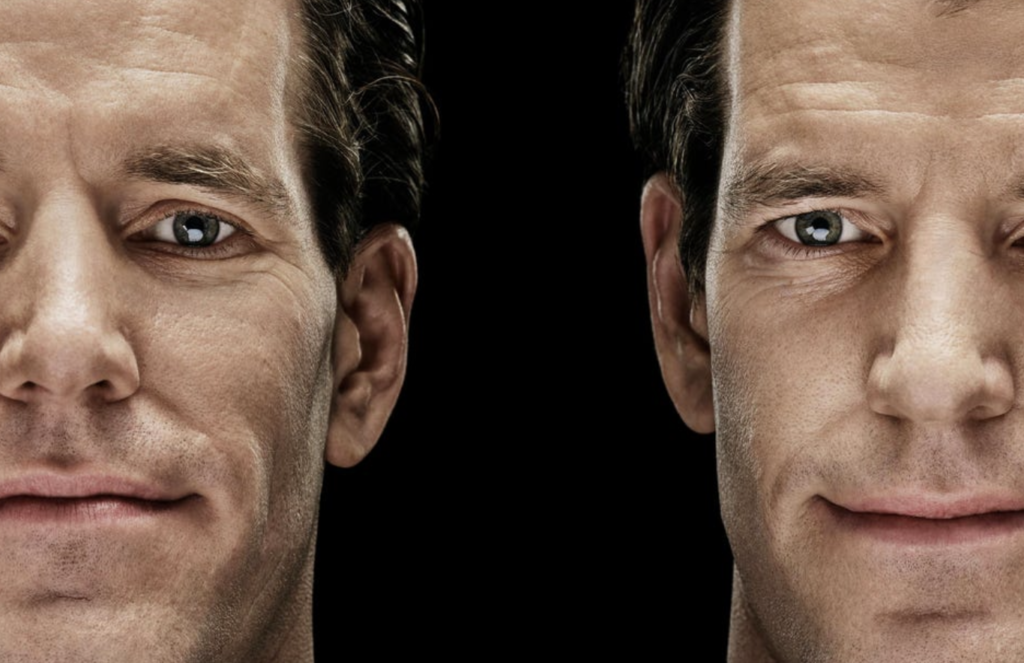
“There's these two parallel paths, in terms of technology right now,” says Cameron Winklevoss, 40, speaking from his home in California. “There's a centralized path, like Facebook or Fortnite, that is one step away from being a metaverse, and that’s totally fine. But there is another path, which is the decentralized metaverse and that's the metaverse where we believe there's greater choice, independence and opportunity, and there is technology that protects the rights and dignity of individuals.”
...Instead of the ad-driven model that has proved so lucrative to social media companies (and fertile for misinformation and political influence) most metaverses will require tiny amounts of cryptocurrency, similar to “gas” used to run other decentralized applications. While revenue models will certainly proliferate, the more demand there is for these tokens, the higher the price, increasing the value of the very same currency the users now own and letting the wealth accumulate to users instead of shareholders.
...The difference between these and other efforts being led by truly open-source startups is that while Big Tech is trying to avoid obsolescence, the Winklevii are investing in startups that assume those companies are already redundant, according to Gemini’s newest board member, Sachin Jaitly.
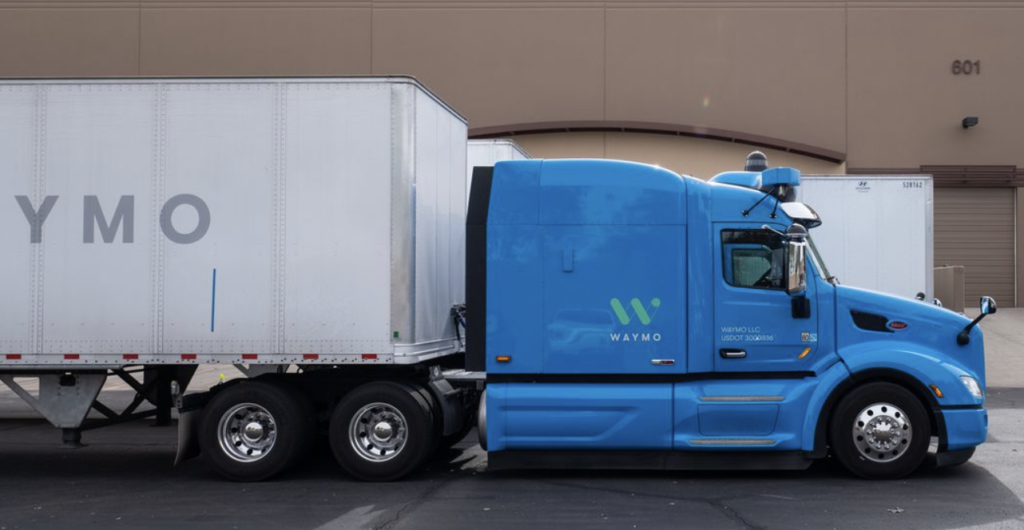
UPS will make deliveries using Waymo’s autonomous Class 8 trucks
Self-driving 18-wheelers hit the highways for UPS!
See the full story here: https://wmleader.com/technology/268380/ups-will-make-deliveries-using-waymos-autonomous-class-8-trucks/
Amazon-sponsored artwork that ‘learns’ debuts at Smithsonian
The artificial intelligence at the heart of a new art exhibit, “me + you,” does not judge you necessarily, but it does analyze and interpret what you have to say.
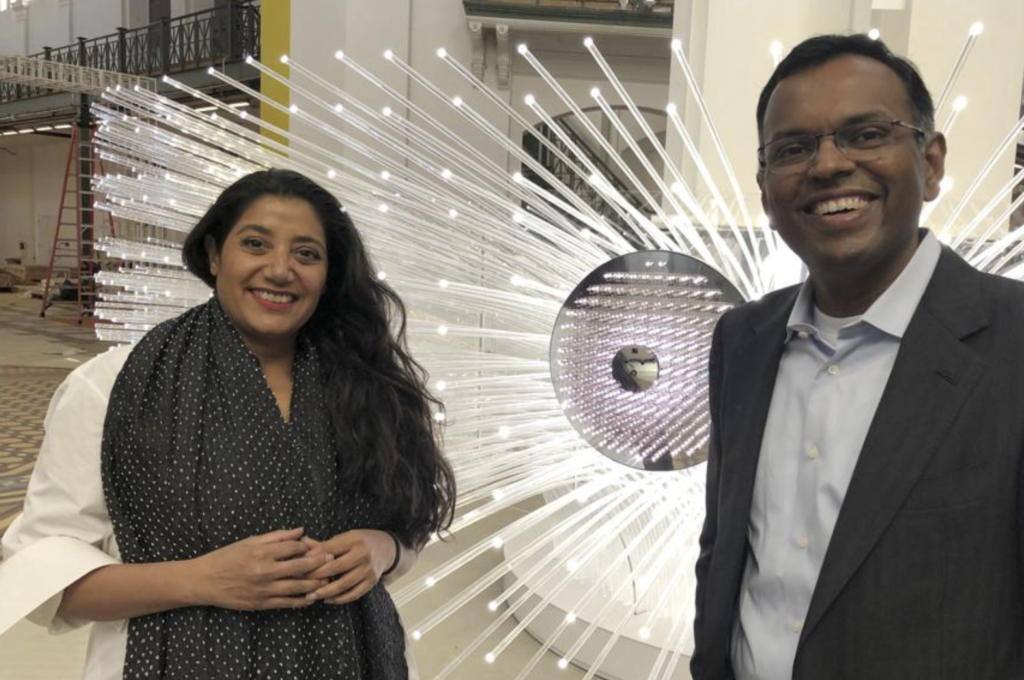
Sponsored by Amazon Web Services, the sculpture by artist Suchi Reddy listens to what you have to say about the future and renders your sentiment in a display of colored lights and patterns.
The artwork is a centerpiece of a new exhibit at the Smithsonian Arts and Industries Building, which is opening to the public for the first time in 20 years. The exhibition, called Futures, opens Nov. 20.
Viewers are invited to interact with the sculpture, which listens for the words “My future is ...” at several circular listening posts integrated into the sculpture.
The words and the sentiments behind them are then reinterpreted as a pattern of colored lights. On a very basic level, positive emotions tend to translate into soothing blends of blue, green and purple. Words that suggest anger might prompt a cascade of colors on the opposite spectrum of the color wheel. If you use a swear word, the lights will turn red.
...
“In a world that feels perpetually tumultuous, there is power in envisioning the future we want, not the future we fear,” said Rachel Goslins, director of the Arts and Industries Building.
The exhibition is scheduled to remain open through July 6. Eventually, the “me + you” sculpture will be relocated to Amazon’s new HQ2 headquarters in Arlington, Virginia.
See the full story here: https://apnews.com/article/technology-business-arts-and-entertainment-sculpture-artificial-intelligence-de82df3baf9c8376fc0c9958c7454543
Disentanglement Is the Next Deepfake Revolution
PhilNote: easy-read long article with many examples.
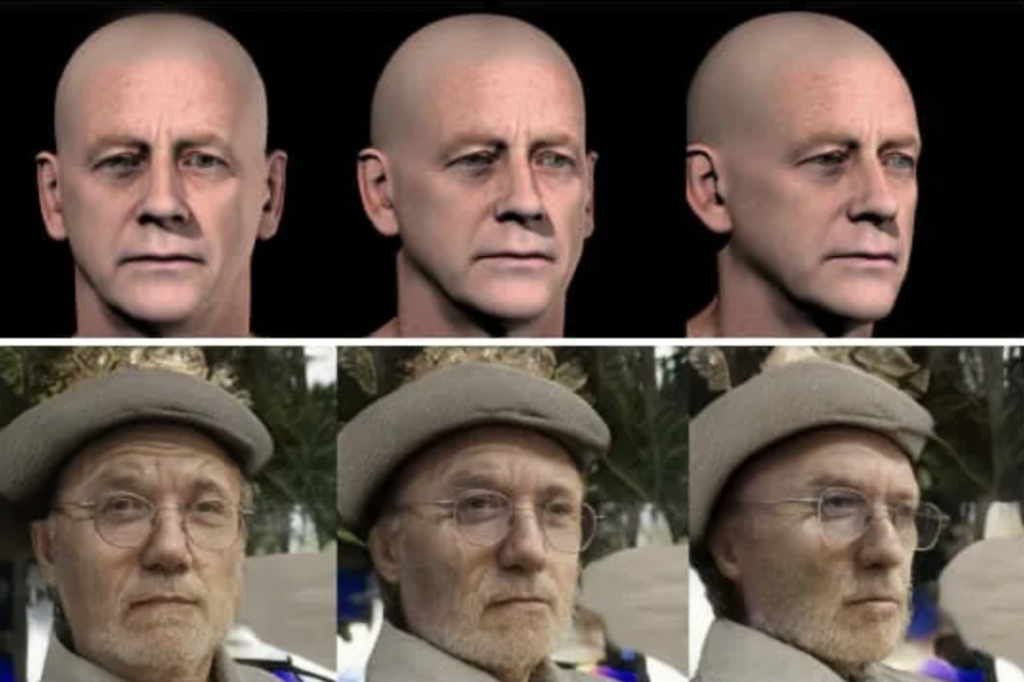
New research from Israel proposes a novel method of using synthetic data, such as CGI heads, to bring deepfaking into the 2020s, by truly separating facial identities (i.e. the essential facial characteristics of ‘Tom Cruise’, from all angles) from their context (i.e. looking up, looking sideways, scowling, scowling in the dark, brows furrowed, eyes closed, etc.).
...
this represents a way forward for a fundamental separation of instrumentality (such as ‘change the angle of the head’, ‘create a frown’) from identity, offering a path to a high-level rather than ‘derivative’ image synthesis-based deepfake framework.
The new paper is titled Delta-GAN-Encoder: Encoding Semantic Changes for Explicit Image Editing, using Few Synthetic Samples, and comes from researchers at Technion – Israel Institute of Technology.
See the full story here: https://www.unite.ai/disentanglement-is-the-next-deepfake-revolution/
In the push for development, is the U.S. prepared to regulate AI?
There are three levels of unintended outcomes that AI regulators and practitioners must monitor:
- AI systems: They won’t always consistently deliver the correct results every single time. We need to design human oversight into AI systems, often referred to as “human-in-the-loop,” to create a system of checks and balances. Regulations and standards in applications, such as autonomous vehicles, are needed for safety, as they can cause direct and immediate harm.
- The business world: AI is creating a different way for companies to compete, and the increasing access to data greatly changes the market dynamic. We need regulations that are similar to antitrust concerns for businesses utilizing AI technology and collecting data.
- Societal impact: In the future, there could be job displacement of human workers. However, strong regulations and restrictions of AI applications are not appropriate or adequate remedies for potential job loss.
See the full story here: https://venturebeat.com/2021/11/17/in-the-push-for-development-is-the-u-s-prepared-to-regulate-ai/
Unveiling the Open Meta DAO
Following its formation in Zug Switzerland, the Open Meta Association announced that in June of 2021 it raised $4.5 million at a $100 million valuation in a token presale to create Open Meta DAO, which will serve as an organizing body for the growth of an open metaverse built on web3 infrastructure, owned and controlled by the community.
The Open Meta Association was established by Ryan Gill, Founder and CEO of Crucible, a web3 company that designs and creates software to enable game developers to build within the pen metaverse. Its core technology is Emergence SDK, a sovereign portable digital identity for players in blockchain-based gaming which will launch in 2022 on Unity and Unreal Engine. Crucible sits in the Innovation Labwith AAA publisher Ubisoft and is an alum of Outlier Ventures’ Base Campaccelerator.
...
The Open Meta DAO will serve as an outlet for its initial 50+ founding members. These members represent different protocols and networks, and together they will use the Open Meta DAO to invest more holistically in blockchain-agnostic initiatives that support the metaverse, both in gaming and the growth of the ecosystem at large.
The Open Meta Association will formally mint the Open Meta DAO in January of 2022 with the distribution of its governance token (“DAO Tokens”) to the founding members from its June presale.
In 2022, Open Meta DAO will host a public sale of its DAO Tokens, creating a treasury to provide transparent grants for community projects that facilitate an Open Metaverse....
See the full story here: https://openmetaverse.substack.com/p/unveiling-the-open-meta-dao?fbclid=IwAR3lMjwOWu7fGpBsb03RZBVQdf-U_3knfHhJrCOu1U9ukC9Ce-fT_-AHefU

Augmented reality: Puratos launches digital support tool for bakers, patissiers and chocolatiers
The app is user-friendly for artisan, industrial and in-store bakeries who need expert advice about recipes and technical challenges.
Ramping up digitalization
Digital AdvisAR forms part of the digitalization strategy of Puratos, which has 600 technical experts in 71 countries.
...The app has universal symbols that can easily be interpreted by users across the world and experts can speak to customers live during the interaction which was an important feature in its development, says Surdiacourt.
Digital AdvisAR was tested in several countries during the pandemic and will be launched first in Austria, Brazil, France, Italy, Turkey and the US. The app is available in the user’s language. ...
Digital AdvisAR can be downloaded from a regular app store. In-person visits from technical advisors will continue when issues cannot be resolved virtually.
See the full story here: https://www.foodingredientsfirst.com/news/augmented-reality-puratos-launches-digital-support-tool-for-bakers-patissiers-and-chocolatiers.html