The Metaverse: How To Build A Massive Virtual World
... The major tech firms are already starting to build ‘proto-metaverse’ projects. Facebook’s recently released Horizon Workrooms, for instance, creates a virtual office, where you can interact with colleagues, collaborate on work and see what your co-workers are doing on their screens. ...
In the same way that today’s broadband networks use content delivery networks (CDNs) to push, say, Netflix movies closer to the end user, ensuring the data has less distance to travel, the metaverse will require similar ‘cheats’ to make sure the user experience isn’t spoiled.
Games such as Fortnite “actually predict to some degree” where the player is going to move next, said Heinz, meaning that Epic Games can “add just a little bit of latency into the experience and not ruin it”.
Similar techniques will need to be developed for the metaverse. “We will need to invent cheats there to... reduce latency and build the experience.”
See the full story here: https://www.forbes.com/sites/barrycollins/2021/09/25/the-metaverse-how-to-build-a-massive-virtual-world/?sh=42809fe96d1c
How augmented reality can advance nuclear operations
Deliver real-time access to authored content
Leverage the power of 5G
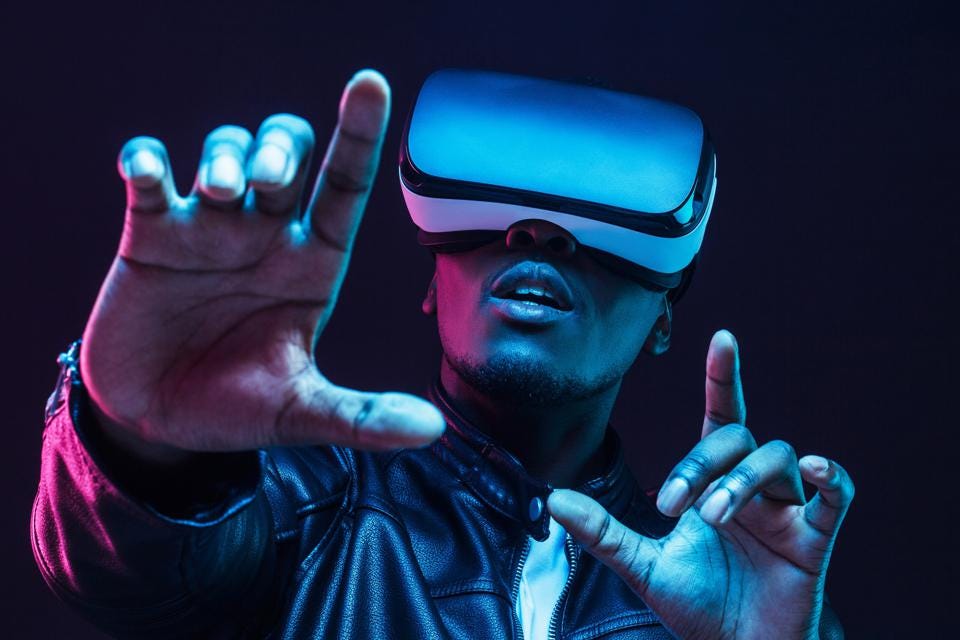
Nuclear facilities are considering adoption of 5G, driven by the edge-computing capabilities, support for remote operations and improved security and reliability. With 5G, the capabilities and value of AR applications increase, as 5G makes data more portable and AR systems faster, more secure and more resilient.
Maximising expertise within organisations is also a supported by AR and optimised by 5G. AR platforms can capture and disseminate knowledge from experts and distribute it to other staff, regardless of location, making employees more productive more quickly, with reduced classroom time.
The integration of AR with IIoT technologies will be greatly enhanced by 5G and the incorporation of sensors into legacy equipment. It will provide transparent information on demand, right at the location of frontline workers, enabling them to directly and securely access critical data. 5G also reduces latency, increases throughput and enables the deployment and connection of more sensors, providing more data for machine learning to help inform maintenance tasks.
Meanwhile advances in measures for device authentication, encryption of user traffic between devices and the network, and additional security protocols provide a new level of security required by utilities.
See the full story here: https://www.neimagazine.com/features/featurehow-augmented-reality-can-advance-nuclear-operations-9104303/
DREAMSCAPE TO DEBUT ‘MEN IN BLACK’ VIRTUAL REALITY EXPERIENCE
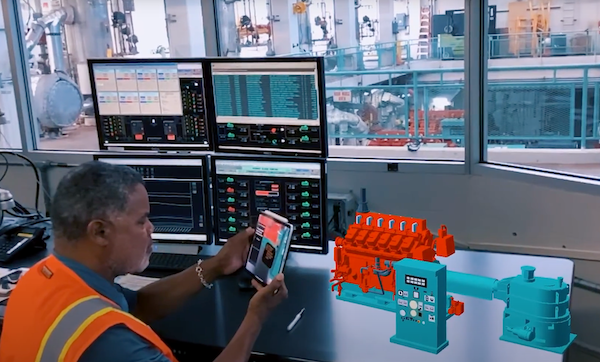
Dreamscape, the location-based immersive virtual reality company, will debut the interactive experience Men In Black: First Assignment at its flagship location in Westfield Century City on Friday, October 1.
“Location-based VR is an important part of Sony Pictures Virtual Reality’s strategy to grow our brands and expand them to new audiences,” said Jake Zim, senior vice president, virtual reality, Sony Pictures Entertainment. “Working with Dreamscape provides us with the unique opportunity to transport people into the immersive world of Men In Black and bring the magic of the franchise to longtime fans and new audiences alike.”
See the full story here: https://www.blackenterprise.com/dreamscape-to-debut-men-in-black-virtual-reality-experience/
Amazon Plans High-Tech Department Store Dressing Rooms
Amazon’s planned department stores will leverage technology to boost clothing sales. The company is testing concepts such as having customers use their phones to scan QR codes of apparel they’re interested in so employees can place the items in a dressing room. Customers could then request alternative items using a touchscreen that may prompt with additional suggestions based on their taste. Amazon is considering opening department stores next year, primarily as a way to sell clothing from Amazon’s private labels as well as select third-party brands that sell on Amazon.com.
“Amazon wants to see if the potential department stores can improve the brand recognition of its apparel while addressing some of the irritants of both online and bricks-and-mortar clothes shopping,” The Wall Street Journal says, noting the dressing rooms may be configured so employees could come and go discreetly, without face-to-face contact, and that eventually “robots or other forms of automation” could be used.
See the full story here: https://www.etcentric.org/amazon-plans-high-tech-department-store-dressing-rooms/https://www.etcentric.org/amazon-plans-high-tech-department-store-dressing-rooms/

Federal court rules Artificial Intelligence cannot be an ‘inventor’ under US patent law
The US District Court for the Eastern District of Virginia on Wednesday ruled that an artificial intelligence (AI) machine cannot be an inventor under the Patent Act. The action was a motion for summary judgement concerning two patent applications filed by Stephen Thaler for an AI machine called DABUS.
DABUS was listed as the inventor for Neural Flame—a light beacon that flashes in a new and inventive manner to attract attention—and Fractal Container—a beverage container based on fractal geometry. Thaler’s patent applications were rejected by the US Patent and Trademarks Office (USPTO) and he challenged this refusal as “arbitrary, capricious, an abuse of direction and not in accordance with the law”.
He filed this action seeking a declaration that a patent application should not be rejected only on grounds that there is no natural person identified as the inventor and that a patent application for an invention by AI should list the AI as the inventor when the criteria for inventorship has been fulfilled by the AI.
The court rejected Thaler’s contentions, holding that the definitions provided by Congress for “inventor” within the Patent Act reference an “individual” whose ordinary dictionary and statutory meaning is a natural person or a human being. Further, the usage of personal pronouns such as “himself or herself” and the verb “believes” in adjacent terms modifying the word “individual” makes it clear that Congress was referencing a natural person.
The court acknowledged that Thaler had provided several policy considerations, such as incentivising innovation and its disclosure as well as preserving the value of human inventorship. However, it held that the ultimate decision would lie with Congress.
In July, the South Africa patent office issued a patent listing DABUS as the inventor. Two days later, a federal judge from Australia also held that a nonhuman can be named as the inventor of a patent. However, US federal courts have consistently held that inventors must be natural persons. As AI technology evolves in sophistication, the US lawmakers and the judiciary will be increasingly grappling with the questions of expanding the scope of patent law.
See the full story here: https://www.jurist.org/news/2021/09/federal-court-rules-artificial-intelligence-cannot-be-an-inventor-under-us-patent-law/