The AI road not taken
AI research and development has focused on only a few sectors, ones that are having a net negative impact for humanity, MIT economistDaron Acemogluargues in “Redesigning AI,” a Boston Review book.
“Our current trajectory automates work to an excessive degree while refusing to invest in human productivity; further advances will displace workers and fail to create new opportunities,” Acemoglu writes. AI also threatens “democracy and individual freedoms,” he writes.
Acemoglu’s lead essay in “Redesigning AI” is followed by short responses from AI researchers, labor advocates, economists, philosophers, and ethicists. They discuss economic inequality, possible futures for workers, and what could happen next in AI.
In the excerpt below, Acemoglu explains why the path we’re on is not set and why the reflexive refrain of “But the market …” doesn’t hold up in the face of basic economics.
It can help us protect their privacy and freedom, too. Plenty of academic research shows how emerging technologies — differential privacy, adversarial neural cryptography, secure multiparty computation, and homomorphic encryption, to name a few — can protect privacy and detect security threats and snooping, but this research is still marginal to commercial products and services.
...Ordinary market forces — which fail to take account of externalities — may therefore deter the types of technologies that have the greatest social value.
... This same reasoning is even more compelling when new products produce noneconomic costs and benefits. Consider surveillance technologies. The demand for surveillance from repressive (and even some democratic-looking) governments may be great, generating plenty of financial incentives for firms and researchers to invest in facial recognition and snooping technologies. But the erosion of liberties is a notable noneconomic cost that it is often not taken into account. ...
See the full story here: https://mitsloan.mit.edu/ideas-made-to-matter/ai-road-not-taken
Veritone MARVEL.ai will create and manage voice models for Mythical Entertainment, whose shows reach 75 million YouTube subscribers
Rhett McLaughlin and Link Neal, better known as Rhett & Link, founders of creator-led content studio Mythical Entertainment and hosts of the most popular daily show on the Internet, "Good Mythical Morning," will use Veritone MARVEL.ai to create, manage, license and monetize their own hyper-realistic synthetic voices.
Veritone MARVEL.ai’s synthetic voice technology will enable Rhett & Link to level-up their content value by localizing its popular shows, developing new monetization channels and leveraging their branded voices to create new content opportunities.
"I cannot wait to hear my own synthetic voice speaking French," Rhett said. Added Link, "The possibilities for new content creation and connection with viewers beyond our core English-speaking audiences are endless."
See the full story here: https://finance.yahoo.com/news/top-digital-media-studio-mythical-130000480.html
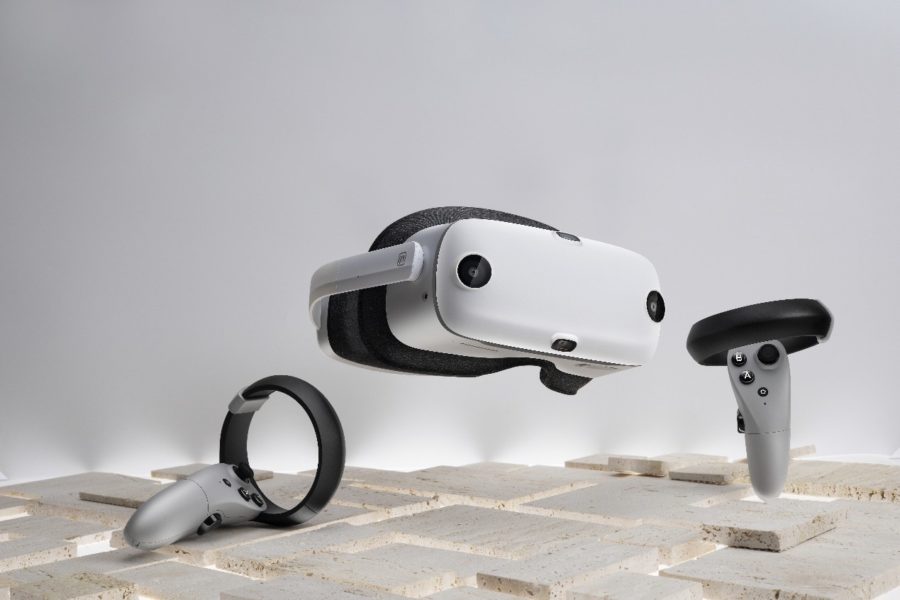
China-based online entertainment platform iQIYI launches new ‘QIYU 3’ Virtual Reality headset
September 1, 2021 – iQIYI Inc., a China-based online entertainment and video service, has recently launched its latest flagship virtual reality (VR) headset, the ‘QIYU 3’, as the company looks to further strengthen its premium VR digital entertainment ecosystem. The launch marks yet another China-based company potentially looking to take a bite out of Facebook’s share of the standalone VR device market, with even the name of iQIYI’s new headset (QIYU 3 or 奇遇3 in Chinese, which translates to ‘Adventure 3’) striking a resemblance to Oculus’ Quest brand.
As the company’s flagship VR product, features of the QIYU 3 headset include:
- A dual-screen design that consists of two RGB LCDs, giving the device a resolution of 4320*2160 and true 4K+ level in native resolution. The refresh rate can also reach 90Hz with the support of two built-in display driver chips, according to iQIYI;
- Powered by Qualcomm Technologies’ Snapdragon XR2 platform, which is designed exclusively for VR / AR;
- 8GB DDR4 RAM;
- A proprietary Q-Light-powered 6DoF interactive system that enables head-hand 6DoF spatial positioning and a millimeter-level positioning precision for controllers;
- QIYU 3 is supported by continuous pupillary distance adjustment technology with an indication precision of up to 1mm. The pupillary distance can be adjusted from 58mm to 72mm;
- QIYU 3 also features iQUT future cinema, which the company states “provides users with a 2,000-inch screen, equivalent to the size of 20 80-inch TVs.”
- QIYU 3 will also be able to offer a wide range of the latest films and TV shows by tapping into iQIYI’s massive content library. Furthermore, iQIYI will provide QIYU 3 with 4K 3D movies and 8K videos at 60fps with a bitrate of 13M, according to the company.
See the full story here: https://www.auganix.org/china-based-online-entertainment-platform-iqiyi-launches-new-qiyu-3-virtual-reality-headset/
The Worlds “Blackest Black” and the Hilarious Artist Feud Behind It
The whole thing started over a a substance called Vantablack. Developed first at the United Kingdom’s National Physical Laboratory and manufactured by Surrey NanoSystems , the substance isn’t so much a color as it something of a blackhole. It absorbs 99.965 percent of visible light and literally traps it until it dissipates into heat. In fact, it’s not even technically a pigment. It’s a lab grown series of nano-tubes. The substance has lots of practical scientific applications, like keeping light out of telescopes for example. Though, someone realized it might have artistic purposes as well, and a slightly altered version was developed (just ever so less “black” and known as Vantablack S-VIS).
The color was then licensed exclusively for artistic purposes to the studios of Anish Kapoor. Meaning that effectively he was the only artist in the entire world who could use it. It’s slightly ironic considering some of Kapoor’s most famed work is with reflective materials (indeed they’re prime art selfie destinations).
As a way of sticking it to Kapoor, he developed a line of pigments including the world’s “pinkest pink” and “glitteriest glitter” and said they were available for any artist in the entire world to use… except Kapoor.
Well, as it turned out Semple did actually team up with scientists to create a black that may not be the “blackest black” but is still pretty damn black as far as practical art supplies are concerned. He calls it “black 2.0” and it does create the neat visual trick of rendering objects coated in it flat.
Surrey NanoSystems recently announced that they created another very black-black called VBx1. Unlike the fragile Vantablack, it is “a solid coating that is far more tolerant.”
See the full story here: https://www.wmagazine.com/story/anish-kapoor-stuart-semple-blackest-black
Seven Underrated Side Hustles Most People Have Never Tried
“90% of podcasts don’t get past episode 3. That’s 1.8 million who quit. Of the 200,000 left, 90% will quit after 20 episodes. That’s another 180,000 gone. To be in the top 1% of podcasts in the world you only need to publish 21 episodes.”
When you practice an underrated side hustle for a year, you’re already ahead of most people who will quit after doing it three times. When a tiny side hustle and long-term thinking are combined, it’s possible to quit working a normal job sooner than you think.
See the full story here: https://medium.com/swlh/seven-underrated-side-hustles-most-people-have-never-tried-5b071b9954f0
Vision of the Future: AR Smart Contact Lenses
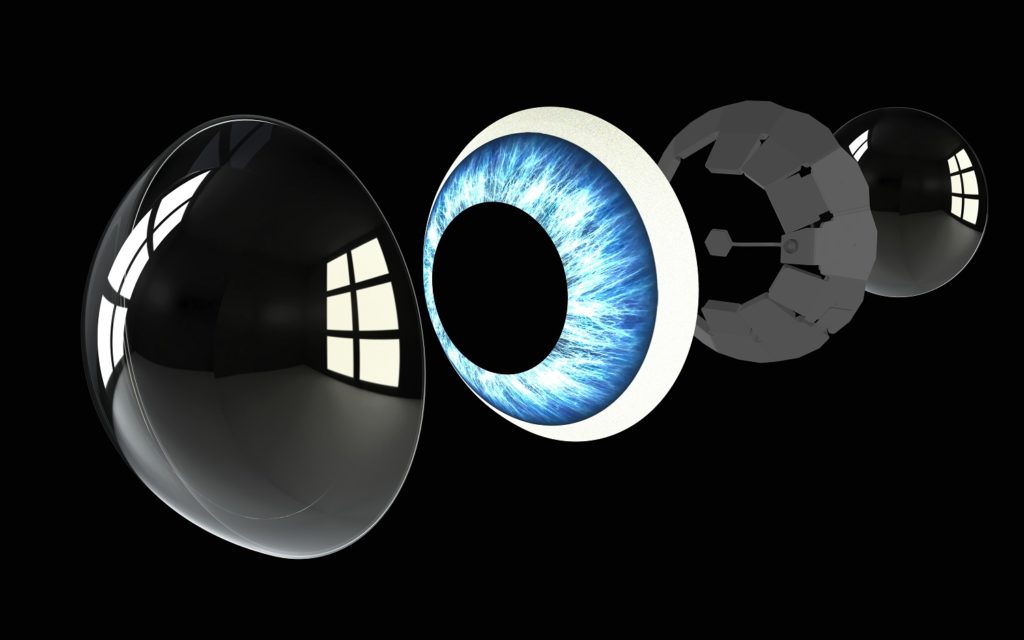
Smart contact lenses with built-in augmented reality (AR) displays to provide information without the need for other screens could soon become a feature of daily life. US-based Mojo Vision, whose aim is to offer “invisible computing,” has teamed up with Japanese contact lens manufacturer Menicon Co to develop the product.
“At the heart of Mojo Lens is the smallest and densest dynamic display ever built. Our 14KPPI display is a microLED array about the size of a grain of sand that projects text, photos and video content onto your retina.”
“When you take your pair of lenses out at night, you’ll recharge and clean them in their case overnight, so they are ready to wear the next day. We believe that someday all eyewear will become smart and that the people that choose contact lenses today will want the benefits of a product like Mojo Lens.”
See the full story here: https://emag.medicalexpo.com/vision-of-the-future-ar-smart-contact-lenses/
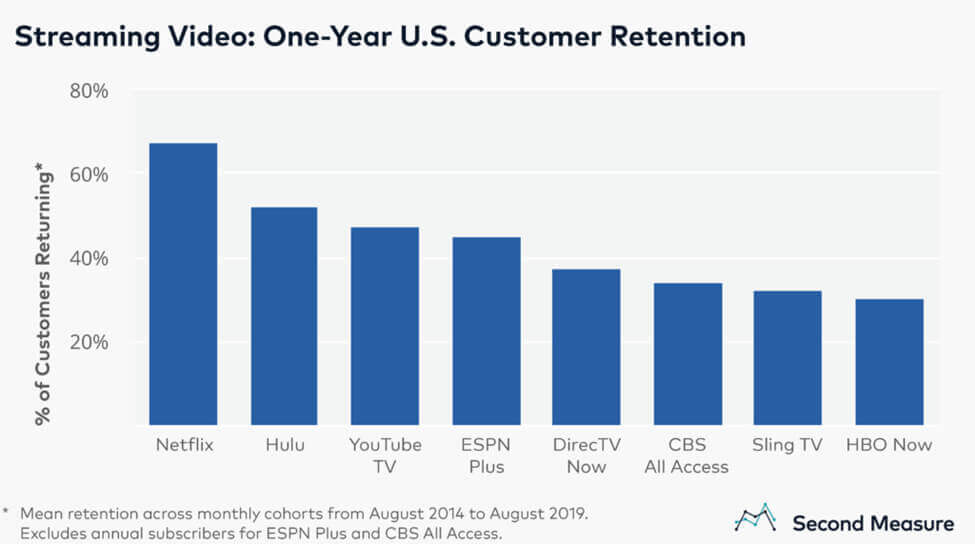
How Netflix Creates Immersive Experiences with Exceptional Design and UX
[PhilNote: this is really about how Netflix attracts and retains customers, not "immersive experiences."]
Netflix UX lesson #1
- Simplify the user interface. Make your CTA prominent and clear and state your most important benefits next to relevant images.
- Specify the number of steps to complete the signup to increase expectancy and boost motivation. Implement user testing to ensure your UX has minimal barriers to conversion.
- Overcome obstacles by addressing common questions in an FAQ section before your final CTA.
- Emphasize personalization wherever you can. Netflix has taken pains to tailor the experience to users’ expectations.
Netflix UX lesson #2:
- Another nod to simplification—streamline your onboarding and login screen. Include only the most necessary buttons and copy, and where possible, exchange text for universally understood symbols.
- Give your users the ability to customize their experience. You may already have opportunities to do this in your settings, such as setting language or notification preferences.
- Let users know about this or walk them through the preference set up in the onboarding stage.
Netflix UX lesson #3:
- Give your high-value content pride of place. Feature it prominently, give it a badge, promote it with video, or find another way to help it stand out among the crowd.
- Continually add value to your platform. Netflix does this through its original content.
- If possible, tailor your high-value content to each segment. Netflix does this through the algorithm’s selection of content and their thumbnail design.
Netflix UX lesson #4:
- Give users the opportunity to choose. Let them personalize their experience and give them as many options as you can allow.
- Make cancellation painless, but offer opportunities for users to change their minds. Netflix does this by offering to keep in touch via email (and then showing users what they’re missing regularly throughout the month).
- Remind users to return to the platform repeatedly through an engaging email marketing strategy.
See the full story here: https://www.business2community.com/customer-experience/how-netflix-creates-immersive-experiences-with-exceptional-design-and-ux-02428429https://www.business2community.com/customer-experience/how-netflix-creates-immersive-experiences-with-exceptional-design-and-ux-02428429
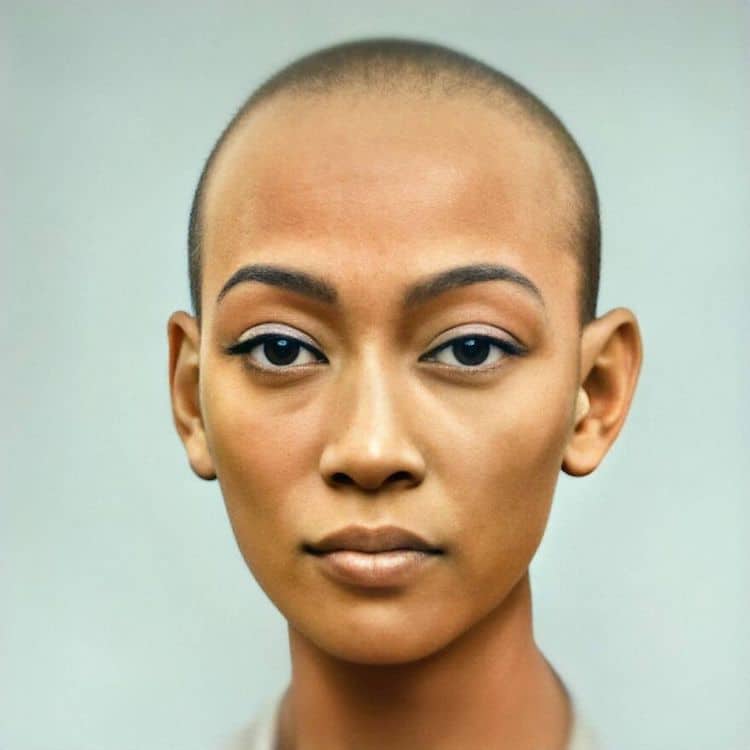
Artist Uses Artificial Intelligence To Reconstruct Realistic Portraits of Historical Figures
To create these portraits, Uterwijk uploads numerous references of the person's likeness to the AI applications. Then, he makes small adjustments to the program until he is satisfied with the result.
“I think the human face hasn't changed dramatically over thousands of years and apart from hairstyles and makeup, people that lived long ago probably looked very much like us, but we are used to seeing them in the often distorted styles of ancient art forms that existed long before the invention of photography.”
Not only does he reimagine real-life royals such as Tutankhamun and Elizabeth I in realistic portraits, but he also applies his digital manipulations to famous works of art, including Michelangelo's David sculpture and Leonardo da Vinci's Mona Lisa painting. “
See the full story here: https://mymodernmet.com/bas-uterwijk-ai-portrait/
How Lord of the Rings changed big screen battles forever
Though audience members might not realize, they're watching AI agents, with different fighting styles and weapons going up against each other -- some with swords, some with shields and spears, some airborne with sparks flying from their hands.
To create distinctive battle patterns for the different groups, Weta relied on motion capture, allowing Massive to give each agent an arsenal of moves to choose from.
Not only are all the fighting styles different, the agents are different. Back in the Lord of the Rings days, Jon Allitt, head of the crowds department at Weta Digital, created a tool in Massive called Orc Builder, that could randomly generate different variations of orcs based on characteristics like height and limb length. Orc Builder is now called Body Page, and it worked the same way in Endgame.
"Visual effects, at its very core, are not about being a perfect simulation of reality. It's about making you believe it," says Gray Marshall, industry veteran and chair of the department of visual effects at the Savannah College of Art and Design.
Regelous, still helming the company, says he's always trying to figure out how to keep moving forward. That might mean giving filmmakers the ability to see special effects almost immediately during production. The Mandalorian, for example, made headlines when it premiered using Epic's Unreal Engine's real-time rendering to create immersive, computer-generated sets. So instead of inserting CG environments into green-screen footage after the fact, it happens during filming.
See the full story here: https://www.cnet.com/features/how-lord-of-the-rings-changed-big-screen-battles-forever/
Scientists Hope VR Can Change Human Behavior And Curb Climate Change
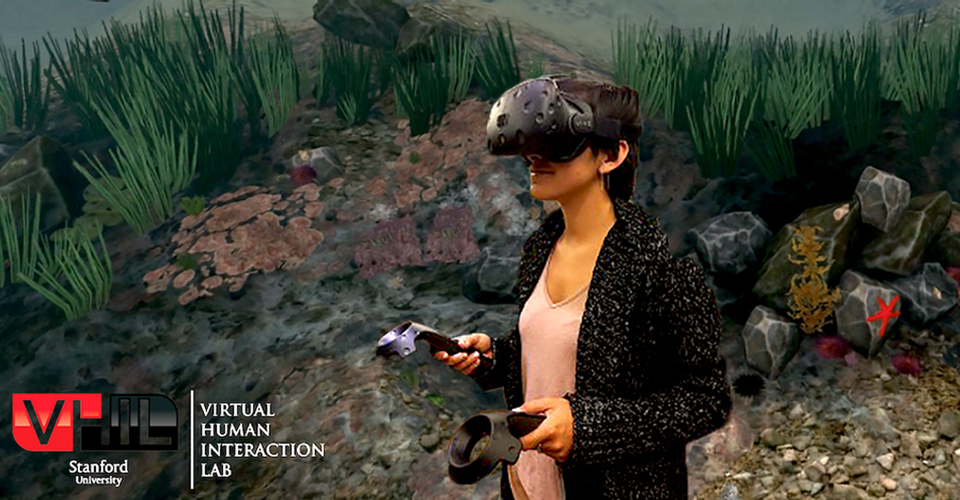
Scientists at the Stanford Virtual Human Interaction Lab are using virtual reality in the hopes that it can change human behavior and curb climate change. The Stanford Virtual Human Interaction Lab, which was founded in 2003, has been using augmented and virtual reality to help influence human interaction. Some of their previous work includes integrating VR into the classroom, using VR to help users feel empathy, and studying the psychology of augmented reality.
While this research can help improve the understanding of environmental change in the world's youth, the IPCC report explicitly states that in 20 years the world will be facing a climate catastrophe. While this research and software are altruistic in nature using virtualreality is going to do little to reverse the effect of climate change when world leaders are the ones who must act.
See the full story here: https://screenrant.com/virtual-reality-climate-change-activism/
Pages
- About Philip Lelyveld
- Mark and Addie Lelyveld Biographies
- Presentations and articles
- Trustworthy AI – A Market-Driven approach
- Tufts Alumni Bio