Tom Cruise and Russia Want to Shoot Movies in Space, but These VR Filmmakers Got There First
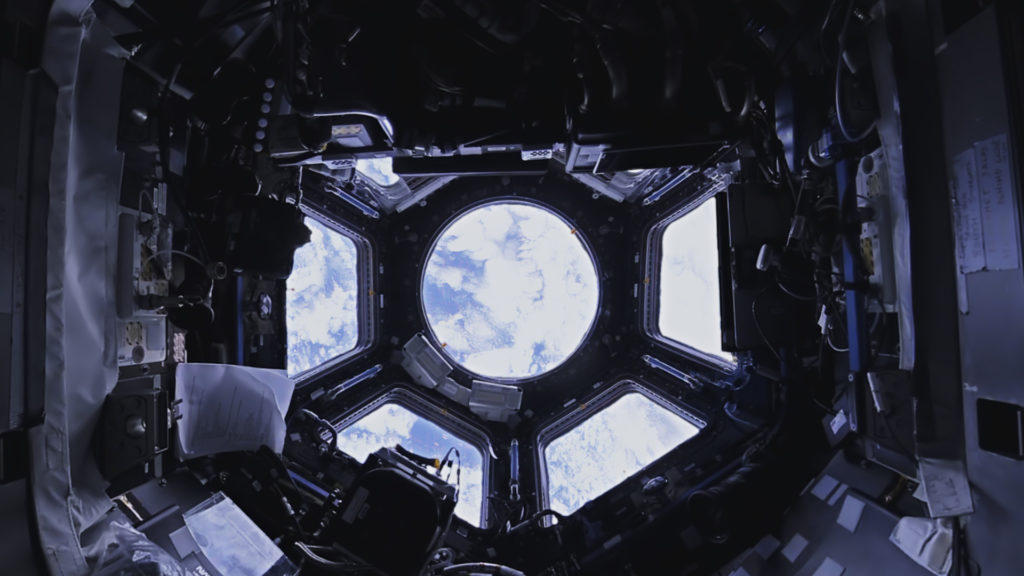
Since January 2019, Felix & Paul, the VR studio launched by Montreal-based virtual realitydirectors Félix Lajeunesse and Paul Raphael in 2013, have been assembling 360-degree footage shot on handmade cameras by 10 astronauts from a revolving crew.
With more than 200 hours of footage to date, the material has so far fueled the first two episodes of the four-part VR series “Space Explorers: The ISS Experience.” The result, co-produced by Time Studios, provides the most advanced way to date for audiences — at least, those in possession of VR headsets — to experience what it’s like to live in zero-gravity in the 21-year-old space station, which orbits 250 miles above the surface of the Earth. ...
This summer, they expect to go one step further, by collaborating with astronauts on a spacewalk for five days of filming in the dark, perilous vacuum outside the station. The Felix & Paul team have developed a complex process of developing equipment for the shoot and coordinating with the astronauts from the ground. “When you work in an environment like this, you really cannot improvise,” Lajeunesse said.
See the full story here; http://Tom Cruise and Russia Want to Shoot Movies in Space, but These VR Filmmakers Got There First
‘New’ Amy Winehouse song created by AI to raise mental health awareness
The track – entitled Man, I Know – was made as part of the Lost Tapes Of The 27 Club, a project raising awareness around mental health.
The project from non-profit organisation Over The Bridge focuses on music stars who, like Winehouse, died at the age of 27. This includes artists such as Kurt Cobain and Jimi Hendrix.
According to the Lost Tapes website, an AI algorithm listened to melodies and lyrics from the late stars.
The algorithm “learned from the music, then generated a string of all-new hooks, rhythms, melodies, and lyrics”.
An audio engineer then used these to create the new music.
See the full story here; https://www.yahoo.com/entertainment/amy-winehouse-song-ai-awareness-100656766.html

Bieber and BTS label HYBE invests in AI
When pop art King Andy Warhol was alive, he transformed the way the art world authenticated art. That’s because Warhol was on a mission to paint like a machine which led him to allow his assistants to help with production. There came a point he was signing pieces that his assistants had produced. And this transitioned into the assistants stamping the artwork with his signature in his absence.
In a similar vein, HYBE has plans to use its artists to generate cash, without them ever needing to be present. Imagine the potential, if it can train AI to know the artists’ voices for future use in video games, audiobooks, podcasts, dubbing adverts or animations. Cartoons are a big part of K-pop culture and could be expanded to its artists in other genres.
That’s the power inherent in AI and it’s got the capacity to become a money-printing machine.
See the full story here: https://www.valuethemarkets.com/2021/04/09/bieber-bts-big-hit-entertainment-investing-artificial-intelligence/

Study Shows Benefits of Virtual Reality in Measuring Memory
The research evaluated how participants compiled increasingly difficult grocery lists from recipes by eliminating ingredients already “on hand” in virtual kitchen cabinets.
“This work fills a gap in our field. Some researchers are beginning to simulate the reality of a particular everyday task or job training scenario with VR [virtual reality],” said Krawczyk, who is also deputy director of the UT Dallas Center for BrainHealth. “On the other end of the spectrum, researchers are interested in this very controlled type of memory task. Our study fits in between, because it’s realistic and relevant to daily life, but it’s also sufficiently controlled as a scientific study should be, with careful elevation of cognitive demand. So we’re able to learn about working memory as well as daily life.”
...“Indeed, how someone approaches a task and makes it efficient may be more important to their performance than their raw ability to maintain information in memory.”
See the full story here: https://news.utdallas.edu/health-medicine/virtual-reality-memory-2021/

Artificial Intelligence Specialist DGene Launches in Hollywood
DGene, a Silicon Valley and Shanghai-based developer of AI technology, has launched operations in Los Angeles. The company is creating software and services that leverage artificial intelligence and computer vision for entertainment content creation. DGene offers proprietary solutions for virtual production, visual effects, digital restoration, volumetric and holographic capture, and the creation of virtual actors and digital influencers.
Yang and Packer have assembled a team of computer scientists and engineers specializing in computer vision, computational photography, computer graphics, machine learning, and related technologies. The U.S. operation will also tap into the extensive development and R&D resources of DGene, China, which has produced groundbreaking AI solutions for companies such as Alibaba, Tencent, and China Mobile.
See the full story here: https://www.creativeplanetnetwork.com/the-wire/artificial-intelligence-specialist-dgene-launches-in-hollywood

First Vietnamese digital human projects launched in HCM City
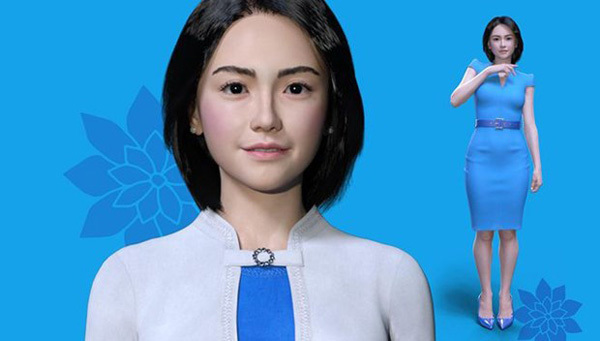
Gumee, a digital girl with a stylish appearance and personality representing Generation Z, was introduced by fashion company Gumac. She will be a fashionista and a new friend of Gumac’s young customers on social media.
The Digital Humans Day 2021 was also attended by Cai Luong (reformed opera) singer and People’s Artist Bach Tuyet and singer and composer Ngoc Son who have engaged in the development of their own digital versions in an attempt to preserve culture and arts using artificial intelligence.
Singer Bach Tuyet said the project offers a great experiment in combining the world’s advanced AI technology and the traditional arts – Cai Luong. It shows that, with digital humans, no area is left behind in the digital transformation process, she said.
See the full story here: https://vietnamnet.vn/en/sci-tech-environment/first-vietnamese-digital-human-projects-launched-in-hcm-city-725830.html
Facebook, Apple and Niantic Bet People Are Ready for Augmented-Reality Glasses
Facebook last month said it is working on AR glasses in tandem with sensor-packed wristbands that can detect finger movements, part of a broader push in researching the development of software and hardware to support the eyewear.
John Hanke last week posted a tweet touting progress on its planned AR glasses, which it is making in partnership with chip maker Qualcomm Inc.
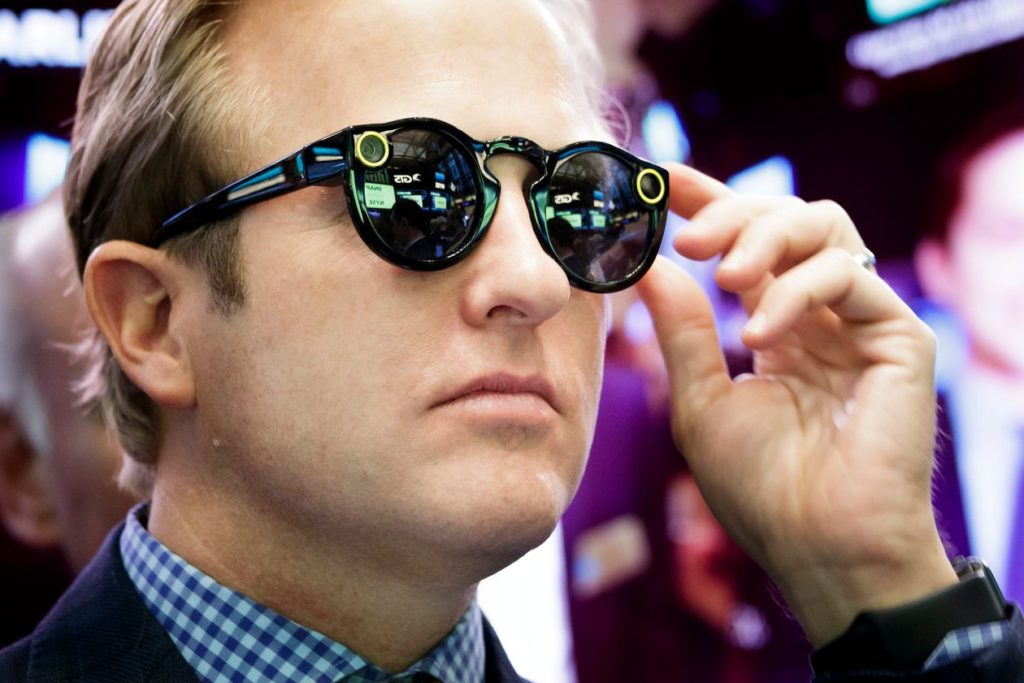
Other companies are guarding their plans. Apple is working on an AR headset for consumers, which analysts expect to hit the market as soon as next year, and has plans for AR glasses to follow. Analysts also say SnapInc., SNAP +5.50% which already sells camera-equipped sunglasses it calls Spectacles, is developing consumer AR glasses, and thatAlphabet Inc.’s Google, which entered the space in 2013 with Google Glass before focusing on sales to business customers, is likely to try a consumer play again.
“A lot of the magic in AR is going to come from the device knowing your place in the world,” Mr. Hanke said.
Another challenge for companies making AR glasses is dealing with issues such as user privacy and security. Facebook is soliciting feedback from tech experts, regulators and consumers on this front, Mr. Bosworth said. For example, he said it will be important to consider how people might feel talking to or just walking past someone wearing AR glasses.
“These things are going to have always-on cameras, always-on microphones,” Mr. Bosworth said. “This really is a technology that demands a public conversation about what the capabilities are going to be, what’s acceptable and not.”
See the full story here: https://www.wsj.com/articles/facebook-apple-and-niantic-bet-people-are-ready-for-augmented-reality-glasses-11617713387
Can VR concerts save a music industry brought to its knees by Covid-19?
Ever wanted to travel to an alien world on a virtual spaceship to see David Guetta’s avatar DJ-ing your own personal concert? Well, now you can, thanks to a new VR experience called Sensorium Galaxy, a multi-user social virtual realityplatform where users are transported to virtual alien ‘worlds’ to watch their favorite DJs in concert.
These worlds come with “supernatural features,” as Sasha Tityanko, Sensorium’s deputy CEO (Art & Marketing) explains. One such world, called Prism, is “a remote planet filled with black rock, lakes, and oceans,” where “everything transforms and evolves, under the influence of music that the artist plays while they’re giving a performance”.
There are obvious benefits to using virtual reality for live music performances, not least the ability to experience them in a way that would not be possible in real life. Virtual concerts are accessible from anywhere, at any time, so you don’t have to wait years for your favorite artists to tour in your country.
Virtual reality is only now approaching mainstream adoption in a meaningful way. Right now, there are just four main players when it comes to mainstream VR headsets you can use at home, including Oculus, PlayStation, HTC, and Valve – and these headsets don’t exactly come cheap.
See the full story here: https://www.techradar.com/news/can-vr-concerts-save-a-music-industry-brought-to-its-knees-by-covid-19