The military branch, started under former president Donald Trump, is working with government contractor SAIC on a gamified training platform that allows employees to interact with full-scale digital replicas of national security satellites. The platform lets the armed forces practice responding to missile warning scenarios and collaborate in cyberspace.
They’re not exactly rehearsing how to destroy alien spaceships. But if satellite solar panels need to be fixed, they can practice doing that — without having to travel to space to do it. If a spacecraft needs to be repositioned, they can execute that too. If troops need more information about a mission, it’s as simple as pressing a button. No space suits or textbooks necessary.
More directly, Space Force’s job is to maintain, protect and expand the U.S. fleet of advanced military satellites.
See the full story here: https://www.washingtonpost.com/technology/2021/03/12/space-force-virtual-reality-training/

OK Computer: Radhika Apte, Vijay Varma’s Sci-Fi Show Is the Beginning of a Conversation on AI, Says Anand Gandhi
Filmmaker Anand Gandhi, who shot to fame as writer-director of the globally-acclaimed 2012 release Ship Of Theseus, has scripted and produced the upcoming web series OK Computer. Gandhi says his new effort, about artificial intelligence (AI), explores the “legal frameworks” that have to be put in place between “organic species” and the “cloud-based intelligence system”. He says the advent of AI has changed a lot of things and the series talks about the co-existence of the two. Ok Computer Trailer: Vijay Varma, Radhika Apte’s Intriguing Sci-Fi Comedy To Hit Disney+ Hotstar On March 26.
The filmmaker added that the film is more of an “ice breaker” in terms of starting conversations with the West about the development of AI. “What I am trying to say is that we have seen our peers in the West share great ideas and insights about AI, our future, and what life and living would be like in the future.
See the full story here: https://sportsgrindentertainment.com/ok-computer-radhika-apte-vijay-varmas-sci-fi-show-is-the-beginning-of-a-conversation-on-ai-says-anand-gandhi/

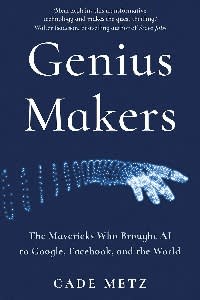
Genius Makers, by Cade Metz — the tribal war in AI
On one side, the “connectionist” tribe believes that computers can learn behaviour in the same way as humans do, by processing a vast array of interconnected calculations. On the other, the “symbolists” argue that machines can only follow discrete rules. The machine’s instructions are contained in specific symbols, such as digits and letters.
After an initial burst of enthusiasm for connectionist thinking among AI pioneers, the symbolist tribe came to dominate as researchers realised that human and machine intelligence are very different attributes. But over the past decade the maverick connectionists have had their revenge, making many of the most striking advances in AI, such as speech and image recognition systems, conversational chatbots, semi-autonomous cars and the AlphaGo program that famously beat the world’s strongest champion in the fiendishly complex game of Go in 2016.
This intellectual counter-revolution that is now rapidly transforming the world is the subject of technology writer Cade Metz’s colourful and readable book, Genius Makers.
Genius Makers is a good read, as far as it goes, but the reader is left with the wish that Metz had displayed deeper learning.
See the full story here: https://www.ft.com/content/52163178-0e12-4de8-9fb3-adc223c12dcd
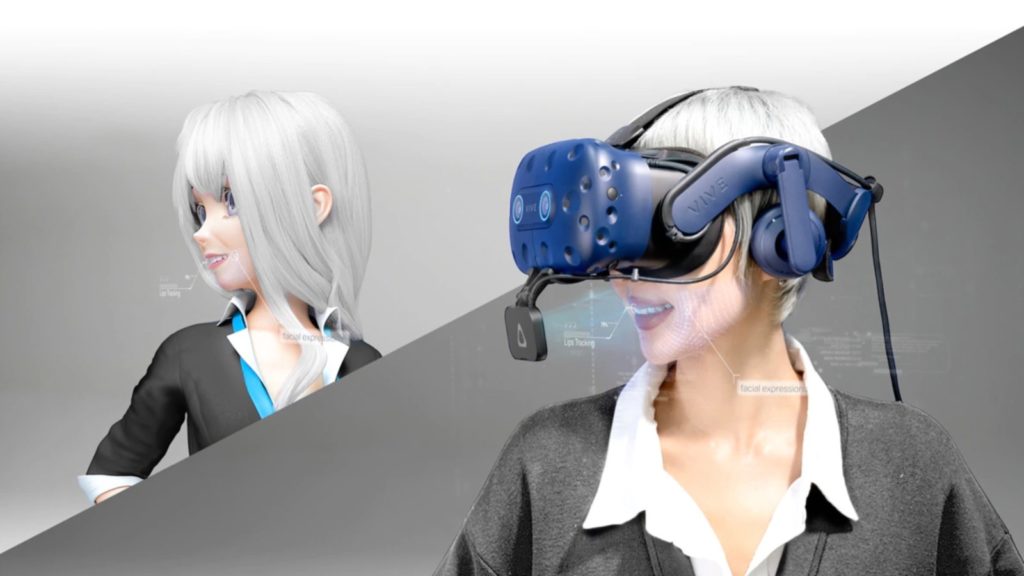
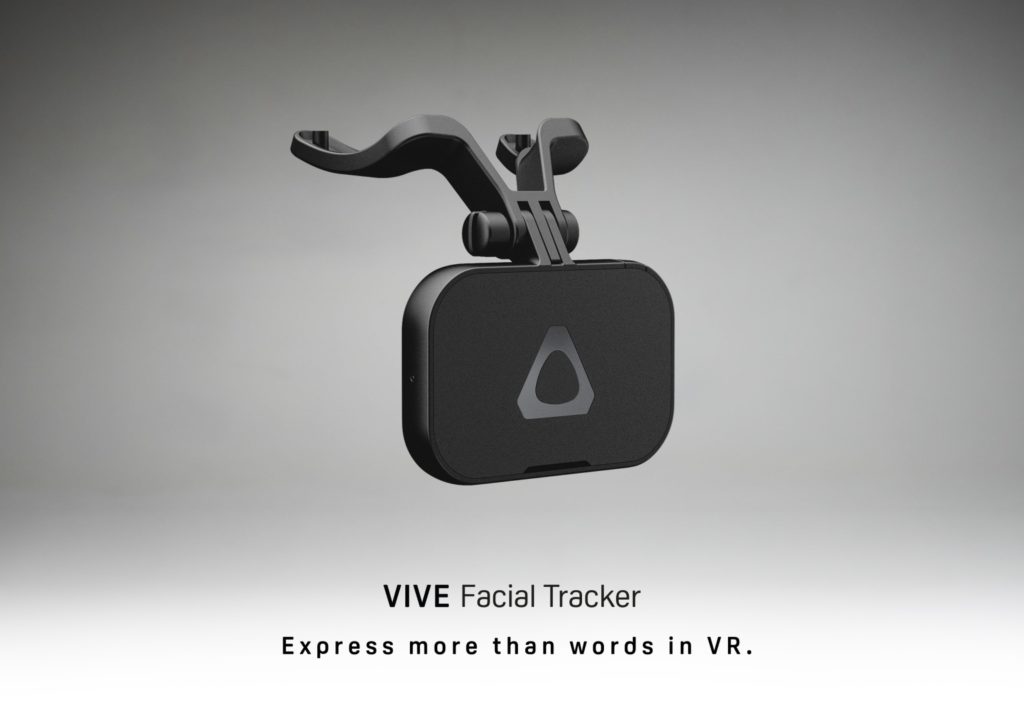
HTC Device Can Translate Lip Movement Into Virtual Realty
The Vive Facial Tracker can capture up to 38 facial gestures and render them in real-time in VR. However, the accessory will be limited to the Vive Pro VR headset series.
See the full story here: https://www.pcmag.com/news/smile-youre-in-vr-htc-device-can-translate-lip-movement-into-virtual-realty
iQIYI Ushers in Next-Generation of Entertainment with Launch of China’s First Extended Reality (XR) Cloud Show
iQIYI Inc. (NASDAQ: IQ) ("iQIYI" or the "Company"), an innovative, market-leading online entertainment service in China, is pleased to announce that it has launched Cloud Show, China's first interactive, immersive, online, virtual performance product. Cloud Show features both real and virtual scenes enabled by multiple audiovisual technologies to deliver users a unique and fresh extended reality (XR) entertainment experience.
XR technology will be used throughout the whole process of the live-streamed concert, rendering an immersive virtual stage performance. The quality of the scenes will be further enhanced by augmented reality (AR)-enabled virtual front scenes, the use of multiple XR virtual machine positions, and film and television-grade equipment.
Meanwhile, viewers will have the freedom to enjoy the performance in their own unique way by switching among multiple different camera angles.
See the full story here: https://www.prnewswire.com/news-releases/iqiyi-ushers-in-next-generation-of-entertainment-with-launch-of-chinas-first-extended-reality-xr-cloud-show-301243046.html

Study Suggests Deepfakes Fool Top Facial Recognition Tech
VentureBeat reports that, “in a paper published on the preprint server Arvix.org, researchers at Sungkyunkwan University in Suwon, South Korea demonstrate that APIs from Microsoft and Amazon can be fooled with commonly used deepfake-generating methods.” More specifically, Microsoft’s Azure Cognitive Services “was fooled by up to 78 percent of the deepfakes the coauthors fed it.”
Amazon Rekognition mistook a deepfake for a celebrity 68.7 percent of the time. The researchers concluded that its study “can shed light on better designing robust web-based APIs, as well as appropriate defense mechanisms, which are urgently needed to fight against malicious use of deepfakes.”
The researchers also warned that, “voice and video deepfake technologies can be combined to create multimodal deepfakes and used to carry out more powerful and realistic phishing attacks … [and] if the commercial APIs fail to filter the deepfakes on social media, it will allow the propagation of false information and harm innocent individuals.”
See the full story here: https://www.etcentric.org/study-suggests-deepfakes-fool-top-facial-recognition-tech/
and here: https://venturebeat.com/2021/03/05/study-warns-deepfakes-can-fool-facial-recognition/

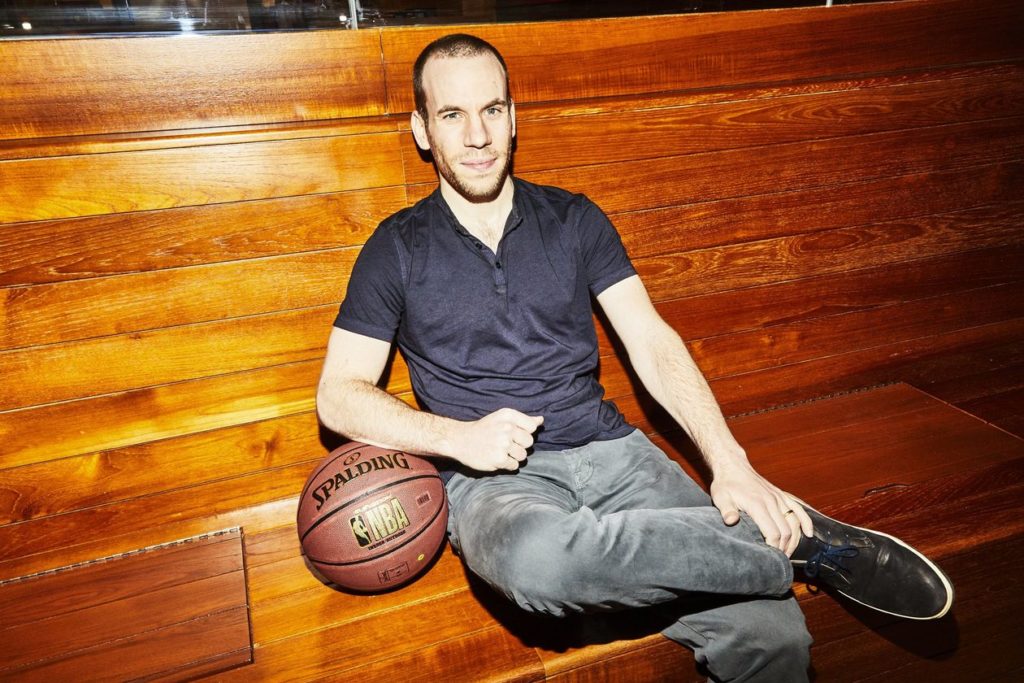
The Whales of NBA Top Shot Made a Fortune Buying LeBron Highlights
The most popular and perhaps most confounding NFT market is NBA Top Shot. It has minted unlikely millionaires and left many scratching their heads as it processed more than $250 million in sales from 100,000 buyers over the last month alone.
The peculiar but lucrative subculture of Top Shot reminds others of a similar hit from the same company, Dapper Labs, in which people collected virtual cats instead of NBA highlights. CryptoKitties was a fad that was mostly forgotten after a few crazy weeks in 2017.
Now the idea is roaring back in part because Top Shot is built for a different audience: the average NBA fan. Dapper Labs cut deals to give the league and its players a slice of every transaction—the company takes a 5% fee—with the goal of reaching casual basketball consumers and not just blockchain evangelists. It’s working. Instead of swapping jerseys after games, NBA players are exchanging Top Shot moments.
See the full story here: https://www.wsj.com/articles/nba-top-shot-nft-crypto-digital-collectibles-11615266042