Virtual ‘sculpture,’ based on math, that’s everywhere and nowhere at once
Observed via a digital lens, though, the sleek creations housed at globalsculpturepark.com have a compelling presence. They can be approached, circumnavigated and — it almost goes without saying — selfie-ized. (Click the “Activate AR” button to bring up the augmented-reality display, which places the artworks, virtually, in your own environment.)
The series of displays, titled “Global Perspective: Math, Art and Architecture Around the World,” will continue through the end of 2021. Every month brings a new set of designs, each with a particular theme, such as fractals, optical illusions and Mobius strips. The complex (and bright red) “Polyline” figures now on view will be replaced by silvery “Knots” at the beginning of March.
See the full story here: https://www.washingtonpost.com/goingoutguide/museums/anton-bakker-art-review/2021/02/23/e66a6a00-71fe-11eb-93be-c10813e358a2_story.html

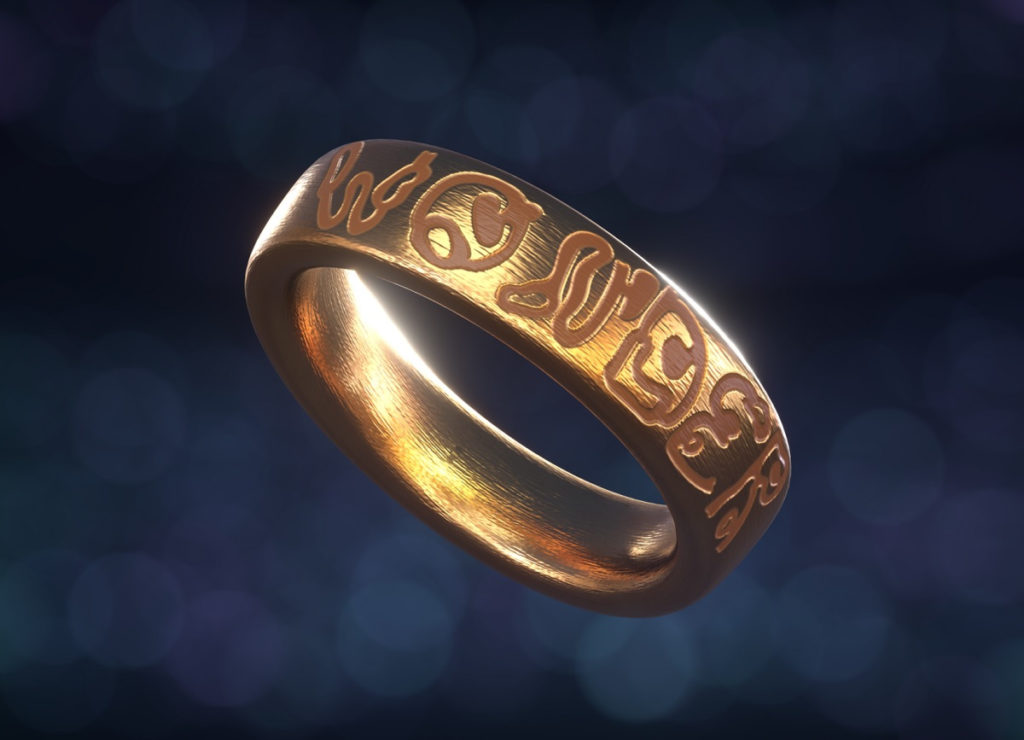
Genies will sell one-of-a-kind digital goods for Shawn Mendes
Genies plans to sell some one-of-a-kind digital goods for musician Shawn Mendes. It comes on the heels of Genies‘ sold-out sale of digital wearables for soccer star Mesut Ozil for $500,000.
The goods can be authenticated as unique using nonfungible tokens, or NFTs, which use blockchain (the transparent and secure digital ledger) to uniquely identify items. NFT-based collectibles can be verified as one-of-a-kind items, and that means they can be auctioned off as rare items.
Fans can in turn sell their collectibles to others, turning the NFTs into a kind of investment. If you can’t afford to buy the whole thing, you could buy a piece of it, as you can get fractional ownership of a digital item.
NFTs are spreading in games, art, and other collectibles. The New York Times wrote a story this week about an artist named Chris Torres, who sold the Nyan Cat (that’s the flying kitty in the shape of a Pop-Tart) for $580,000. Since the token can be verified, the buyers will know whether the art is a fake or if it’s real. CryptoKitties maker Dapper Labs is reportedly in the midst of raising $250 million at a $2 billion valuation, and the company’s NBA Top Shot collectibles have hit more than $123 million in sales.
See the full story here; https://venturebeat.com/2021/02/25/genies-will-sell-one-of-a-kind-digital-goods-for-shawn-mendes/
Vuzix Corp: A Potential Winner In The AR Race Receives Ark Invest’s Confirmation
- Vuzix Corporation has the potential of becoming a big winner in the augmented reality (AR) smart glasses race for the enterprise market.
- Vuzix's AR smart glasses are solving key problems across multiple verticals and industries that are much needed today.
- I discuss the competitive advantages and value proposition that Vuzix offers and perhaps the reasons Ark Invest saw this same thesis.
- Vuzix has a number of execution risks ahead that we discuss too.
See the full analysis here: https://seekingalpha.com/article/4409047-vuzi-corp-potential-winner-in-ar-race-receives-ark-invests-confirmation

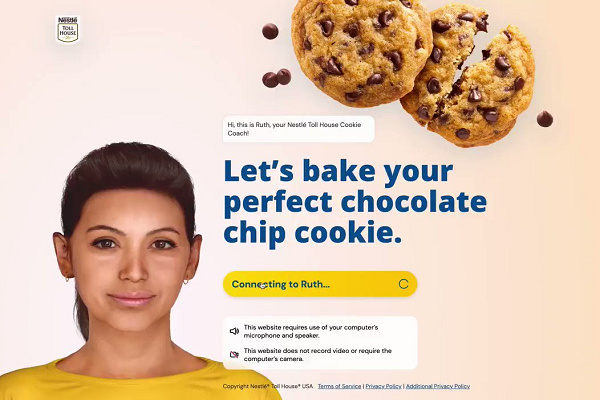
Nestle Debuts Virtual Human Cookie Coach
Nestle Toll House introduced a virtual human named Ruth to help people bake cookies this week .
Ruth was built in partnership with Soul Machines, a New Zealand developer of virtual humans. Soul Machines has provided tech for many virtual human projects, including Ella, The New Zealand police department virtual officer that interacts with visitors to a police station. For Ruth’s AI and interactive ability, Nestle used Google Dialogflow for natural language processing, but Amazon Polly for the text-to-speech because it had better pacing and avoided uncanny valley territory, according to Bertelsen.
Both the AI and visual elements are improving rapidly, with MetaHuman Creator drawing a lot of buzz for its realistic human appearance and startups like CoCo Hub showing just how flexible the combination of vocal and visual graphics can be. LG stood out at CES this year because Reah Keem, a virtual influencer created by the company performed part of the keynote.
See the full story here: https://voicebot.ai/2021/02/24/nestle-debuts-virtual-human-cookie-coach/
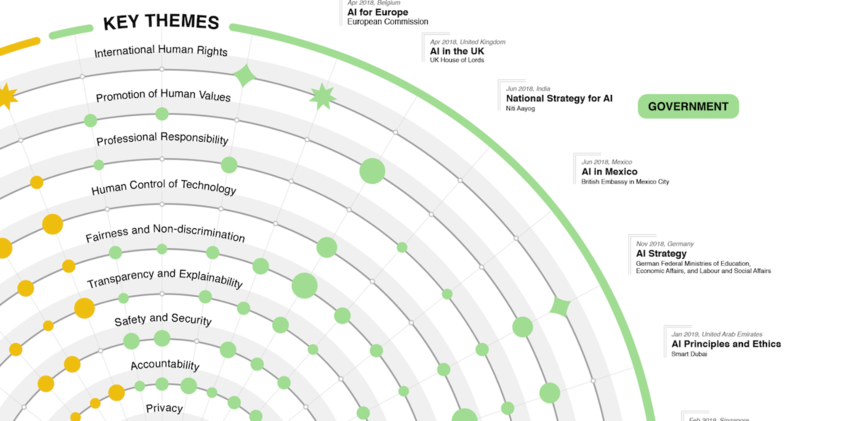
We need to talk about Artificial Intelligence
- Dialogue is hampered by an information gap between creators of AI technology and policymakers trying to regulate it.
- Knowledge building is critical to set a framework of ethics and norms in which AI can innovate safely.
- Principles are valuable only if they are agreed upon and if they are actually implemented.
While consensus starts to form around the impact that AI will have on humankind, civil society, the public and the private sector alike are increasing their requests for accountability and trust-building. Ethical considerations such as AI bias (by race, gender, or other criteria), and algorithmic transparency (clarity on the rules and methods by which machines make decisions) have already negatively impacted society through the technologies we use daily.
Technology providers – lack of clarity on AI ethics
Compared with other corporate social responsibilities, AI is accelerating the need for technology companies to advance conversations about ethics and trust, as AI echoes societal behaviour. With AI, corporations risk being the driver of an exponential increase of the biases already existing in society at an irreversible scale and rate.
Therefore, technology companies need both ethics literacy and a commitment to multidisciplinary research to create a sound understanding and adoption of ethics. However, through their training and during their careers, the technical teams behind AI developments are not methodically educated about the complexity of human social systems, how their products could negatively impact society, and how to embed ethics in their designs.
See the full story here: https://www.weforum.org/agenda/2021/02/we-need-to-talk-about-artificial-intelligence/
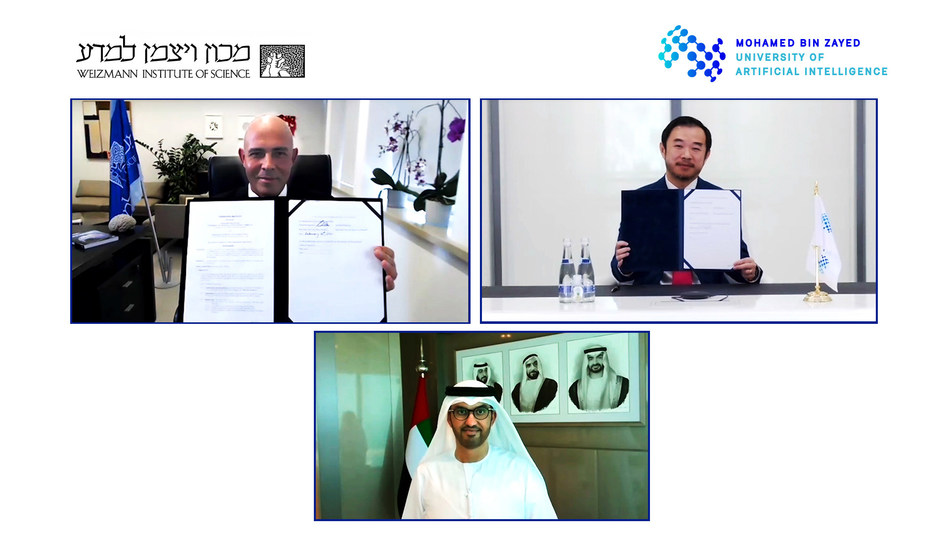
Mohamed bin Zayed University of Artificial Intelligence and Weizmann Institute of Science establish joint AI Program
The Mohamed bin Zayed University of Artificial Intelligence (MBZUAI) and the Weizmann Institute of Science (WIS) have announced the establishment of the MBZUAI-WIS Joint Program for Artificial Intelligence Research (the AI Program). The new program will promote collaborative initiatives in fundamental artificial intelligence research and will explore AI applications in domains such as healthcare, genomics and more.