Shakespeare in virtual reality: is this the future of theatre?
Based on the Shakespearian classic A Midsummer Night’s Dream, performers will bring this new play to life in a digital midsummer forest. Through virtual reality (VR), audience members at home will be able to interact with actors and guide the story in real-time.
In collaboration with Manchester International Festival and thanks to funding from big tech names including Innovate UK and Fortnite creators Epic Games, Dream marks the latest efforts from the theatre community to give us the live performances experience we miss so much.
See the full story here: https://mancunion.com/2021/02/12/shakespeare-in-virtual-reality-is-this-the-future-of-theatre/

Vuzix looking far ahead with its smart glasses and Augmented Reality technologies
PhilNote: thorough company analysis for stock price.
Founded in 1997, the group holds 184 patents and patents pending and numerous IP licenses in the Video Eyewear field. It has won Consumer Electronics Show (or CES) awards for innovation for the years 2005 to 2021 and several wireless technology innovation awards among others
See the full story here: https://www.proactiveinvestors.com/companies/news/941234/vuzix-looking-far-ahead-with-its-smart-glasses-and-augmented-reality-technologies-941234.html

AI progress depends on us using less data, not more
1. AI has a compute addiction.
2. Big data can mean more spurious noise.
3. We’re still only making linear progress.
4. Privacy concerns are expanding.
How I learned to stop worrying and enjoy data scarcity
In order to overcome these challenges, specifically in my area, cyber security, we have to, first and foremost, align expectations.
Algorithmic efficacy as top priority.
Human augmentation-first approach.
Leveraging hardware improvements.
Eyal Balicer is Senior Vice President for Global Cyber Partnership and Product Innovation at Citi.
See the full story here: https://venturebeat.com/2021/02/13/ai-progress-depends-on-us-using-less-data-not-more/

Apple launches an augmented reality app to promote For All Mankind on Apple TV Plus
But For All Mankind: Time Capsule is one of the first indications of Apple tying all of its hardware, content, and service ambitions together. It’s an augmented reality app downloaded from the App Store that prompts users to subscribe to Apple TV Plus to watch For All Mankind, with additional content for LIDAR-equipped Apple devices.

It’s the kind of cross-promotional content that spans Apple’s wide array of businesses. It could also offer a glimpse at the kind of integrated hardware, software, and service bundle that Apple could be considering for any future AR devices.
See the full story here: https://www.reportdoor.com/apple-launches-an-augmented-reality-app-to-promote-for-all-mankind-on-apple-tv-plus/
Oculus Co-Founder Invests in VR Startup Nanome
PhilNote: more funding for an established scientific visualization startup. We saw this a few years ago at the OC VR demo day.
The funding round was led by Bullpen Capital with participation from Oculus co-founder Michael Antonov’s Formic Adventures along with other angel investors. Nanome’s VR platform has been there since 2018 and is available on both Steam and Oculus Store. The new funds will be channeled into expanding the VR startup’s team and building new partnerships.
According to Nanome CEO Steve McCloskey, the startup has had a “compelling vision about what scientific collaboration should look like” and its VR platform aims to equip scientists working in various fields such as discovering new ways to combat diseases, addressing climate change and improving people’s lives. McCloskey states that Nanome provides an intuitive virtual interface where scientists can experiment, design and learn “at the nanoscale.” He noted that the new funding will give Nanome the “firepower” to increase its impact, support more research initiatives and continue its work in revolutionizing biotech and scientific research.
See the full story here: http://virtualrealitytimes.com/2021/02/13/oculus-co-founder-invests-in-vr-startup-nanome/
Thought-detection: AI has infiltrated our last bastion of privacy
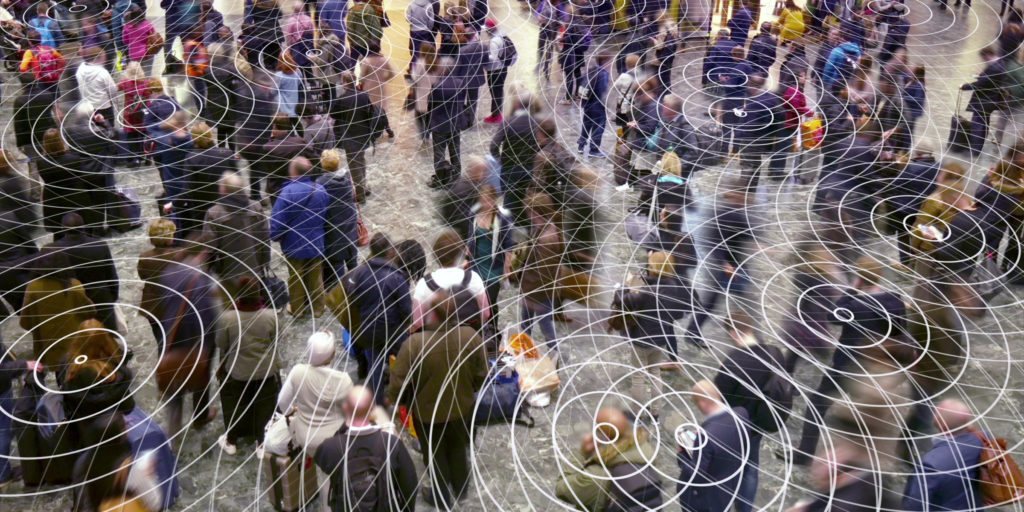
Research published last week from Queen Mary University in London describes an application of a deep neural network that can determine a person’s emotional state by analyzing wireless signalsthat are used like radar. In this research, participants in the study watched a video while radio signals were sent towards them and measured when they bounced back. Analysis of body movements revealed “hidden” information about an individual’s heart and breathing rates. From these findings, the algorithm can determine one of four basic emotion types: anger, sadness, joy, and pleasure. The researchers proposed this work could help with the management of health and wellbeing and be used to perform tasks like detecting depressive states.
Ahsan Noor Khan, a PhD student and first author of the study, said: “We’re now looking to investigate how we could use low-cost existing systems, such as Wi-Fi routers, to detect emotions of a large number of people gathered, for instance in an office or work environment.” Among other things, this could be useful for HR departments to assess how new policies introduced in a meeting are being received, regardless of what the recipients might say. Outside of an office, police could use this technology to look for emotional changes in a crowd that might lead to violence.
The research team plans to examine public acceptance and ethical concerns around the use of this technology.
See the full story here: https://venturebeat.com/2021/02/13/thought-detection-ai-has-infiltrated-our-last-bastion-of-privacy/
Los Angeles Tech Company Launches World’s First App to Keep You Talking to Loved Ones … Even After You Die
However, YOV is distinct in that it doesn’t seek to create a new, virtual entity, nor create a public persona of someone. YOV seeks to maintain a real-life connection with those closest to us. Utilizing proprietary technology, YOV is the only company creating unique, personality-based personas derived from actual, permission-based communication between two individuals over time— designed to offer one a sense of comfort and connection.
A first-of-its-kind, YOV features:
- Unique virtual personas custom-built for each set of interactions.
- Re-creation of treasured nuances and inflections in interactions with loved ones.
- Seamless user experience that makes communication feel authentic and real.
- Built-in psychological expertise combined with AI to sustain and evolve personas over the long term.
.....
About YOV
Based in Los Angeles, California, You, Only Virtual, Inc. (YOV) is a digital platform that recognizes the unique bonds between loved ones, and enables authentic, posthumous one-on-one communications.
See the full story here: https://www.prweb.com/releases/los_angeles_tech_company_launches_worlds_first_app_to_keep_you_talking_to_loved_ones_even_after_you_die/prweb17720820.htm?fbclid=IwAR2_icsVipQCnv9-LoCkwveXQskCfvh4OhpMbJiTuU1NhdImZ46hUOrR_SA

Top EU Privacy Regulator Calls for Total Ban on Targeted Ads
Forbes reports that the EDPS further called for “measures to make sure that when attempting to remove illegal or harmful content from their platforms, companies should avoid — ‘insofar as is possible’ — the processing of personal data … [and that] profiling for purposes of content moderation should be prohibited unless the provider can demonstrate that such measures are strictly necessary.”
TechCrunch reports that before the laws can be approved, they will go through “debate and negotiations in the European Parliament and Council … [which] means battle lines are being drawn to try to influence the final shape of the biggest overhaul to pan-EU digital rules for decades.”
Apple chief executive Tim Cook, who decried the ad-tech “data complex,” urged the EU to “double down on enforcement of its flagship General Data Protection Regulation (GDPR).”
See the full story here: https://www.etcentric.org/top-eu-privacy-regulator-calls-for-total-ban-on-targeted-ads/