ArchAI: Using AI to automatically detect archaeological sites
ArchAI https://www.archai.io covers this gap with instant, high accuracy assessment at an early stage. Founder Iris Kramer is using technology developed during her PhD in deep learning and previous degree in archaeology. She combines the two domains to deliver an innovative product that applies the power of AI to the construction industry to deliver rapid results and improved outcomes by automatically detecting archaeological sites on earth observation data.
ArchAI is seeking partnerships with large construction companies, particularly those involved in major infrastructure projects where she can quickly bring significant, scalable benefits. She is also considering the possibility of bringing on board a co-founder with either an established reputation and connections at board level within the construction industry or extensive experience in using deep learning and would be interested to hear from anyone who fits that profile.

See the full story here: https://futureworlds.com/archai-using-ai-to-automatically-detect-archaeological-sites/
Taking Udacity to New Heights
At Udacity, we think of the Nanodegree program as a new “fourth degree.” The three common university degrees — the Bachelor’s, Master’s, and PhD — have been with us for more than six-hundred years! While these programs form a strong foundation for a student’s career, the reality is that technology is moving too fast today to ever be done learning. To be the best, workers need to continuously refresh their skills and learn about the latest technologies in their field. That’s the role of the Nanodegree program.

See the full story here: https://blog.udacity.com/2019/05/udacity-new-heights.html?fbclid=IwAR335IwhZ3A8Ezvs2GpQZIGTbQOzvkL7Pvjcb3UZmUBl_-vTWz8HjiJ5mws
Vuzix’s new microLED smart glasses look like tech you’d actually want to wear on your face
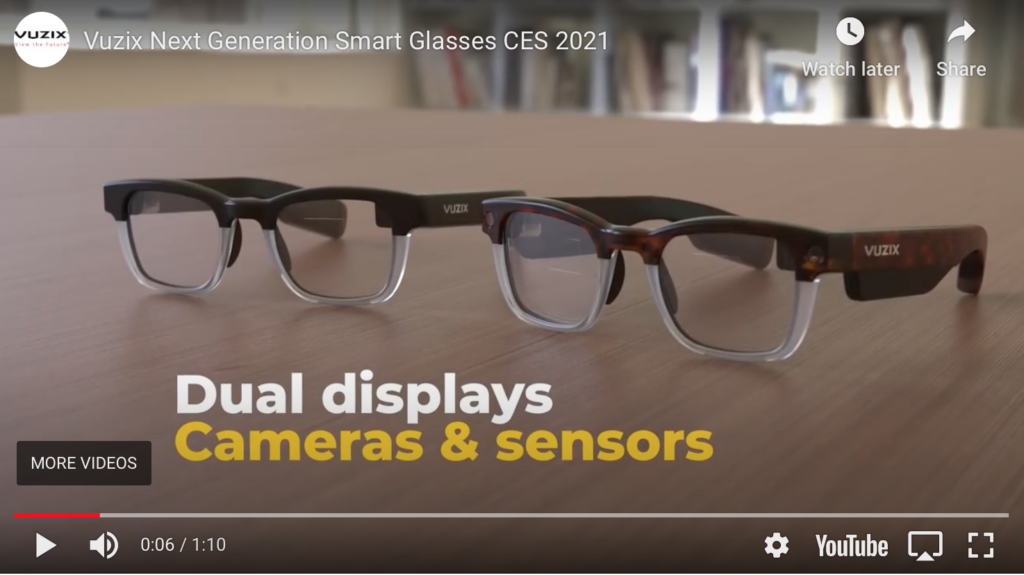
Wearable tech and augmented reality provider Vuzix is back at CES 2021 with another pair of its smart glasses, this time with a new advancement. The latest pair is powered by microLED technology, thanks to a partnership with the Chinese firm Jade Bird Display. MicroLED displays have emerged in recent years as viable alternatives to OLED screens, driving advancements mostly in the television space.
Yet, the tech in this context allows for ultra small but powerful display projectors to be fitted into both sides of the smart glasses, which, to Vuzix’s credit, look pretty close to something you’d be comfortable wearing out in public on a daily basis.
Combined with Vuzix’s waveguide tech and its display engine optics for mapping the image onto the inside of the glass, the result is an impressive-looking gadget that can project a stereoscopic monochrome or color image onto both lenses at a variety of pixel densities and resolutions, depending on the software requirements.
Vuzix’s smart glasses, which are more in the realm of heads-up displays than true AR, are aimed more toward the enterprise, especially after Intel acquired a 30 percent stake in the Rochester, New York-based company back in 2015.
See the full story here: https://www.theverge.com/2021/1/11/22225605/vuzix-microled-smart-glasses-next-gen-ar-heads-up-display-ces-2021?fbclid=IwAR2gmu7ng_LdXp85H4UG51D5JjppKCs25ql2pOY30uwnEJUGKObPsSfuJMA
He Created the Web. Now He’s Out to Remake the Digital World.
But now, Mr. Berners-Lee, 65, believes the online world has gone astray. Too much power and too much personal data, he says, reside with the tech giants like Google and Facebook — “silos” is the generic term he favors, instead of referring to the companies by name. Fueled by vast troves of data, he says, they have become surveillance platforms and gatekeepers of innovation.

“Pods,” personal online data stores, are a key technical ingredient to achieve that goal. The idea is that each person could control his or her own data — websites visited, credit card purchases, workout routines, music streamed — in an individual data safe, typically a sliver of server space.
Companies could gain access to a person’s data, with permission, through a secure link for a specific task like processing a loan application or delivering a personalized ad. They could link to and use personal information selectively, but not store it.
Mr. Berners-Lee’s vision of personal data sovereignty stands in sharp contrast to the harvest-and-hoard model of the big tech companies. But it has some echoes of the original web formula — a set of technology standards that developers can use to write programs and that entrepreneurs and companies can use to build businesses. He began an open-source software project, Solid, and later founded a company, Inrupt, with John Bruce, a veteran of five previous start-ups, to kick-start adoption.
Inrupt introduced in November its server software for enterprises and government agencies. And the start-up is getting a handful of pilot projects underway in earnest this year, including ones with Britain’s National Health Service and with the government of Flanders, the Dutch-speaking region of Belgium.
Tech companies have formed a Data Transfer Project, committing to make personal data they hold portable. It now comprises Google, Facebook, Apple, Microsoft and Twitter. The Federal Trade Commission recently held a “Data to Go” workshop.
Inrupt is betting that trusted organizations will initially be the sponsors of pods. The pods are free for users. If the concept takes off, low-cost or free personal data services — similar to today’s email services — could emerge.
Whether his team can realize that vision is uncertain. Some in the field of personal data say the Solid-Inrupt technology is too academic for mainstream developers. They also question whether the technology will achieve the speed and power needed to become a platform for future apps, like software assistants animated by a person’s data.
Inrupt faces a series of technical challenges, but none that are “go-to-the-moon hard,” said Bruce Schneier, a well-known computer security and privacy expert, who has joined Inrupt as its chief of security architecture.
See the full story here: https://www.nytimes.com/2021/01/10/technology/tim-berners-lee-privacy-internet.html?fbclid=IwAR1WU_nQRCuYdknU5xoYEQQjdVpJoPJMIllU38dJaEd_2I5nRt4o82VZRXUhttps://www.nytimes.com/2021/01/10/technology/tim-berners-lee-privacy-internet.html?fbclid=IwAR1WU_nQRCuYdknU5xoYEQQjdVpJoPJMIllU38dJaEd_2I5nRt4o82VZRXU
Fraunhofer IOF to Revolutionize Quantum Communications and Microscopy
New encryption methods
In the world of communication, Fraunhofer IOF is developing a new encryption technology known as "quantum key distribution" (QKD for short) to protect data today against the cyber attacks of tomorrow. At CES 2021, Fraunhofer IOF will showcase the EPS (short for “Entangled Photon Source”) that generates entangled photon pairs that can serve as the basis for generating quantum-based keys.
Microscopy
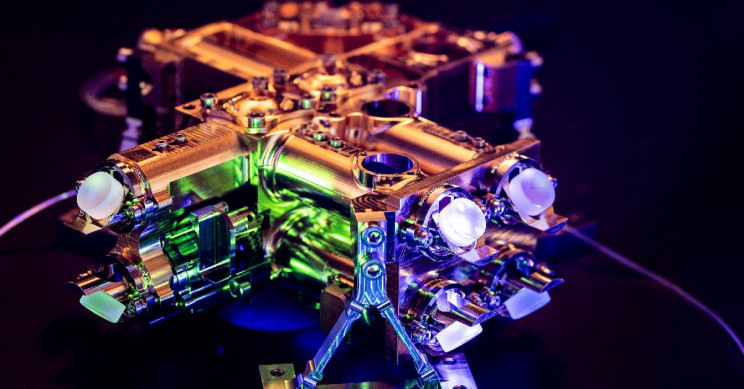
But that's not all that Fraunhofer IOF uses entangled photon pairs for. These elements also serve as the basis of a new microscopy technique that does not cause irreversible damage to the samples as light radiation does. This is because these two photons exchange information with each other without having to interact with the sample itself.
How This Weird Dreamcast Game Revolutionized A.I.
Seaman was the first of its kind in the sense that you could intelligently interact with the on-screen character.
Saito actually contemplated what it would be like to have a pet who asked you questions like “who was that woman you brought home last night?”

Seaman was that pet, and in this piece, we’re going to delve into some of the more fascinating aspects of the game’s A.I.
The Seaman gets angry when he’s hungry. He knows when the weekend is and tells you to go out — he even has intercourse (?). The game’s depth and wide array of interactions is what made it interesting. Thematically, the conversations with Seaman were all about real-world stuff; he was just one of the guys, despite looking a little different. It was possible to become — dare I say — friendly with Seaman despite him being an entirely different species. Is it a stretch to say that Seaman is an early icon for video game diversity?
The microphone peripheral was the key piece of hardware that made Seaman possible. Both the microphone and the game were simultaneously in development.
...the software would listen for speech, map that speech as closely as possible to a pre-determined library, and then select the most plausible/appropriate response based on a pre-written vocabulary and sentence structure.
See the full story here: https://medium.com/super-jump/how-this-weird-dreamcast-game-revolutionized-a-i-6c0abb9ac083https://medium.com/super-jump/how-this-weird-dreamcast-game-revolutionized-a-i-6c0abb9ac083