VR LEAPS INTO THE DISRUPTIVE PHASE
In 2016, combined venture investments in VR, AR, and mixed reality (MR) exceeded $1.25 billion. In 2019, that number increased more than 3X to $4.1 billion.
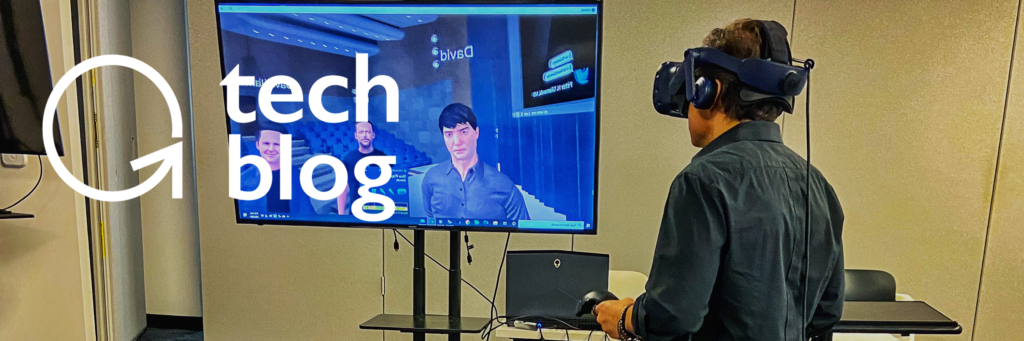
And today, major players are bringing new, second-generation VR headsets to market that have the power to revolutionize the VR industry, as well as countless others.
Already, VR headset sales volumes are expected to reach 30 million per year by 2022. For example, Facebook’s new Oculus Quest 2 headset has outsold its predecessor by 5X in the initial weeks of the product launch.
With the FAANG tech giants pouring billions into improving VR hardware, the VR space is massively heating up.
In this blog, we will dive into a brief history of VR, recent investment surges, and the future of this revolutionary technology.
The new normal for concerts could involve mixed-reality holograms
Live-streaming performances and music downloads brought in some revenue, but those experiences aren’t as captivating or money-generating as in-person concerts. That’s where innovative tech offerings like holograms and personalized digital concerts fit in, according to Denise White, CEO of BLANK XR and former director of direct-to-consumer technologies at the Walt Disney Company.

“From our point of view, the new normal is holographic,” White said. “What that will enable you to do is put on a headset and actually have a conversation with your favorite artists.”
Essentially, it’s mixing artificial intelligence with video and sound manipulation.
The company is in the process of recruiting performers who will share ownership of the holographic image. The service is primarily geared toward Gen Z and younger millennials who prioritize sensory experiences, White said.
BLANK XR will roll out its musician experience with a $9.99 per month membership. Users will also be able to subscribe to individual artists and can choose to donate money to support them, White said.
Koss, a former cybersecurity officer at Walt Disney, said the company has a policy against creating holograms of dead musicians. “I’m not bringing anyone back from the dead,” Koss said.
Conferences After Covid Will Be Shorter—and Smarter
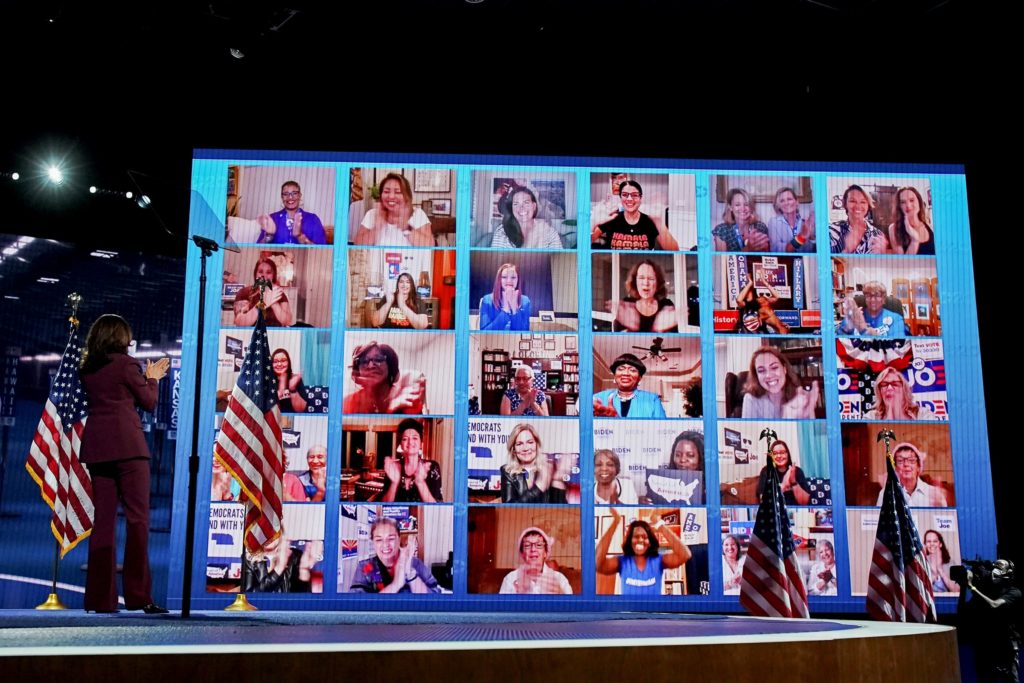
Last year’s event, which took place in New York, drew 1,000 attendees; this year, 6,000 people signed up. “Since we didn’t have the cost associated with setting up a whole venue, we had the opportunity to open it up to people; you don’t have to travel, you don’t have to pay for a hotel; that helped us grow quickly,” says Arueyingho, who’s based in Houston.
Brevity Is the Soul of Zoom
But there’s one thing organizers didn’t need AI to tell them: Zoom fatigue is real. “People don’t want to sit in front of their computer for more than 30 or 40 minutes; that’s why TED talks are so successful,”
“The other day I shared a statistic with a client: They had 500 attendees and 398 unique chat posts,” says Edwards. That format enables anyone—not just panelists—to answer questions that arise in a chat, and it encourages participation among introverts who are disinclined to walk up to a microphone in a room full of people, she says.
The Party Problem
The Investigative Reporters & Editors conference in September included a trivia happy hour, a Dutch baby cooking demonstration, and a pet parade, complete with slides introducing each animal companion during an unsurprisingly chaotic live Zoom; the event drew more than 150 people, including one participant who said she’d woken up at 5 am so she could tune in from Kyrgyzstan.
See the full story here: https://www.wired.com/story/what-conferences-will-look-like-post-covid/
Spatial launches augmented reality workspaces app for mobile
Spatial Systems Inc., a holographic collaboration platform for augmented reality and virtual reality, today announced a native AR app for iOS and Android that runs on almost any current generation of mobile device.
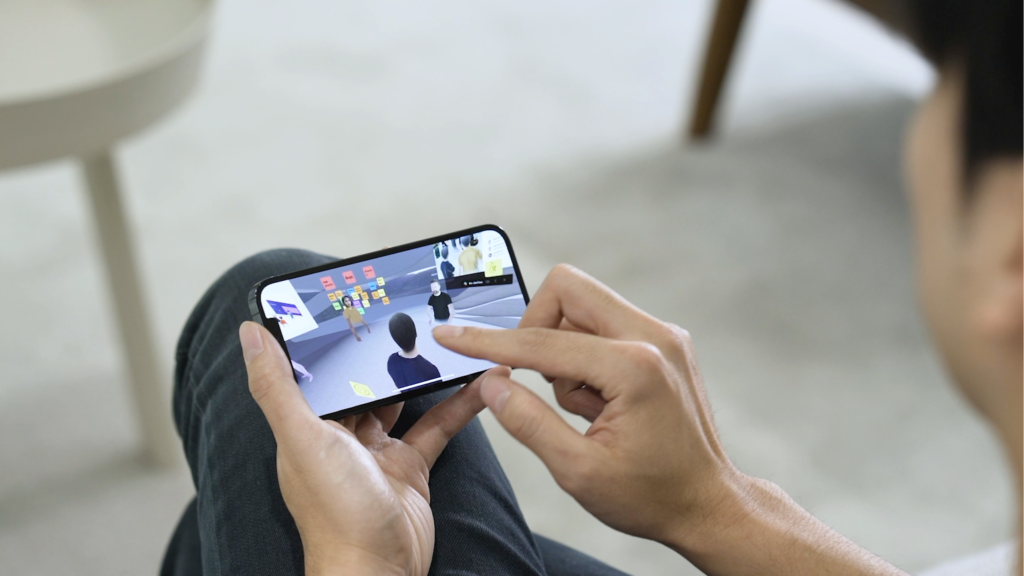
During the COVID-19 pandemic, interest in Spatial’s platform has exploded as an alternative to tools such as Zoom, with usage up over 130 times from before 2019, and now more than a million meetings have been joined. With hundreds of hours spent in Spatial each day, this trend is accelerating, but remote access to AR/VR headsets remains a barrier to many consumers because of expense and availability.
However, billions of AR-enabled smartphones are on the market today, and Spatial makes use of advances in ARKit and ARCore on iOS and Android to take advantage of this to make AR and VR more accessible to everyday people.
In that time, Spatial launched on the Oculus Quest store and introduced an auditorium environment, a VR space that can seat more than 40 people at once for collaboration as if they were in a lecture hall.
Spatial is now live for iOS and Android.
See the full story here: https://siliconangle.com/2020/12/15/spatial-launches-augmented-reality-workspaces-app-mobile/
Augmented reality visor makes cake taste moister, more delicious
Researchers have developed an augmented reality (AR) visor system that enables them to manipulate the light coming off food in such a way as to 'trick' people consuming the food into experiencing it as more or less moist, watery, or even delicious. The findings not only reveal how human taste is experienced in a multisensorial way—through a combination of visual perception, smell and even sound—but the technique could be used in hospitals to improve the palatability of food, or as a design development tool in the food industry.
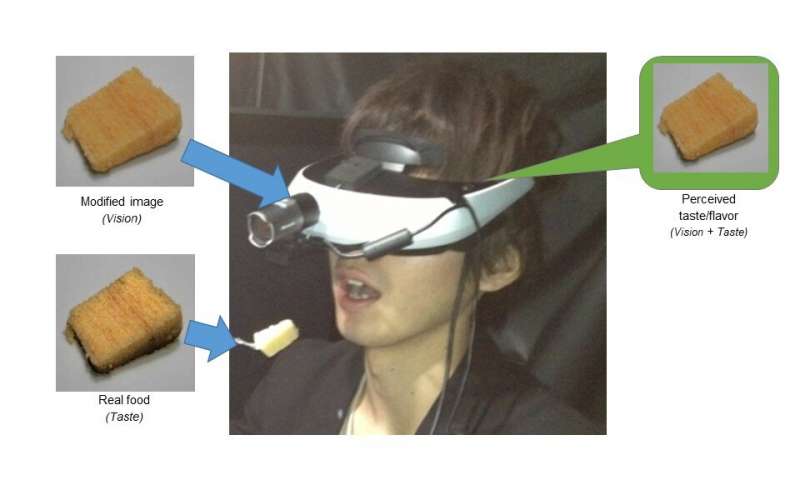
The findings were published in Scientific Reports on September 30, 2020.
Underlying that visual experience is the way that light bounces off an object, or—to put it in more scientific terms—the distribution of luminance.
The researchers developed an augmented reality (AR) system that allows them to manipulate the standard deviation of luminance distribution.
The AR manipulation was most effective in moistness (of the cake) and wateriness (of the ketchup), while the effect of the system on perception of sweetness was relatively modest
See the full story here: https://medicalxpress.com/news/2020-12-augmented-reality-visor-cake-moister.html
TESLA FULL SELF-DRIVING CODE CONTAINS SECRET “AUGMENTED REALITY VIEW”
While digging through the code of their Tesla’s Full Self-Driving feature, a noted Tesla hacker-owner who goes by the handle “green” found an augmented reality view of everything the vehicle is capable of seeing in vivid detail, Teslarati reports.
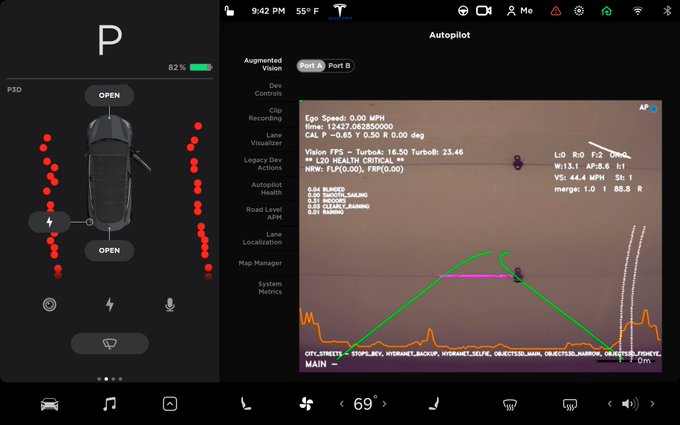
The Elon Musk-led company began rolling out its Full Self-Driving beta in October, allowing a select group of Tesla owners to test the feature.
Dead Code
In several videos posted to Twitter, the hacker showed off “the much coveted augmented reality view.” They also spotted “tons of dead code” including snippets that may hint at possible features to be released later down the road including “coast2coast” and “map selection.”
See the full story here: https://futurism.com/the-byte/tesla-full-self-driving-code-secret-augmented-reality-view