Exploring Decentraland: A Review of the Virtual World Built on Ethereum
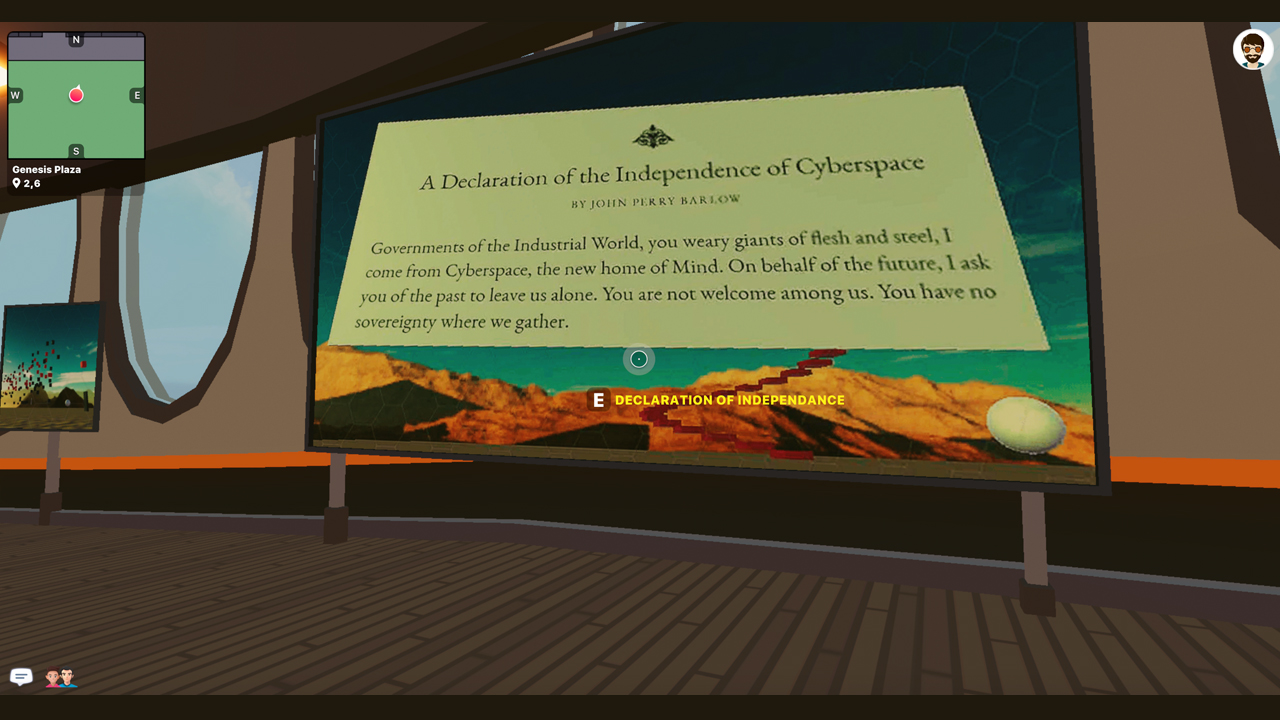 Essentially, the world is a blockchain fueled virtual reality platform and users can explore, create, play games, collect wearables, monetize creation, leverage land plots, and 3D building techniques. After the “Bronze Age,” Decentraland moved into the “Iron Age” which involves the ability to interact with the virtual world in various ways and leverage the native cryptocurrency MANA to process payments.
...
Over the course of two weeks, my sons and I still have not explored every crevice and plot in Decentraland. Joshua and Franklin enjoyed all the things that you could ride like the Ferris Wheel, race tracks, and the many obstacles throughout the metaverse.
 My favorite place was the Crypto Valley Art Museum and the donut shop with two police cruisers sitting in front of the shop. My oldest son Joshua explores Decentraland on his own now too, as he downloaded Metamask on his own laptop and fires up the virtual world to explore.
...
Joshua is ten so he enjoyed the program a lot more than his seven-year-old brother Franklin. Overall, we all thought the experience is enjoyable and it’s very cool to see a virtual world built on top of the Ethereum network. My two sons also enjoyed the fact that they used a Metamask wallet for interaction and how the ETH chain powers the entire world.
The only issue I had with the entire Decentraland experience was the high ETH gas fees, which are a problem for every defi application right now and the expensive gear. I think that people marketing virtual wearables should come down on their prices, but I can see that happening if Decentraland gathers more users.
See the full story here: https://news.bitcoin.com/exploring-decentraland-a-review-of-the-virtual-world-built-on-ethereum/
Come for the Network, Pay for the Tool
As high quality content and effective brand strategy move down the long tail, “community” has become an important concept for every post-Web 2.0 player. Crypto token holders, influencer fanbases, DTC brand customers, creator audiences, and new social networks are all often referred to as communities, and each has a stake in developing community for itself.
A new business type here is the paid community: a direct subscription to join in. Today, most paid communities live on the outskirts of existing social platforms. But as they become normalized, paid communities are becoming a viable business model for smaller-scale social networks aiming to be both profitable and socially sustainable.
This emerging new media thing, the paid community social network, has new rules and new risks, and just as it will require new skillsets to operate, requires a new way of understanding what both business and community mean.
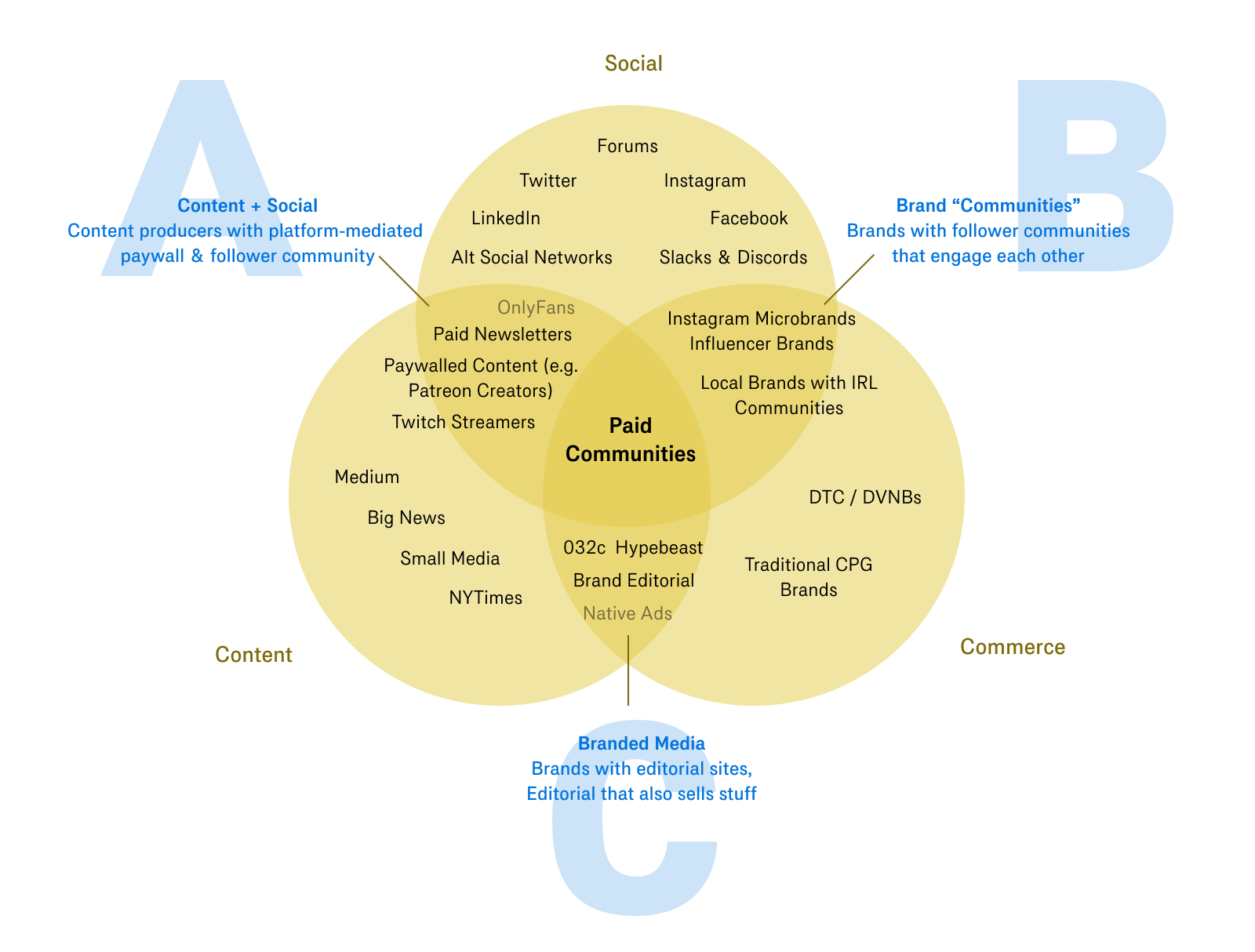
Paid Communities Are a New Business Model for Bespoke Social Media
Meanwhile, dozens of alternative social networks have sprouted up in the last couple years. With the maturation of Javascript-based web development and plenty of front-end talent, it’s become easy to build complex web applications with tiny teams. futureland.tv, Dialup, Special Fish, and alternative dating app Bighead are among these new experiments. These alternative social networks are interesting in part because they prove that dissatisfaction with mainstream web has motivated significant movement to alternatives. But they are also interesting because of their unique user communities.
Businesses want to be active participants in their customers’ social landscape, because brand values are the last battleground for differentiation.
Bloomberg
The key point to understand about Bloomberg is that it’s both a software product and a social network. The software product determined who would join the network, but the network is what keeps users there. It’s like a multiplayer video game, or Harvard: Sure, the quests and campus are useful, but people keep showing up because of the friends they’ve made or the connections they intend to make.
“come for the network, pay for the tool.”
See the full article here: https://subpixel.space/entries/come-for-the-network-pay-for-the-tool/?fbclid=IwAR2qlZbBMzJY9bHrSPmXMdE0kKOhmoSB6uAauetBpks_3FbV5nUQE4cJefQ
Marketers Experiment With TV Ads in Console Videogames
 “Hardcore gamers, if they are used to paying $60-plus for a videogame, they may not feel aligned with an ad-supported experience,” said John Frelinghuysen, managing director of consulting firm L.E.K. Consulting, which has researched the subject of ads in games. “But as you move down to midcore or casual-level gamers, playing free games or games on subscription services, we think the market is much more ready for that.”
Executives involved in the tests acknowledged the risk of alienating gamers, but added that they have shown a willingness to accept ads in exchange for rewards. It is important that marketers run ads that speak to the audience they are trying to reach.
See the full story here: https://www.wsj.com/articles/marketers-experiment-with-tv-ads-in-console-videogames-11595768400
Virtual reality study provides insight into how anxious individuals can reduce threat magnification tendencies
A recent study by Dino Krupić and his team used VR technology to explore individual differences in response to an induced fear of heights. Specifically, they were interested in whether threat magnification – the tendency to exaggerate the presence of danger – could explain differences in the physiological arousal and distress response to fear.
A sample of 122 participants of an average age of 22 took part in a virtual reality experience called Richie’s Plank Experience.... After the plank experience, participants were assigned to one of three conditions: listen to a mindfulness recording, watch a relaxing VR animation, or sit in silence (control condition).
Before the experiment, subjects completed the Pain Catastrophizing Scale (PCS) as an assessment of threat magnification, and the anxiety and fear scales of the Questionnaire of Approach and 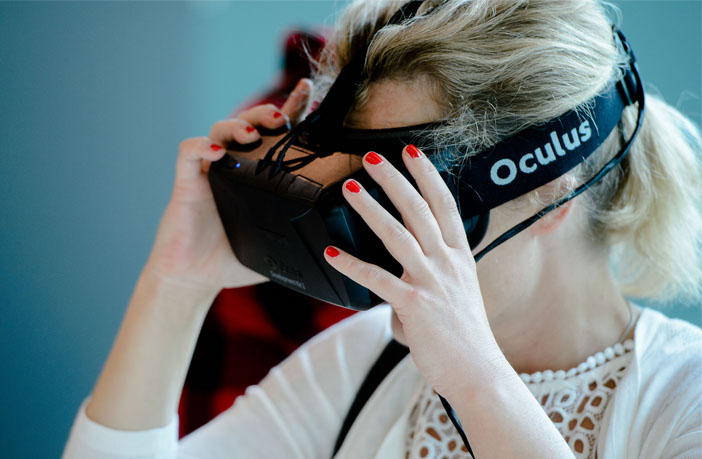 Avoidance Motivation (QAAM). Moodmetric rings measured subjects’ skin conductance levels throughout the experiment and subjects rated their state of physiological arousal immediately after the plank experience. Finally, subjects rated their levels of distress before the plank experience, immediately after it, and following the relaxing condition.
Namely, anxious individuals tend to magnify or overestimate the dangerousness of threats from the environment,” Krupić told PsyPost.
The researchers propose that anxious individuals “are prone to catastrophizing”, which in turn “increases perceived physiological arousal, which then leads to a higher subjective levels of distress.” Accordingly, the authors suggest that interventions to address catastrophic thinking might be beneficial for individuals struggling with anxiety.
See the full story here: https://www.psypost.org/2020/07/virtual-reality-study-provides-insight-into-how-anxious-individuals-can-reduce-threat-magnification-tendencies-57452