The future of fashion? Virtual reality artists and designers collaborate for an immersive show
London Fashion Week saw its first digital showcase in June, quickly followed by Couture Fashion Week in July. The latter saw many high-end labels, including Chanel, Valentino, Dolce & Gabbana and Dior, introduce a new era of virtual fashion shows and short films.
Verizon Media’s The Fabric of Reality
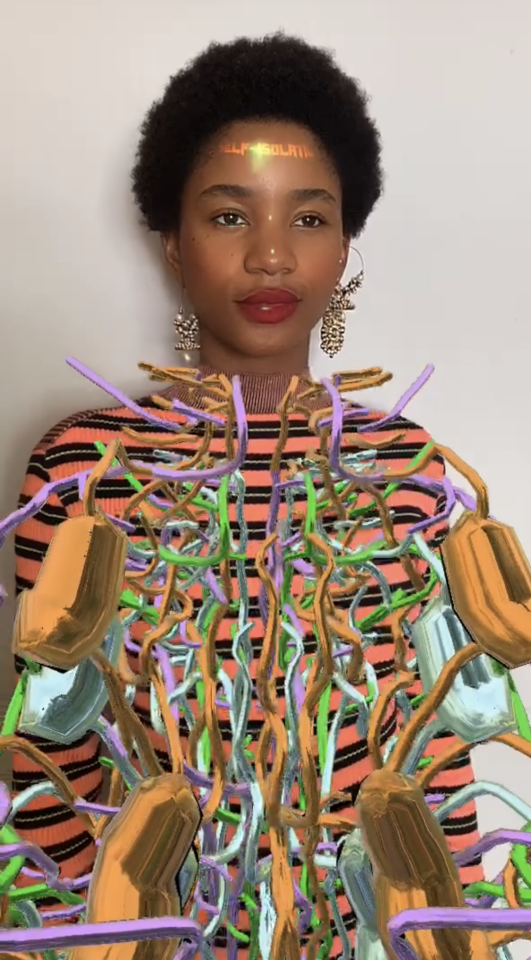
To help reinvent fashion shows for the future, RYOT, Verizon Media’s in-house creative studio has created The Fabric Of Reality, an immersive fashion experience that pairs three up-and-coming designers with virtual reality artists to create a unique collaboration.
See the full story here: https://sports.yahoo.com/the-fabric-of-reality-immersive-show-120503665.html

Serving virtual reality Raspberry Pi to flies
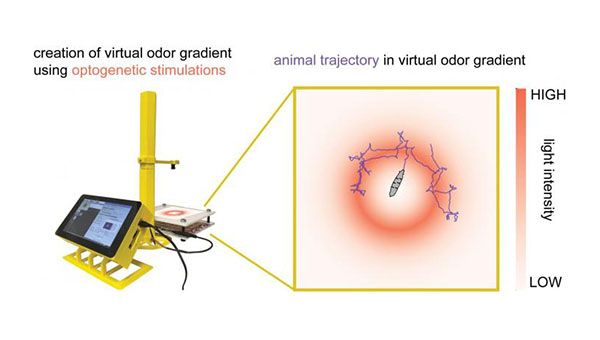 The Raspberry Pi Virtual Reality system (PiVR) is a versatile tool for presenting virtual reality environments to small, freely moving animals (such as flies and fish larvae), according to a study published in the open-access journal PLOS Biology by David Tadres and Matthieu Louis of the University of California, Santa Barbara. The use of PiVR, together with techniques like optogenetics, will facilitate the mapping and characterization of neural circuits involved in behaviour.
In the new study, Tadres and Louis used their PiVR system to present virtual realities to small, freely moving animals during optogenetic experiments. Optogenetics is a technique that enables researchers to use light to control the activity of neurons in living animals, allowing them to examine causal relationships between the activity of genetically-labelled neurons and specific behaviours.
As a proof-of-concept, Tadres and Louis used PiVR to study sensory navigation in response to gradients of chemicals and light in a range of animals. They showed how fruit fly larvae change their movements in response to real and virtual odour gradients. They then demonstrated how adult flies adapt their speed of movement to avoid locations associated with bitter tastes evoked by optogenetic activation of their bitter-sensing neurons. In addition, they showed that zebrafish larvae modify their turning manoeuvres in response to changes in the intensity of light mimicking spatial gradients. According to the authors, PiVR represents a low-barrier technology that should empower many labs to characterize animal behaviour and study the functions of neural circuits.
See the full story here: https://www.labnews.co.uk/article/2030709/serving-virtual-reality-raspberry-pi-to-flies
Vuzix Highlights its Growing Augmented Reality Smart Glasses Patent Portfolio for Next Generation Smart Glasses
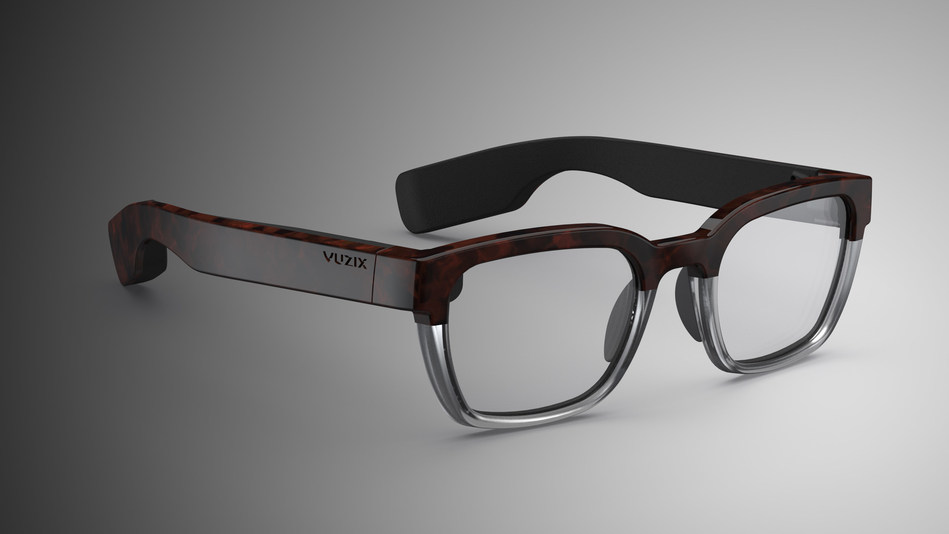 -Vuzix waveguides with holographic optics, laser and micro LED display integration cornerstone to producing fashion forward wearable computer smart glasses
-Company's patent portfolio has grown from 90 patents and patents pending to 166 over the last 36 months
Tim Burton’s ‘Lost Vegas’ Exhibit Brought To Life Using VR And Drone Photogrammetry
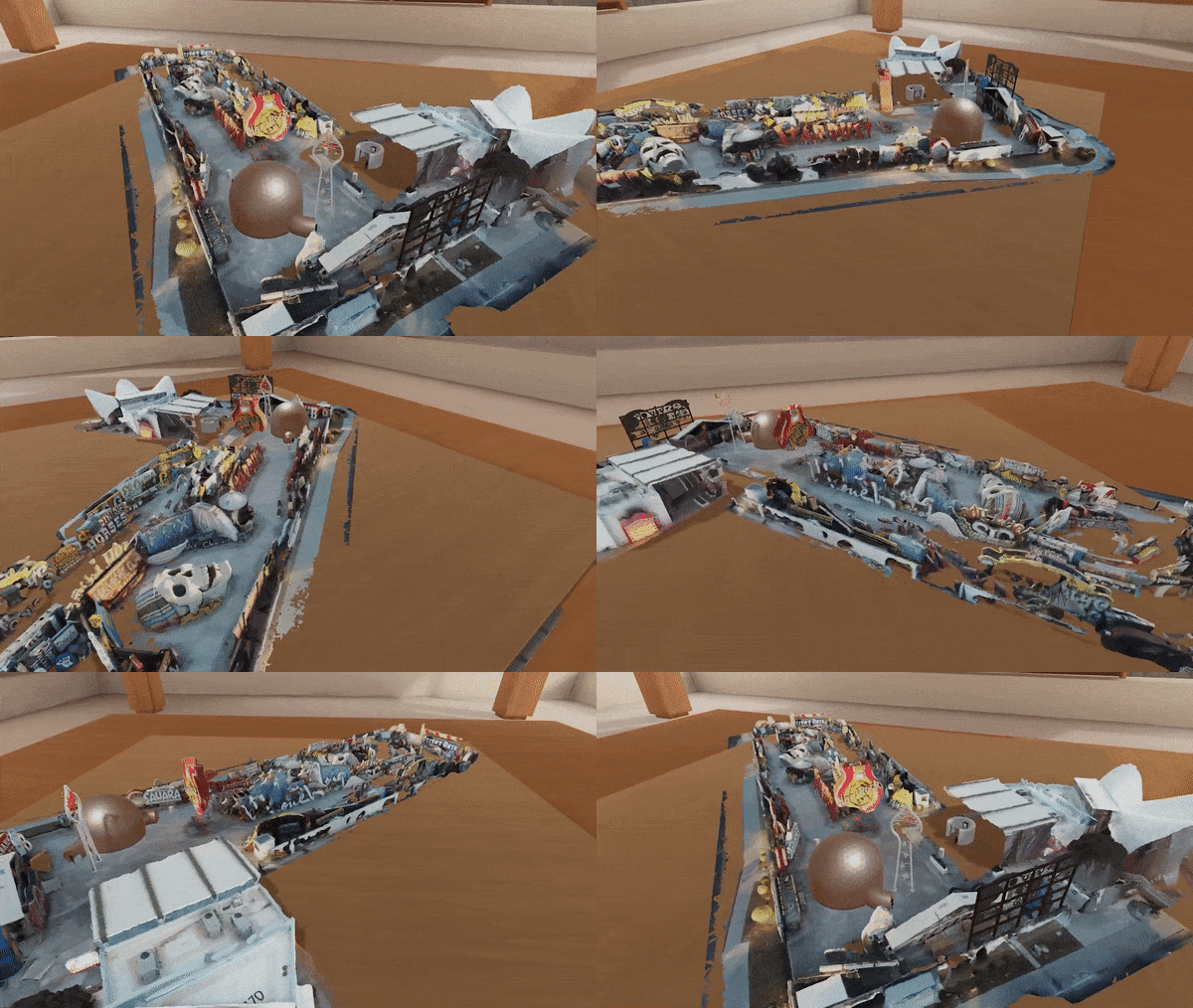 There are very few public art galleries more unique than that of The Neon Museum in Las Vegas, Nevada. Established in 1996, the non-profit organizations primary goals involve the collection and preservation of classic Las Vegas signage for exhibition and cultural enrichment.
In 2019, museum curators handed over control of the campus to celebrated filmmaker, artist, and animator Tim Burton (The Nightmare Before Christmas, Edward Scissorhands, Sleepy Hollow), marking the first time a single artist had been given full reign of the space.
Pentagon’s Joint AI Center (JAIC) Testing First Lethal AI Projects
 The new acting director of the Joint Artificial Intelligence Center (JAIC), Nand Mulchandani, gave his first-ever Pentagon press conference on July 8, where he laid out what is ahead for the JAIC and how current projects are unfolding.
The press conference comes two years after Google pulled out of Project Maven, also known as the Algorithmic Warfare Cross-Functional Team.
“We have had overwhelming support and interest from tech industry in working with the JAIC and the DoD,” Mulchandani said. “[we] have commercial contracts and work going on with all of the major tech and AI companies – including Google – and many others.”
Termed JAIC 2.0, the new plan includes six mission initiatives that are all underway, including joint warfighting operations, warfighter health, business process transformation, threat reduction and protection, joint logistics, and the newest one, joint information warfare. The latest addition includes cyber operations.
Here is how he responded:
“I don’t want to start straying into issues around autonomy and lethality versus lethal — or lethality itself. So yes, it is true that many of the products we work will go into weapon systems.”
“None of them right now are going to be autonomous weapon systems. We’re still governed by 3000.09, that principle still stays intact. None of the work or anything that General Shanahan may have mentioned crosses that line period.”
See the full story here: https://www.unite.ai/pentagons-joint-ai-center-jaic-testing-first-lethal-ai-projects/