Introducing Jadu, A Social App That Lets You Perform With Holograms
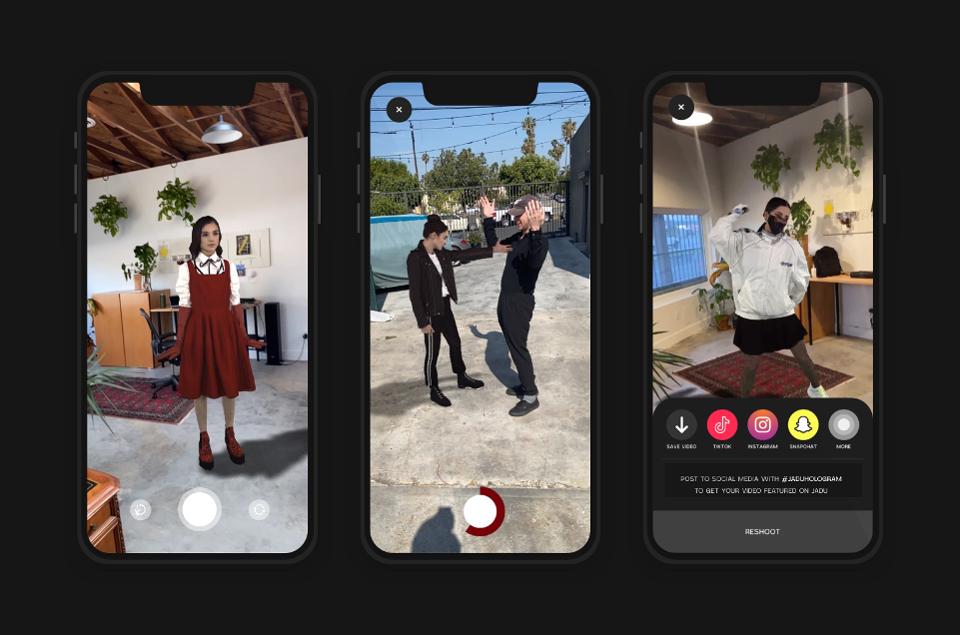
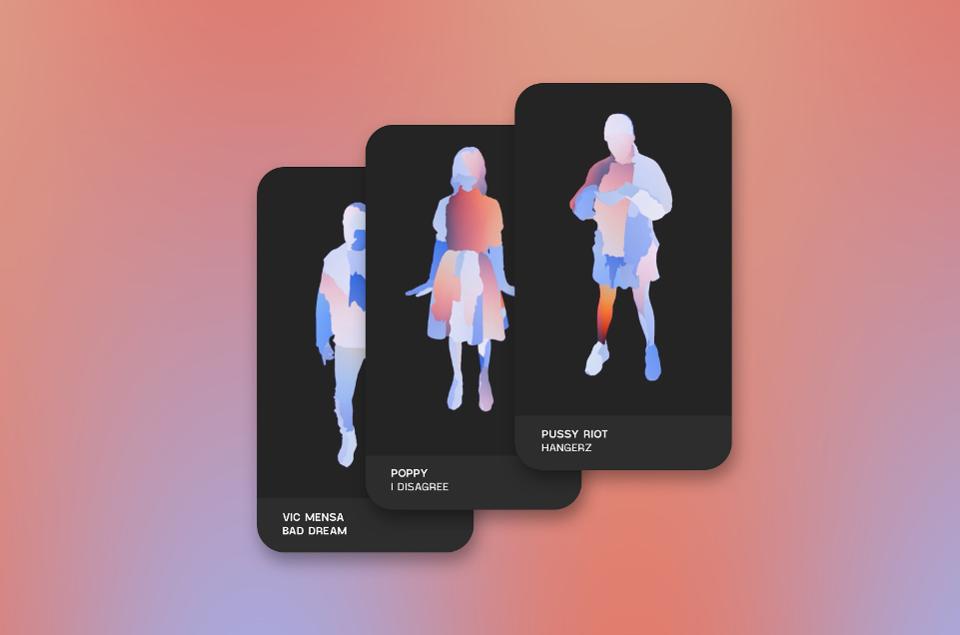 The latest project from Asad J. Malik’s 1RIC (Terminal 3, A Jester’s Tale) comes after the announcement last year that the volumetric studio was scaling in Los Angeles, CA. The app allows users to access pre-recorded 3D “holographic” performances from a curated slate of artists and record photo and video content “with” them using augmented reality.
With TikTok gaining major traction with younger demographics over the past two years, the duet has become a staple in the social media diet of “digital natives” worldwide. 1RIC CEO and Jadu Founder Asad J. Malik explained that Jadu is meant to evolve this language of creative interaction.
“We want Jadu to enable a new sense of presence,” Malik said in a statement. “There is something special about allowing artists to share this new sense of presence with young audiences that care so deeply about them.”
Each hologram consists of a 15-second snippet, which users can place in their own world and react to in their own individual way. Once the app has been opened and the hologram selected, users scan their surroundings to place the hologram in their space. The resulting video can be saved to their device to be shared across other social media platforms.
Los Angeles-based Talespin nabs $15 million for its extended reality-based workforce training tools
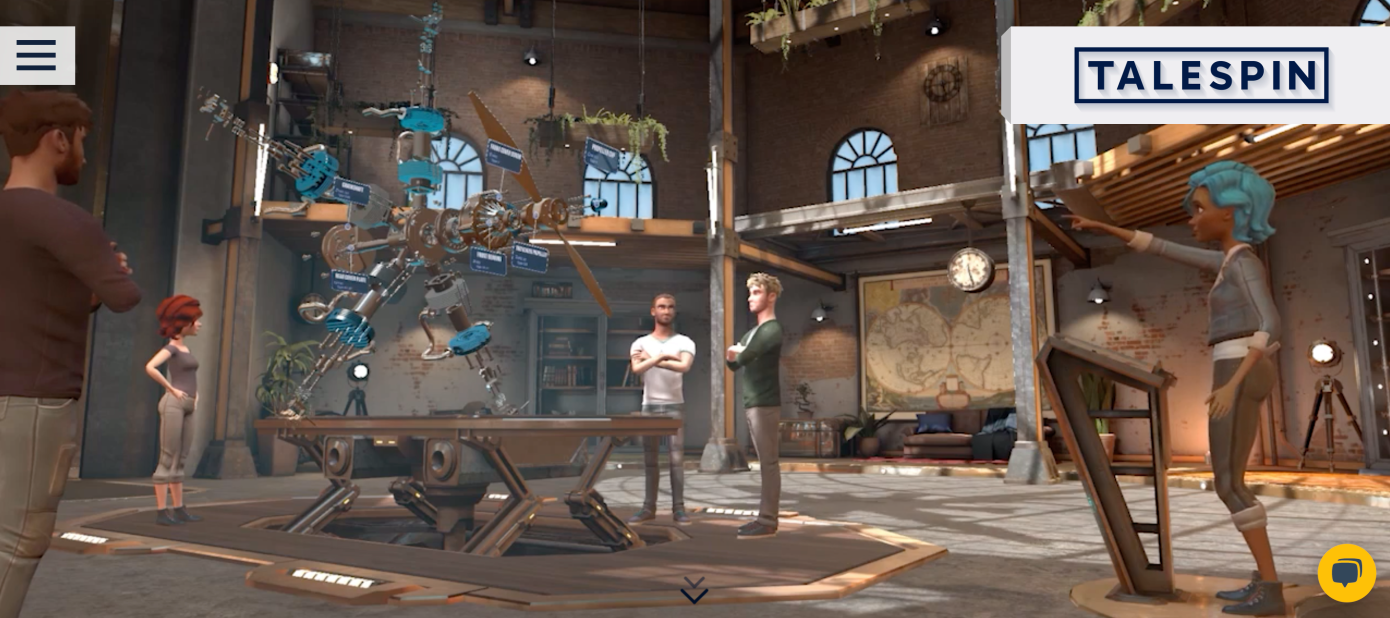 It turns out the virtual and augmented reality companies aren’t dead — as long as they focus on the enterprise. That’s what the Los Angeles-based extended reality technology developer Talespin did, and it just raised $15 million to grow its business.
“Talespin‘s immersive platform has transformed employee learning and proven to be an impactful addition to our training programs. We’re honored to continue to support the Talespin team through this next phase of growth and development,” said Scott Lindquist, Chief Financial Officer at Farmers Insurance, in a statement.
Farmers is an investor in Talespin, as is the corporate training and talent management software provider Cornerstone OnDemand, and the hardware manufacturer HTC.
See the full story here: https://techcrunch.com/2020/03/03/los-angeles-based-talespin-nabs-15-million-for-its-extended-reality-based-workforce-training-tools/
Former Head Of Tencent X Lab Jia Jiaya Establishes New AI Startup
 Jia Jiaya, the former head of X Lab under Tencent Cloud and Smart Industry Group and a tenured professor of the Computer Science and Engineering Department of the Chinese University of Hong Kong, founded an AI company whose main direction is industrial inspection and high-definition video.
The reason to found the company is that "the sinking of AI will definitely bring new breakthrough points." Jia Jiaya said that after seeing so many industries, there is nowhere to use a suitable and simple AI system. For example, in all electric power industries today, reducing energy consumption is a huge ultimate goal, but in the core part of this generator, very few experts in the AI direction can understand the specific needs of this industry, so it is difficult to customize it.
At the same time, he led the team to win championships in international computer vision field competitions such as instance segmentation, semantic segmentation and object detection. He has trained more than 40 doctoral and master students, including Xu Li, co-founder and CEO of Chinese AI startup unicorn, SenseTime.
See the full story here: https://www.chinamoneynetwork.com/2020/02/28/former-head-of-tencent-x-lab-jia-jiaya-establishes-new-ai-startup
106 VR Titles Generated More than $1 Million in Revenues in 2019
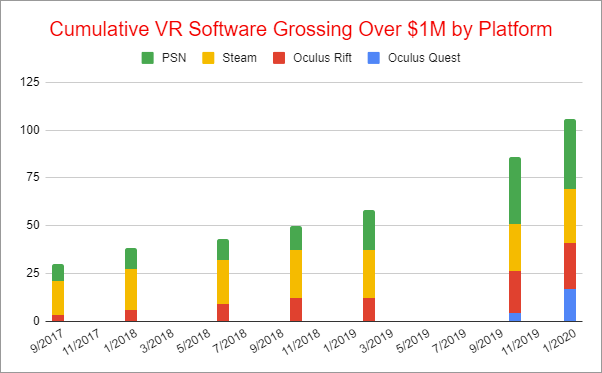 The top seven titles in the analysis generated more than $10 million in revenues. The leading VR title grossed $60 million. Chennavasin expects a VR title to hit the $100 million milestone by this time next year.
See the full story here: https://virtualrealitytimes.com/2020/02/29/106-vr-titles-generated-more-than-1-million-in-revenues-in-2019/
Snapchat Evolves AR Scope With Ground Segmentation Lenses
 Snapchat is expanding its arsenal of Lenses that alter the look of users and the environment, and in doing so is quickly becoming the leader in augmented reality. While Snapchat’s communication tools place the app in the realm of social media, it’s not hard to see why it calls itself a “camera company.”
See the full story here: https://www.forbes.com/sites/rebeccabellan/2020/02/29/snapchat-evolves-ar-scope-with-ground-segmentation-lenses/#1e960fe51a8c
The Political Pundits of TikTok
 In a sense, these TikTok users are building short-form TV networks, each with a cast of talking heads. On TikTok they’re called hype houses, named after the high-powered influencer collab house in Los Angeles. These political houses are not physical homes, but virtual, ideological ones represented by group accounts.
There are conservative-leaning houses (@conservativehypehouse, @theconservativehypehouse, @TikTokrepublicans and @therepublicanhypehouse, which amassed more than 217,000 followers in under a month) and liberal ones (@liberalhypehouse, @leftist.hype.house). There are also bipartisan houses, for users who love discourse, and undecided houses, for those who aren’t sure what or whom they love.
“I do feel like TikTok is cable news for young people,” said Sterling Cade Lewis, 19, who has nearly 100,000 followers. “CNN and Fox and big-name news media, those are all geared toward people who have honestly grown up with a longer attention span.”
TikToks, on the other hand, run a maximum of 60 seconds; most videos are as short as 15. “Being able to make shorter videos and educational clips, it’s easier to connect with a younger generation who’s just swiping through their phones 24/7,” Mr. Lewis said.
Though they disagree on major issues, members of different political groups frequently engage with each other. Their videos often go viral when they “duet” on major issues. (Duetting is a feature on TikTok that allows users to respond to videos with videos of their own and post them side by side.)
See the full story here: https://www.nytimes.com/2020/02/27/style/tiktok-politics-bernie-trump.html
Let’s Be Honest: The Augmented Reality Market Is Literally All About The Smartphone Right Now
... not very upfront about the fact that almost all the value in the augmented reality ecosystem is currently being generated by AR on phones. And that this will continue for likely another four to six years.
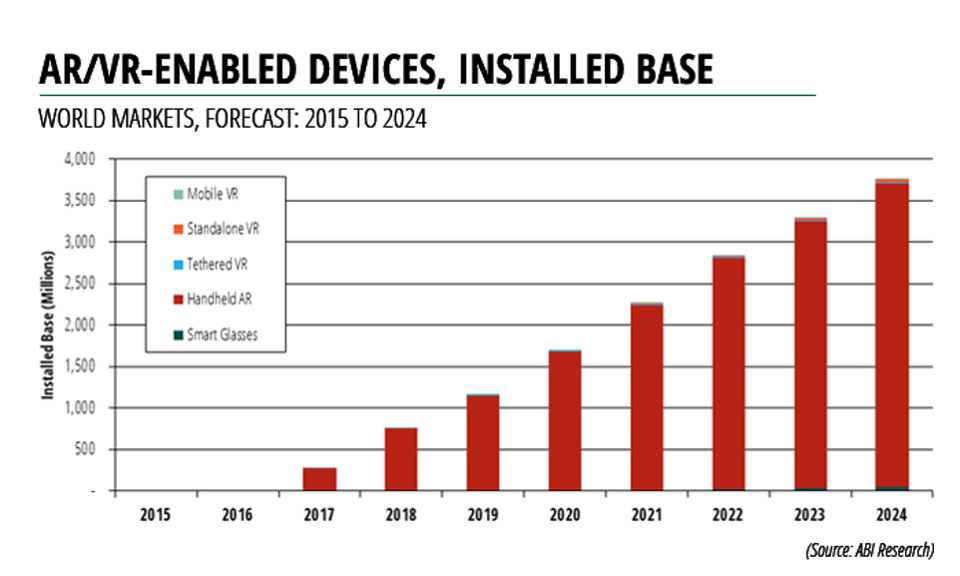 At first glance, the legend is spectacularly unhelpful, providing labels for chunks of data that don’t seem to exist in the chart. At closer glance, there are slices of units in the mobile VR, standalone VR, tethered AR, and smartglasses categories. They’re just so small that they almost entirely vanish compared to the Handheld AR category.
See the full story here: https://www.forbes.com/sites/johnkoetsier/2020/02/27/lets-be-honest-the-augmented-reality-market-is-literally-all-about-the-smartphone-right-now/#3052bd3f118d