Expo 2020 Dubai unveils pavilions for Australia, Canada, India and Malaysia
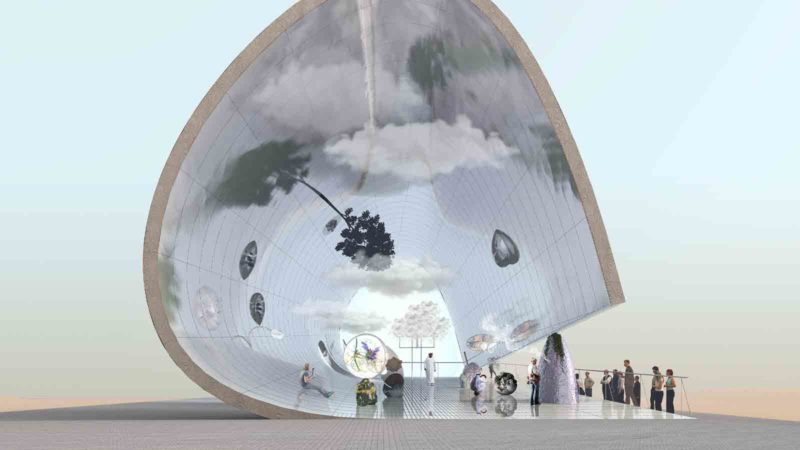
Latvia
This pavilion is an open space for imagination and thought, with an Arabian desert sandscape, industrial-speed internet and 3D stereo sound.
 See the full story here: https://blooloop.com/news/expo-2020-dubai-pavilions-australia-canada-india/?fbclid=IwAR0Ap2TTQQilE61FuPwvVEp1lWHUa_UfZM6aPJxaT31I2b4MNNE8kVU1Ohk
IEEE calls for standards to combat climate change and protect kids in the age of AI
 The IEEE Standards Association has released a report calling for engineers to consider the impact their work will have on climate change, children, and society. It’s a push toward “utilizing emerging technologies in a way that prioritizes people and planet over power and profits.”
The Institute of Electrical and Electronics Engineers (IEEE) is one of the largest organizations for computer scientists in the world. With hundreds of thousands of members, the group undertakes initiatives to create common standards and often consults organizations like the European Commission and OECD on matters of ethics and design principles.
The whitepaper encapsulates change already underway at the IEEE that’s in line with AI ethics principles released in spring 2019 after years of work, according to John Havens, director of the IEEE Global Initiative on Ethics of Autonomous & Intelligent Systems.
The report offers three recommendations:
- Shift toward a “new climate economy” and identify “Earth-friendly AI”
- Protect children’s future, data, and lives
- Seek new success metrics that take societal well-being into account
The paper itself does not constitute an IEEE standard, but it points to a number of standards that may need to change to reflect the recommendations.
Children, data privacy, and big tech
The whitepaper also argues that the internet fails to account for underage users. It asserts that the internet is designed to treat every user as an adult, ignoring the need to protect children from data collection by tech giants.
It also points to advances in the field of probabilistic computing that can support the creation of well-being metrics and highlights recent work by the government in New Zealand, where lawmakers are using metrics associated with people and the environment to influence policy and the economy.
Other metrics that measure human benefit and well-being include the OECD’s Better Life Index and the Genuine Progress Index, which lawmakers in places like Maryland use when drafting legislation.
See the full story here: https://venturebeat.com/2020/02/06/ieee-calls-for-standards-to-combat-climate-change-and-protect-kids-in-the-age-of-ai/
At Andover Senior Center, A Virtual Reality Cupcake Lesson
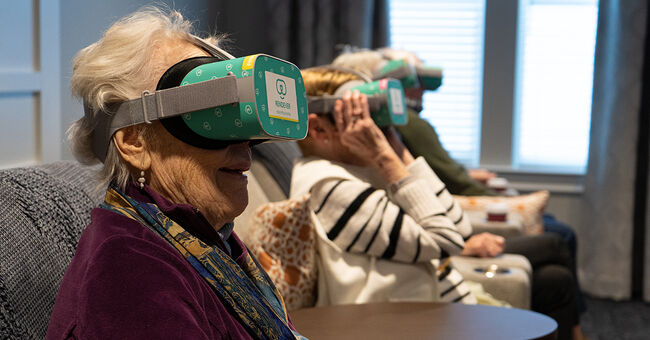 Residents at Stone Hill Senior Living Center got a special virtual reality cupcake-making lesson as a Valentine's Day treat Thursday.
The residents strapped on VR goggles, transporting them to Magnolia Bakery in Boston's Faneuil Hall, where they watched a baker give a step-by-step lesson on how to make fancy Valentine's cupcakes.
Then, they got to eat fancy Valentine's Day cupcakes in real life.
It's a project by Somverville-based company Rendever. The company's CEO, Kyle Rand, told WBZ NewsRadio's Madison Rogers they use virtual reality to reduce social isolation in communities like senior centers.
"We actually saw decreases in depression, increases in feelings of trust, and increases in social health, because what happens is, they're experiencing these things together," he said. "They're laughing together, they're smiling together. They take their headsets off, and you have this new connection."
See the full story here: https://wbznewsradio.iheart.com/content/virtual-reality-cupcakes-andover-senior-center-stone-hill-vr-goggles-valentines-day/
Sony imagines a world full of artificial intelligence, from kitchen bots to games
 In 1997, Hiroaki Kitano, a research scientist at Sony, helped organize the first Robocup, a robot soccer tournament that attracted teams of robotics and artificial intelligence researchers to compete in the picturesque city of Nagoya, Japan.
Kitano now leads a new effort at Sony, announced in November, to infuse cutting-edge artificial intelligence throughout the company.
Sony will focus its artificial intelligence on three domains, says Kitano: games, sensors and, more interestingly, culinary arts. These areas reflect the company's current commercial focus and an aspirational direction for the future.
See the full story here: https://newsdio.com/sony-imagines-a-world-full-of-artificial-intelligence-from-kitchen-bots-to-games/49703/
2019 Was a Major Inflection Point for VR—Here’s the Proof
by Tipatat Chennevasin
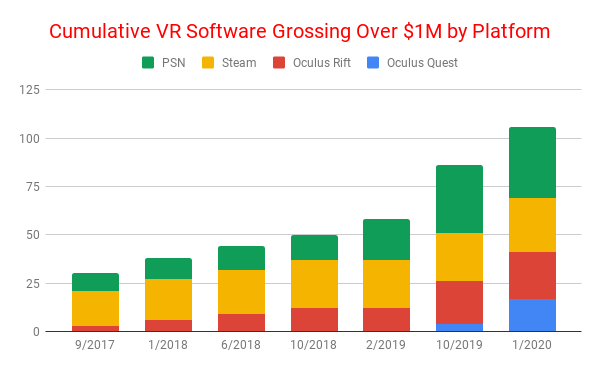
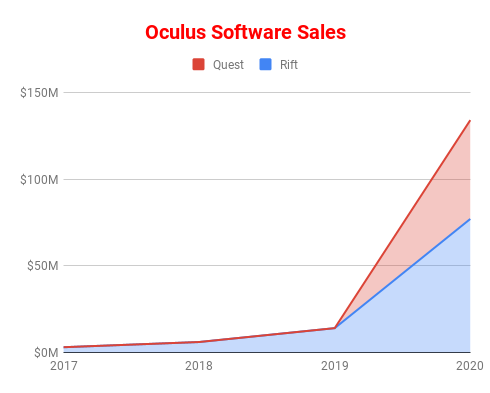
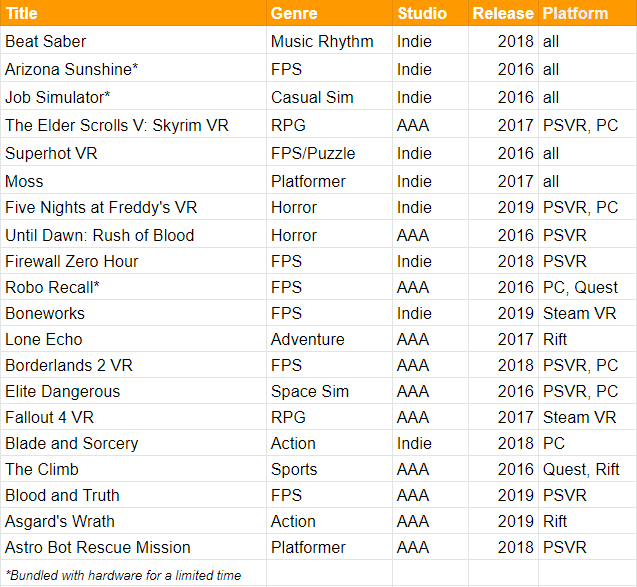
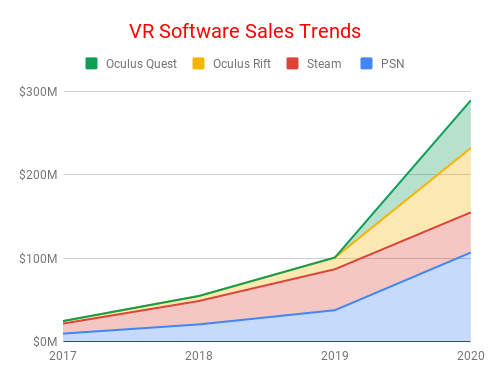 VR adoption is accelerating thanks to the Oculus Quest. We’ve seen over 100 VR titles break $1 million in revenue, growing the total VR software market by 3x in 2019. Top grossing VR titles have cleared $10 million in revenue, and can reach up to $60 million in sales given the current distribution of headsets in the market so far. Though still small, VR is a growing and sustainable platform for developers.
Oculus proved that VR was more than a product when they officially released numbers about their ecosystem last September at Oculus Connect 6. During the convention, they announced that VR software sales on their platform had exceeded $100 million; $20 million of that just from the Oculus Quest ecosystem, which launched only four months prior. But that’s not the only signal we have that VR is a growing and sustainable platform.
See the full story here: https://www.roadtovr.com/2019-major-inflection-point-vr-heres-proof/?fbclid=IwAR2rSKxz6Gvx0dVMhsQY6cldTWT-Dh8FPd-D3723M5Zq8N1KY94OQ34UWiA
The Future of Deep Learning Is Unsupervised, AI Pioneers Say
 “How do we learn with fewer labels, fewer samples or fewer trials?” asked Mr. LeCun, speaking at an event organized by the Association for the Advancement of Artificial Intelligence. “My suggestion on it…is to use self-supervised learning, which is basically learning to fill in the blanks. Basically it’s the idea of learning to represent the world before learning a task, and this is what babies do.”
Mr. LeCun was speaking during a session with Yoshua Bengio, of the University of Montreal and the Montreal Institute for Learning Algorithms, and Geoffrey Hinton, of AlphabetInc.’s Google, the Vector Institute and the University of Toronto. The three shared the 2018 A.M. Turing Award for their work advancing the field of deep learning, a technique that powers image-recognition systems, natural-language understanding and more. The Turing Award, bestowed annually by the Association for Computing Machinery, recognizes lasting, major contributions to the field and comes with a $1 million prize.
Self-supervised machines will be able to better handle new situations they encounter, Mr. Bengio said. That would be comparable to the way people figure out how to drive in an area where they’ve never been or when construction activity forces them to change a familiar route.
Self-supervised learning works well when it is applied to natural-language problems, such as filling in the blanks of missing words in a sentence. But it doesn’t work so well with predicting the next frame of a video image, Mr. LeCun said. Humans can predict what’s going to happen next in a video of a ball dropping, but machines struggle with that sort of intelligence, he said.
Efforts to get to the next level in AI face three challenges, Mr. LeCun said. Researchers want to develop AI that can learn with fewer labels, reason more like people and “plan complex action sequences.”
How tech companies are trying to make augmented and virtual reality a thing, again
See the full story here: https://www.vox.com/recode/2020/2/11/21121275/augmented-virtual-reality-hiring-software-engineers-hired
This NYC pop-up uses augmented reality to teach visitors about sustainability
It’s one thing to tell someone about sustainability, but it’s another thing entirely to show them.
And that’s exactly what Arcadia Earth aims to do. The New York City pop-up features 15 high-tech (and highly photogenic) rooms that let visitors feel, smell, hear and see their way through a lesson in environmental awareness.
The 14,000 square foot exhibit was created by designer Valentino Vettori, who got the idea after visiting a sustainability event in Los Angeles.
But the exhibit does a lot more than telling. Arcadia Earth uses virtual reality and augmented reality — through an iPhone-friendly app that lets visitors “see” deer prancing around them or walk through an ocean full of fish.
See the full story here: https://sports.yahoo.com/2020-02-11-arcadia-earth-new-york-sustainability-pop-up-recycle-vettori-23923638.html