Superhot VR Grosses Over $2 Million in the past week
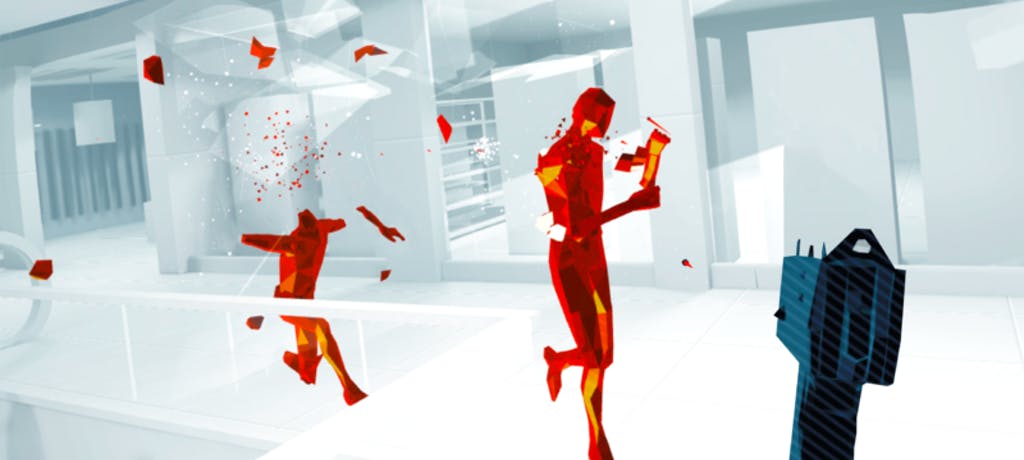 Superhot VR has grossed over $2 million over the past week. The bullet-time shooter hit a major stride through the Christmas season and continues to prove the viability of virtual reality.
What makes this game stand out is the style and how the action only moves when you move. The minimalist style also works well in virtual reality.
Even though Superhot VR was released over two years ago, it continues to grow in popularity.
Virtual Reality Gaming Continues to Grow
While most have viewed the virtual reality space as a declining market, this clearly shows the opposite is true. Virtual reality gaming continues to be a growing space, and with the release of the upcoming Half-Life: Alyx, it is sure to grow more.
See the full story here: https://thenerdstash.com/superhot-vr-grosses-over-2-million/
Location-based VR is hot — but is it right for you?
 1. What audience should you target?

The mass audience is nothing like a niche one. For general audiences, the games should be easy to grasp, packed with actions and not so hard to complete. The themes should be familiar.
Back in 2014, we opened a real-life (non-VR) escape game chain with 10 games in different genres. The first room we opened was cyberpunk. We aimed at the geek audience itching for tech and difficult puzzles. But once we opened a second escape room with the fairy tale setting, everything changed. The bookings grew. The more people came, the more we realized that difficult puzzles aren’t the draw — an action-packed game with a low barrier for entry is a must. Tech meant nothing to our audience — they didn’t care how we made it. They didn’t like dark settings. They wanted to enter a fantasy, a fairy tale.
Best business model: VR escape rooms. Others tend to be more geek-oriented.
See the full story here: https://venturebeat.com/2019/09/17/location-based-vr-is-hot-but-is-it-right-for-you/
Oculus Devices Sold Out in a Positive Sign for Virtual Reality
 Virtual reality's new popularity
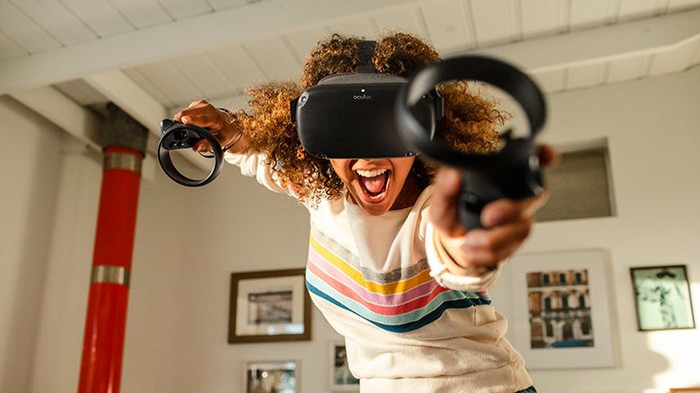
One of the biggest challenges in the VR industry has been reaching any kind of scale. Since the products were launched, Sony's (NYSE:SNE) PlayStation VR has sold only 4.7 million units (most at discounted prices), Oculus Rift has sold 1.5 million, and the HTC Vive sold 1.3 million, according to SuperData Research, a Nielsen company.
That's not a big-enough installed base to attract developers, or to qualify as a product that retailers want to dedicate much shelf space to. So VR has been a failure in many people's eyes, at least so far.
The hottest Christmas gift in VR
It's no coincidence that Quest sold out over the holidays. It's the perfect price point as a gift, and many consumers will identify it with the gamers in their lives.
Oculus wants to build an enduring platform
What's not clear now is if Facebook and Oculus can build an enduring VR platform.
See the full story here: https://www.fool.com/investing/2019/12/27/oculus-devices-sold-out-in-positive-sign-for-virtu.aspx
Fortnite’ Is Building The Metaverse Whether You Realize It Or Not
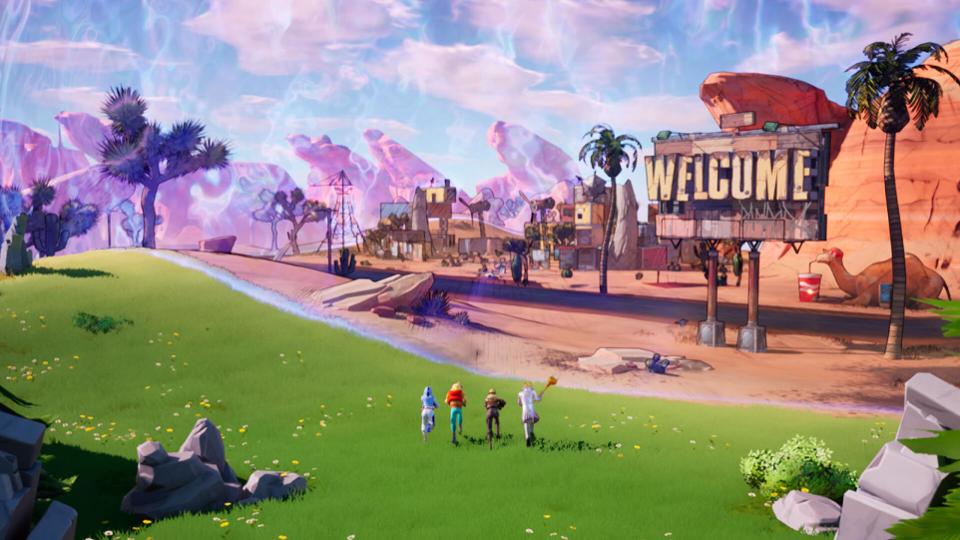 This month, Fortnite had an event where they debuted a new Star Wars clip in-game. The clip itself was not significant, and was kind of terrible. The big deal was the rest of it. The clip was introduced by a soaring TIE vs. Falcon fight players were invited to attend. The clip was presented by JJ Abrams himself, complete with a custom avatar. And at the end, there was a message from Emperor Palpatine itself of such significance to the movie, it was actually in the opening crawl. And you could only hear it in Fortnite.
Fortnite is building something here. Something much, much bigger than a battle royale game.
Call it the Metaverse if you’re a Snow Crash fan. Call it the Oasis if you’re more into Ready Player One. But I fully believe that this is what Fortnite is building, a shared virtual world where players and brands and IPs all collide and coexist in a myriad of ways. For playing games, yes, but also for…everything.
Observe any kid playing Fortnite and they’ll reveal that the game already exists as a sort of interactive social network, a bit like Minecraft before it. Yes, you play, but you are there to spend time with your friends.
In Ready Player One, players travel to different planets to play different games. Maybe the Epic Store becomes an entirely virtual space where instead of just clicking a button, while you’re hanging out on Planet Fortnite, you board a rocket to take you to Pandora to start playing Borderlands. You get the idea.
See this full story here: https://www.forbes.com/sites/paultassi/2019/12/27/fortnite-is-building-the-metaverse-whether-you-realize-it-or-not/#590032f356f6
Teslasuit’s new VR gloves let you feel virtual objects and track your pulse
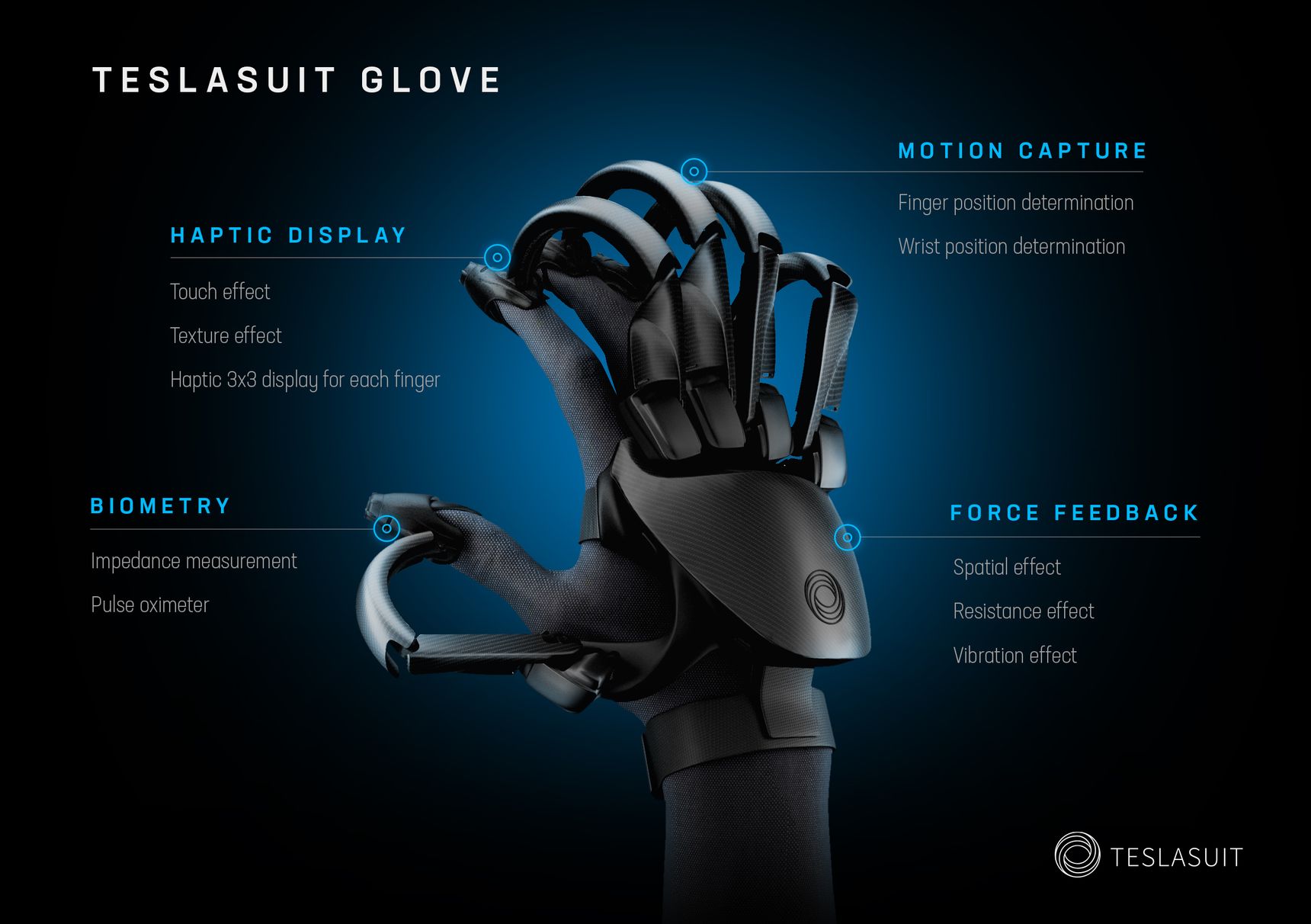 Teslasuit — known for its full-body haptic feedback suit — is introducing a glove that can let users feel virtual textures and gather biometric data. The device is called simply the “Teslasuit Glove,” and it will debut at CES in January, with the goal of shipping by the second half of 2020.
Teslasuit is one of several haptics and motion control companies that launched during the mid-’10s VR boom, appealed initially to consumers, then shifted to business customers. It launched the suit on Kickstarter in 2016, but it canceled that campaign and officially announced its first product in 2018. It’s since demonstrated potential applications in astronaut training, emergency evacuation drill practice, and other simulation scenarios. The creators aren’t ruling out gaming and entertainment possibilities, but at around $5,000, this isn’t a home headset accessory.
See the full story here: https://www.theverge.com/2019/12/26/21037855/teslasuit-glove-vr-haptic-feedback-glove-announce-pricing-release-date-ces-2020
Machine Learning Reveals Hidden Geology
Leila Donn, a doctoral student at the University of Texas at Austin studying environmental geoscience, wasn’t necessarily looking for a computer model to help her find the location of ancient Mayan caves last year. Mostly, she just was hot and tired and the work was going slowly.

“In summer the of 2018 I went to the ancient Maya site of El Zotz in the Petén Department of Guatemala to help a colleague look for caves. Each evening we’d sit down and take a look at the LIDAR hillside, looking for depressions surrounded by steep areas,” she said.
“While hard tropical forest hikes actually are my idea of fun, looking for caves in this manner wasn’t particularly efficient,” she said.
She had an idea.
“It occurred to me that it would be tremendously useful if we could develop a computational method of predicting likely locations of caves,” she said.
...she was surprised to find that no one had actually applied machine learning for searches like hers.
She did this by using Python and ArcGIS to make raster layers to capture morphologic characteristics that were associated with cave entrances, such as the fact that they are frequently located in areas of very steep topography.
Donn, whose master thesis at UT Austin was on the “Human-Environment Impact on Geomorphology and Flood Recurrence of the Belize Rover Valley,” now wants to expand her work to predict caves more accurately.
“I’d like my program to identify only caves versus small cave-like voids. It would also be tremendously helpful if I were able to acquire an additional training dataset from an area of similar geomorphology,” she said.
See the full story here: https://explorer.aapg.org/story/articleid/55296#CommentForm
Devil’s in the details in Historic AI debate
 Marcus started with a recap of his career, noting he had done the first work on big data with early childhood learning studies, as a cognitive scientist. What struck him about neural nets, all the way back in the 1990s, was that "classic connectionism couldn't learn universals outside training space." The failures of neural nets in some cases are an argument for "richer innate priors," he said, things that seem to be built into organisms through evolution, not merely that which is learned.
Marcus clarified that he has never said deep learning should be abandoned, but that that it should be "re-contextualized as a tool among many." He said he and Bengio at one time were far apart in their thinking because Bengio "relied too heavily on black boxes," meaning, neural nets. "Recently he has taken a sharp turn to positions I've long argued for," said Marcus, meaning, the notion of "hybrid" AI systems that would combine some machine learning with some form of symbol manipulation.
Bengio summarized his main interest these days as being about how neural nets can respond to data that is "out of distribution," or OOD, the problem of how to generalize beyond training data. He made reference to a paper recently published, and accepted at next year's ICLR conference, "A meta-transfer objective for learning to disentangle causal mechanisms."
Bengio quickly went into articulating what might be a manifesto of how he views all AI problems. Deep learning, with which he is most associated, is "not a particular architecture or a particular training procedure," said Bengio. "It's something that's moving, it's more a philosophy as we add more principles to our toolbox."
See the full story here: https://www.zdnet.com/article/devils-in-the-details-in-bengio-marcus-ai-debate/?fbclid=IwAR2vSX64KtwtPujoEMiHkOlTf6TWtP8zr9BP3oqtbRZMfkDNvjIF-b6gNxI
Thinkware to showcase Augmented Reality navigation device at CES
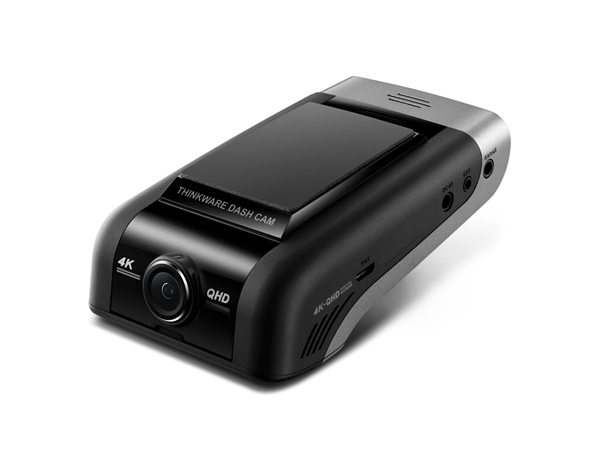 Dash cams are becoming one of the latest must have pieces of tech for your car as they help lower insurance premiums and in the unfortunate event of a collision, they can help prove who was at fault. Thinkware has taken its years of experience in the dash cam market and is finding new ways to use the technology.
The new device comes equipped with a heads-up display and uses the latest local map data to ensure drivers are safe and informed. The Augmented Reality navigation device also features an advanced user interface and a library-type solution that uses maps of locations around the world, while game engines can display AVN, CLUSTER, HUD and other information on the device.
See the full story here: https://www.kitguru.net/channel/generaltech/james-dawson/thinkware-to-showcase-augmented-reality-navigation-device-at-ces/