Why Microsoft and Warner Bros. Archived the Original ‘Superman’ Movie on a Futuristic Glass Disc

Project Silica at the Microsoft research lab in Cambridge with Ant Rowstron and Richard Black. 21 Station Road, CB1 2FB. 16 September 2019
The piece of silica glass storing the 1978 “Superman” movie, measuring 7.5 cm x 7.5 cm x 2 mm. The glass contains 75.6 GB of data plus error redundancy codes.
Microsoft has teamed up with Warner Bros. to store a copy of the 1978 movie “Superman” on a small glass disc about the size of a coaster. The collaboration, which will be officially unveiled at Microsoft’s Ignite 2019 conference in Orlando, Florida Monday, is a first test case for a new storage technology that could eventually help safeguard Hollywood’s movies and TV shows, as well as many other forms of data, for centuries to come.
“Glass has a very, very long lifetime,” said Microsoft Research principal researcher Ant Rowstron in a recent conversation with Variety. “Thousands of years.”
And to this date, Warner Bros. is storing most of its movies and TV shows on film, even if they’re being shot digitally. For archival purposes, the studio splits a film into its YCM color components, resulting in three distinct copies that are then written on black-and-white film. The results are being stored away in a cold vault, which is kept between 35 and 45 degrees Fahrenheit.
Hollywood studios have been storing films like this for decades, explained Collar. “This process is tried and true.” And it works: When Warner Bros. recently decided to reissue “The Wizard of Oz” in 4K, employees just had to go back into the studio’s vault, retrieve those 3 color-isolated copies, digitize each, and reassemble them to the color master copy. “It is an evolved process,” said Collar.
However, the process doesn’t work for all kinds of assets. Video games, for instance, need to be stored digitally. Light field video captures, holograms, or whatever else the future may hold for next-generation entertainment, will likely also require different solutions. And with recent visual improvements like 4K and HDR, there is an ever-increasing need for petabytes of storage, said Warner Bros. chief technology officer Vicky Colf. “It’s the quality of the content that we are dealing with.”
See the full story here: https://variety.com/2019/digital/news/project-silica-superman-warner-bros-microsoft-1203390459/
Adobe and Twitter are designing a system for permanently attaching artists’ names to pictures
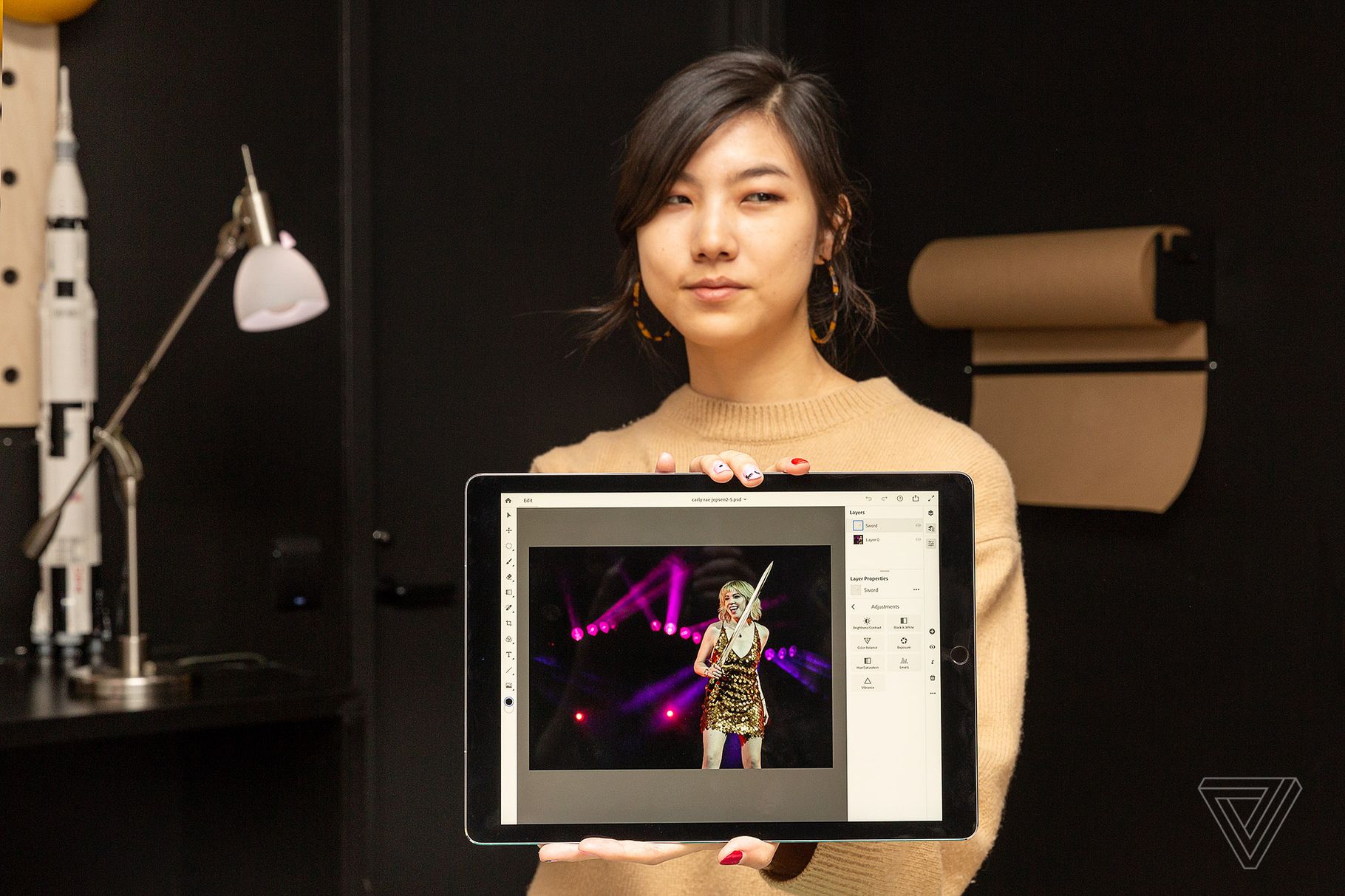 Adobe, Twitter, and The New York Times Company have announced a new system for adding attribution to photos and other content. A tool will record who created a piece of content and whether it’s been modified by someone else, then let other people and platforms check that data. Adobe showed off a prototype in Photoshop today, but many of the details are still in flux, and there’s no release date.
The overall project is called the Content Authenticity Initiative, and its participants will hold a summit on the system in the next few months.
See the full story here: https://www.theverge.com/2019/11/4/20948229/adobe-twitter-nyt-company-content-authenticity-initiative-attribution-misinformation-tool
BMW’s magical gesture control finally makes sense as touchscreens take over cars
 BMW has been equipping its cars with in-air gesture control for several years and I never paid attention to it. It seemed redundant.
Now, in 2019, with giant touchscreens set to takeover cars, I find BMW’s gesture control smart and a great solution to a future void of buttons.
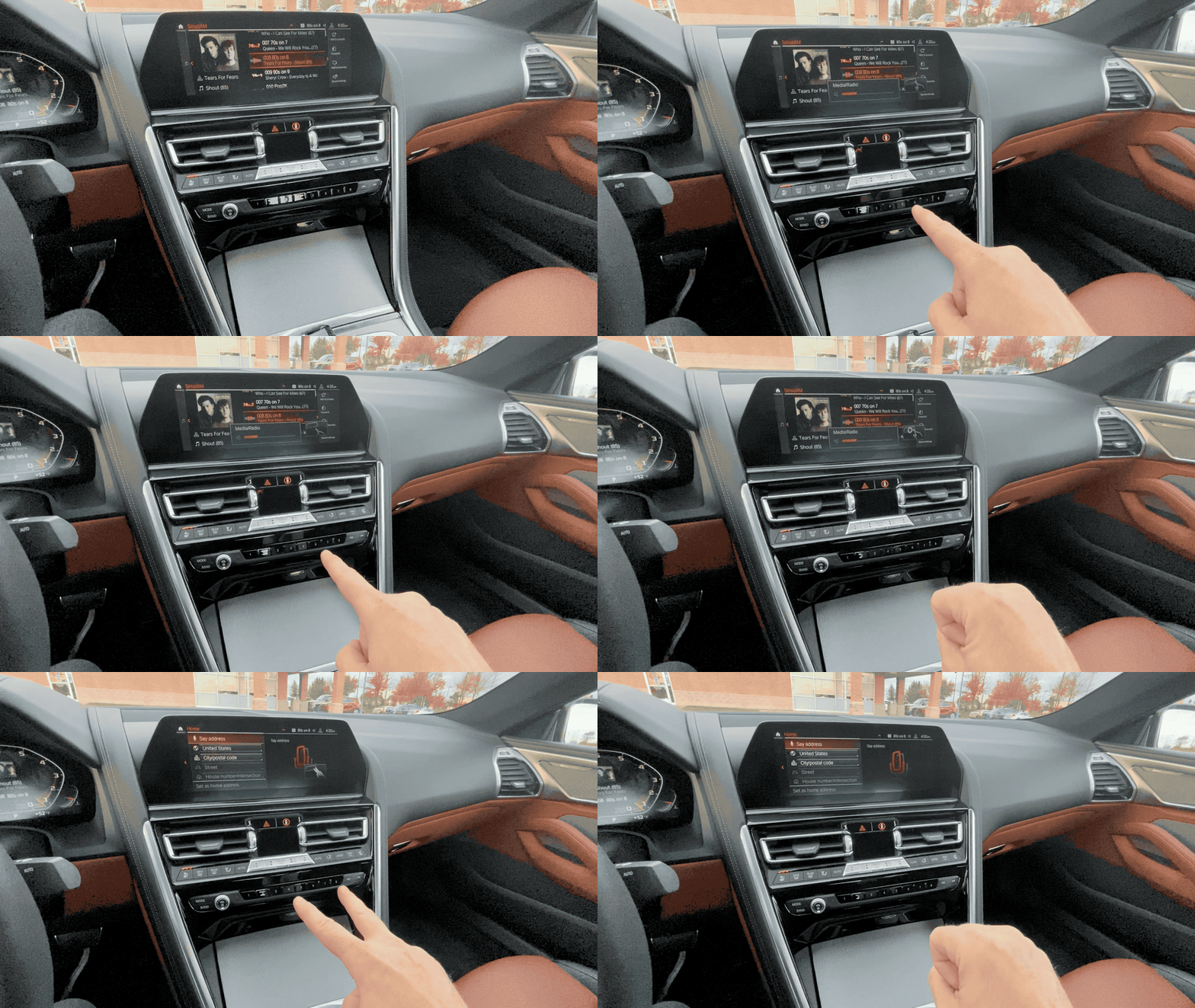
Here’s how it works: To control the volume, take one finger and spin it in the air above the center stack. Anywhere. The range is impressive. A person can do this next to the screen or two feet away. A person’s arm could be resting on the center armrest and lift in the air and twirl their finger. Bam, it controls the volume. Put two fingers up – not spinning, like a flat peace sign – and the screen turns on or off. Make a fist and open it twice to load the navigation or phone (user picks the function).
After using the system for several days, I never had a false positive. The volume control took about 10 minutes to master, while the other gestures worked the first time.
See the full article here: https://techcrunch.com/2019/11/04/bmws-magical-gesture-control-finally-makes-sense-as-touchscreens-take-over-cars/
Enhancing AR with machine learning
Layering ML on top of AR apps extends their usefulness.
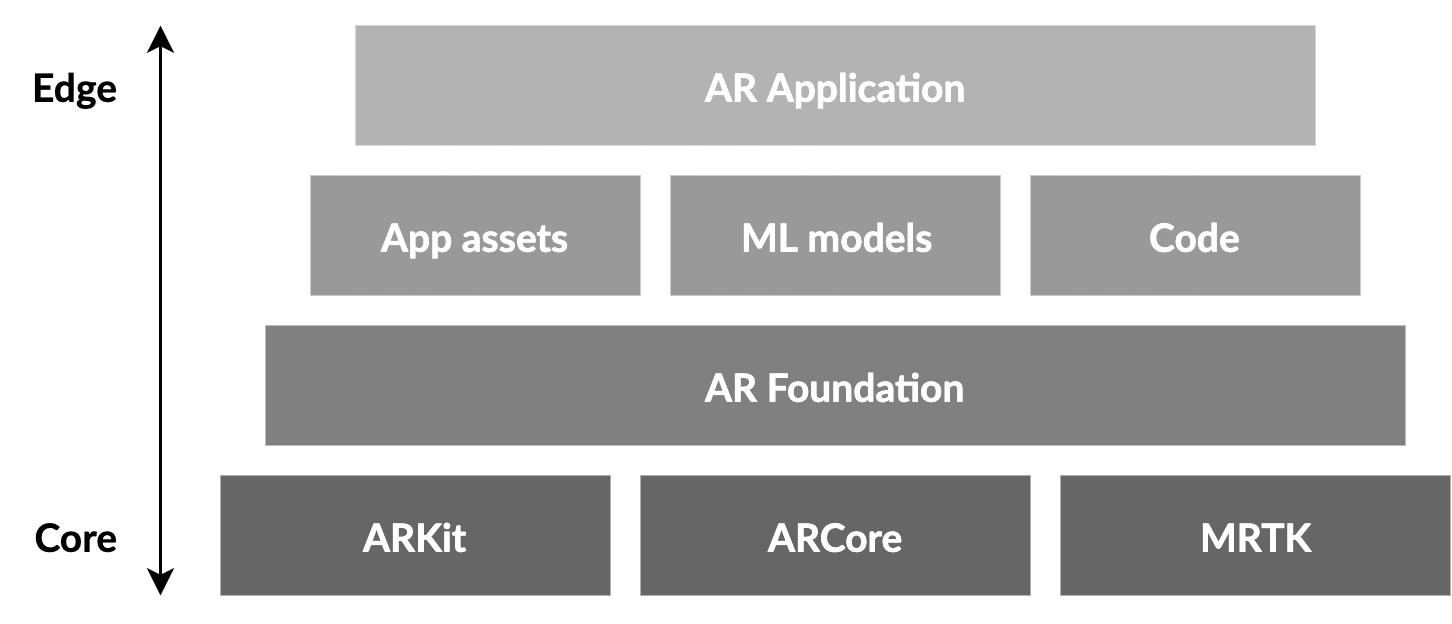 AR technology often uses SLAM (simultaneous localization and mapping):
In conclusion.
Because of the technological progress made in the last couple of years, AR apps are exceeding expectations in terms of what they can do.
Since the camera image is always available, these apps also provide a unique opportunity for using visual data to enrich the experience: Enabling the app to read text, find objects or detect anomalies, for example. These features can be powered by a custom machine learning layer built on top of the core tech.
See the full story here: https://towardsdatascience.com/enhancing-ar-with-machine-learning-9214d2da75a6
If you’re worried artificial intelligence is coming for you, read Melanie Mitchell’s new book
 According to a Pew survey, 72% of us are “worried” rather than “enthusiastic” about the potential developments in automation.
Count me among the worried, though I am not worried about artificial intelligence coming for my job so much as the unthinking embrace of technology as a “solution” for flawed human behavior. It seems as though there’s a story every day about the failure of a so-called intelligent algorithm, including recent news of the Amazon facial recognition technology, “Rekognition,” “matching” 28 pictures of New England-area pro athletes with a database of police mugshots.
“Artificial Intelligence: A Guide for Thinking Humans” by Melanie Mitchell (Farrar, Straus and Giroux, $28).
Mitchell holds a Ph.D. in computer science and is an artificial-intelligence researcher who has worked alongside some of the pioneers of the field, including Douglas Hofstadter, author of the seminal “Gödel, Escher, Bach: An Eternal Golden Braid.” That book established many of the ground rules for how we discuss issues of computer intelligence and automation.
Algorithms can now compose music that we may call “art,” but as Mitchell points out, those algorithms will always be incapable of appreciating that art.
See the full story here: https://www.chicagotribune.com/entertainment/books/ct-books-biblioracle-1110-20191104-yx36rnivkrfbdeohsd572bfyxi-story.html
How China built a single-photon detector that works in space
 One of the emerging uses for single photons is to pack them with quantum information and send them to another location. This technique, known as quantum communication, exploits the laws of physics to make sure the information cannot be read by any eavesdropper.
One challenge is to find ways to send this quantum information around the world. That’s difficult because the information is fragile—any interaction between the photons and their environment destroys it.
So Chinese physicists have come up with a workaround: beam the photons to an orbiting satellite, which relays them to another location on Earth’s surface. In this way, the uncomfortable passage through the atmosphere can be minimized.
But there is a problem. Quantum communication requires detectors that can spot and measure single photons.
Today, Meng Yang and colleagues at the University of Science and Technology of China in Hefei say they have solved the problem. They have even tested their machine over the last two years on an orbiting satellite and say it works well.
So the trick with avalanche breakdown is to set up a voltage that rapidly accelerates a free electron to high enough speeds to knock other conducting electrons free. This creates a chain reaction—an avalanche—that results in a much larger and more easily detectable current.
So the task for Yang and co was to find ways to protect and enhance the performance of commercial off-the-shelf single-photon detectors so that they can operate in space.
These experiments have set the scene for a new generation of space-based quantum communication.
In the meantime, the rest of the quantum physics world has looked on with envy. China has a clear lead in space-based quantum communication, albeit with help from European researchers in key areas.
By contrast, US plans have stalled.
Senate Bill Calls For Search Engines to Divulge Algorithms
 One of Thune’s concerns is “the potential for search algorithms to be used to prey on users’ emotions, seeking to stir anger and prolonging their use of a service, for example.” The measure describes an unfiltered search as one that “wouldn’t consider user-specific profile data — such as the user’s geographic location and search and browsing history — in formulating search results unless the user expressly provides such data to the platform for purposes of the search.”
The proposed law, which would be enforced by the FCC, would only apply to platforms with more than 500 employees or $50 million in revenue, or those that “collect or process the personal data” of more than one million people. WSJ notes that “the bill represents the most serious legislative effort to date to put limits on the use of online algorithms.”
See the full story here: https://www.etcentric.org/senate-bill-calls-for-search-engines-to-divulge-algorithms/#more-145374
Apple patent Describes Tangibility Visualization of Virtual Objects within Various Headset Environments
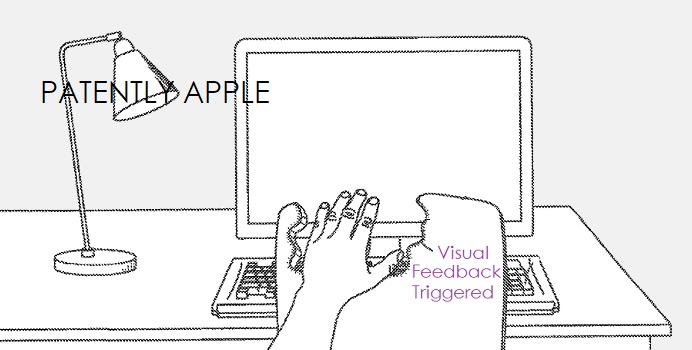 Because the experience is realistic and immersive, the user can easily confuse a virtual (and thus intangible) object within the CGR environment as being a real tangible object that exists outside of the CGR environment.
Thus, the described techniques enhance user convenience and further provide the user with an enhanced degree of safety when interacting with a CGR environment by enabling the user to quickly and easily visually recognize whether an object within the CGR environment is a non-tangible virtual object or corresponds to a real, and thus tangible, object in the real environment.
There are many different types of electronic systems that enable a person to sense and/or interact with various CGR environments. Examples include head mounted systems, projection-based systems, heads-up displays (HUDs), vehicle windshields having integrated display capability, windows having integrated display capability, displays formed as lenses designed to be placed on a person's eyes (e.g., similar to contact lenses). A head mounted system may have one or more speaker(s) and an integrated opaque display.
See the full story here: https://www.patentlyapple.com/patently-apple/2019/11/apple-patent-describes-tangibility-visualization-of-virtual-objects-within-various-headset-environments.html
Is virtual reality the next frontier for Arab cinema?
 There has been criticism that virtual reality cinema threatened to comprise the artistic integrity of filmmaking but Latiri argued that it could enhance the industry.
“Digital technologies are here to serve cinema, not denigrate it,” Latiri said. “We want to show there is a structure in Tunisian labs to execute these techniques. We want to show we can produce visual effects and use these digital techniques here in our labs.
The Carthage Film Festival included panel discussions on visual effect techniques, African animation, immersive technologies in the cinema industry and virtual films.
There was considerable debate regarding the use of virtual reality in cinema. Zied Meddeb Hamrouni, a multidisciplinary artist who researches virtual reality cinema, said the genre has the potential to reshape viewers’ experiences in a profound way.
“New media have radically changed the industry,” he said. “We should ask ourselves what it could do for entertainment. What we seek when watching films is empathy. This is the most important element of storytelling.
The festival set up a virtual reality lab on Tunis’s main boulevard, where members of the public experienced the new technology firsthand.
See the full story here: https://thearabweekly.com/virtual-reality-next-frontier-arab-cinema