Mark Zuckerberg admits that Facebook’s $2 billion bet on virtual reality ‘is taking a bit longer than we thought’ to pay off
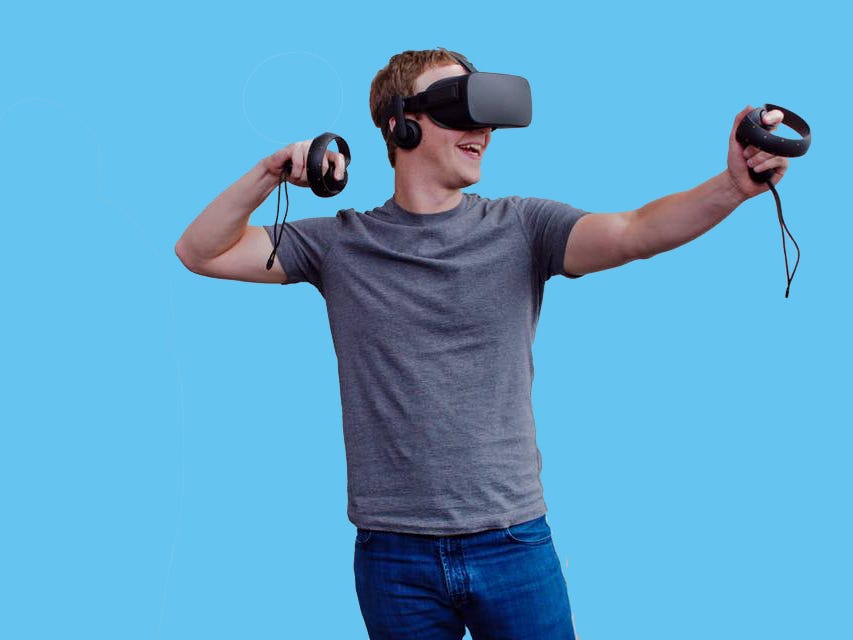
- Mark Zuckerberg's vision for VR and AR at Facebook is "taking a bit longer than we thought" to materialize, he said Wednesday during the company's quarterly earnings call.
- Facebook purchased Oculus, a virtual reality headset startup, five years ago, but has struggled to cultivate even a niche audience for the product. However, Zuckerberg is still optimistic.
- The tech giant is still betting on a future where VR is more prominent — Facebook unveiled its newest VR headset, the Oculus Quest, in May, and the product has made headway in early sales.
 See the full story here: https://www.businessinsider.com/mark-zuckerberg-facebook-oculus-vr-bet-taking-longer-than-expected-2019-10
Vanderbilt Univ. – VandyHacks VI: Where dreams become (virtual) reality
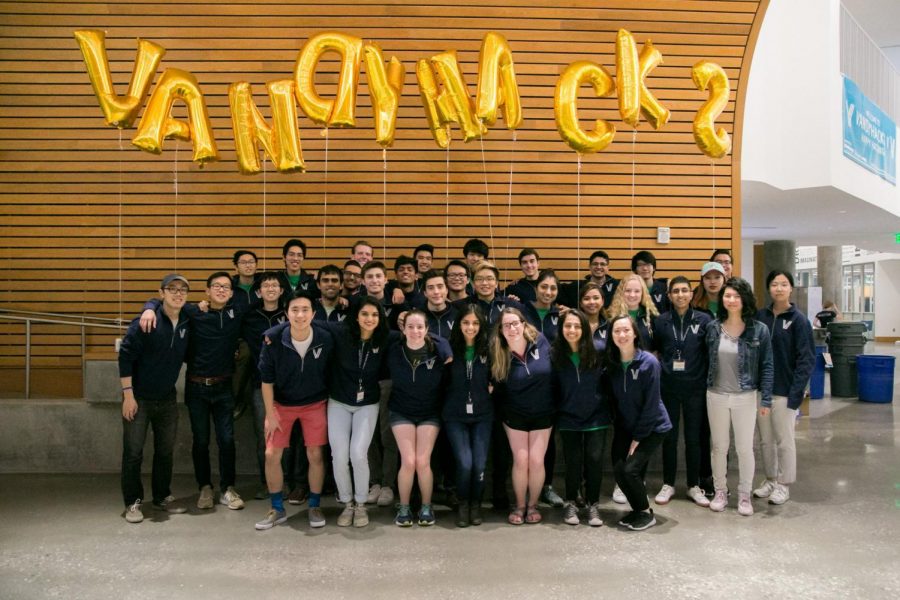 Beginning Nov. 1, the Wondr’y will be filled with 36 hours of hacking, creativity and community. The sixth annual student-run and self-funded VandyHacks hackathon will allow college students to explore their creativity in developing any project that makes use of their programming skills, regardless of experience level. 700+ students will have the chance to win prizes, interact with professionals, expand their programming abilities and bond with fellow students at this year’s VandyHacks VI: Art Edition, challenging students to “code a masterpiece.”
VandyHacks is a student programming organization started by Sam Pepose and Carolyn Zeng in 2014. Students desired a program similar to other hackathons beginning around the country and wanted a way to engage programmers outside of the classroom. Now, co-presidents Matt Leon and Nidhi Mehta, with Nidhi being the first female president of the club, are challenging programming stereotypes and working to expand VandyHacks even further, VandyHacks organizer sophomore Sophia Chen said.
The competition officially begins at 10 p.m. Friday Nov. 1 and the expo to display the completed projects will take place at 10 a.m. Sunday Nov. 3. Events in between include Zumba, networking, a morning walk, a typing competition, a hand spa and 1:30 a.m. karaoke on Nov. 3, according to the event schedule on the Vandyhacks VI website.
See the full story here: https://vanderbilthustler.com/27820/featured/vandyhacks-vi-where-dreams-become-virtual-reality/
TikTok has broken rap music
Musicians are changing their songs for viral success on TikTok. But it's infantilising rap music
 At a recent show in Los Angeles, the rapper onstage made the crowd wiggle their fingers and “sit down, stand up, sit-stand, si-sta...” like a game of musical chairs, as bright cartoons coloured the stage. It smacked of a six year old’s birthday party rather than the sweaty, fleshy rout of LA’s live rap scene. The artist responsible for the jamboree was Philly rapper Tierra Whack, whose debut album Whack World is a perfect companion to TikTok, the app that’s currently taking Gen Z by storm, and which now seems to be changing the entire genre of rap music.
Known as musical.y in an earlier incarnation (which the New York Times referred to as “the youngest social network we’ve ever seen”), the app merged with Bytedance in 2018 to become the singing-dancing conglomerate that the world is now struggling to make sense of. It has upwards of 500 million active users, and every day, teens and tweens are uploading millions of fifteen-second videos of themselves lip-syncing to music.
TikTok also seems to be stripping music of any of its severity. “Even the really dark scary songs are all made out of fun; even the really serious songs aren’t taken seriously anymore,” says Llusion, a popular producer on the app who posts videos almost daily. "For some reason, our ears just absorb all the songs we hear on TikTok and they just get stuck in our heads and we fall in love with them.”
See the full story here: https://www.wired.co.uk/article/tiktok-baby-rap
NBCUniversal rolls out its ShoppableTV ads
 NBCUniversal has been testing a new ad unit that allows viewers to buy — directly from their phone — products featured on the show they’re watching.
We’ve written about other companies creating shoppable video technology, but that usually means adding links or other elements to online videos — very different from NBCU’s ShoppableTV, which connects the programming on your living room TV with a shopping experience on your phone.
The company is using QR codes to achieve this. An ad with the code will pop up at on the bottom of the screen during relevant moments of the show. If you’d like to purchase the product, you can point your camera at the code and you’ll end up following an affiliate link to the sponsor’s e-commerce site.
See the full story here: https://techcrunch.com/2019/10/28/nbcuniversal-rolls-out-its-shoppabletv-ads/
MIT Taught Self-Driving Cars to See Around Corners with Shadows
 The new MIT system is simpler because it just looks for subtle changes in light and shadow on the ground that indicate another vehicle is approaching.
This work comes from MIT’s famous Computer Science and Artificial Intelligence Laboratory (CSAIL). The team thinks this approach to monitoring the environment around a vehicle could be the equivalent of x-ray vision for cars. Whereas the LIDAR used for object mapping in current self-driving cars has high resolution and collects more data than a visible light camera, it can only objects that are directly visible. A shadow, however, might be enough to trim as much as half a second off the car’s reactions. That could be the difference between a major accident and a near miss.
ShadowCam uses a sequence of four video frames from a camera pointed at the region just ahead of the car.
See the full story here: https://www.extremetech.com/extreme/301073-mit-taught-self-driving-cars-to-see-around-corners-with-shadows
Spreading the Love of Classical Music Through Virtual Reality
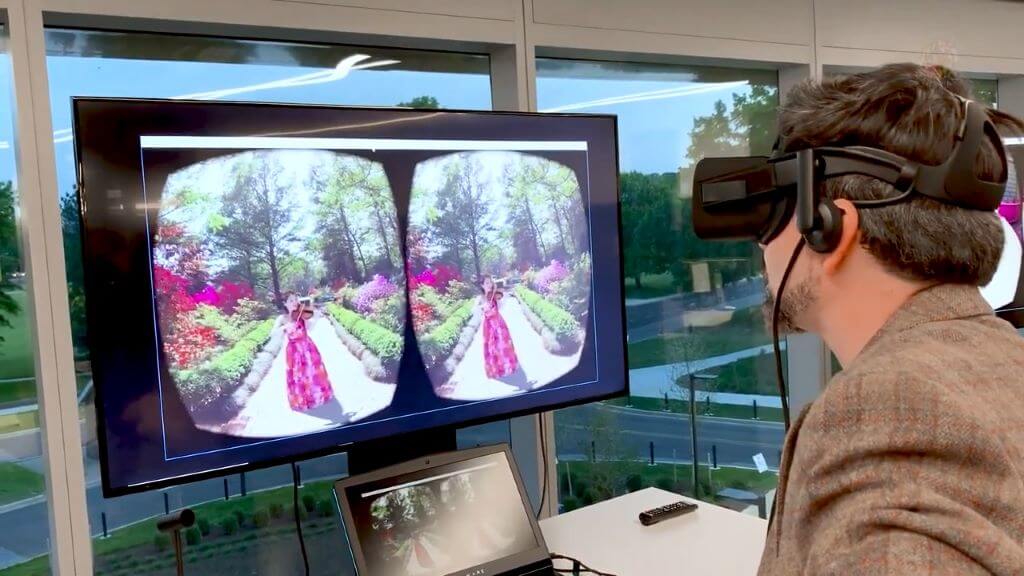 PlayStation VR made a Joshua Bell VR experience for music lovers and tech enthusiasts. Owners must use a VR headset and any pair of headphones to indulge in the full experience. Once set up, the app takes users to the Lyndhurst hall in London. There, Bell performs the Hungarian Dance No. 1 by Brahms, along with pianist Sam Haywood.
Developers leveraged binaural audio processing technology, as well as directional surround sound to make everything come to life. In other words, users will hear the sound in exquisite detail the closer they move to Bell. If they step back, they will experience the hall’s natural reverb.
Owners of a PlayStation headset can download the VR experience for free.
How VR Is Transforming Classical Music
Another up and coming VR application is the Four Strings Around the World project. Featuring Romanian violinist, Irina Muresanu, the app takes its audience around the world as she plays beautiful melodies with her violin.
Through the app, users can have a one-on-one lesson with Muresanu. They can see and observe the movement of her hands and her bow arms in great detail.
See the full story here: https://arpost.co/2019/10/30/spreading-love-classical-music-virtual-reality/
(Vancouver) Tetsuro Shigematsu’s new play explores lives swallowed up by the lure of virtual reality
 In Kuroko, a co-production between the Cultch and Vancouver Asian Canadian Theatre, Maya (Kanon Hewitt) is a young woman who has secluded herself in her room for the better part of six years. But when a mysterious stranger challenges her to help save her dying father, she is forced to come to terms with the outside world.
Rather than delve too deeply into the latest developments in virtual reality tech, which would have dated the play (“It would be the equivalent of doing a show about MySpace,” he said), he was more fascinated by the phenomenon of hikikomori — people, like Maya, who opt out of society and retreat into their rooms.
“We realized that even if you’re watching what someone is doing in virtual reality on a screen, it’s still a solitary experience to behold. So we decided to go completely analog — using theatrical conventions of gestures and no masks or goggles at all, and letting audience members use their imagination.”
See the full story here: https://vancouversun.com/entertainment/local-arts/tetsuro-shigematsus-new-play-explores-lives-swallowed-up-by-the-lure-of-virtual-reality