HADO: The Amazing Ways Augmented Reality Is Changing Sport
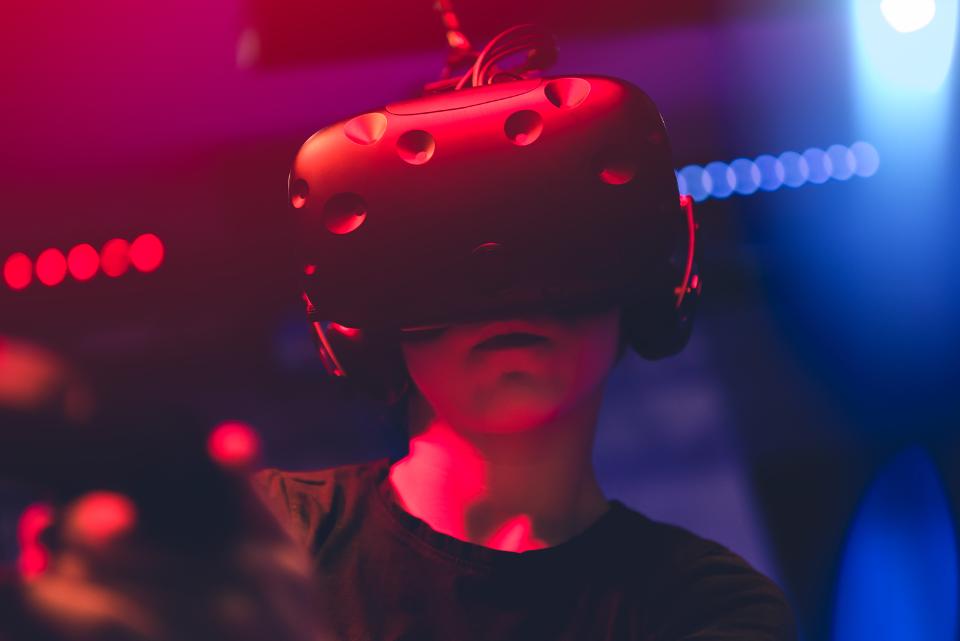 HADO is an entirely new experience the company calls techno sports that uses augmented reality (AR) tech and motion sensors without requiring the player to be tethered to a gaming system, controllers, or cables. The company has three AR offerings, including HADO Augmented Sport (Player vs. Player), HADO Monster Battle, and HADO Shoot; they will soon add HADO Kart.
This is not a sport played in your living room, but in 60+ arenas in 15 countries that give ample space for the competition similar to other physical sports such as volleyball and basketball.
HADO has held several competitions and events in Asia, including the HADO World Cup tournament where the world's top players compete for a cash prize and bragging rights as the HADO World Champions. There are plans to expand globally by 2020. Currently, 600,000 users have experienced HADO sports.
See the full story here: https://www.forbes.com/sites/bernardmarr/2019/10/23/hado-the-amazing-ways-augmented-reality-is-changing-sport/#3691b05e1b33
Snap is slowly growing, but it’s banking on augmented reality to sustain it
 CEO Evan Spiegel detailed how important AR will be for the company’s future. Spiegel says every daily active user interacts with a Snap AR product nearly 30 times a day on average. These come in the form of AR Lenses and filters that place masks or virtual elements on the user’s face or in their environment. He also notes that the Snap community has created more than 600,000 Lenses.
Spiegel also says the company is looking to integrate AR wearables into its lineup within the next seven to 10 years, starting with its third-generation Spectacles glasses, which the company introduced in August. The glasses come with an added camera so that people can overlay these AR effects on their content, and they go on sale in November.
In the more immediate term, the company says it expects “significant” potential revenue to come from AR advertisements, and it’s focusing on scaling its platform to make AR more personalized and to help the company make money from the technology.
See the full story here: https://www.theverge.com/2019/10/22/20927521/snap-growth-earnings-ceo-user-ar-augmented-reality
Sandbox VR raises $11 million from elite Silicon Valley and Hollywood investors
 Sandbox VR has raised an additional $11 million in funding from notable Silicon Valley and Hollywood icons, such as Andreessen Horowitz, Katy Perry, and Justin Timberlake.
The new investment brings their reported total to $83 million in 2019, including a $68 million round from earlier this year. The investment takes place amid a slowdown in VR funding, and it suggests that Sandbox has something special in its location-based VR technology.
Sandbox VR aims to create the something akin to Star Trek’s Holodeck, a room that can become any virtual environment and feel like it’s real, according to founder Steve Zhao.
The company is in the process of a rollout across the U.S. with a location recently opened in Los Angeles. It is coming soon to New York, Austin, San Diego, and Chicago with a total of 16 total locations planned by the end of 2020. The company has invested in retail locations, integrated technology together to create a unique experience, and built a game studio.
See the full story here: https://venturebeat.com/2019/10/22/sandbox-vr-raises-11-million-from-silicon-valley-and-hollywood-elite-from-andreessen-horowitz-to-justin-timberlake/
Theme park of the future: Facial recognition replacing tickets at new Universal Studios in China
 The new Universal Studios theme park under construction in China will use facial recognition for admissions, payments and queueing, according to Agence France-Presse.
Universal is teaming up with Chinese internet giant Alibaba for a host of services that will be integrated into the new Beijing theme park opening in 2021, the two companies announced during a joint press event on Thursday.
“There is no more seamless way to enjoy what we’re building than using the Alibaba technology,” said Comcast CEO Brian Roberts, according to AFP.
Cameras will scan visitors’ faces as they enter Universal Studios Beijing to determine if they’ve paid their admission. The facial recognition cameras in the new theme park will be linked to Alibaba’s Alipay electronic payment platform. The new technology will allow Universal visitors to use their faces to join express queues for rides, pay for meals and open lockers.
Facial recognition technology is used for everything from supermarket checkouts to surveillance in China, according to AFP.
Visitors uncomfortable with the facial recognition technology or who have privacy concerns will still be able to pay for tickets, meals and merchandise using more traditional methods, Universal officials told AFP.
See the full story here: https://www.ocregister.com/2019/10/18/theme-park-of-the-future-facial-recognition-replacing-tickets-at-new-universal-studios-in-china/
CEO of Santa Fe’s Meow Wolf says he’ll step down
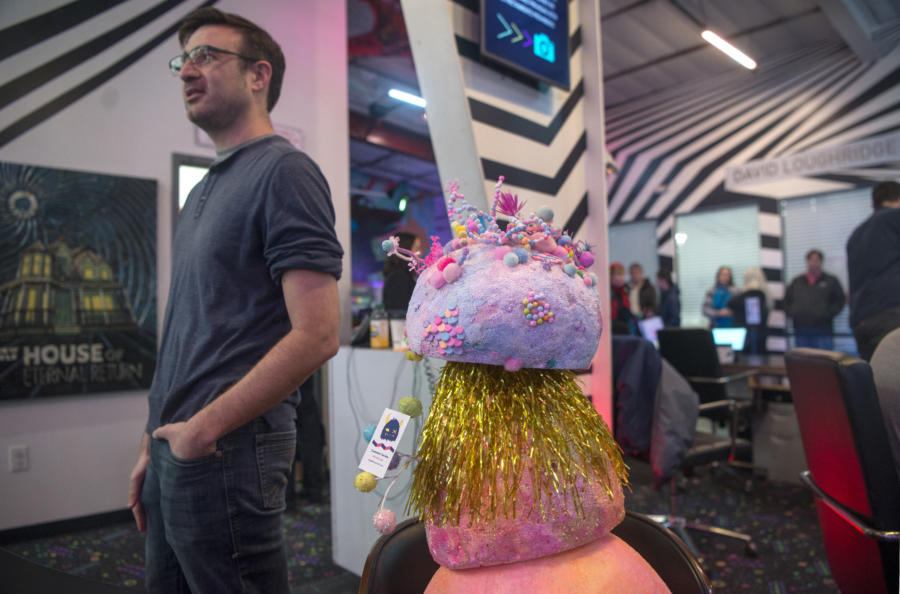
em022019j/jnorth/Vince Kadlubek, co-founder of Meow Wolf, stands next to one of their pip & pop sculptures in the lobby of their House of Eternal Return, in Santa Fe, Wednesday February 20, 2019. The pip & pop sculptures are used some of the new exhibits at Meow Wolf this year. (Eddie Moore/Albuquerque Journal)
“Five years ago, in the fall of 2014, I was making $50/a day delivering food, living at my parents’ house on the south side of Santa Fe, and dreaming of becoming an accomplished playwright,” Kadlubek wrote.
“Only 14 months later, I become CEO of New Mexico’s fastest-growing startup company and our team unveiled one of the most impactful pieces of art in the 21st century,” he said. “On March 16, 2016, Meow Wolf opened House of Eternal Return to the public and my life became forever and radically changed.”
Attendance at the edgy arts installation hit 1 million visitors by July 2018, driven mostly by word of mouth and a solitary billboard on Interstate 25 heading north from Albuquerque.
The infusion of large amounts of capital and the announcement of projects in Las Vegas, Nevada, Denver, Phoenix and Washington, D.C,, changed Meow Wolf from a scrappy upstart to a Disney wannabe in the eyes of some.
See the full story here: https://www.abqjournal.com/1380634/meow-wolf-ceo-vince-kadlubek-steps-down.html
Islamic State Turns to Teen-Friendly TikTok, Adorning Posts With Pink Hearts
 Videos, since removed, represent challenge for app’s Beijing owner, Bytedance, which has hired thousands of moderators to curate content.
The videos—since removed, in line with the app’s policy—featured corpses paraded through streets, Islamic State fighters with guns, and women who call themselves “jihadist and proud.” Many were set to Islamic State songs. Some included TikTok filters, or images, of stars and hearts that stream across the screen in an apparent attempt to resonate with young people.
The posts from approximately two dozen accounts, identified by social-media intelligence company Storyful, appeared to target TikTok’s users as part of a new show of strength—and possible enlistment tool—as U.S. troops withdraw from Syria. Islamic State has focused on online propaganda since its inception, including using social media to spread its message, setting it apart from other jihadist groups.
The extremist content marks a new challenge for TikTok. The app, owned by Beijing-based Bytedance Ltd., features short videos that started becoming popular in the U.S. in 2018 and has been embraced by teens. It was the third-most installed app world-wide in the first quarter, behind Facebook Inc.’s WhatsApp and Messenger, and about 30% of users are under the age of 18, according to internal TikTok documents viewed by the Journal.
To maintain its culture of light-hearted fun, TikTok has invested in advanced algorithms that people familiar with the matter say can detect many types of harmful content. TikTok has also hired thousands of content moderators in China, the U.S. and elsewhere to curate what ends up on the app.
The company’s rules prohibit terrorist and criminal organizations from using TikTok. “DO NOT use TikTok to promote and support these organizations,” the company says in its guidelines. The videos promoting Islamic State show that enforcing the guidelines proves difficult.
“This is an industry-wide challenge complicated by bad actors who actively seek to circumvent protective measures, but we have a team dedicated to aggressively protecting against malicious behavior on TikTok,” a spokeswoman for TikTok said.
Less extreme content now poses a bigger challenge for Facebook, Twitter and YouTube. Those companies are struggling at times with how to decide when to remove messages that promote conspiracy theories, racist tropes and other hateful or misleading content.
When those companies leave such posts on their sites, users charge them with facilitating harassment and abuse; other users charge the companies with censorship when the content is removed.
See the full story here: https://www.wsj.com/articles/islamic-state-turns-to-teen-friendly-tiktok-adorning-posts-with-pink-hearts-11571680389
Deepfakes are being used to dub adverts into different languages
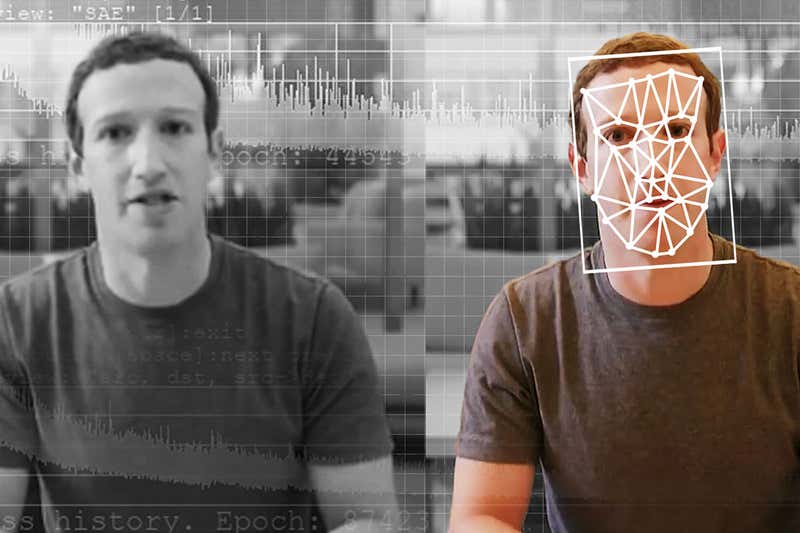 Fake videos created by artificial intelligence are now so realistic that they are becoming useful.
Israeli tech firm Canny AI is one of several companies cashing in on so-called deepfakes, using the technology to dub videos into different languages. The firm is currently using it to dub advertisements or messages from celebrities for audiences in different countries and plans to use it for television shows and films in the future.
See the full story here: https://www.newscientist.com/article/2220628-deepfakes-are-being-used-to-dub-adverts-into-different-languages/