National Gallery to launch ‘immersive Leonardo Da Vinci experience’ as they unveil hidden sketch and fingerprints
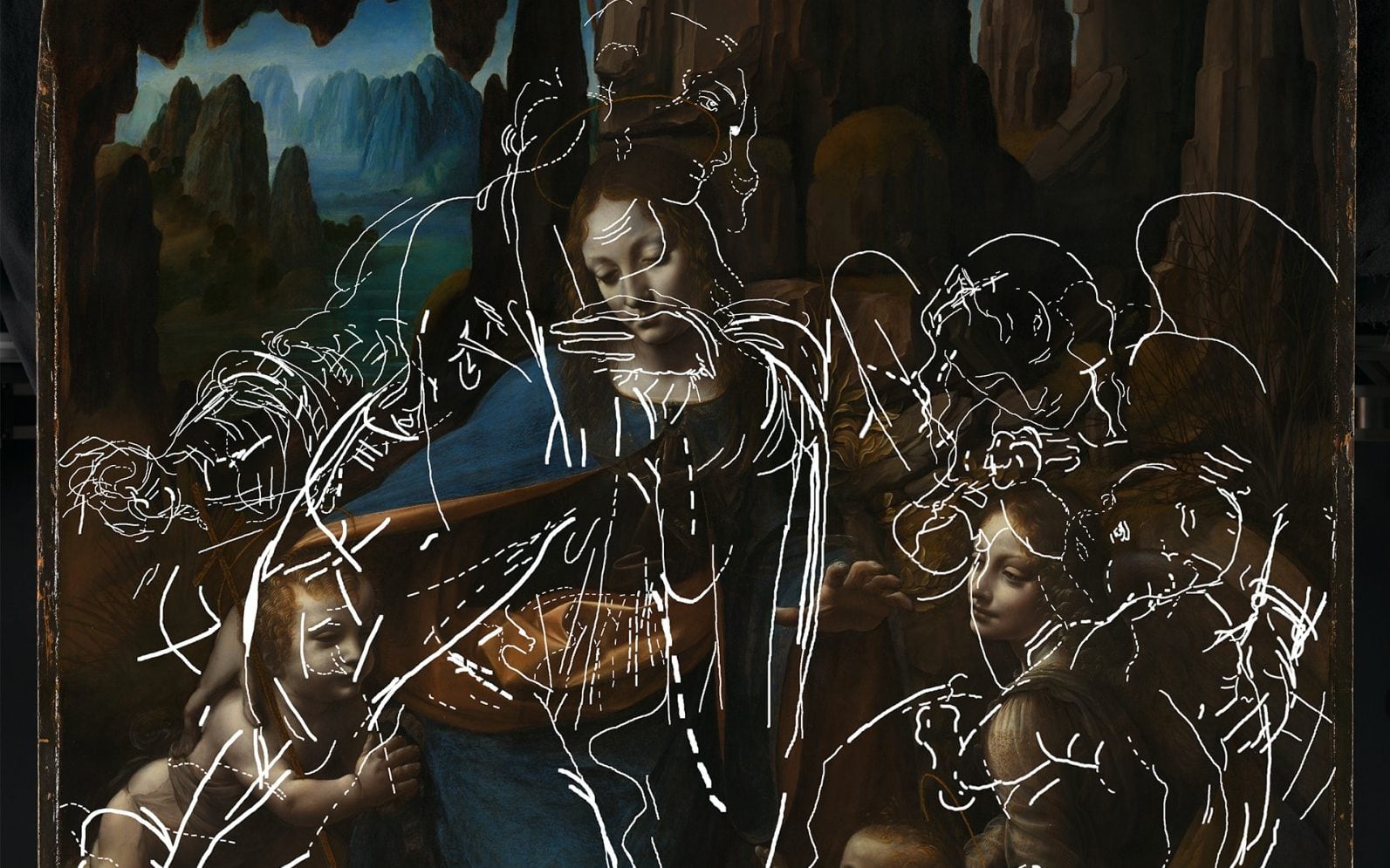 The National Gallery has commissioned the production team behind the 2012 Olympic opening ceremony and blockbuster pop culture exhibitions to bring to life a Leonardo Da Vinci painting, in a new “immersive” exhibition.
The show, which opens in November, will see the ground floor of the gallery “completely transformed” into an “immersive exploration of [Leonardo’s] genius as a painter”, focusing on one work: The Virgin of the Rocks.
The painting has been undergoing significant scientific investigation, uncovering the original, hidden sketches of the artist as well as mystery handprints left in the paint.
The gallery promises "multi-sensory experiences" spanning four rooms, including projections showing Leonardo’s use of “light and shadow” and a conservator’s studio showing how modern experts can look beneath the painting’s surface.
See the full story here: https://www.telegraph.co.uk/news/2019/08/14/national-gallery-launch-immersive-leonardo-da-vinci-experience/
Lux Capital Raises More Than $1 Billion Across Two New Funds to Invest in Companies Building a Sci-Fi Future
 Lux Capital, a New York-based venture capital firm, has raised more than $1 billion across two new funds to back companies on “the cutting edge of science.” The firm raised $500 million for its sixth flagship early-stage fund and another $550 million for an opportunity fund focused on growth-stage investments. Limited partners include global foundations, university endowments, and tech billionaires.
Technology is evolving at a pace faster than ever before, and Shakir believes that rapid innovation could be a double-edged sword for venture firms investing in moonshot companies. “There are ethical challenges we’ve never seen before, and it’s not something that can be ignored anymore. Investors are responsible for helping foster those ethical standards in their companies during the earliest days.”
See the full story here: https://fortune.com/2019/08/01/lux-capital-new-funds/
AI can’t protect us from deepfakes, argues new report
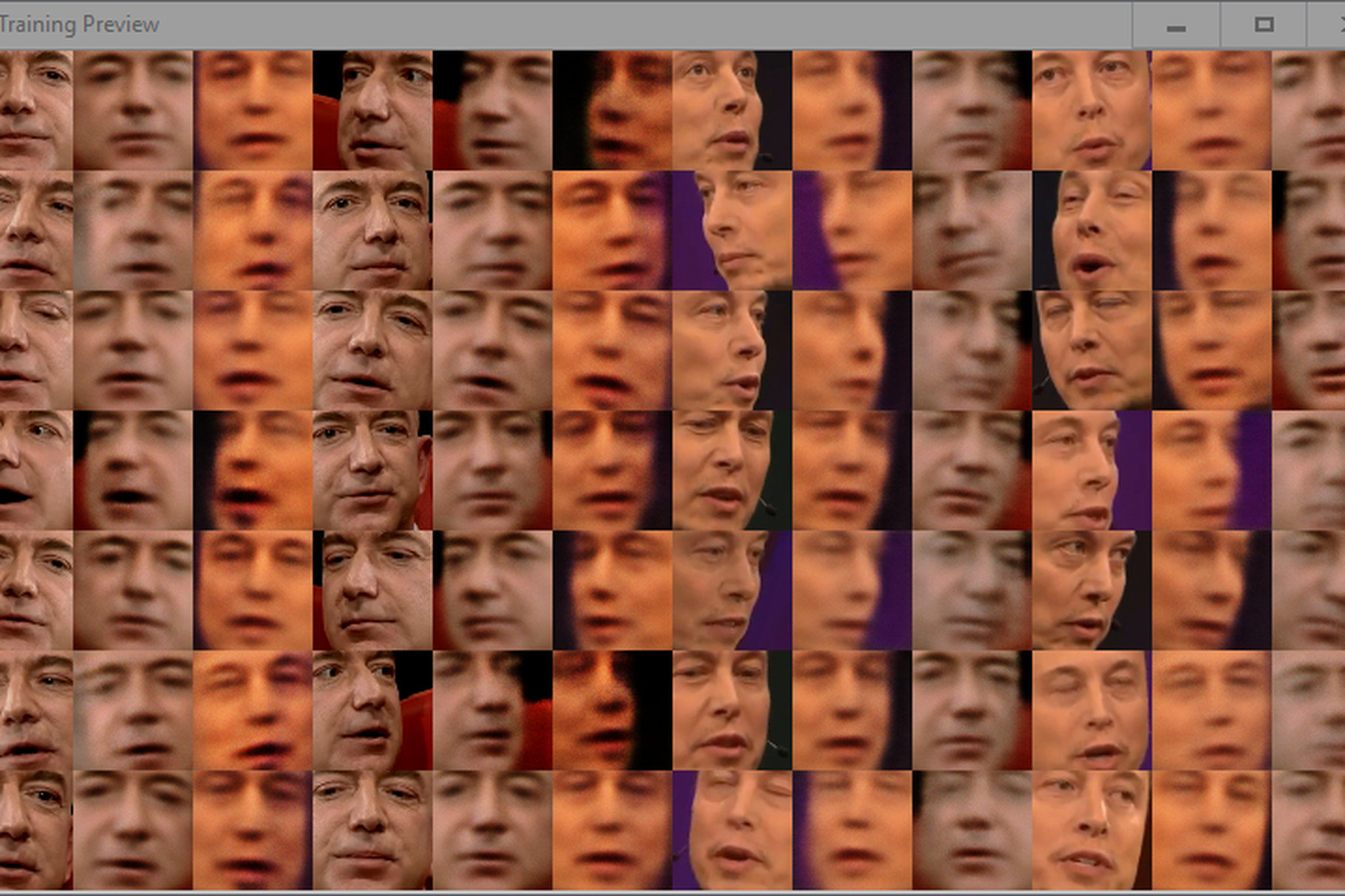 “The relationship between media and truth has never been stable,” the report reads. In the 1850s when judges began allowing photographic evidence in court, people mistrusted the new technology and preferred witness testimony and written records.
To combat this issue, Facebook recently announced that it was releasing a dataset to allow people to test out new models aimed at detecting deepfakes....But almost all of these solutions aim to fight manipulation at the point-of-capture (i.e., when a photo or video is taken) or at the detection level (to make it easier to differentiate between doctored and undoctored content).
Bobby Chesney, co-author of the paper “Deep Fakes: A Looming Challenge for Privacy, Democracy, and National Security,” does not view data collection as an issue. “I see the point that if left unregulated, private entities will have access to more information,” he said. “But the idea that that’s inherently bad strikes me as unpersuasive.”
Chesney and Paris agree that some sort of technical fix is needed and that it must work alongside the legal system to prosecute bad actors and stop the spread of faked videos. “We need to talk about mitigation and limiting harm, not solving this issue,” Chesney added. “Deepfakes aren’t going to disappear.”
See the full story here: https://www.theverge.com/2019/9/18/20872084/ai-deepfakes-solution-report-data-society-video-altered
OpenAI experiment proves that even bots cheat at hide-and-seek
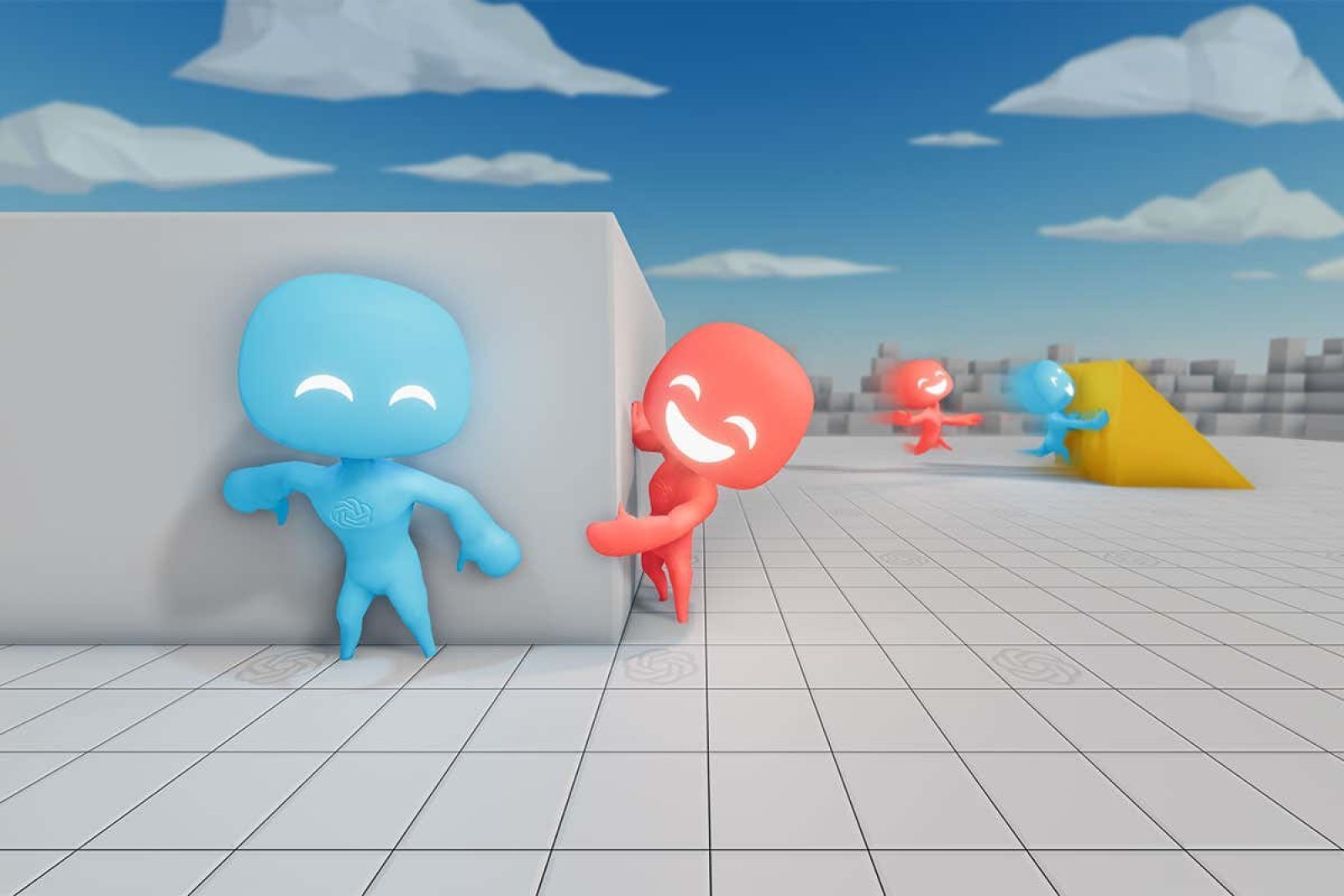 At first, the hiders and the seekers simply ran around the environment. But after 25 million games, the hiders learned how to use boxes to block exits and barricade themselves inside rooms. They also learned how to work with each other, passing boxes to one another to quickly block the exits. The seekers then learned how to find the hiders inside those forts after 75 million games by moving ramps against walls and using them to get over obstacles. After around 85 million games, though, the hiders learned to take the ramp inside the fort with them before blocking the exits, so the seekers have no tool to use.
See the full story here: https://www.engadget.com/2019/09/18/openai-experiment-hide-and-seek/
The James Beard House joins one of the country’s most lauded chefs to make the case for VR meals.
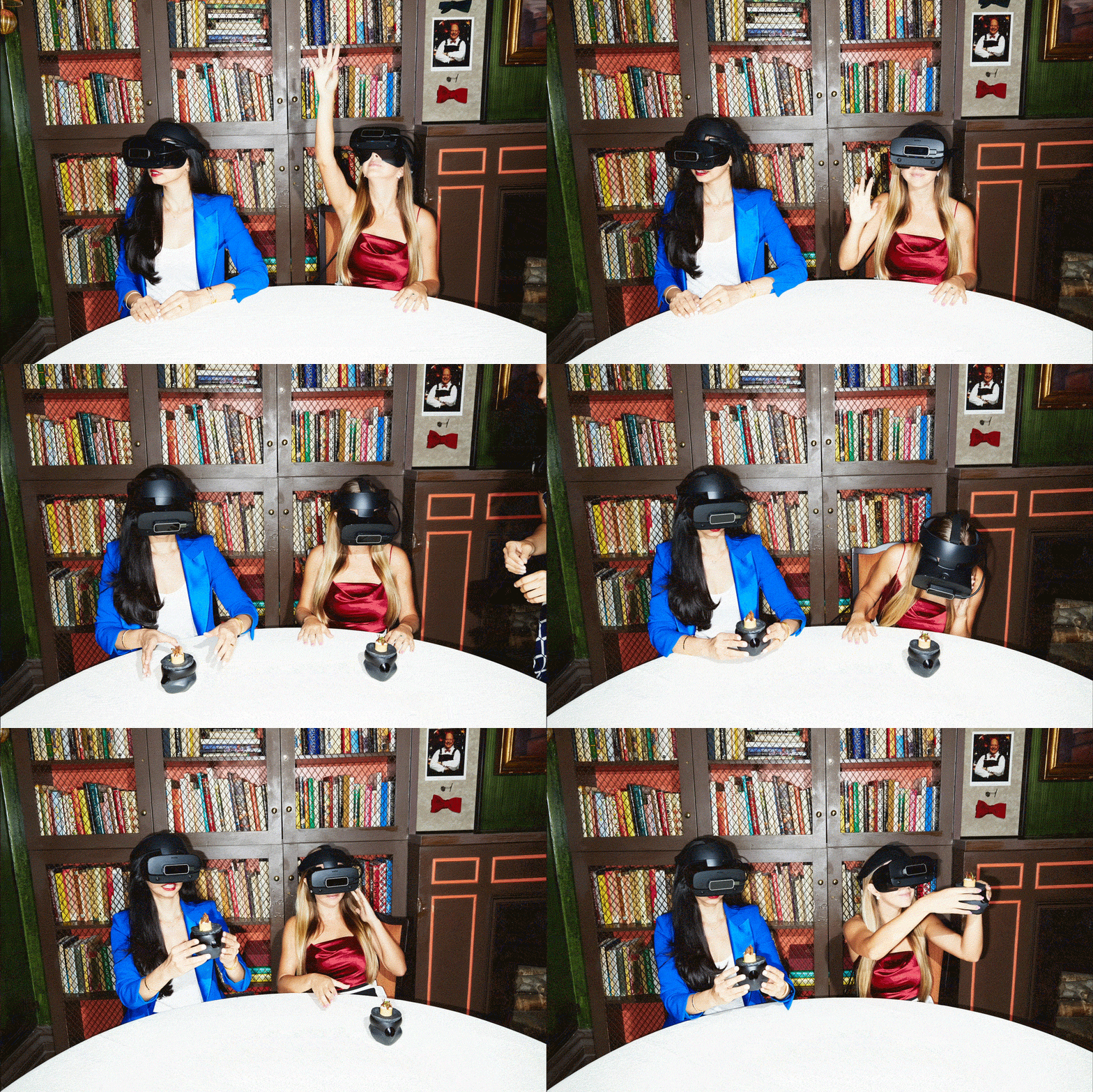 He was blinded by an Oculus virtual-reality headset that kept him in a 3D, interactive world inspired by 1932’s The Futurist Cookbook. Parr saw only virtual sculptures where the food should have been: The tart became a gray asteroidal blob rimmed by an orbiting disc of red crystal debris, for example. After each bite, his virtual world transformed, imbuing a layer of narrative to the meal while playing with the senses. A 2018 Journal of Food Science study found that VR environments affect taste. A VR barn makes cheese taste more pungent, for example, and a VR park bench makes it taste more herbal.
See the full story here: https://www.bloomberg.com/news/features/2019-09-19/virtual-reality-meals-come-to-james-beard-house-with-adda-chef
Can this virtual reality tour convince you to work in Madison?
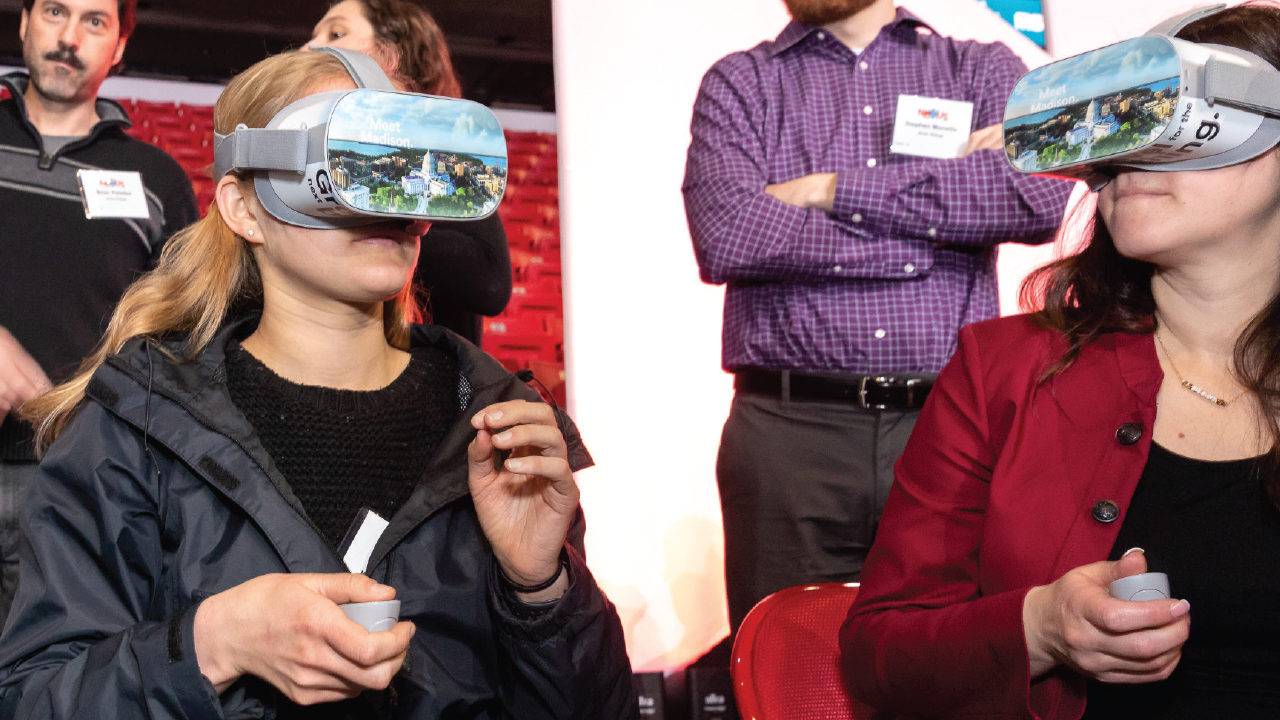 This virtual reality headset is a project three years in the making. It was spearheaded by the Greater Madison Chamber of Commerce to recruit applicants from outside the Midwest to come to Madison for job opportunities.
After talking with local companies and conducting research, the chamber realized that selling the place was just as important as selling the city's companies and jobs.
"That experience of actually seeing, touching, experiencing Madison was a big part of affecting that ultimate talent acquisition going well," Chamber Vice President Kevin Little says.
President Zach Brandon says the chamber undertook a nationwide brand perception study that based its research on the 12 common archetypes, which are characteristics that define people's interests. The survey found that millennials connect to the seeker or explorer brand, so they're looking for experiences. Brandon says if a company could get a new recruit to experience Madison, it could sell them on a job here.
See the full story here: https://www.channel3000.com/madison-magazine/home-and-lifestyle/can-this-virtual-reality-tour-convince-you-to-work-in-madison-/1122529513
7 things to know about the augmented reality landscape
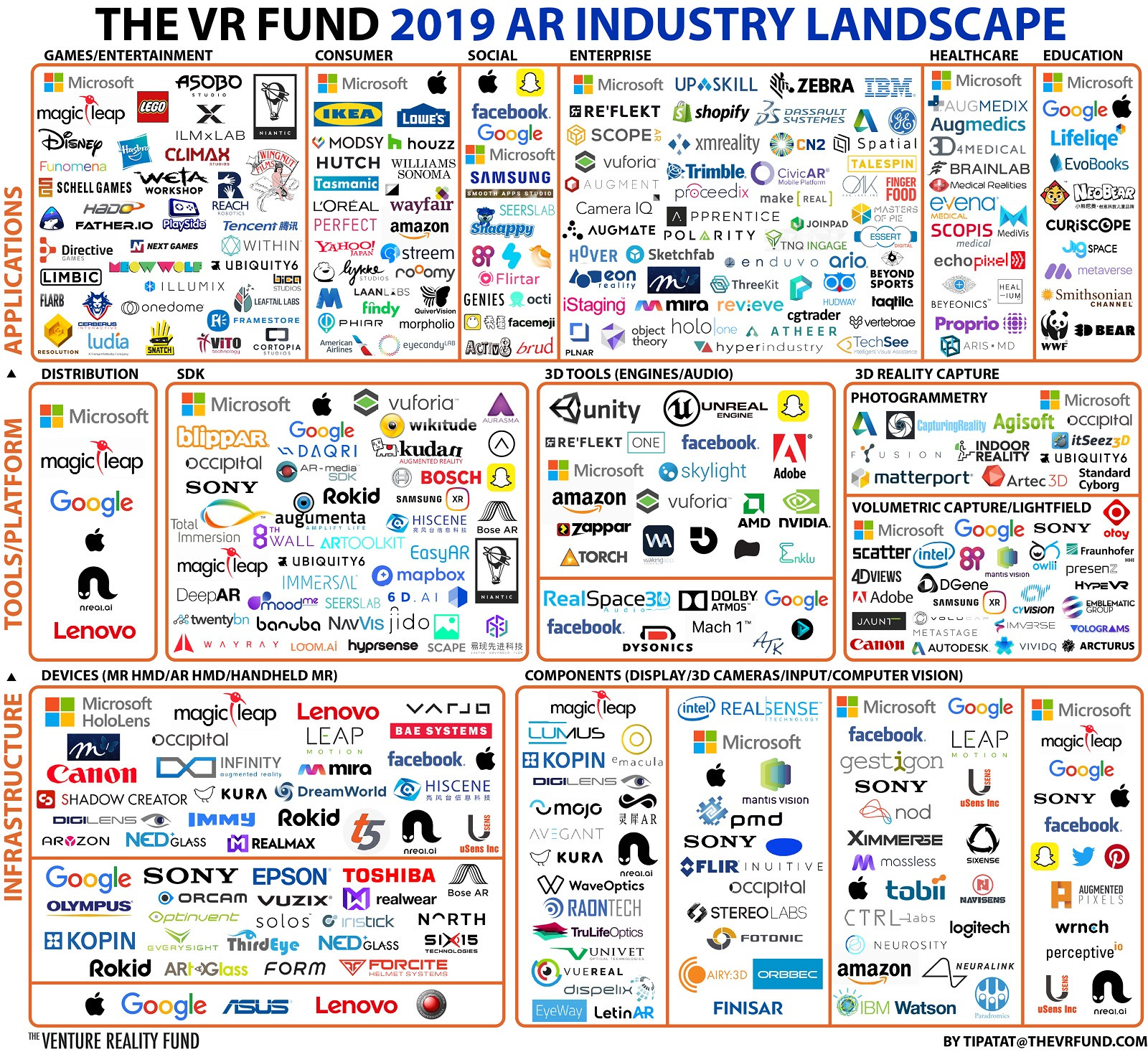 1. AR is growing
2. HMD (head-mounted display) AR is in a transition
3. Enterprise continues growth trajectory
4. AR needs new types of content
5. Consumer AR content is alive and well
6. Mobile AR 2.0 is coming
7. Investments Will Continue
See the full story here: https://venturebeat.com/2019/09/18/7-things-to-know-about-the-augmented-reality-landscape/