A new Mixed Reality Headset Invention from Apple Focuses on an Augmented Reality Optics System
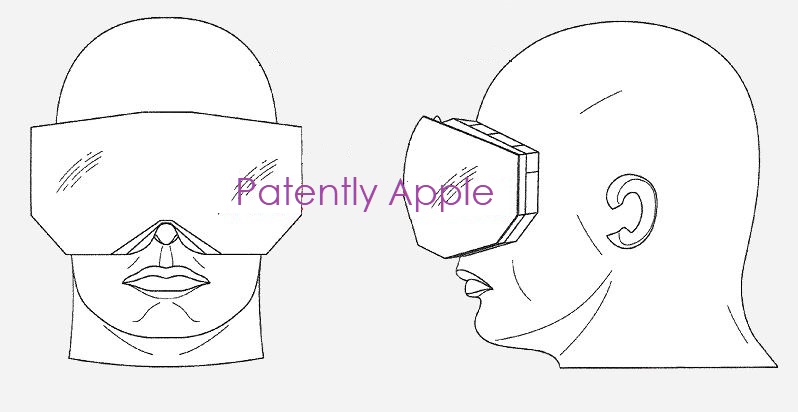
The US Patent & Trademark Office published a patent application from Apple relating to a mixed reality headset with emphasis on Augmented Reality which allows a user to view real-world objects while viewing images overlaid on top of real-world objects.
Apple's invention covers an electronic device such as a mixed reality headset that has a laser light source such as a laser light source that emits light into a waveguide.
The key parts of the patent cover the light source for the display system and its many sensors. The list of sensors is extensive and includes the following:
Strain gauge
Gaze tracking
Proximity,
Ambient Light
Touch, Force Touch
Temperature
Sensors
Pressure
Magnetic
Gesture
3D
Accelerometers
Gyroscope
Orientation
Light-based
Microelectromechanical systems
Capacitive
How VR films are putting Taiwan on the map
 In the past three years, the organization has already produced 12 VR projects by local filmmakers. It also operates the Kaohsiung VR Film Lab, the only VR theater in Taiwan.
Ting adds, “The development of any new technology must be matched by creativity. Taiwan already has an advantage in terms of manufacturing hardware for VR content. Our creators were also willing to embrace and explore this new technology. I think that’s why Taiwan’s VR films have developed so quickly and it’s why it has achieved an advantage in VR production.”
See the full story here: https://variety.com/2019/digital/news/taiwan-cutting-edge-virtual-reality-1203315648/
Bugatti Design Director Achim Anscheidt Discusses Virtual Reality Design of $9 Million Centodieci
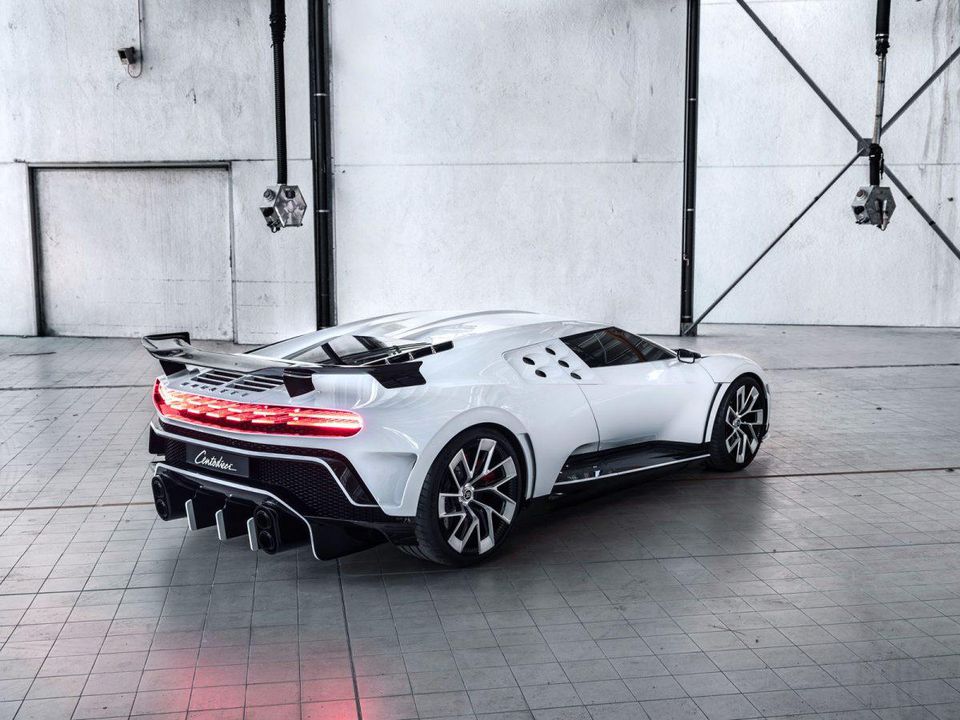 “It doesn’t take me one and a half years anymore. It takes half a year with Virtual Reality, VR goggles. This was the only way to answer the needs of our CEO Stephan Winklemann, to turn the brand where he wanted to go. Same with Centodieci, with Divo. Same with La Voiture Noire,” says Achim.
“Eighteen years ago Derek Jenkins, who was one of my idols and heroes, said that we would be walking around VR cars and they’d be so realistic that we would speak of them in VR. And now we are there. I am so happy that I was forced to adopt that process. Maybe possible because I have such a small area to overlook that I could take the whole team and put them on that stool."
See the full story here: https://www.forbes.com/sites/markewing/2019/08/31/bugatti-design-director-achim-anscheidt-discusses-virtual-reality-design-of-9-million-centodieci/#7044e0407bff
If reality is a data structure, can the simulation theory hold up?
- Professor of cognitive science Donald Hoffman presents his theory that the world we perceive is a virtual reality. Hoffman has tested this theory by running successful computer simulations that suggest there is no objective reality.
- When it comes to Nick Bostrom's simulation theory, Hoffman agrees with parts and disagrees with others. Hoffman argues that, while space time and physical objects do not correspond with objective reality, conscious experiences like the smell of garlic and the feel of velvet cannot be produced by the simulation.
- "You can't start with unconscious ingredients and boot up consciousness," Hoffman says.
- See the full story here: https://bigthink.com/videos/virtual-reality
Robot Coffee Tastes Great, But at What Cost? (About $5)
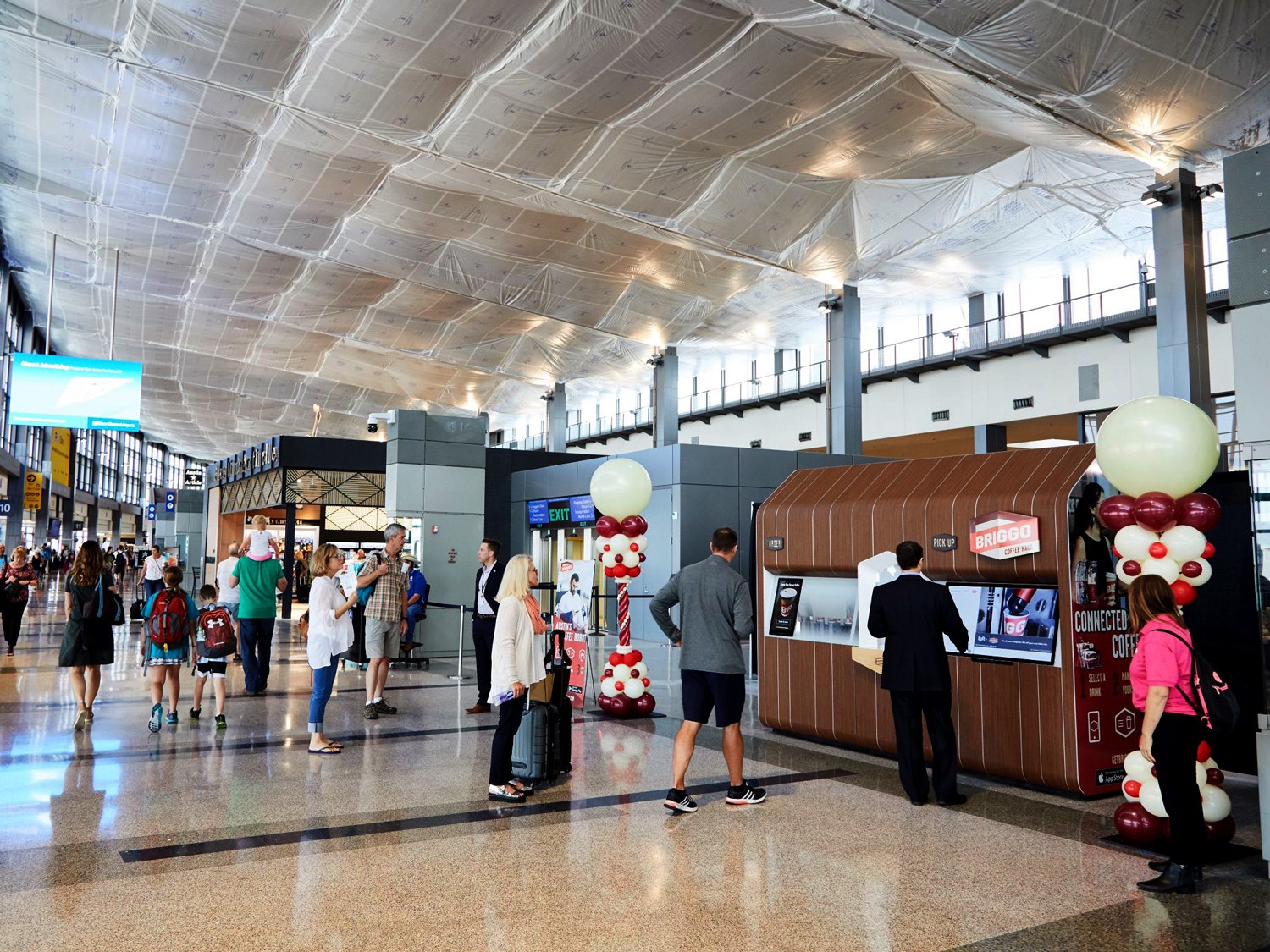 Automatic coffee kiosks are cropping up across cities and airports. All day long, all night long, if you ask the robot to make you a coffee drink, it will. It has to. That is its function. The Coffee Haus can’t be reasoned with. It doesn't feel pity, or remorse, or fear. And it absolutely will not stop until you have a cup of coffee. Intense? Sure, but the thing is, the coffee is pretty good. And it sure is efficient. Maybe the world of espresso will be better for a robotic invasion.
See the full story with video here: https://www.wired.com/story/coffee-haus-robot-coffee/
Industry review boards are needed to protect VR user privacy
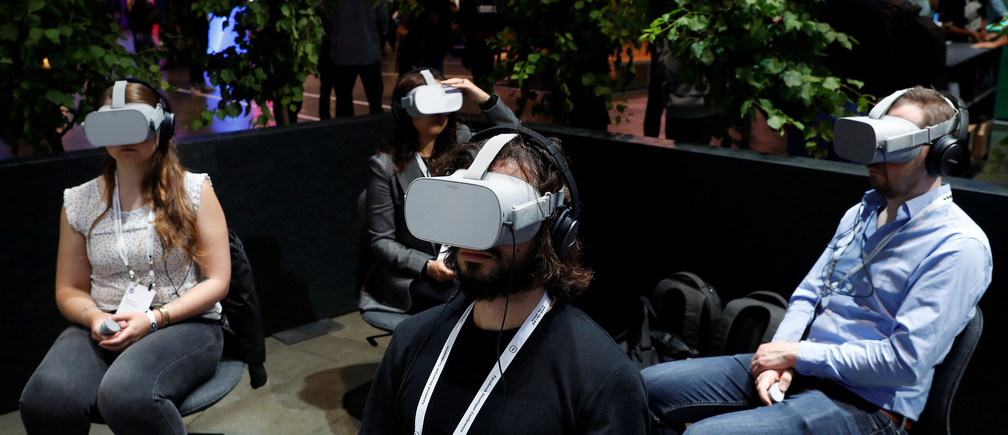 This is a hypothetical situation, but the science of using movements tracked in VR to predict dementia, and the technology to do so, are very real.
What Riley didn’t know was that the startup that created this game had decided to sell its users’ tracking data. Riley also didn’t know that a 20-minute VR game session recorded 2 million points of data about his body movement, and that an insurance company was one of the customers buying the game data. A month after playing the game, Riley was turned down for a new life-insurance policy. Given his excellent health, he couldn’t understand why. Several appeals later, the insurance company disclosed that Riley’s tracking data from the VR maze game revealed behavioral movement patterns often seen among people in the very early stages of dementia. Later, Riley’s sister, who had not played the VR maze game, was also rejected for life and long-term care insurance policies, as dementia tends to run in families.
Virtual and augmented reality (VR and AR) biometric tracking data - micro-movements of head, torso, hands, and eyes - can be medical data. It can diagnose or predict anxiety, depression, schizophrenia, addiction, ADHD, autism spectrum disorder and more about a person’s cognitive and physical function.
Anonymizing VR and AR tracking data is nearly impossible because individuals have unique patterns of movement.
See the full story here: https://www.weforum.org/agenda/2019/08/the-hidden-risk-of-virtual-reality-and-what-to-do-about-it/
OpenAI has released the largest version yet of its fake-news-spewing AI
 OpenAI has released its latest version of GPT-2—and published a report that explains why it's doing it in this way.
The news: In February OpenAI unveiled a language model so good at generating fake news that the organization decided it was too dangerous to release the full thing. Now six months later, it has released a version of the model, known as GPT-2, that’s half the size of the full one. Alongside it, the policy team has published a report that examines the impact of releasing it in this way.
Bit by bit: In May, a few months after GPT-2’s initial debut, OpenAI decided it would carry out the staggered release of incrementally larger versions of the model. In February, it published a version of the model that was merely 8% of the size of the full one. It then published another version that is roughly a quarter of the size of the full one.
So, was it worth it? The accompanying report says that the decision to do it this way helped OpenAI better anticipate the possible malicious uses of GPT-2. But some experts argue that withholding the full model actually prevents effective countermeasures being developed.
See the full story here: https://www.technologyreview.com/s/614237/openai-released-its-fake-news-ai-gpt-2/?