Ironic, Informal And Expressive, ‘New Rules Of Language’ Evolve Online
 But in a lively and wide-ranging new book called Because Internet, the linguist Gretchen McCulloch argues that a huge part of our Internet lives is conducted in a common vernacular, what she calls in her subtitle the New Rules of Language. I think of it as "chatspeak." McCulloch traces its origins back to the early days of email, but it came into full flower in the modern era of social media. It's the style of informal writing people use when they go to the Internet to reproduce the sense of connectedness they get hanging out in physical gathering places like high school cafeterias, bars and coffee houses. To that end, they've had to devise ways of compensating for the loss of the gestures, expressions and vocal effects that convey meaning in face-to-face conversation — that is, they've had to create what McCulloch calls a "typographical tone of voice."
They've done that through what social scientists call bricolage, cobbling together the scraps of material they happen to have on hand. They convey emphasis by putting spaces between l e t t e r s, using all CAPS, or repeating exclamation points. They lengthen words like "yesss" or "noooo" to suggest a friendly intimacy. Or they achieve other effects by repurposing the rules of formal writing. There's no need to mark the end of a text message with a period, so when somebody does use one, it's taken as a sign of passive aggressiveness — "I'm fine."
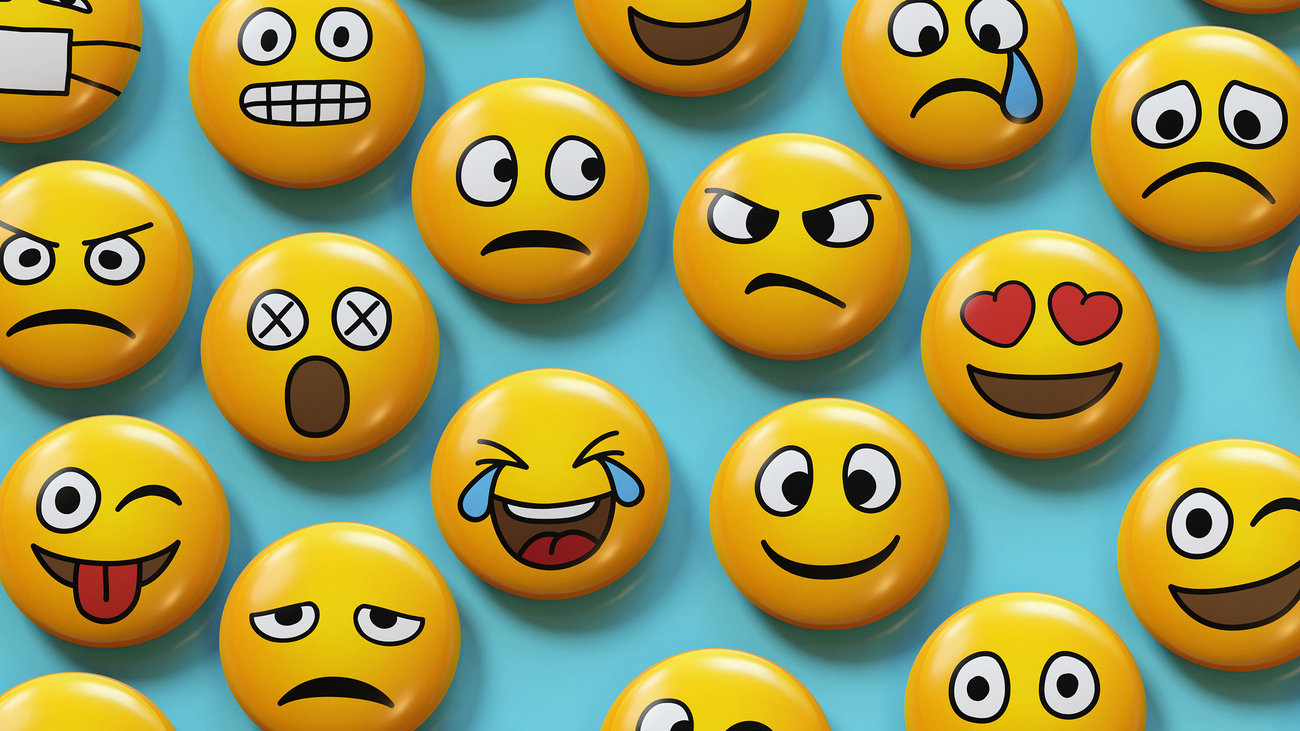
Then there are all the graphic indicators such as emoticons like smileys, which morphed into a whole army of emojis, particularly the emblematic ones like thumbs up and praying hands.
See the full story here: https://www.npr.org/2019/08/20/749946265/opinion-ironic-informal-and-expressive-new-rules-of-language-evolve-online?utm_campaign=the_download.unpaid.engagement&utm_source=hs_email&utm_medium=email&utm_content=75915037&_hsenc=p2ANqtz-_8BgLQc_oZ_ohoGWc73Pyss9AB64Wv2bh1YQGQw4TEgLjLWryoHAqresiCZ3G4bYv7q0nGx1AQqDPb__3NP3DaeT_jGg&_hsmi=75915037
Old age is over—if you want it to be
 Some huge advances in longevity medicine may be coming, and as they do, we’ll have to grapple with the challenges and opportunities of a world in which people live longer and healthier lives.
The latest issue of MIT Technology Review is all about the biological and technological advances that will help us all to live longer, and the implications for society.
For such a world to be prosperous and harmonious, society needs to shed stereotypes of older people as unproductive, inflexible, and technologically challenged. Our very notion of “old age” was invented around the same time as the theory of eugenics and is about equally valid. Groups like the Longevity Explorers and Senior Planet give the lie to the idea that older people can’t start new ventures or learn to use technology.
Art: Of augmented reality and social realities
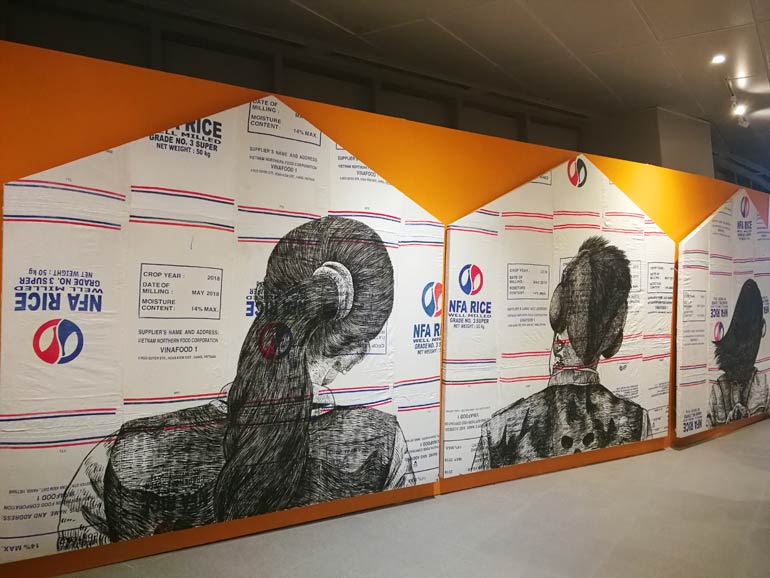 ARTWORKS depicting social issues, graphite drawings and installations, and paintings of an industrial landscape viewed with augmented reality came out on top in the 16th edition of the Ateneo Art Awards held on Sunday at the Ateneo Art Gallery of the Ateneo De Manila University in Quezon City.
See the full story here: https://www.bworldonline.com/of-augmented-reality-and-social-realities/
Five Companies Using Virtual Reality To Improve The Lives Of Senior Citizens
Viarama
Viarama is adding joy to the lives of senior citizens who are receiving end-of-life care. Using HTC Vive headsets and Google Earth VR, those in nursing homes or hospices are taken on journeys they never thought possible. The company is enabling the elderly to travel back to where they got married, or where they did their national service.
Mynd VR
MyndVR is on a mission to improve the lives of senior residents and assisted living communities by introducing virtual reality solutions into outdated health-care practices.
 Rendever
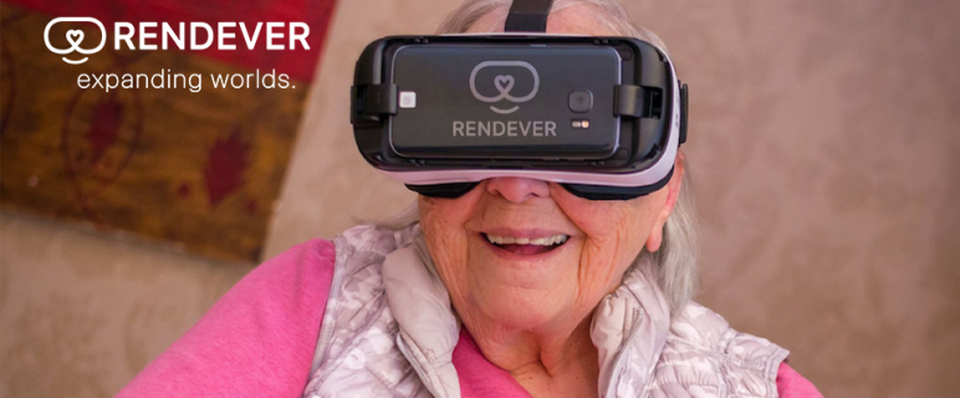
The latest National Poll on Healthy Aging (February 2019) revealed that one in three elderly adults felt a lack of companionship, which suggests that millions of older adults across the U.S. feel lonely. Research shows that chronic loneliness can impact older adults’ memory, physical well-being, mental health, and life expectancy. In fact, some research suggests that chronic loneliness can shorten life expectancy as much as smoking.
VR Genie
VR Genie is run by the nonprofit organization Equality Lab. The company’s mission is to “use cutting-edge technology to enable communities to thrive and to improve their quality of life.”
Virtual Exercise
In the U.S., it is recommended that elderly adults get 150 minutes of exercise per week in order to enhance their overall quality of life and reduce the likelihood of accidents related to frailty.
See the full story here: https://www.forbes.com/sites/solrogers/2019/08/21/five-companies-using-virtual-reality-to-improve-the-lives-of-senior-citizens/#657c5d734279
Singularity University Announces Virtual Reality Training Program and On-Demand Classes at 2019 Global Summit
 Singularity University (SU), a global community with a mission to educate, inspire and empower leaders to apply exponential technologies to address humanity’s grand challenges, announced today availability of its two newest products,
This press release features multimedia. View the full release here: https://www.businesswire.com/news/home/20190819005184/en/
- On-Demand Classes, affordable, bite sized, learning on topics such as such as security and hacking, artificial intelligence and human healing, and
- Uncommon Learning, a personally adaptive virtual reality (VR) training system with first of a kind integrated neuroadaptive features.
On-Demand Classes, a new series of online content, is made up of 2-3 hour classes developed by global experts in conjunction with SU around specific areas of expertise.
“The pace of change will never be slower than it is today, and humans will experience unprecedented changes in their lives in the next decade,” said Tammy Lakes, executive vice president of online learning and digital business at SU. “With On-Demand Classes SU is able to educate, inspire and provide deeper insight into these changes on a scale that is affordable and global.”
On-Demand Classes will be updated monthly on SU.org and start at $100. Current available classes include:
- Surpassing Limitation with Khalil Osiris and Dr. Makaziwe Mandela
- How-to-Hack for Kids…and Executives with Nico Sell
- Symbiotic Systems: Designing an Inclusive Future with John Wise
- Transforming Business With Nature with Francisco D’Elia
Uncommon Learning is a personally adaptive virtual reality training system where users will learn new skills in an immersive environment and their training experience will be modified based on individual performance as well as biometric data including brain response, heart rate and eye tracking.
“We all learn differently; even individual needs change moment by moment, and yet traditional training methods are rigid and remained unchanged for decades, ” said Kyle Nel, executive vice president of Uncommon Partners Lab. “Uncommon Learning combines immersive virtual reality with adaptive features made possible with neuroscience and machine learning technologies to create a holistic training system that is more effective and drives higher employee confidence and performance.”
Integrated adaptive features maintain optimal user engagement by automatically slowing down during moments of stress or becoming challenging if the user appears to be bored, this amplifies the effectiveness over and above that seen in typical VR training alone. Skills are learned faster and with greater retention, resulting in higher performance, improved safety and employee satisfaction. The system can be deployed across any industry.
Uncommon Learning is currently accepting applications for VR training. To learn more about the program or to apply, visit su.org/enterprise/uncommon-partners-lab.
See the original PR here: https://finance.yahoo.com/news/singularity-university-announces-virtual-reality-130000391.html
Augmented Reality to save industrial plant workers from electrocution
 UNSW Sydney’s Maker Games hailed an augmented reality system as this year’s winner.
An average of 27 workers dies each year from electrocution, while more than 530 people are hospitalised with electrical injuries.
The Team safAR students responded to the problem by creating a system that uses augmented reality (AR) to provide step-by-step instructions to workers on how to safely isolate machinery.
The software uses AR object recognition and speech recognition.
It is an easy-to-use tool that any construction worker can look at the machinery and instantly get feedback on what they should do in the field.
It uses some small safety glasses that give you a VR/AR kind of display. This allows workers to operate the software hands free while in the field.
Other projects
Other prototypes presented by the Maker Games finalists were:
- An app-controlled system to protect the home against bushfires
- A mask that protects water utility workers in India from inhaling deadly hydrogen sulphide
- An app that simulates trading on the stock market as well as real life events affecting personal finances
- A virtual reality house inspection app
- An augmented reality remote inspection tool for fire engineers
- Drones and robots that can safely navigate wet and dry environments in water vessel tanks
- A robot that can calibrate and test optimum microphone positioning for audio hardware manufacturers
- Wearable clipboard/tablet device holder enabling nuclear plant workers to carry out inspections hands-free
See the full story here: https://www.opengovasia.com/augmented-reality-to-save-industrial-plant-workers-from-electrocution/
Facebook makes augmented reality accessible to SMEs
Unfortunately, most of the AR use cases seem to come out of large organizations rather than small- and medium-sized enterprises (SMEs) that are usually expected to be more creative — but thanks to Facebook, that’s about to change.
“Starting today, anyone can create and publish their own Spark AR effects on Instagram,” said the Tech@Facebook blogpost announcing the development.
“We’re also introducing the new Effect Gallery, which includes niche AR effects from up-and-coming artists, making it easier for people to discover unique effects from the creator community. To discover and try on new effects yourself, simply “Browse Effects” at the end of your effects tray in the Instagram Camera.”
The fact that users can quickly discover new filters is what can help brands quickly get the most out of their efforts, making AR projects more valuable to them in the first place.
See the full story here: https://techwireasia.com/2019/08/facebook-makes-augmented-reality-accessible-to-smes/
Got Pain? A Virtual Swim With Dolphins May Help Melt It Away
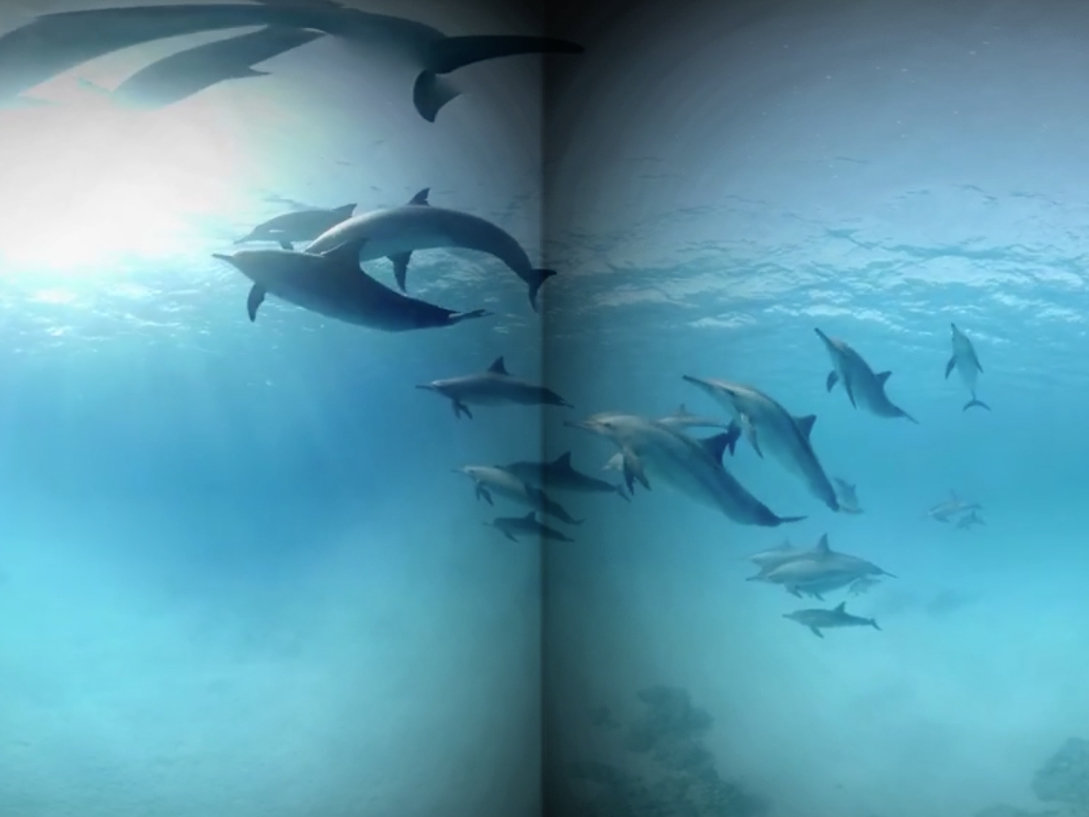 "I get a strong feeling of pleasure, relaxation and peace," he says.
It doesn't take long to produce that effect — about 10 minutes or so, via the headset.
Norris is no stranger to pain. He's got chronic pain through his spine, back and hips, from injuries that go back years.
Ever since he was introduced to virtual reality, he's been hooked. In addition to swimming with dolphins, he's tried other VR experiences, such as wilderness walks.
A study published this month in the journal PLOS ONE is just the latest to document that an immersive, virtual reality experience can be an effective strategy for reducing pain.
VR "changes the way we perceive the pain," explains study author Brennan Spiegel, a physician and the director of Cedars-Sinai Health Services Research in Los Angeles.
See the full story here: https://www.npr.org/sections/health-shots/2019/08/19/751495463/got-pain-a-virtual-swim-with-dolphins-may-help-melt-it-away