Bentley Concept Car Gets Its Own Augmented Reality App, but the Price of Admission Is Steep, Sort Of
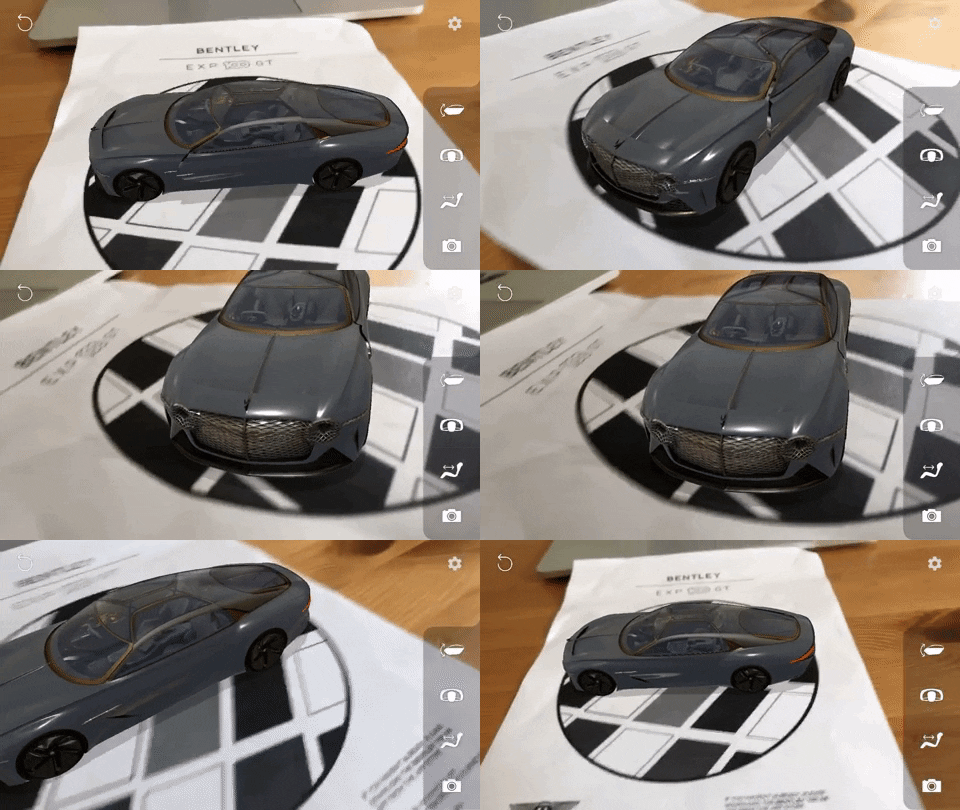
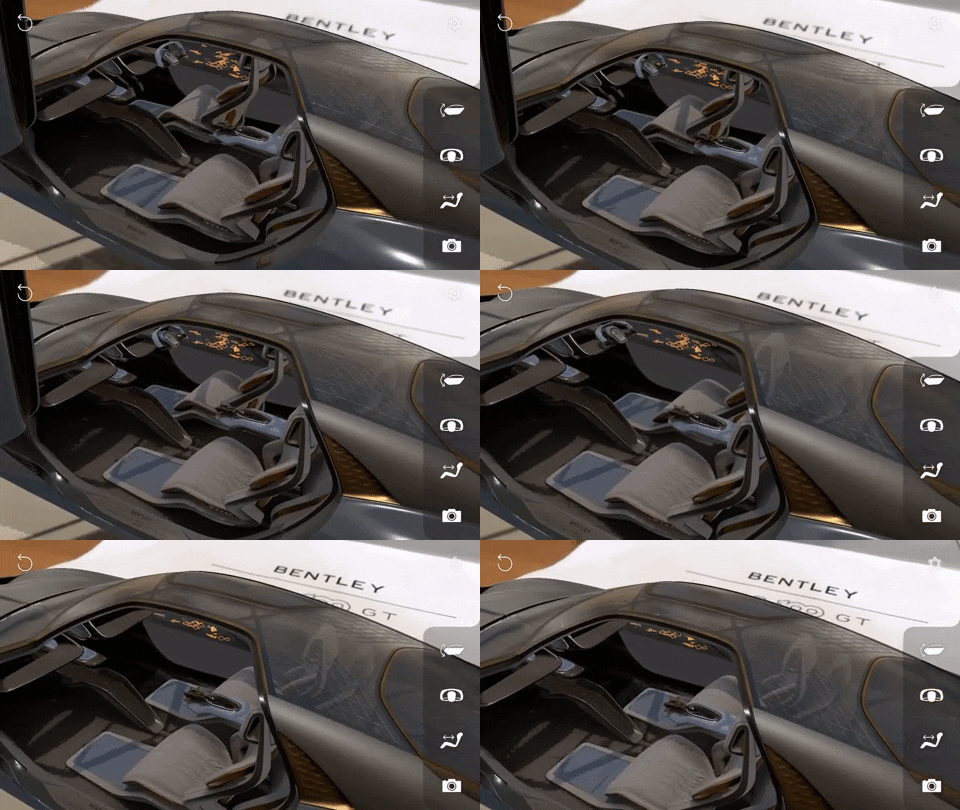 Only a handful of people can actually afford a Bentley, but no one can afford the Bentley EXP 100 GT — because, as a concept car, it's not for sale (yet). So the only way to really get a good look at this vehicle is in AR. Select Bentley dealers around the world will actually have their own version of the QR code on the floor of their showroom. This will bring up a full-scale 3D model of the car you can actually walk around.
Ironically, the car is more advanced than the app and its relatively primitive marker-based AR. The EXP 100 GT is an all-electric vehicle and was "inspired by the company's deep understanding of the desires of its intelligent, forward-thinking customers," according to Bentley.
The company also claims that the vehicle "embraces Artificial Intelligence (AI) as a means to reassert the car as a place for creating, experiencing and capturing extraordinary human experiences and emotions." Additionally, the vehicle has a self-driving mode and can go from zero to 60 mph in under 2.5 seconds, reaching a top speed of 186 mph.
See the full story here: https://next.reality.news/news/bentley-concept-car-gets-its-own-augmented-reality-app-but-price-admission-is-steep-sort-0203487/
World’s largest ‘Virtual Reality’ hospital to open in Bydgoszcz
 The world’s largest virtual hospital is set to be built in Bydgoszcz by InventionMed, a medical technology firm that uses virtual and augmented technology simulators to aid the training of medical professionals.
The company has received a grant of 16.2 million złoty from the Ministry of Investment and Economic Development, and will sink that back into a 29.5 million złoty project that will see the development of a virtual hospital and leading edge R&D centre.
Principally known for their TutorDerm simulation, InventionMed’s centre will play to the firm’s strengths and specialize in aesthetic and clinical dermatological training.
In addition, the five-storey, 3,000 sq/m centre will also explore other areas of medicine such as cardiology, cardiac surgery, neurosurgery, anatomy and neurological rehabilitation.
“The concept behind creating a VR/AR Centre of Innovative Medical Simulations is a response to the research and technological gap existing on the Polish market,” says Tomasz Kierul, the President of the Board of InventionMed.
See the full story here: https://www.thefirstnews.com/article/worlds-largest-virtual-reality-hospital-to-open-in-bydgoszcz-7176
The SunCAVE, the World’s Highest Resolution Walk-in Virtual Reality Environment, Turns Two
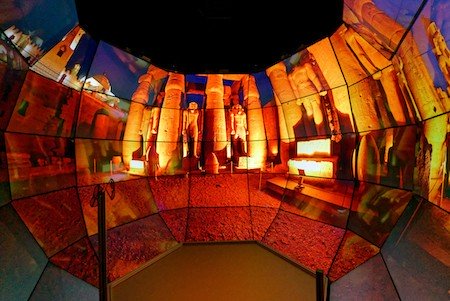 Tucked into a cozy-feeling room on the first floor of the UC San Diego's Qualcomm Institute are 70 screens, bundles of cables and 35 computer nodes that make up a powerful system that can process massive amounts of data transmitted over the Internet from researchers all over the US or even Antarctica.
It can also take you, virtually, into worlds as varied as a temple in Egypt, an ancient copper smelting site in Jordan or an underwater cave system on the Yucatan Peninsula. Or even into the abdomen of Crohn’s disease patients.
Front and center in the room is a 360-degree sphere-like scaffolding covered in screens called the SunCAVE—the world’s highest resolution walk-in virtual reality (VR) environment.
Two years ago this summer, the Qualcomm Institute’s CAVE (or Cave Automated Virtual Environment) morphed from the StarCAVE, as it was known, into the SunCAVE. Its physical shape changed, as did the technology running it behind the scenes.
“The fact that we can use 35 PCs and 70 game-class graphics cards (GPUs) and memory together makes it a computer cluster that also happens to immerse you in realistic 3D pictures, algorithmic visualizations, and even MRI-scans of human brains and other organs,” he said.
See the full story here: https://www.newswise.com//articles/world-s-highest-resolution-walk-in-virtual-reality-environment-turns-two
The world’s top deepfake artist is wrestling with the monster he created
 Hao Li has spent his career perfecting digital trickery. Now he’s working to confront the problem of increasingly seamless off-the-shelf deception, reports Will Knight.
Raising awareness: Li has been trying to get CEOs and politicians around the world to consider the consequences that videos doctored with AI—“deepfakes”—could have for them, and for the rest of us. They are virtually guaranteed to be weaponized.
About Li: He isn’t your typical deepfaker. He’s edited some of the most famous faces in the world for modern blockbusters, fooling millions of moviegoers into believing in a smile or a wink that was never actually there, or adding their faces onto stunt people’s.
Breakthrough: In 2009, Li developed a way to capture a person’s face in real time and use it to operate a virtual puppet, without needing motion-trackers.
Troubling potential: Even as Li races ahead with digital fakery, he’s troubled by the potential for harm. He’s working with researchers refining tools to detect deepfakes. But he thinks it’s just a matter of time until deepfakes are totally undetectable.
See the full story here: https://www.technologyreview.com/s/614083/the-worlds-top-deepfake-artist-is-wrestling-with-the-monster-he-created
Why Apple’s New Augmented-Reality Collaboration With Famous Artists Won’t Help Us Reach the Next Stage of [AR]T
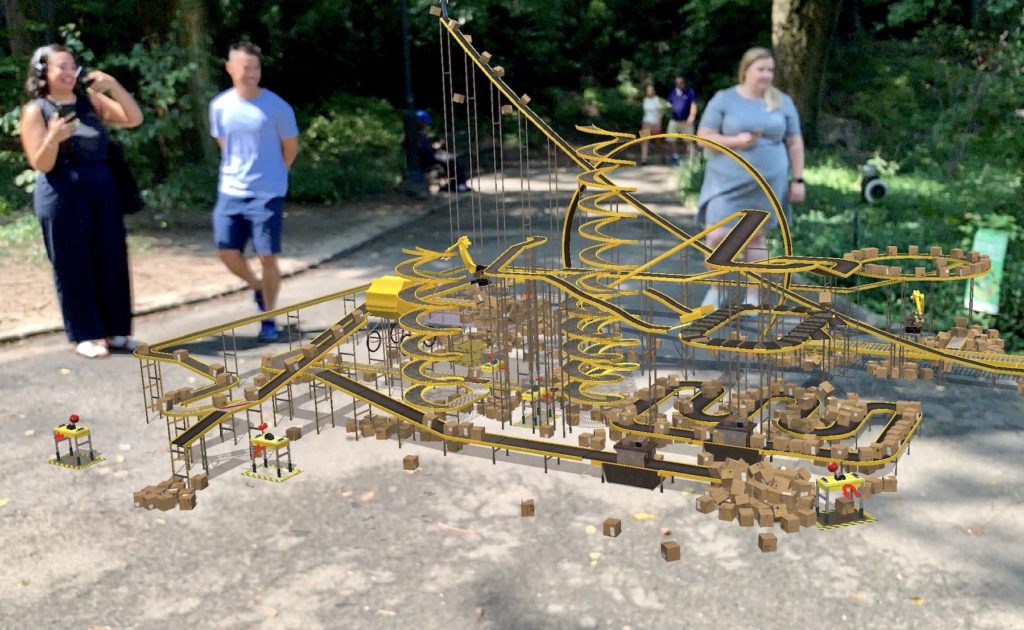 The truth is that most serious artists working on digital technologies today feel compelled to address the more disturbing or unsettling sides of them, how they are reshaping our humanity and making us ever more dependent on corporations. A more powerful hint of the disorientation and alarm that marks the contemporary conversation about tech might have made the works in “[AR]T” cut a bit deeper, feel a bit more vital to the present and a little less like innocuous one-offs—but that’s not what this initiative is all about. As it stands here, to borrow a term from video game criticism, you can’t help but feel that the artistic potential has been nerfed.
See the full story here: https://news.artnet.com/opinion/apple-augmented-reality-art-1624540
Instagram Is Letting You Create Your Own Augmented Reality Filters
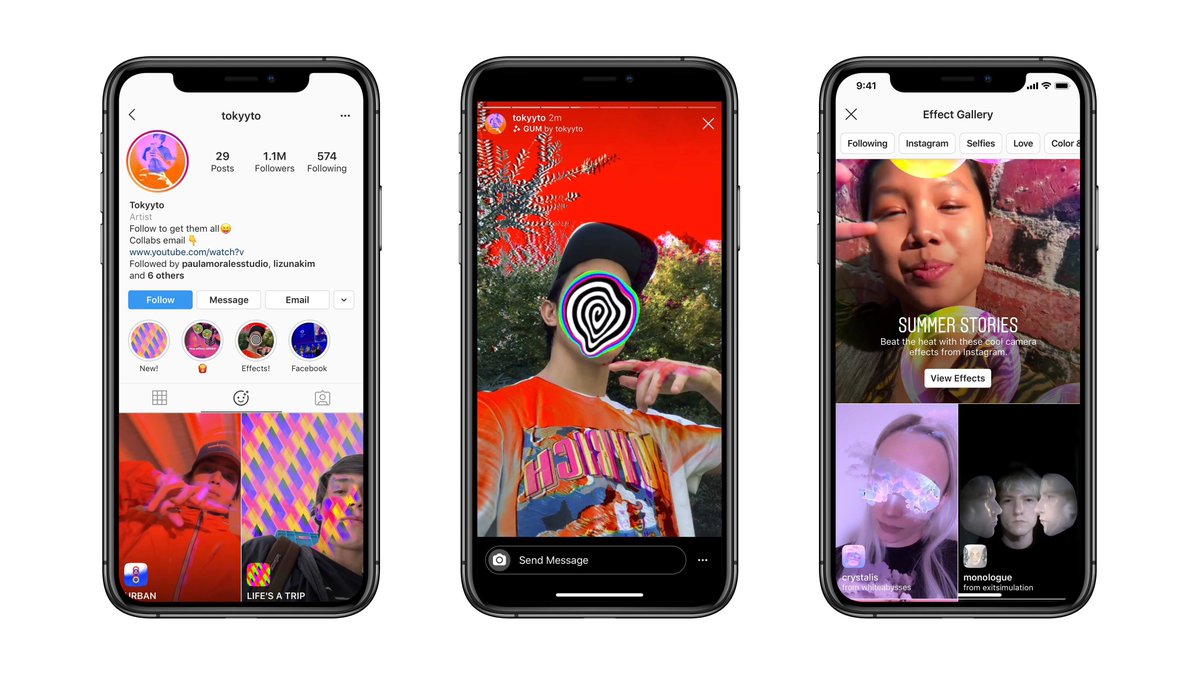 Instagram wants you to take your Stories to the next level, as the social media app is now allowing users to create their own augmented reality filters. By utilizing Spark AR’s public beta — previously available to Facebook users — anyone can create and publish their own AR effects on Instagram.
Spark AR is available for Mac and PC, featuring tools to synch movements, import object sounds, and publish filters directly to Instagram. You can also take advantage of the Learning Center for tutorials on coding and how to animate 3D objects.
See the full story here: https://www.highsnobiety.com/p/instagram-augmented-reality-filters/
Why Are Deepfakes So Effective? Its because we want them to be true.
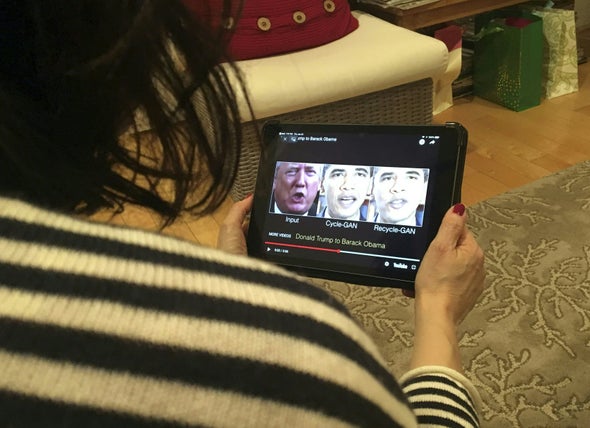 Fueled by advances in AI and spread over the tentacles of social media, deep
 fakes may prove to be among the most destabilizing of forces humankind has faced in generations.
After showing over 3,000 adults fake images accompanied by fabricated text, a group of researchers reached two conclusions. First, the more online experience and familiarity with digital photography one had, the more skeptical the person evaluating the information was. Second, confirmation bias—the tendency to frame new information to support our pre-existing beliefs—was a big factor in how people judged the veracity of the fake information.
Deep fakes work so well because they have large audiences willing to believe and spread them. We often see what we want to be true—a desirability bias.
To understand how a well-executed deep fake could play into desirability bias, consider these vignettes. The first is a video of a high school student that went viral on Twitter in January. Many saw a smug young man mocking a tribal elder. Others saw a nervous teenager not knowing how to react in a strange situation. This was unaltered footage. What was missing was context—the truth was more complex.
Psychologists found that repeating the same message boosts the propaganda effect through a process called priming. The more you are exposed to a statement, the likelier you are to rate it as true.
One of the best works is Psychology of Intelligence Analysis, written by Richards Heuer, a longtime CIA officer.
Two of Heuer's key points are that being aware of cognitive biases is not enough. You also have to apply methods that foster higher levels of critical thinking, such as structuring information using decision trees and causal diagrams, and by challenging assumptions.
See the full story here: https://blogs.scientificamerican.com/observations/why-are-deepfakes-so-effective/?
Interact with the WAX Blockchain in Terra Virtua’s Augmented Reality Mobile App
 Owners of Millions of WAX Collectibles Enjoy Their Skins In World's First Ever Fully-Immersive Augmented Reality/Virtual Reality Blockchain Entertainment Platform
LONDON, and GRAND CAYMAN, Cayman Islands, Aug. 14, 2019 /PRNewswire/ -- Worldwide Asset eXchange™ (WAX) and Terra Virtua, the world's first fully immersive augmented reality and virtual reality (AR and VR) entertainment platform, today announced that customers can interact with the millions of digital collectibles trading on the WAX Blockchain in augmented reality.
Together, the companies are in a position to take full advantage of the rapidly expanding AR/VR consumer entertainment market, which is expected to grow from $3.2B to $19.9Bin the next three years. The integration of WAX into Terra Virtua combines the strength of the WAX Blockchain and its suite of microservices that are built for developers with Terra Virtua's platform to create a secure, streamlined and interactive social environment to view, buy, sell and trade virtual collectibles.
See the full story here: https://finance.yahoo.com/news/interact-wax-blockchain-terra-virtuas-161000706.html
Google’s AI learns how actions in videos are connected
 ...scientists at Google propose Temporal Cycle-Consistency Learning (TCC), a self-supervised AI training technique that taps “correspondences” between examples of similar sequential processes (like weight-lifting repetitions or baseball pitches) to learn representations well-suited for temporal video understanding. The codebase is available in open source on GitHub.
As the researchers explain, footage that captures certain actions contains key common moments — or correspondences — that exist independent of factors like viewpoint changes, scale, container style, or the speed of the event. TCC attempts to find such correspondences across videos by leveraging cycle-consistency.
...Moreover, they say that it can transfer metadata (like temporal semantic labels, sound, or text) associated with any frame in one video to its matching frame in another video, and that each frame in a given video could be used to retrieve similar frames by looking up the nearest neighbors in the embedding space.
See the full story here: https://venturebeat.com/2019/08/08/googles-ai-learns-how-actions-in-videos-are-connected/
Quantum system virtually cooled to half of its actual temperature
 As the researchers explained, the results are based on the idea that there is a strong connection between temperature and quantum entanglement.
"A modern perspective in physics is that temperature is an emergent property of quantum entanglement," Cotler told Phys.org. "In other words, certain patterns of quantum entanglement give rise to the familiar notion of temperature. By purposefully manipulating the pattern of entanglement in a system, we can gain access to lower temperatures. While these remarkable ideas were previously understood theoretically, we figured out how to implement them experimentally."
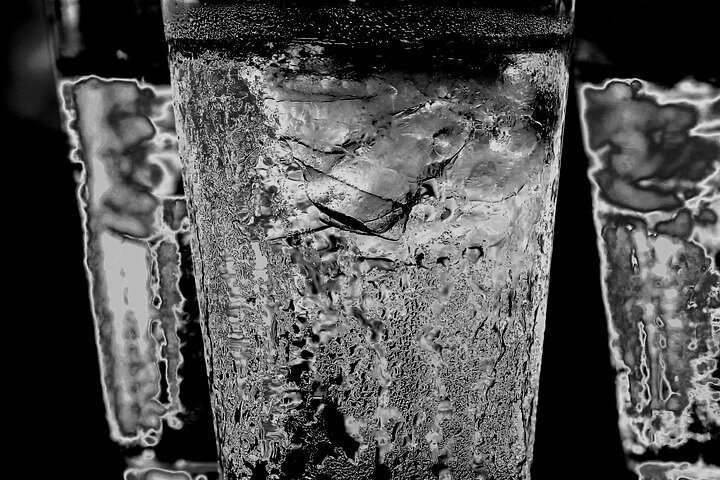
"We may be able to use quantum virtual cooling to 'cross' what are called finite-temperature phase transitions," Cotler said. "This seems quite bizarre—it would be like taking two glasses of liquid water, and by making a quantum measurement, you learn about the properties of solid ice.
Due to their quantum properties, quantum simulators can perform certain tasks like this that are out of the reach of classical computers, which cannot leverage quantum entanglement and superposition.
See the full story here: https://phys.org/news/2019-08-quantum-virtually-cooled-actual-temperature.html