SuperReal Transforms Cipriani 25 Broadway Like You’ve Never Seen It Before
 Multimedia entertainment studio Moment Factory and Cipriani have created an immersive digital art exhibition in the event space, open to the public through the end of August.

Riffing on the architecture and history of the landmarked building, the Montreal-based studio was inspired to create an experiential installation exploring the intersection of new and old technologies. The ticketed exhibition, with a 45-minute run time, incorporates projection mapping and large-scale multimedia art, leading visitors through five distinct interactive environments in the space. One of the environments, “Imagination Pollination,” offers a new way of looking at the venue, as blinking lights trace the architectural detailing.
See the full story here: https://wwd.com/fashion-news/fashion-scoops/moment-factory-superreal-cipriani-1203226370/
Amazon lays out a technology to guide delivery agents with augmented reality
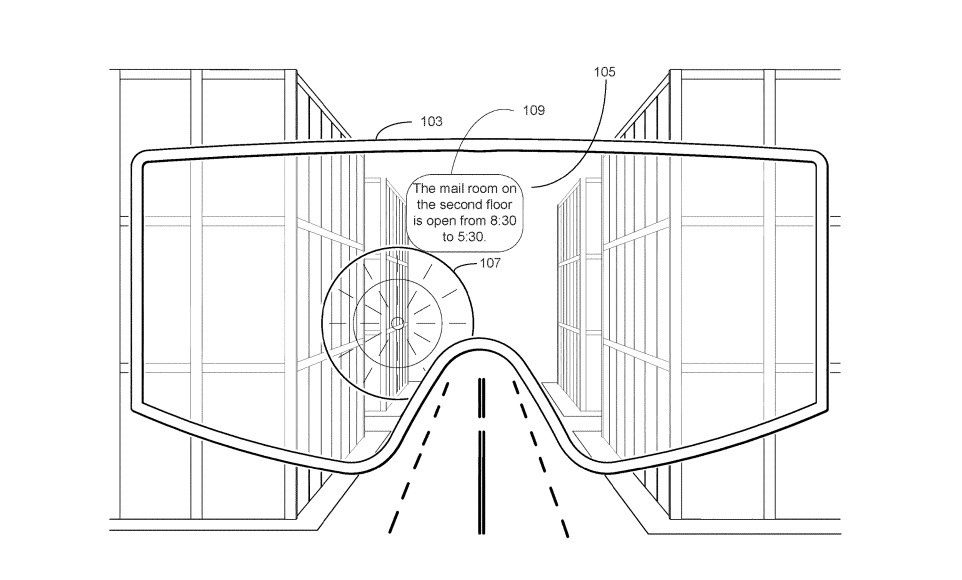 The patent, published today, outlines a scheme for alerting a delivery agent about the best times to make a delivery, the best routes to take and even the best places for parking — all overlaid on the agent’s AR headset.
Why do it, in this age of navigation apps?
“Experienced delivery agents often learn information about the delivery routes and delivery areas that is not reflected in a delivery route generated by a routing application,” Amazon inventor Robert Niewiadomski writes in his application, filed back in 2016.
Such lore can include gate codes, the precise location of the preferred delivery entrance and “the most efficient or best places to park when making a delivery to a destination or a group of destinations,” Niewiadomski notes.
As the agents go about their rounds, the delivery tips and cautionary notes (for example, watch out for the guard dog) pop up via a wireless connection to their AR headsets.
See the full story here: https://www.geekwire.com/2019/amazon-lays-technology-guide-delivery-agents-augmented-reality/
At Siggraph 2019, AI-aided CG flexed its muscles and slightly stumbled
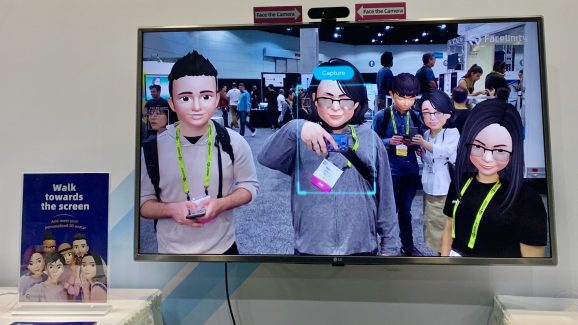 In reality, I am not a long-haired Asian woman, and when I create virtual avatars of myself, they’re never long-haired, Asian, or female. Yet at this week’s Siggraph 2019 conference in Los Angeles, FaceUnity’s “automatic” cloud AI avatar generator snapped a photo of me and quickly came to some very incorrect conclusions. “It thinks you’re a lady,” one of the booth attendants said, slightly smiling. I walked away from the demo bemused, thinking about how Apple will eventually add the same AI-powered feature to iOS’s Animoji/Memoji generator, but will make it work properly.
This, in a nutshell, is the 2019 state of AI in computer graphics. Lots of developers are finding ways to incorporate AI and machine learning technologies into projects that will be mainstream within the next five years, but you often have to look beyond their currently mixed results — and their least performant examples — to appreciate how important they’ll soon become.
The debate over “compelled decryption” is likely headed for the US Supreme Court.
 The context: In Hong Kong, cops have been prying open protestors' eyes so that FaceID will unlock their smartphones, giving them access to what can be a life’s worth of data. In the US, police officers can command you to look at a phone or put your finger on the sensor to unlock it, an order known as “compelled decryption.”
But should they be able to? That’s a live question right now in the US, with cases pending in the highest state courts in Indiana, Pennsylvania, and New Jersey. It’s likely to be reviewed by the US Supreme Court in the next two to three years, says Orin Kerr, a law professor at UC Berkeley.
The argument: Since encryption backdoors are inherently insecure, compelled decryption would be a convenient way for police to get into someone’s device without needing them. However, it’s still unclear if the practice is constitutional or not.
Read the full story here: https://www.technologyreview.com/s/614071/why-smartphones-cop-mode-might-not-keep-cops-out-for-much-longer/?utm_campaign=the_download.unpaid.engagement&utm_source=hs_email&utm_medium=email&utm_content=75391469&_hsenc=p2ANqtz-93hVTa8N_UcdDMu9yYbljDHHRJH84xu-0e6wFLjm1EC9aTt253NEipQP6y2feJyvc3t04q_TVFaXMTIzODBqlHFRZebA&_hsmi=75391469
Every Single Sex Toy in Third Aurora’s Augmented Reality Platform

Augmented Reality objects. Bondage Mask, Sex Swing, Bondage Cage, Whipping Board (PRNewsfoto/Third Aurora)
The company behind the augmented reality platform, Third Aurora, firmly believes that technology such as augmented reality will play a huge role in not only sex-toy sales, but many other industries as well. Dave Chaffey, one of the co-founders of the company, acknowledges that the platform will provide a bit of a giggle for consumers at first. "Yes, there's certainly been a lot of people giving it a go and some office banter about all the bits and pieces you can see. We're expecting that at the start. But once the initial laughter dies down, watch this become a serious channel for commerce."
"Think about it for a second," says Chaffey, "If you're a coy couple looking to purchase bondage equipment, where do you start? You can look online but photographs don't give you the true picture. You really need to view it in a three-dimensional setting you know well, to see if it's going to match the bed suite."
See the full story here: https://www.prnewswire.com/news-releases/every-single-sex-toy-in-third-auroras-augmented-reality-platform-300896996.html
Stanford University Researchers Point to Dramatic Improvements In Virtual Reality Sound
 “Making it easier to create models makes it practical to build interactive environments with realistic sound effects,” remarked Doug James, a professor of computer science at Stanford who is currently focusing on this VR music challenge.
The traditional approach to modeling sounds is based on theories developed by famed scientist Hermann von Helmholtz. But the researchers have based their algorithm on how music composer Heinrich Klein was able to blend multiple musical notes into a single sound. It uses a computer’s graphic processor to split different vibration modes into chords, and then it creates a sound-wave simulation of those chords.
In practical terms, the algorithm can significantly reduce the amount of time required to model sounds. It can be many thousands of times faster than traditional modeling, which could bring an unprecedented amount of realism to VR experiences.
See the full story here: https://www.digitalmusicnews.com/2019/08/05/stanford-virtual-reality-sound/
ReelTime VR Creates First Virtual Reality Commercials that Can Be Seen On Both Traditional TV and Internet Video Platforms
 The commercials that are airing proving the capability were filmed using ReelTime VRs proprietary technologies and methodologies during the creation of ReelTime's No. 1 award winning VR travel series "In Front of View". The series seen in 49 countries starring international supermodel/actress Front Montgomery and her daughter Leonie Montgomery, now in its second season, transports the viewers so that they can travel alongside the famous mother and daughter as they explore the most beautiful and hidden places in full 360 Virtual Reality.
ReelTime VR is a pioneer in Virtual Reality technologies and has received patent-pending status from the United States Patent and Trademark Office (USPTO) for their non-provisional patent application covering apparatus and method claims for technology involving simultaneous capturing of 360 X 360 degree Spherical Panorama Images and Video.
See the full story here: https://finance.yahoo.com/news/reeltime-vr-creates-first-virtual-120000436.html
China has started a grand experiment in AI education. It could reshape how the world learns.
 Racing ahead: While experts puzzle over AI’s role in education, China hasn’t waited around. Its AI-enabled teaching and learning sector has exploded. Tens of millions of students now use some form of AI to learn—whether through extracurricular tutoring programs like Squirrel’s, digital learning platforms like 17ZuoYe, or even in their main classrooms.
Blowing up: At the moment, it looks like this could be a huge new business area. That’s got Silicon Valley interested. And the Chinese firms behind the programs are already beginning to export their models globally.
A note of caution: Experts worry about the direction this rush is taking. At best, they say, AI can help teachers foster their students’ interests and strengths. But it could also further entrench a global trend toward standardized learning and testing, leaving the next generation ill-prepared to adapt in a rapidly changing world of work.
Three things have fueled China’s AI education boom. The first is tax breaks and other incentives for AI ventures that improve anything from student learning to teacher training to school management. For VCs, this means such ventures are good bets. According to one estimate, China led the way in over $1 billion invested globally last year in AI education.
Second, academic competition in China is fierce. Ten million students a year take the college entrance exam, the gaokao. Your score determines whether and where you can study for a degree, and it’s seen as the biggest determinant of success for the rest of your life. Parents willingly pay for tutoring or anything else that helps their children get ahead.
Finally, Chinese entrepreneurs have masses of data at their disposal to train and refine their algorithms. The population is vast, people’s views on data privacy are much more lax than in the West (especially if they can get coveted benefits like academic performance in return), and parents are big believers in the potential of technology, having seen how much it has transformed the country in just a few decades.
See the full story here: https://www.technologyreview.com/s/614057/china-squirrel-has-started-a-grand-experiment-in-ai-education-it-could-reshape-how-the/?