Another U.S. City Moves to Ban Face Recognition, Citing Threats to Free Speech and Civil Rights
 On Tuesday, the city of Cambridge, Massachusetts moved one step closer to prohibiting local government from using facial recognition. Three other cities in the country have already instituted such bans over concerns that the technology is biased and violates basic human rights.
“The use of face recognition technology can have a chilling effect on the exercise of constitutionally protected free speech, with the technology being used in China to target ethnic minorities, and in the United States, it was used by police agencies in Baltimore, Maryland, to target activists in the aftermath of Freddie Gray’s death,” the amendment states.
Cambridge would join San Francisco, Oakland, and Somerville in banning this specific type of surveillance tech.
Backlash to the spread of face surveillance is growing. But if we don’t act now, it will soon become ubiquitous, and then it could be too late.”
See the full story here: https://gizmodo.com/fourth-u-s-city-bans-facial-recognition-citing-threat-1836858623?
Meet the classified artificial brain being developed by US intelligence programs
 But Executive Order 12333 outlines principles governing intelligence agencies and doesn’t apply in the same way to the private Earth-observation companies that have proliferated in recent years, BlackSky being one of them. Corporations can point their telescopes pretty much anywhere they like. Although the government does reserve the right to exercise “shutter control,” prohibiting photography of a certain area, it has never done so (sometimes the government does buy exclusive access to an area, a practice known as “checkbook shutter control”). Limits do exist on the resolutions at which private companies can sell images to the public and to other countries.
For the most part, companies like Maxar, Planet, and BlackSky take pictures that anyone with a fat enough checkbook can purchase — including you, and including organizations like the NRO. That raises some interesting legal questions that researchers like Aftergood are still trying to figure out: if NRO was interested in surveilling the US, and can’t deliberately use its satellites to focus in on your house, could it simply buy pictures of your house from a private company instead?
The NRO did not provide a specific answer on commercial data’s role in Sentient. But limits, says Aftergood, should still exist on paid-for data. “What they do with that should in some way be mission-oriented,” says Aftergood. “They’re not supposed to be snooping for snooping’s sake.”
Costs of Teaming With Social Media Influencers on the Rise
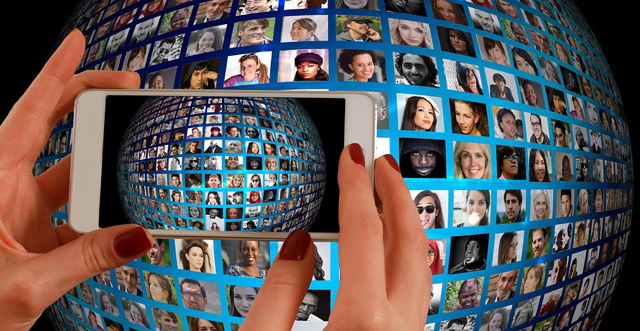 A report from Klear points out that nano-influencers on YouTube (with 500 to 5,000 followers) earn an average of $315 per video, and power-influencers (with 30,000 to 500,000 followers) charge an average of $782 per video.
“Brands are willing to pay a premium for video posts on Instagram, too,” reports eMarketer. “Nano-influencers make an average of $114 per video post on Instagram, compared with $100 for an image post and $43 for a story. Power users make an average of $775 for an Instagram video, $507 for an image post and $210 for a story.”
See the full story here: https://www.etcentric.org/costs-of-teaming-with-social-media-influencers-on-the-rise/
Siggraph 2019 offers a sneak peek into what’s next for AR, VR, and CG
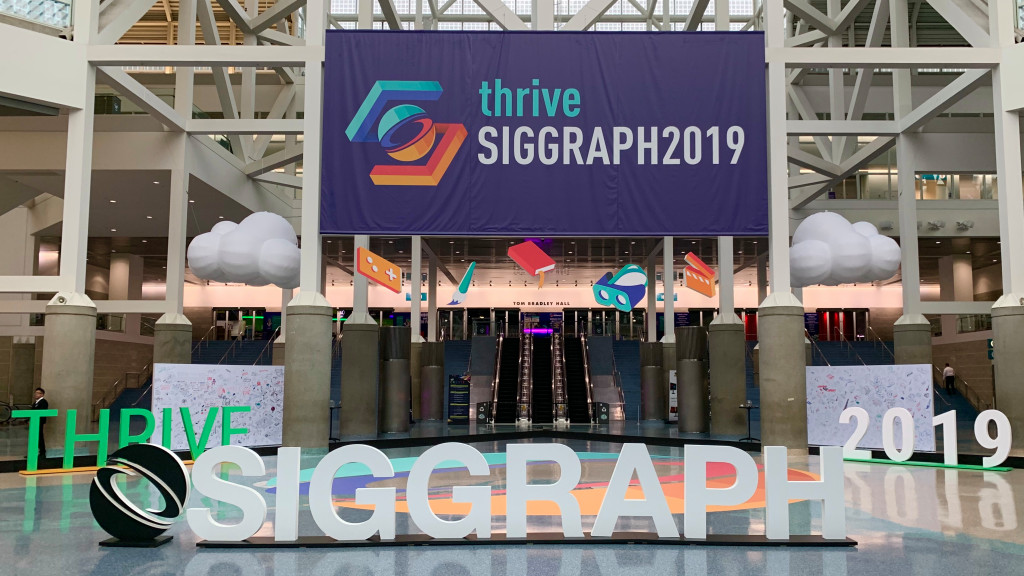 This story is an excellent overview of Siggraph art and products.
https://venturebeat.com/2019/07/30/siggraph-2019-offers-a-sneak-peek-into-whats-next-for-ar-vr-and-cg/
Virtual reality to solve personal problems / Embodied as Sigmund Freud
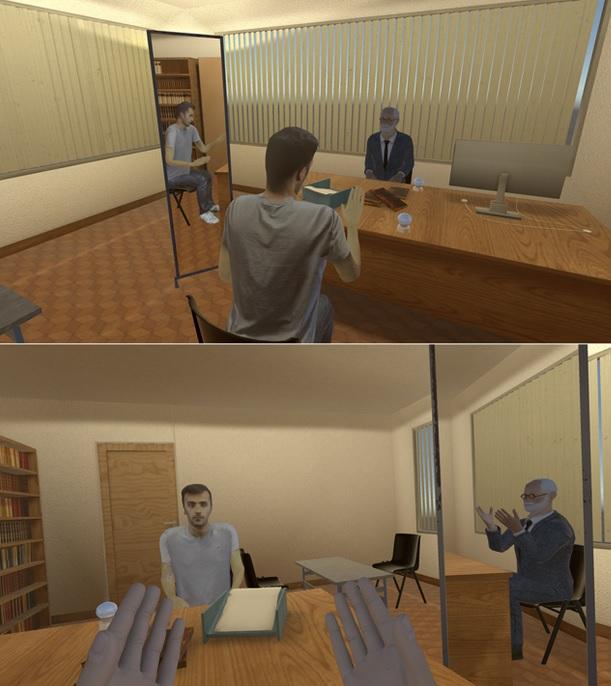 A research team of the University of Barcelona (UB), IDIBAPS and Virtual BodyWorks, a spin-off of both institutions and ICREA, has used immersive virtual reality to observe the effects of talking to themselves as if they were another person, using virtual reality. Study results, published in the Nature Group's journal Scientific Reports, show that conversation with oneself embodied as Dr Sigmund Freud works better to improve people's mood, compared to just talking about your problems in a virtual conversation with pre-scripted comments. Researchers claimed that the method could be used by clinicians to help people dealing with minor personal problems.
The study was led by Mel Slater and Solène Neyret, researchers at the Experimental Virtual Environments Lab for Neuroscience and Technology (Event Lab), a research group of the Faculty of Psychology of the UB. Clinical psychologist Guillem Feixas, of the UB Department of Clinical Psychology and Psychobiology and the Institute of Neurosciences of the University of Barcelona (UBNeuro) also guided the study.
Previous studies developed by this research team have shown that when we adopt a different body using virtual reality, we change our behaviour, attitude and perception of things.
The participant can explain their personal problem to Dr Freud, and then switch to being embodied as Freud. Now, embodied as Freud, when they look down towards themselves, or in a mirror, they will see Freud's body rather than their own, and also this body will move in synchrony with their own movements. "They will see and hear their own likeness explaining the problem, and they see their virtual self as if this were another person. Now they themselves have become the 'friend' who is listening and trying to help," said Mel Slater.
See the full story here: https://www.newswise.com/articles/virtual-reality-to-solve-personal-problems
VR massages: Like ‘Black Mirror,’ but actually enjoyable
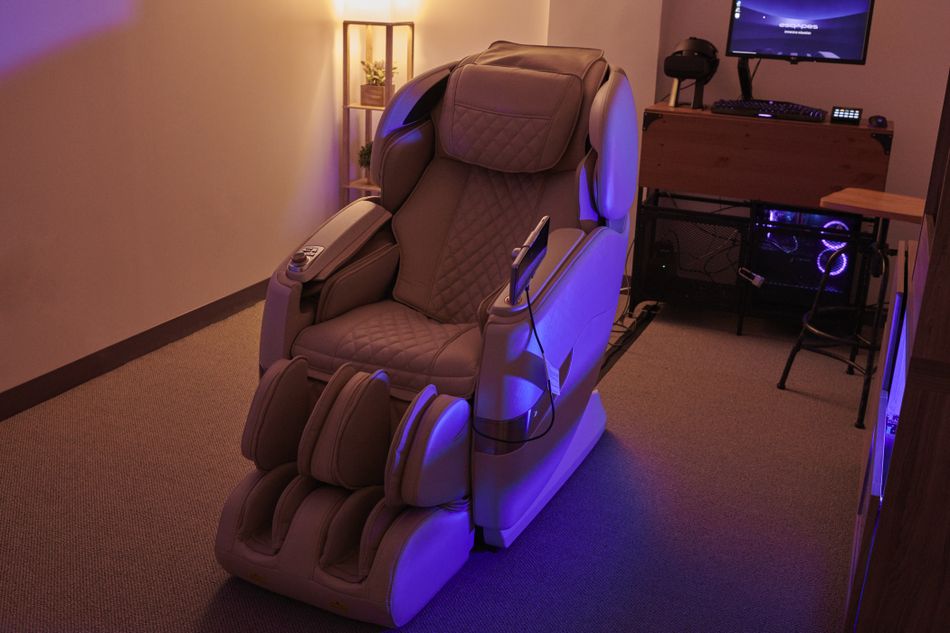
Despite being called a "VR massage," there is nothing virtual about the massage itself. A session gets you 30 minutes in a cushy massage chair that works on your back, bottom, and legs, yes, but also calves, feet, neck, arms, and hands. There's no human masseur involved, but, as an Esqapes employee put it, the two chair models they use are more luxe than "what you find at the mall."
However, to my surprise, the draw of the VR massage is more about the VR than the massage. Jackson designed 10 different "environments," that range from the "tropical retreat" I experienced, to secluded glens, luxurious cabins, and exotic temples. Nothing happens, per se, in the VR worlds, except the passage of time as you would experience it in the real world: the sun moves across the sky, waves ripple, birds fly. The fact that you are earthbound in a massage chair forces you to simply look around and be. And that is what turns Esqapes from something that sounds like a silly, vaguely dystopian-sounding gimmick, to a novel and effective way to induce calm.
"The massage chair I was like, is perfect," Jackson said. "It gives you a reason why you're just in this world and just looking around, there's no expectation to do anything, you know? That was kind of the twist."
See the full story
The world is getting hotter. Can temperature-controlled clothing provide some relief?
 The device is controlled using a smartphone that allows users to adjust their body temperature. After performing hundreds of simulations, Sony claims the device can lower the wearer’s body by 23 degrees or raise it by about 14 degrees.
Sony claims the Reon Pocket only weighs about three ounces, making it easily concealed inside a “neck pocket,” which “can be worn without a sense of incongruity in appearance.” The rechargeable device will cost around $120 and be available only in Japan when it goes on sale next year, Sony said.
Facebook is funding brain experiments to create a device that reads your mind
 The news: In 2017, Facebook announced that it wanted to create a headband that would let people type at a speed of 100 words per minute, just by thinking. Now, the social-media giant has revealed that it has been financing extensive university research on human volunteers.
How? It’s developing “speech decoders” able to determine what people are trying to say by analyzing their brain signals. It’s important research as it can help show if a wearable brain-control device is feasible.
Eventually: Facebook wants to create a wearable headset that lets users control music or interact in virtual reality using their thoughts.
The ick factor: It’s an early example of a giant tech company being involved in getting hold of data directly from people’s minds. To some neuro-ethicists, that means we are going to need some rules, and fast, about how brain data is collected, stored, and used.
See the full story here: https://www.technologyreview.com/s/614034/facebook-is-funding-brain-experiments-to-create-a-device-that-reads-your-mind/
Disney’s Latest VR Film ‘A Kite’s Tale’ Is Adorable, Albeit Very Short
 ...a kite’s tale continues Disney’s trend of blending conventional, hand-drawn animation with cutting-edge CG, offering audiences a nostalgic experience that’s as cute as it is technologically impressive.
Directed by Bruce Wright, Effects Animator at Walt Disney Animation Studios, a kite’s tale follows a rambunctious puppy kite who becomes “tangled up” in the affairs of a stuffy old dragon kite.
That was arguably the most impressive aspect of a kite’s tale: its ability to deliver a genuine sense of nostalgia. It feels as though you’re watching a classic animation, despite the fact you’re viewing the action on a piece of cutting-edge technology. Overalll the biggest negative I found was in the run-time. As soon as I found myself beginning to connect with the characters, the credits had already begun to role, leaving me desperate for more of the dynamic duo.
With two impressive VR short films now under their belts, Walt Disney Animation Studios Short Circuit experimental program is quickly becoming one of the most impactful VR filmmaking programs currently in circulation. No doubt the funding and resources offered by Disney will prove indisposable to the growing VR filmmaking industry.