The impact of social media and the Internet on today’s political arena is undeniable, but how will the emerging world of deep fakes, virtual influencers and augmented technologies tip the scales in 2020? During an AWE Nite LA meetup this week at the Phase Two co-working space in Los Angeles, the ETC’s Phil Lelyveld moderated a panel on the impact of emerging technologies on the 2020 presidential election. Panelists included machine learning expert Stanley Bishop, journalism professor Robert Hernandez, filmmaker and Artie founder Armando Kirwin, and bot creator Sally Slade.
Armando Kirwin, founder of AI character dev house Artie, discussed how a deep fake campaign spokesperson —a candidate advocate John Doe —is entirely possible. The bounded problem set of campaign issues is well suited for the current state of virtual being technology. If it didn’t have to respond in real time, it could be an effective campaign tool.

Stanley Bishop of Spacepost Laboratories and Bishop AI said that using artificial intelligence to detect deep fakes is a “cat and mouse” game. GANs (Generative Adversarial Networks) can be used to detect deep fakes, but GANs are also being used to correct the errors in deep fakes that make them detectable.
Magnopus lead AR/VR developer Sally Slade has created an Instagram bot called Billbot to raise awareness when bills come up for discussion within the California legislature. Billbot could be applied to the Federal legislature’s activities.
USC journalism professor Robert Hernandez discussed the difficulty in defining and achieving an “informed citizenry,” and even what constitutes facts versus opinion. Reporting facts selectively is opinion masquerading as factual coverage. He argued that the very concept of objective reporting is unachievable because everyone has biases. Hernandez recommends diversity in the newsroom staff and in the news feeds as a means of undercutting bias.
The panel discussed how rare it is to have a common experience across political and social divides. Natural disasters and major sports events came to mind. Political debates have the potential of drawing an audience from a cross-section of society, but only if the participants collectively represent a cross-section of ideas so a wide swath of people tune in to hear their own opinions voiced.
Virtual influencers could be used to engage young voters in the political process. Slade pointed out that virtual influencer Lil Miquela has already been an advocate for social causes.
Topics:
Armando Kirwin,
Artie,
Artificial Intelligence,
Augmented Reality,
AWE Nite LA,
Billbot,
Bishop AI,
Deep Fakes,
GANs,
Instagram,
Internet,
Journalism,
Lil Miquela,
Machine Learning,
Magnopus,
Phil Lelyveld,
Presidential Election,
Robert Hernandez,
Sally Slade,
Social Media,
Spacepost Laboratories,
Stanley Bishop,
Virtual Influencers,
Virtual Reality
 The TRACER system consists of the Magic Leap One AR headset, a backpack processor and a Haptech Inc., state-of-the-art instrumented weapon, designed to deliver realistic recoil. More importantly, TRACER leverages and builds upon software developed by Magic Leap Horizons as part of the U.S. Army's Augmented Reality Dismounted Soldier Training (ARDST) project, providing advanced weapons tracking and allowing trainers to create multiple and adaptable simulation scenarios for security personnel to experience.
See the full story here: https://www.eurekalert.org/pub_releases/2019-07/oonr-tsu072419.php
By Wolves in the Walls director Pete Billington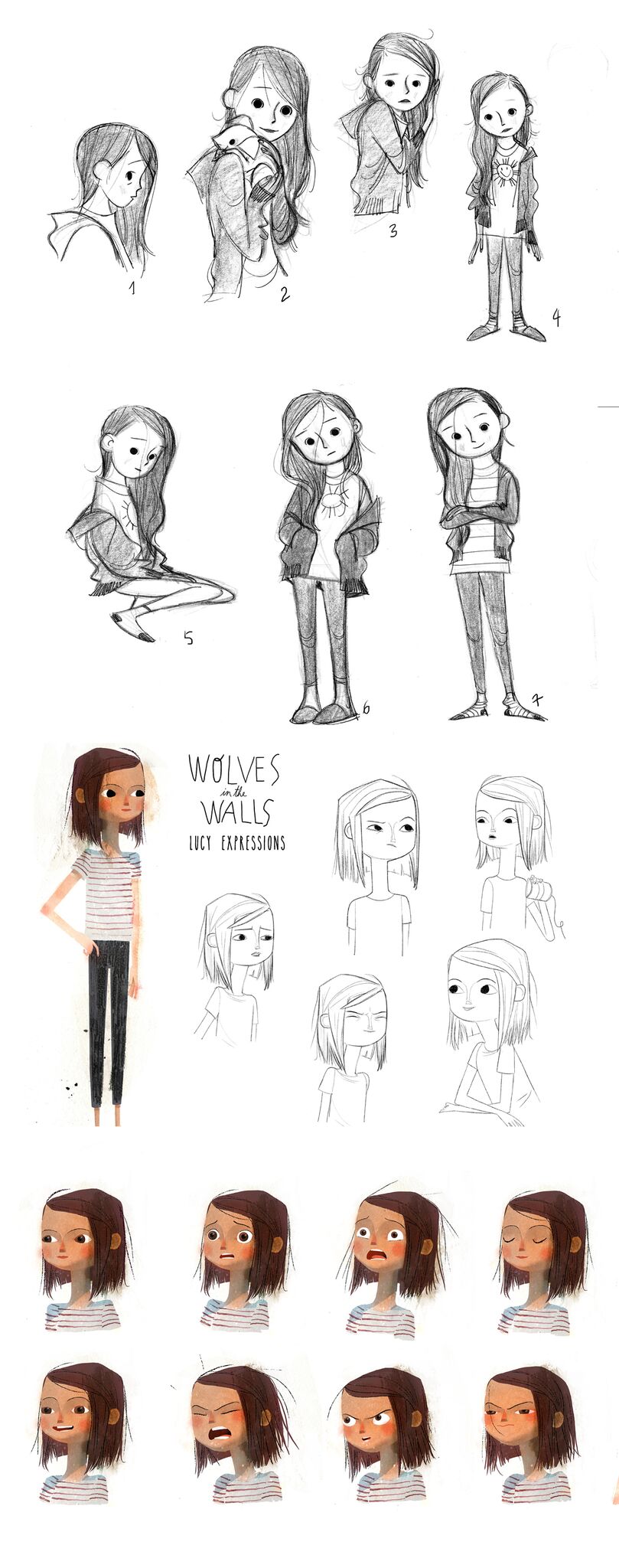 SHOULD....
-
DELIVER A BELIEVABLE, SPECIFIC EMOTIONAL PERFORMANCE
-
MAINTAIN THE ILLUSION OF LIFE INDEPENDENT OF THE LINEAR NARRATIVE
-
RELATE TO HER SURROUNDINGS IN AN NON-DETERMINISTIC WAY
-
REACT TO AUDIENCE AGENCY IN A WAY THAT IS CONSISTENT WITH HER PASSIONS
-
APPEAR TO HAVE A MEMORY OF PREVIOUS EVENTS
-
EVOKE A SENSE OF DELIBERATE, STYLIZED CONSISTENCY IN DESIGN, BEHAVIOR AND PERFORMANCE.
WHEN WE SHOW WOLVES TO PEOPLE, WE OFTEN OBSERVE THEM TALKING TO HER, SOMETIMES OPENLY AND IN UNEXPECTED WAYS. ALL OF THIS POINTS TO A FUTURE WHERE PEOPLE WILL HAVE ONGOING, PERSISTENT RELATIONSHIPS WITH CHARACTERS ACROSS ALL TYPES OF MEDIA. IT IS SOMETHING THAT WE ARE VERY EXCITED TO EXPLORE.
See the full story here: https://www.virtual-beings-summit.com/content/the-evolution-of-lucy?fbclid=IwAR3YD-htNPjuaKQOjY0aPmBGO2A06wkt_lOqeCNv2Jj7AMyjVYb2QZZoEJc
 In 2013, Ravasio learned to code and built the first iteration of the Hipcamp platform, a comprehensive database of campsites that earns money by taking a commission made from each booking it facilitates. Today, the company has grown to 40 employees, with campsites in 300,000 sites across the U.S. and plans to expand internationally soon.
“We’re committed to getting people outside, and that’s really the guiding light of our expansion plans,” she said.
As for long-term plans, an Airbnb acquisition wouldn’t make sense, Ravasio explained: “I think going public and making Hipcamp a company that anyone can buy and own part of is exciting to me”
See the full story here: https://techcrunch.com/2019/07/24/hipcamp/?utm_medium=TCnewsletter&tpcc=TCdailynewsletter
He aha te mea nui o te ao? He tangata, he tangata, he tangata.
What is the most important thing in the world? It is people, it is people, it is people.
Traumatic brain injury (TBI) is a worldwide “silent epidemic” causing a variety of memory issues for those affected. Although several software approaches aim to aid memory recollection, they are inadequate for many TBI survivors and none address aspects of cultural awareness in New Zealand. We explored design concepts of traditional Mäori cultural artefacts and techniques and how they helped Mäori people recall past information. This paper describes our research and development of Maumahara Papahou, a mobile app that uses augmented reality features to create a digital memory treasure box based on the concepts of Mäori mnemonic aids.
See the full story here: https://researchcommons.waikato.ac.nz/handle/10289/12720
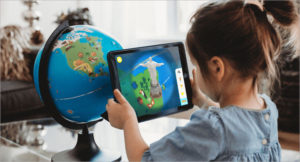 A technology startup focusing on AR experiences for kids just landed $7 million in Series A funding. PlayShifu, founded by two dads, has won awards for its technology while gathering an impressive early user base for its flagship product, a toy globe onto which children can project AR exploration experiences using a tablet.
The company's early success is especially notable given how difficult the children's technology market is to penetrate.
The globe, called the Shifu Orboot, has a US user base of more than 100,000 kids, according to the company, with high engagement among 4-8-year-olds.
While most children's apps retain less than 10 percent of children users after the first month, the company says its tracking shows that more than 40 percent of kids continued using Orboot in the second month of ownership.
See the full story here: https://www.zdnet.com/article/an-educational-augmented-reality-toy-kids-actually-seem-to-like/
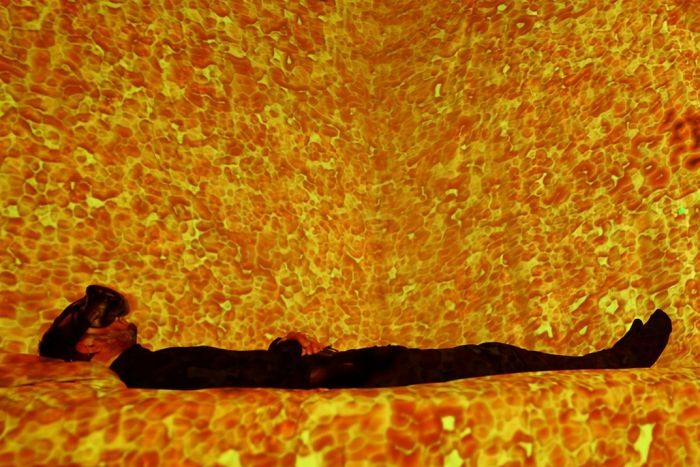
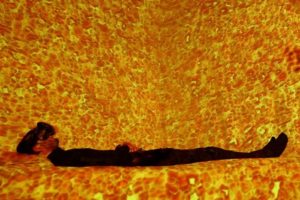 Researchers at RMIT University in Melbourne recently investigated whether this kind of interactive virtual reality experience could induce feelings of restfulness and sleepiness.
The multisensory experience involves lying on a gently vibrating bed and wearing a VR headset and is based on the principles of neurofeedback, which uses real-time displays of brain activity to teach regulation of mental states.
During the experience, which was originally conceived as a public art project called Inter-Dream, the brain's electrical activity is monitored via an electroencephalogram (or EEG) and fed into the participant's VR headset.
"We assigned different colours and properties that the visuals take on in response to those different brainwaves," Mr Semertzidis said.
The result? A unique, sometimes mesmerising visual representation that changes in response to the brain's electrical activity.
Dr Kirkcaldie said there was value in developing tools that help people relax before going to sleep, especially in a day and age that's permeated by devices "extremely good at getting our attention".
"If you end up being unable to wind down … then I do think a process that gives you feedback and an understanding of when you are winding down is probably of great value."
See the full story here: https://www.abc.net.au/news/health/2019-07-24/virtual-reality-tool-investigated-to-promote-sleep/11323134
Could Privacy Laws Disrupt AR Use?
In almost all uses, AR records information not just about the user, but their surroundings. This invariably includes other people. But while legislation seems to care about protecting individuals, the actions of those observed in the presence of AR systems seems to suggest that maintaining social norms is more important.
Study into this phenomenon has settled on the term "privacy paradox": "the observation that many people are aware of privacy risks and claim to care about it, but do not behave in that way."
The promise for augmented reality to enhance everything from shopping to storytelling is considerable. As the privacy paradox demonstrates, it is legislation, rather than individual consent issues that will need to be overcome for it to reach its potential.
See the full story here: https://www.electropages.com/blog/2019/07/could-facial-recognition-privacy-issues-constrain-augmented-reality

 SHOULD....