Juanita: Any words of wisdom for fashion and tech-forward entrepreneurs who want to break into the AR apparel scene?
Chris: Its been about 2 years since we were able to launch our product into the marketplace. The AR industry is still so new for most people and they don’t understand it yet. The estimated time is about another 6-8 years until it really becomes a part of an everyday consumer’s life. With that challenge alone, that should give you enough information that it’s not an easy space to get into and that there will be resistance.
See the full story here: https://arpost.co/2019/07/26/chris-fermoselle-dekryptic-augmented-reality-tees-accessories/
 But the summit made clear that this wasn’t just a matter of physically reproducing humans with digital animations. It was also about getting the story and the emotion right to make a believable human. Cyan Banister, a partner at Founders Fund and an investor in many Virtual Beings Projects, said she wanted to see if someone could reproduce her grandmother so that she could have conversations with her again. Banister said these characters could be so much more compelling if they remember who you are and converse with you in context.
“I saw Hatsune Miku in person, and that was magical, seeing how genuinely excited people were,” Banister said. “I wondered what is the American equivalent of it. We haven’t seen it yet, but I think it’s coming.”
Her best friend, Roman Mazurenko, was killed in a car accident. Months afterward, she gathered his old text messages in an effort to preserve his memory. She wanted one more text message from him.
She had her team in Russia build a chatbot using artificial intelligence, with the aim of reproducing the style and nature of Mazurenko’s personality in a text-based chatbot. It worked. Kuyda put it out on the market as Replika, and now it has more than 6 million users in the past couple of years. Many of those users write fan letters, saying that they are in love with their chatbot friends.
There are so many lonely people in the world, Kuyda said. She has been told that Replika is creepy, but she has begun to figure out how to measure the happiness that it creates.
The potential risks of the wrong use of AI — virtual slaves, deep fakes, Frankenstein monsters, and killing machines — are plentiful.
The moral is, “We are what we pretend to be, so we must be careful about what we pretend to be.”
Peter Rojas, partner at Betaworks Ventures, said, “We shouldn’t be afraid to think about legislation and regulations for things that we want to happen.”
He said there are moral, ethical, and responsibility issues that we can discuss for another day.
See the full story here: https://venturebeat.com/2019/07/26/knights-and-bikes-is-a-quirky-take-on-1980s-coming-of-age-stories/
 A new Virtual Reality attraction, Mazaria in Tokyo's Sunshine City allows players to become part of some of their favourite anime and gaming worlds.
Mazaria spokeswoman Kumiko Yoshinari says that the experience is designed for visitors to "enter into this world and have a great time alongside their favorite characters."
One such visitor, Momiji Fukatsu, says that she thinks that because Virtual Reality as a new technology is not readily available to everyone, "having a place like this where you can try it out with lots of different games is great."
The centre is made up of four zones including an "Adventure Zone", "Panic Zone", "Science Fiction Zone" and "Festival Zone".
The VR Park also includes a gift shop and a restaurant that serves many Bandai themed foods such as Pac-Man curry and ice cream.
Mazaria opened on 15 July 2019 as a permanent attraction located in Tokyo's Sunshine City complex. Tickets are about 40 US dollars for adults and 20 US dollars for children for a full day-pass.
See the full story here: https://www.wtvy.com/content/news/Virtual-reality-meets-old-school-gaming-in-new-Tokyo-attraction-513235311.html
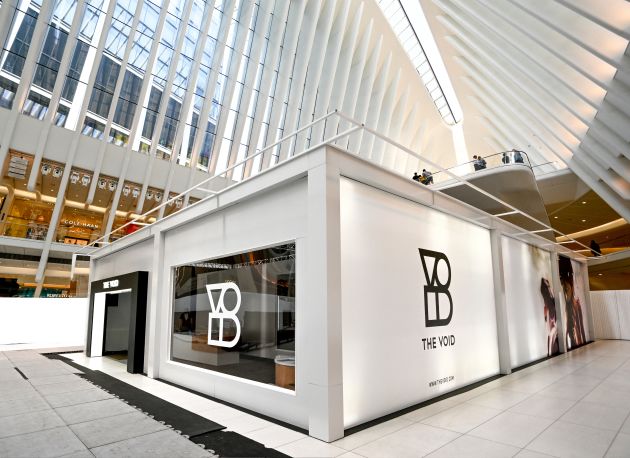
 At that time, other immersive VR gaming attractions — such as The Void and MindTrek VR — were beginning to emerge in major cities. But Zhao dreamed of creating an experience that put greater emphasis on in-headset interactions between players.
“There were a lot of VR experiences like what you experience at home. Then there were full immersive ones. We didn’t do any of that. We felt the game experience was not about the environment, but your friend,” said Zhao.
So, with their team of six having successfully built a pop-up venue and amassed a small cult following for its games in Hong Kong, they decided in 2018 to take their business stateside — to the mecca of VR, Silicon Valley.
“That was the second paradox: People were curious about us being from Hong Kong, so they were interested in investing,” said Zhao.
With it, the company has expanded to new markets including Vancouver, Canada; Jakarta, Indonesia; Macau, greater China; and Singapore.
Zhao said those venues enjoy around 90% occupancy during peak hours, which are on weekends and in the evenings from 6 p.m.
Sandbox VR now plans to open new locations in a range of U.S. cities, including Austin, Chicago and New York, as part of the company’s plans to target leading global markets.
“It’s a fundamentally human experience, so the scope is global. But we’re aiming for countries with high GDP (gross domestic product) initially,” said Zhao, pinpointing other parts of the U.S., the U.K., Japan and China. A 30-minute session in the U.S. currently costs $48.
It’s part of Zhao’s grand ambition to create a “new movie industry” of VR content. For that, the entrepreneur will be looking to raise more funds next year.
See the full story here: https://www.cnbc.com/2019/07/26/how-sandbox-vr-became-a-virtual-reality-gaming-sensation.html
As Disney, WarnerMedia, NBCUniversal and Apple get ready to launch streaming services, they may not need to be the best ones offered in the U.S. in order to thrive, but new data suggests that being in the Top 3 would certainly help — a tall order still, considering the likes of Netflix, Amazon Video and CBS All Access have a leg up on the upcoming competition.
 Many Americans who stream media pay for three services at a collective $37 per month, though the optimum price for wooing far more households to multiple streamers is a combined $21 a month, a new Hollywood Reporter/Morning Consult poll finds. The acceptable range consumers would like to pay for all their streaming offerings is $17 to $27. (The poll uses the Van Westendorp model, which seeks to locate the sweet spot in pricing between what consumers deem “too good to be true” and “too expensive.”)
So far, consumers are willing to pay much more for their cable TV package than they are for streaming, as the poll indicates that 90 percent of U.S. subscribers pay more than $50 per month for their service.
Most analysts say that Disney is in the best position to meaningfully challenge Netflix, given its deep library (especially after acquiring the 20th Century Fox film and TV studio), brand-name recognition, dominance of recent box office trends and strong franchise properties related to Pixar, Marvel and Star Wars. Shows and movies that Disney once licensed to Netflix and others will soon head exclusively to Disney+.
See the full story here: https://www.hollywoodreporter.com/news/americans-want-pay-21-all-streaming-services-combined-poll-finds-1226433
Burke said NBCU has more than 500 people working on the NBCUniversal streaming platform. The venture will use the same digital infrastructure that supports Sky’s Now streaming platform in Europe, Burke said.
NBCU recently struck a deal to scoop up exclusive streaming rights to “The Office” as a marquee property for the streaming service, although it will not return to NBCU from Netflix until 2021. Burke noted that Nielsen research shows that viewership of “Office” episodes amounts to 5% of all Netflix volume. The comedy series that aired on NBC from 2005 to 2013 is “tied to the DNA” of NBC, Burke said. “We see ‘The Office’ as one of the tentpole programs on our platforms.”
See the full story here: https://variety.com/2019/tv/news/nbcuniversal-streaming-service-the-office-april-1203279301/
The impact of social media and the Internet on today’s political arena is undeniable, but how will the emerging world of deep fakes, virtual influencers and augmented technologies tip the scales in 2020? During an AWE Nite LA meetup this week at the Phase Two co-working space in Los Angeles, the ETC’s Phil Lelyveld moderated a panel on the impact of emerging technologies on the 2020 presidential election. Panelists included machine learning expert Stanley Bishop, journalism professor Robert Hernandez, filmmaker and Artie founder Armando Kirwin, and bot creator Sally Slade.
Armando Kirwin, founder of AI character dev house Artie, discussed how a deep fake campaign spokesperson —a candidate advocate John Doe —is entirely possible. The bounded problem set of campaign issues is well suited for the current state of virtual being technology. If it didn’t have to respond in real time, it could be an effective campaign tool.
Stanley Bishop of Spacepost Laboratories and Bishop AI said that using artificial intelligence to detect deep fakes is a “cat and mouse” game. GANs (Generative Adversarial Networks) can be used to detect deep fakes, but GANs are also being used to correct the errors in deep fakes that make them detectable.
Magnopus lead AR/VR developer Sally Slade has created an Instagram bot called Billbot to raise awareness when bills come up for discussion within the California legislature. Billbot could be applied to the Federal legislature’s activities.
USC journalism professor Robert Hernandez discussed the difficulty in defining and achieving an “informed citizenry,” and even what constitutes facts versus opinion. Reporting facts selectively is opinion masquerading as factual coverage. He argued that the very concept of objective reporting is unachievable because everyone has biases. Hernandez recommends diversity in the newsroom staff and in the news feeds as a means of undercutting bias.
The panel discussed how rare it is to have a common experience across political and social divides. Natural disasters and major sports events came to mind. Political debates have the potential of drawing an audience from a cross-section of society, but only if the participants collectively represent a cross-section of ideas so a wide swath of people tune in to hear their own opinions voiced.
Virtual influencers could be used to engage young voters in the political process. Slade pointed out that virtual influencer Lil Miquela has already been an advocate for social causes.
Topics:
Armando Kirwin,
Artie,
Artificial Intelligence,
Augmented Reality,
AWE Nite LA,
Billbot,
Bishop AI,
Deep Fakes,
GANs,
Instagram,
Internet,
Journalism,
Lil Miquela,
Machine Learning,
Magnopus,
Phil Lelyveld,
Presidential Election,
Robert Hernandez,
Sally Slade,
Social Media,
Spacepost Laboratories,
Stanley Bishop,
Virtual Influencers,
Virtual Reality
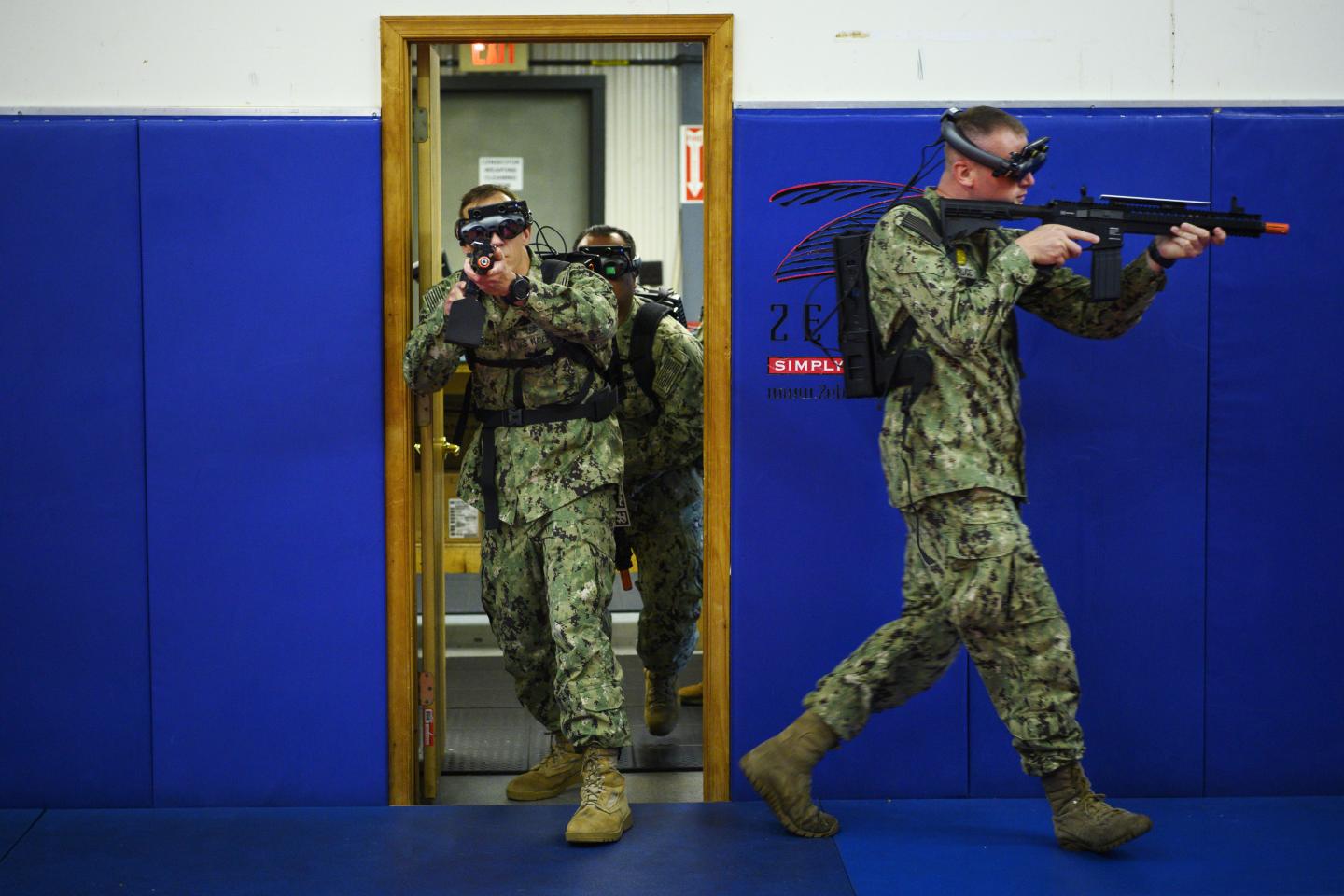
 The TRACER system consists of the Magic Leap One AR headset, a backpack processor and a Haptech Inc., state-of-the-art instrumented weapon, designed to deliver realistic recoil. More importantly, TRACER leverages and builds upon software developed by Magic Leap Horizons as part of the U.S. Army's Augmented Reality Dismounted Soldier Training (ARDST) project, providing advanced weapons tracking and allowing trainers to create multiple and adaptable simulation scenarios for security personnel to experience.
See the full story here: https://www.eurekalert.org/pub_releases/2019-07/oonr-tsu072419.php