Top 25 Game Companies Generated $107 Billion Last Year
 The top 25 public game companies, which represent almost 80 percent of the $134.9 billion worldwide gaming market, generated $107.3 billion in revenue in 2018. According to researcher Newzoo’s Global Games Market Report, this marks the first time that the top 25 companies have surpassed $100 billion in a single year. China’s Tencent ($19.7 billion) took the No. 1 spot for the sixth consecutive year, followed by Sony ($14.2 billion), Microsoft ($9.8 billion), and Apple ($9.5 billion). Collectively, the top 10 companies experienced 19 percent growth last year.
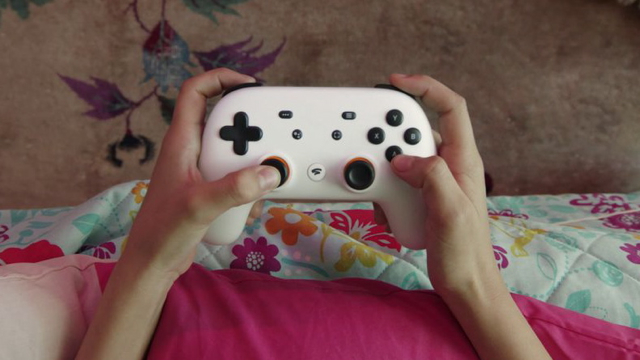
Apple and Google have consistently performed well in this market, due in large part to revenue generated from their app stores. “Google recently announced Stadia, the company’s cloud gaming platform that allows users to stream entire games via the Internet,” reports VentureBeat. The company also “announced the creation of Stadia Games and Entertainment, its own studio that will develop Stadia-exclusive games.”
See the full story here: http://www.etcentric.org/top-25-game-companies-generated-107-billion-last-year/
Verizon Media Opens 8 Studios Globally, Including 5G Studio in Los Angeles
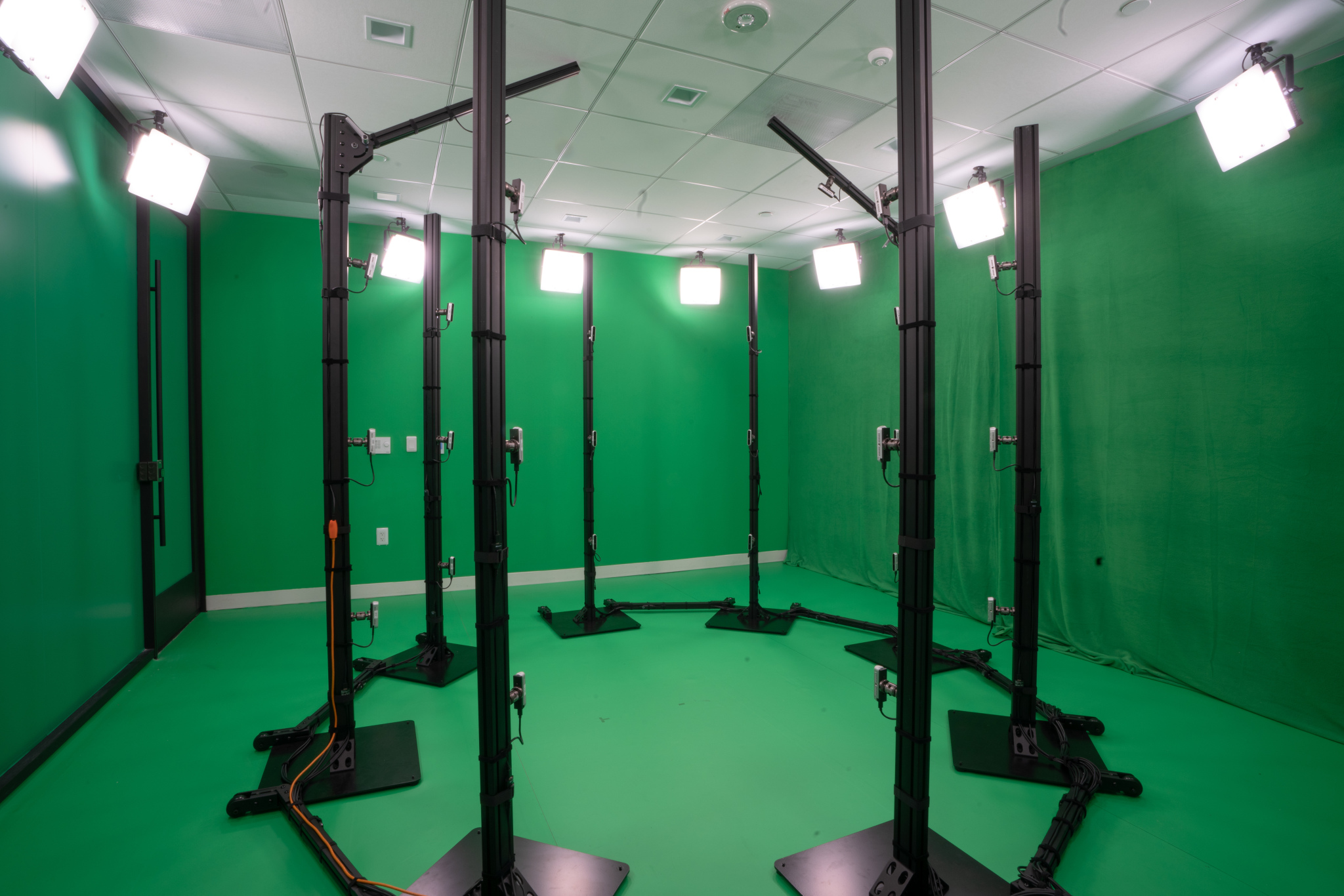
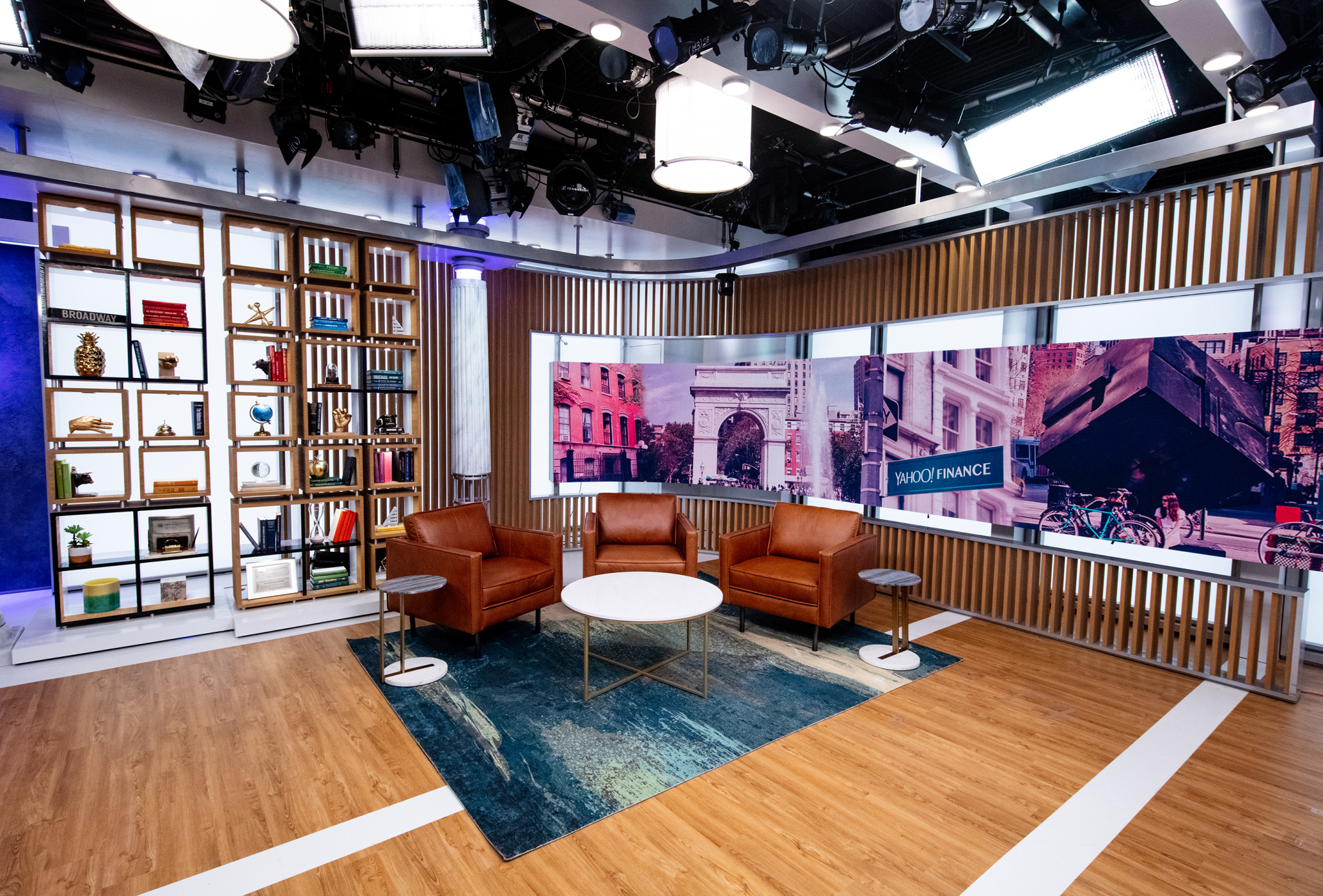 Verizon Media, the telco’s content subsidiary formerly known as Oath, has been busy building out its network of video production facilities around the world: In the first few months of this year, Verizon Media opened or upgraded studios in New York, London, Paris, Singapore, Hong Kong, Brazil and Australia. In addition, it also launched a 5Gstudio in Los Angeles that is meant to pioneer new production technologies and media formats enabled by 5G connectivity.
The studios are being used by all of Verizon Media’s brands, including Yahoo, HuffPost, TechCrunch and AOL. A special focus of the Los Angeles studio space, which is being led by Verizon Media’s immersive content unit Ryot, is the evaluation of cutting-edge technologies, said head of Ryot Zeda Stone. “We have a full motion capture stage here,” he said, adding that the space was also equipped with a volumetric capture stage.
After first testing these technologies in Los Angeles, Verizon Media is then looking to customize them for the needs of its other studio spaces. For instance, it brought a simplified motion capture system to an existing studio space in Taiwan, where it is now used to produce content for one of Verizon Media’s YouTube channels.
In addition to equipment for motion and 3-D capture, the Verizon Media studio in Los Angeles is now also equipped with a full-blown 5G node, which enables Ryot to experiment with ultra-fast, low-latency wireless data transfers. “It is the only 5G studio in the world,” said Verizon Media general manager of news, entertainment & studios Alex Wallace. “No one knows where 5G is gonna take us, but we want to be at the forefront of it.”
One are of focus will be to evaluate 5G’s role in making productions more nimble, and possibly replace the satellite truck still commonly used for TV coverage with a much smaller set-up, explained Stone. “How do we break down that production pipeline?” Ryot will also be doing real-time animation and motion capture with 5G, and envisioning a future when audiences with 5G phones can directly interact with that type of content.
All of this is happening as telcos are slowly starting to build up their network infrastructure to bring 5G to their consumers. Verizon announced earlier this year that it would bring 5G to 30 cities this year, but thus far only serves small sections of Chicago and Minneapolis with the technology.
“We are nowhere near where it’s going to be,” acknowledged Wallace. This also means that no one really knows which apps and services will ultimately be successful on the service, which she argued was another reason for experimenting with the technology early on. “I don’t think anyone predicted Facebook when 4G came around,” Wallace said.
See the full story here: https://variety.com/2019/digital/news/verizon-media-studios-5g-1203191919/?fbclid=IwAR0RcDXcbRYrIBmEQlG8vcDeTZt-qsbLG5q26-Y5nrWMn4NqQE_q3q1wy3Y
‘High Fidelity’ Shifts Focus Towards Non-VR Due to Slow Growth
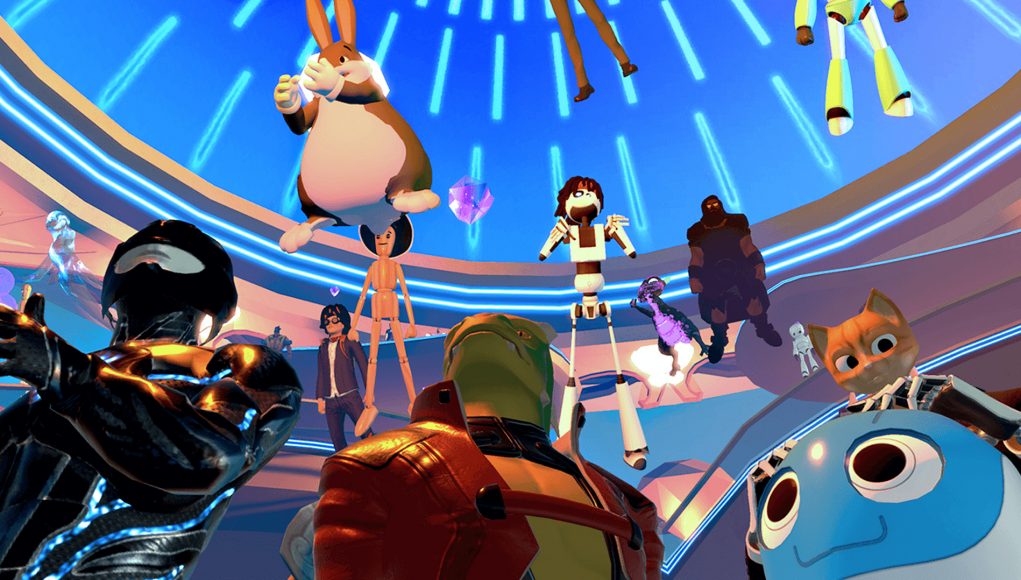 Philip Rosedale, CEO of High Fidelity and founder of Second Life, announced at a High Fidelity community meeting recently that the company will be scaling back their VR efforts, focusing more on improving their PC and Mac performance. The company has also shut down all first-party user spaces and associated servers except for a single orientation room, which will be used for new users only.
High Fidelity is still allowing individual users to run their own spaces/servers, although refocusing efforts to flush out its desktop client and encourage user-generated spaces undoubtedly comes as a cost-savings maneuver by the company.
As first reported by New World Notes, Rosedale’s reasoning behind the move comes down to a pretty big linchpin: VR headsets sales. They simply aren’t getting into enough hands to make the company profitable in its current form.
“One thing to do, which all the companies have been doing, is better support for desktop users. Because any assessment of the rate of progress on HMDs is a sobering one; they’re not selling enough to create a general-purpose community that is both interesting and profitable,” Rosedale said at the meeting. “So, it’s really important to recognize, that through no fault of our collective selves, it’s not working. This model is not working right now. The flat world, that is an open building environment, is not compelling enough as it stands right now for the number of HMDs that are out there to get lift off. And so we’ve gotta think hard about that.”
High Fidelity was designed to be a platform anticipating the very broad use of VR across the Internet for things like this—public meetings, going to work, going to school— doing all kinds of different things.”
Rosedale says that while they’ve done their best to get that aspect of their business started, the company feels it’s making a mistake by taking an active role in the community by supporting first-party spaces. This, he says, comes down to the company’s inability to manage ban lists and moderate users.
“Let’s actually add all [users from NeosVR, Anyland, and Rec Room] together into one product. That company will not survive. There’s not enough revenue,” he said at the community meeting. “Everybody here that’s having such a good time: you guys need to pay us $10,000 a month for us to keep the company going indefinitely into the future, for us to basically be a positive cash-flow company, as we say here in The Valley. And everybody else in VR right now is faced by that.”
Fraunhofer demonstrates 5G virtual reality video streaming software
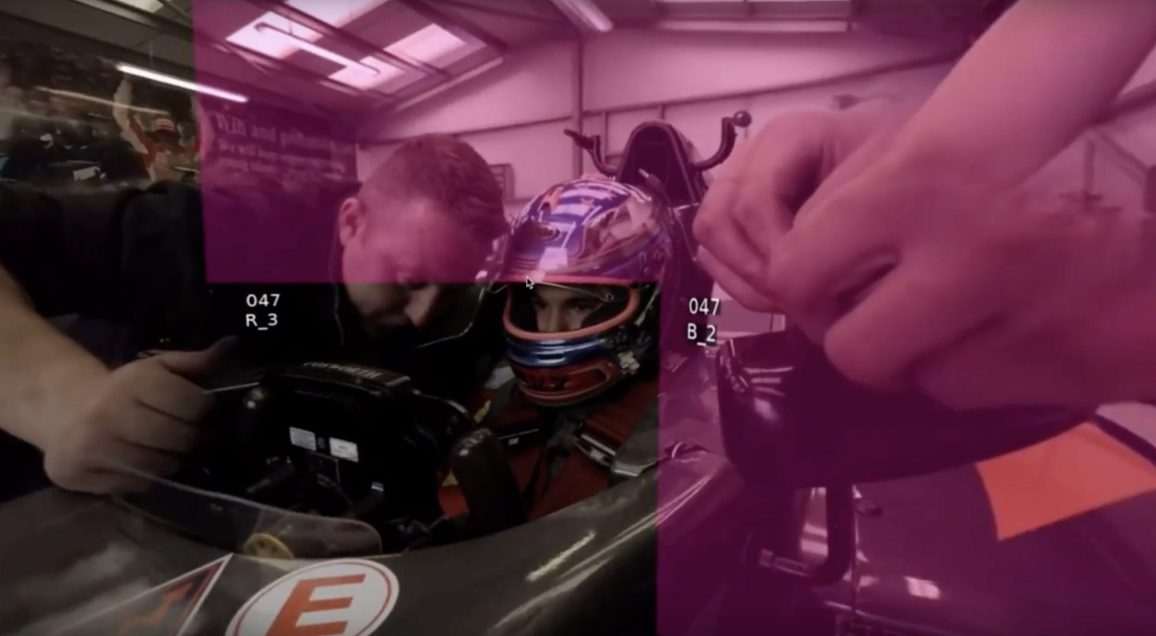 Known worldwide for its contributions to the MPEG format — the compression technology used in MP3 audio files and MP4 videos — Germany’s Fraunhofer has recently turned its attention to the next frontier in media: virtual reality. After unveiling affordable VR headset microdisplay hardware last year, the company is now showing off next-generation video compression software using the new MPEG-OMAF standard, the first VR specification enabling 360-degree videos to stream over 5G networks.
Based in “significant” part upon Fraunhofer video compression technologies, MPEG-OMAF breaks wraparound videos into grids of tiles encoded at multiple resolutions.
Unlike traditional videos, which stream from servers at one user-selected resolution, these VR videos dynamically use high-resolution tiles where the viewer is currently looking, and low-resolution tiles for parts that are out of sight. As the user’s head position changes, the headset or display device requests a different mix of streamed tiles optimized for the user’s current focus area.
This trick enables the entire 360-degree video to continue streaming while devoting maximum detail to whatever the user is viewing. It parallels the recent use of foveated rendering to maximize real-time 3D graphics for VR users, guaranteeing that head-moving viewers will always be able to see something through their peripheral vision, even if it’s lower in fidelity.
Fraunhofer is demonstrating the new technology using a combination of JavaScript, Apple’s Safari web browser, the WebGL API for rendering, and HEVC video support; a technical video is available here. Source code for the JavaScript player and instructions on creating standards-compliant content are available now on GitHub.
See the full story here;https://venturebeat.com/2019/04/17/fraunhofer-demonstrates-5g-virtual-reality-video-streaming-software/
8th Wall Brings Image Targets to Its Web-Based Augmented Reality Platform
 Release 11 of 8th Wall Web brings Image Targets, the company's take on image recognition for AR activations. The capability enables creators to define a 2D image as a marker and embed AR content, such as 3D models or video, which can be accessed through mobile web browsers on iOS and Android.
"Unlike other web-based image recognition technology, the image detection and tracking for 8th Wall Web is all performed directly on-device, in the mobile browser," the company announced in a blog post.
While both tech giants also have their own web AR options, Apple's AR Quick Lookonly works on iOS, and Google's web-based capability for ARCore is still experimental, so 8th Wall maintains an advantage in being cross-platform.
 See the full story here; https://mobile-ar.reality.news/news/8th-wall-brings-image-targets-its-web-based-augmented-reality-platform-0196339/
Paul Allen’s legacy includes a virtual reality “Holodome”
 The centerpiece of the dome movement is Holodome, which was a pet project of the late Microsoft co-founder.
- At TED, Vulcan debuted 2 new experiences: one is a live-action film that takes you to the top of Mount Everest and another takes you inside the Impressionist works of Claude Monet as you step inside the artist's world.
- The video is not just all around you, but also above you and at your feet.
My thought bubble: Both new exhibits do exactly what good VR should — that is, convincingly take you to a place you couldn't go, somewhere either inaccessible, like Everest, or unreal, as with Monet.
Details: The centerpiece of the technology is 4 very-high-resolution projectors.
- There are 2 Holodomes already in the wild, one that was used for consumers at the Museum of Popular Culture (MoPop) in Seattle and another in Venice, California, where Vulcan has been showing the technology to creators.
- At MoPop, 40,000 consumers have been through the Holodome since last May.
See the full story here: https://www.axios.com/paul-allen-legacy-virtual-reality-holodome-e86d85d4-fb47-415a-8fa8-7349390b807b.html
Virtual Reality Experience Takes Audience Back to 10,000 BC at This Year’s Tribeca Film Festival, April 24-May 5
 The film experience moves forward while looking backward with the U.S. premiere of CAVE, a shared virtual-reality experience that transports audiences back thousands of years, April 24 through May 5 at the 2019 Tribeca Film Festival.
In this multi-faceted virtual reality experience—co-created by Ken Perlin, Kris Layng, and Sebastian Herscher at NYU’s Future Reality Lab—viewers journey to 10,000 BC, when stories were told around a campfire and the history of our ancestors was written on the walls of caves.
The piece whisks its audience into the past and drops them into a dilemma faced by Ayara, a young woman who is struggling to decide whether to accept her role as her tribe’s only emissary to the spirit world.
CAVE was designed from the ground up to challenge the status quo of how audiences collectively experience immersive arts and entertainment. The coming-of-age tale is told using the cutting-edge Parallux system, a fundamentally new kind of shared VR technology that allows virtual experiences to be shared by many people in the same location.
Unlike conventional 360-degree VR, viewers see and hear the story—as well as one another—from a unique point-of-view within the same virtual environment, letting them feel as physically present in the shared world as they would when attending a live theater or concert event.
See the full story here: https://www.newswise.com/articles/virtual-reality-experience-takes-audience-back-to-10-000-bc-at-this-year-s-tribeca-film-festival-april-24-may-5