https://www.euronews.com/embed/726980
The Domus Transitoria (the transit house, which allowed Nero to move between the Palatine hill and the Esquiline hill) was the first lavish residence of perhaps Rome's most notorious emperor, before the more famous Domus Aurea (Golden Palace) was built after the 64 AD Rome fire.
The Great Fire of Rome consumed most of the city over the course of a week, with some blaming Emperor Nero (who famously "fiddled while Rome burned"), who in turn blamed the Christians.
Modern-day visitors to the palace must descend underground to see the palace's rooms and gardens, which were later covered by other constructions and debris.
"Nero wanted an atmosphere that expressed his ideology, that of an absolute ruler, an absolute monarch, therefore this was a place of great opulence and wealth," explains Alfonsina Russo, manager of the Colosseum Archaeological Park.
See the full story with video here: https://www.euronews.com/2019/04/15/watch-visit-emperor-nero-s-palace-via-virtual-reality
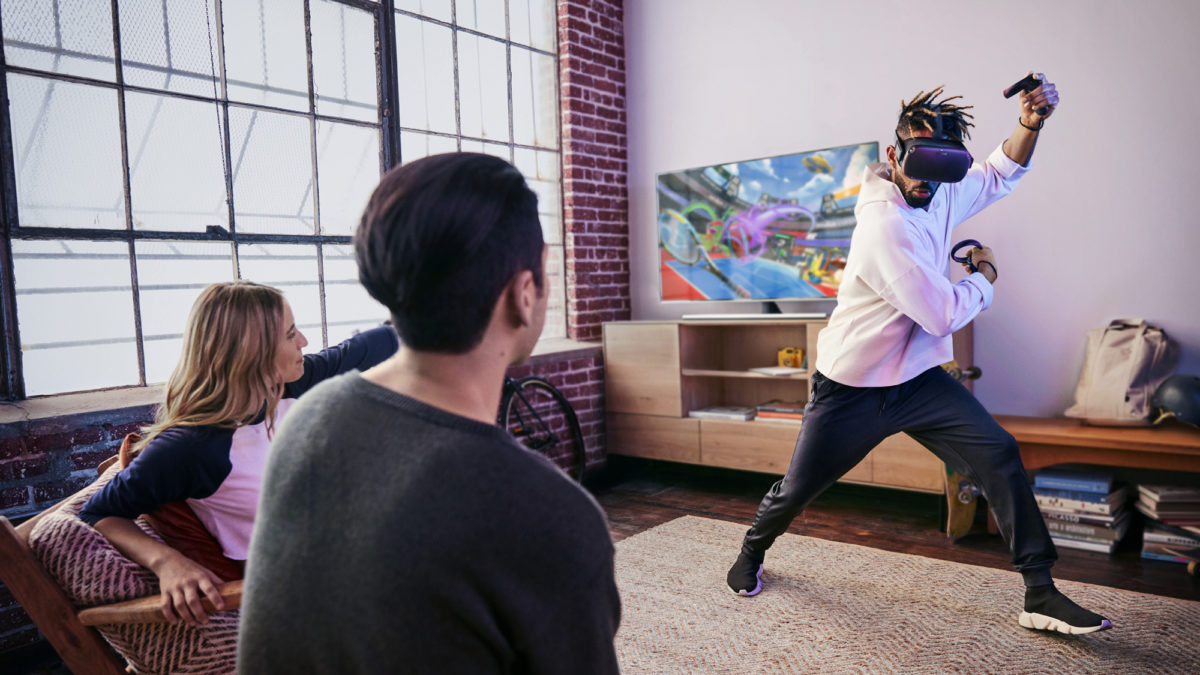
 Parks found that while 25% of domestic broadband households are familiar with VR technology, just 8% of households use it. Among consumers who own or are familiar with VR, 54% use their headset or would use it for gaming.
“Sixty-two percent of U.S. broadband households play video games, and while gamers are a passionate market segment, they can be limited in scope, which has stalled adoption of VR to a wider audience,” analyst Billy Nayden said in a statement. “There has been some notable video content developed for VR, such as Alejandro G. Iñárritu’s short video experience Carne y Arena, which won an Oscar, but overall lack of quality, non-gaming content is inhibiting broader adoption.”
See the full story here: https://www.mediaplaynews.com/parks-virtual-reality-vr-headsets-remain-niche-video-game-product/
 Augmented reality technology provider NexTech AR Solutions Corp. announced Friday that the company is taking its industrywide software development in a new direction: to Hollywood.
With its new AR Studio in Hollywood, NexTech intends to launch a proprietary entertainment venue that will focus on producing immersive content using next generation AR on mobile devices and smart glasses.
“NexTech is building an innovative concept for immersive entertainment that I’ve been waiting over five years to materialize,” Barry Sandrew, a visual effects pioneer and serial entrepreneur acting as adviser to NexTech. “Within AR Studios the technology, talent and opportunity to create this new form of storytelling have converged into what promises to become a game changing entertainment venue.”
NexTech’s claim to fame is providing end-to-end AR solutions for numerous industries designed to enhance marketing, advertisements and sales.
See the full story here: https://siliconangle.com/2019/04/14/nextech-establishes-augmented-reality-entertainment-studio-hollywood/
also see https://www.nextechar.com
Not only did Coachella unveil Coachella Coin, a new scavenger hunt game that festival guests can use on its app, but there are a bunch of spots throughout the festival where guests could indulge in new technologies, including a new stage at the Sahara tent that lets guests see space-themed augmented reality, Friday night headliner Childish Gambino’s collaboration with Google Pixel and a lounge from HP where people could design their own knapsack.
Augmented reality at the Sahara Tent
Visitors to the Sahara tent, the airplane hangar of a stage that features a lot of electronic music and hip-hop, got to see it in an all new way by using their Coachella Camera on their Coachella smartphone app. Between sets guests could point their phones at the stage to see a variety of space themed objects, including space stations, asteroids and an astronaut not unlike the giant astronaut from Poetic Kinetics that’s roaming the grounds nearby.
“Together, augmented reality, virtual reality, and the various other ‘extended realities’ will change the way that people interact with the world and each other,” Coachella Digital Innovation Manager Sam Schoonover wrote in an email. “Music festivals both on and off-site will also be affected. So while we always make an effort to introduce new technological components that the fans will find and interesting, we’re also preparing for the future.”
See the full story here: https://www.pe.com/2019/04/14/coachella-2019-from-augmented-reality-to-food-delivery-tech-plays-increasing-role-in-the-festivities/
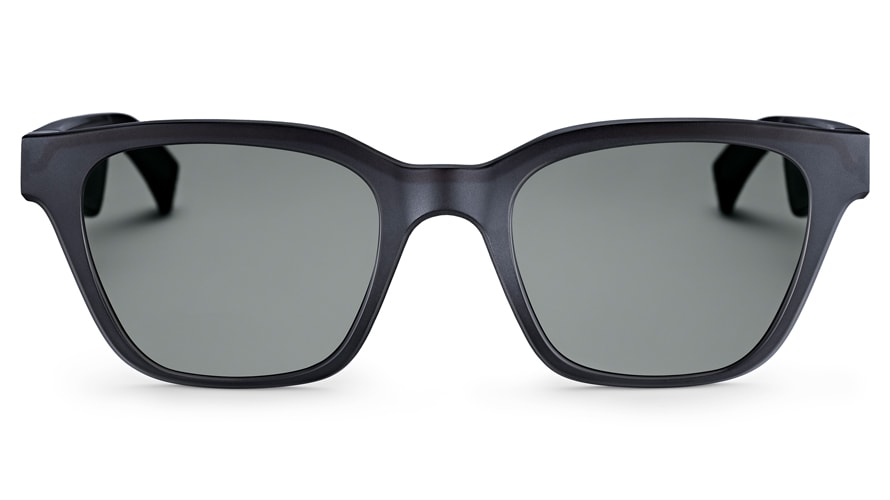
 A new wave of tech could dramatically change how we hear a digitally augmented world. Thanks to the new Bose Frames, anyone can hear personal stories from pilgrims hiking the famous Camino de Santiago trail in Spain—just as if they were walking alongside them. And Tónandi, a collaboration between the mixed-reality company Magic Leap and the Icelandic band Sigur Ros, allows users to create music by interacting with sounds and digital visuals in the room around them.
See the full story here: https://www.adweek.com/digital/sound-may-be-the-next-augmented-reality-frontier-for-brands/
 Last week, organizers of the Neural Information Processing Systems Conference (NeurIPS), one of the world’s largest annual AI research conferences, updated their policy for paper submissions to require what they’re calling a reproducibility checklist. It’s a small shift in a grander fight to curb the growing “reproducibility crisis” in science, where a disconcerting number of research findings are not successfully being replicated by other researchers, casting doubt on the validity of the initial findings.
In February, a statistician from Rice University warned that machine-learning techniques are likely fueling that crisis because the results they produce are difficult to audit. It’s a worrying problem as machine learning is increasingly being applied in important areas such as health care and drug research.
As the “world's most significant AI conference,” wrote Jack Clark, the policy director of the nonprofit OpenAI, in his weekly newsletter Import AI, “NeurIPS 2019 policy will have [a] knock-on effect across [the] wider AI ecosystem.”
See the full story here: https://www.technologyreview.com/the-download/613297/the-biggest-ai-conference-is-trying-to-fix-the-fields-reproducibility-crisis/?fbclid=IwAR0FVhzvXuqUaRZMng5uEXDdG45AYuxFPQoUOQ0RdIAKv92BK5z_l1SXnOs
By
Phil Lelyveld
April 11, 2019
Overcoming the uncanny valley of emotion is the major challenge of AI when creating a virtual human, according to Armando Kirwin, co-founder of Artie. He spoke at the NAB panel titled “AI in Media and Entertainment: Driving the Future, New Content Formats – Immersive.” HP’s Joanna Popper moderated the panel that also included Digital Domain’s John Canning, Lillian Diaz-Przybyl from Butcher Bird Studios, and Baobab Studios’ Kane Lee. The panel discussion ranged from synthetic characters and evolving views on acceptable versus realistic behavior, to what happens when your smart speaker becomes a virtual character.
Kirwin said that a great deal of research has already been done related to gaze and gaze awareness, pupil dilation, natural language processing and natural response, micro-emotions, and other human behaviors and emotion-indicators. He and others are now working on putting the pieces together to create credible behavior in synthetic beings; both human and animal.

When it comes to simulating emotions, Kirwin noted that AI implementations have major holes to fill. For example, most AI is not trained to recognize laughter, so it tries to understand it as words, which he describes as delivering a very dystopic response.
Digital Domain’s Canning discussed using AI to create the Thanos character for Avengers: Infinity War. The workflow still relied on Josh Brolin to bring human emotion to the CGI character’s performance. AI systems can fool people, but we are years away from the specific duplication of Josh Brolin, Canning said.
Kirwin responded that last month all 10 of the top Billboard music videos in Japan were performed by synthetic characters. As we blend the real and virtual worlds, there is growing acceptance of synthetic or virtual characters like Lil Miquela on Instagram as talent and influencers, especially among young people. Instagram is already a network of fake people, said Kirwin, so Lil Miquela is acceptable there. Diaz-Przybyl called this “acceptable artificiality.”
Thanos can pull you through the narrative, said Kirwin. He can hide the shortcomings of AI. How soon before you don’t need Josh, Armando asked? Kane Lee added that “animators are our actors” at Baobab.
Diaz-Przybyl is much less interested in photo-realistic characters than animated ones. Animation lets you do things beyond human capabilities in ways that the audience can accept. It is a more interesting direction, she said.
Lee mentioned that they have incorporated AI research into their character performances. He referenced a Stanford study that found that a person’s emotional connection to a synthetic character greatly increases if the character mirrors the person’s head and body movements with a 3-5 second delay. Kirwin referred to other research that found that placing eyes on a tip jar in a coffee shop significantly increased the number of tips left.
Diaz-Przybyl would also like an AI that can speed up the creative process of branching narratives. She is interested in what kind of story the computer tells, but that doesn’t replace what humans create. We need the surprise in the narrative, she said, and computers are not there yet.
Canning raised the issue of the impact of infinitely branching narrative on production cost. Kane added that it would be nice to have choices at key points at the narrative, but that everyone should get the same basic experience in order for it to be scalable.
The conversation turned to the role of data. Diaz-Przybyl mentioned market research that found, counter-intuitively, that people who watch a lot of YouTube videos are more likely to go to movies in theaters than people who don’t. “It will be an interesting journey for the creators to see the data,” Kirwin said. It will change the role of writers.
Earlier in the day, at a panel on extreme sports video production and distribution, extreme biking champion and video producer Mike Steidley said that he re-edits his 2 minute YouTube videos when he sees audience drop-off at 1 minute 45 seconds, and he front-loads the action in his Facebook edit of the same material because the first 6 seconds are key to hold the Facebook audience. It may be that, for AI-driven content, the writer will have an ongoing relationship with the content as the distribution platforms evolve and data analytics are incorporated into the creative process.
Finally, the panel turned the discussion to smart speakers and personal assistants. Canning pointed out that it is one thing for the personal assistant to be a disembodied voice, but quite another for it to have a face. He asked: How will that change our relationship to Alexa?
Kirwin responded that, in a study he conducted with Google, they found that people spend 5 minutes with an avatar assistant versus 5 seconds with a speaker-based assistant. Moving your personal assistant from a smart speaker to a synthetic character will apparently have a significant impact on your relationship with it.
See the original post here:
Topics:
Animation,
Armando Kirwin,
Artie,
Artificial Intelligence,
Avengers: Infinity War,
Baobab Studios,
Butcher Bird Studios,
CGI,
Digital Domain,
Facebook,
Google,
HP,
Instagram,
Joanna Popper,
John Canning,
Josh Brolin,
Kane Lee,
Lil Miquela,
Lillian Diaz-Przybyl,
M&E,
Mike Steidley,
Movies,
NAB 2019,
Smart Speakers,
Uncanny Valley,
Video,
Virtual Assistants,
YouTube
 At the dawn of the wireless age 30 years ago, U.S. companies jostled for primacy in wireless networking. Companies such as Motorola and Lucent — an offshoot of the old AT&T monopoly — were sources of innovation, exploring new ways of delivering voice and data wirelessly. It was Lucent, for example, that helped introduce Code Division Multiple Access, or CDMA, a mobile technology that promised to improve the capacity of wireless carriers.
But their fortunes declined around the turn of the century as they failed to keep pace with a changing market. No U.S. company stepped in to fill the gap as those companies faded — partly because of the growing strength of foreign alternatives and partly because of the immense scale required to survive in that line of business, according to industry experts.
“Lucent basically collapsed because they didn’t have a big enough wireless arm to keep them afloat when the Internet backbone [business] collapsed” in the dot-com bust, said Roger Entner, a telecom analyst at Recon Analytics. “Motorola, over time, simply became less competitive because the other vendors had more economies of scale.”
Today, Nokia and Ericsson are the top providers of telecommunications networking gear in North America and are No. 2 and No. 3, respectively, in the world. The two companies each recorded revenue of about $25 billion last year.
But both have been surpassed by Huawei, which in the span of three decades has become the world’s largest provider of telecom equipment.
“I do think the Western companies did underestimate how credible Huawei was,” said Paul de Sa, a telecom industry analyst and co-founder of the advisory firm Quadra Partners. “There were executives who basically laughed [at the idea] that Huawei or ZTE could compete.”
With the support of China’s state-owned development bank, Huawei also has been able to undercut competitors with attractive financing for its products. In February alone, Huawei announced partnershipswith wireless carriers in eight countries, including Iceland, Switzerland, Saudi Arabia and Turkey.
It doesn’t hurt that Huawei serves a massive domestic market in China, which grants it tremendous advantages of scale that many tech companies, including American ones, are hungry to access themselves.
See the full story here: https://www.washingtonpost.com/technology/2019/04/10/us-spat-with-huawei-explained
In an influential paper that laid out the theory, the Oxford philosopher Nick Bostrom showed that at least one of three possibilities is true: 1) All human-like civilizations in the universe go extinct before they develop the technological capacity to create simulated realities; 2) if any civilizations do reach this phase of technological maturity, none of them will bother to run simulations; or 3) advanced civilizations would have the ability to create many, many simulations, and that means there are far more simulated worlds than non-simulated ones.
We can’t know for sure which of these is the case, Bostrom concludes, but they’re all possible — and the third option might even be the most probable outcome. It’s a difficult argument to wrap your head around, but it makes a certain amount of sense.
Rizwan Virk, a computer scientist and video game designer, has just released a new book, The Simulation Hypothesis, that explores Bostrom’s argument in much greater detail and traces the path from today’s technology to what he calls the “Simulation Point,” the moment at which we could realistically build a Matrix-like simulation.
See the full story here: https://www.vox.com/future-perfect/2019/4/10/18275618/simulation-hypothesis-matrix-rizwan-virk?_hsenc=p2ANqtz-9pCPWkoQRH1M6lJZlqNmM231gcfCk_A6992uIuau5y2_P7_YvWdAELDTZ8oDlm1GRifw4HdtXmm-3xniK3ngAVA8LnvA&_hsmi=71660486