The project based in St. Louis, Missouri, was launched on March 4 and ends on April 3. About 49 backers — most of them backing their first project — recently pushed the effort past its $5,000 funding goal.
“Our technology provides for highly accurate player tracking for indoor areas of up to 30′ x 30′,” the email states. “This partially depends on area lighting and the number of tracking posters we use.”
A custom iPhone holder and ARKit-based VR headset is certainly an intriguing prospect.
The film, which stars Will Smith, Clive Owen, and Mary Elizabeth Winstead, tells the story of an aging assassin attempting to leave the lifestyle, but finds himself hunted by a younger clone of himself. Think “John Wick” but if Keanu Reeves was being stalked by a younger Keanu.
Not only is this going to require some extensive de-aging and CGI visual effects work, just to make it convincing, but Lee isn’t content with stopping there. He’s also apparently utilizing the HFR (High Frame Rate) technology that he used on the aforementioned ‘Billy Lynn.’
The note sent to exhibitors comes with instructions on how to test whether the theater is equipped to handle the HFR technology. The letter states the film will have versions presented in 60fps 3D and 120fps 2D. Of course, one has to assume this is in addition to the typical 24fps 3D and boring old 24fps 2D.
“Since its inception, Spotlight Stories strove to re-imagine VR storytelling. From ambitious shorts like ‘Son of Jaguar,’ ‘Sonaria’ and ‘Back to The Moon’ to critical acclaim for ‘Pearl’ (Emmy winner and first-ever VR film nominated for an Oscar) the Spotlight Stories team left a lasting impact on immersive storytelling. We are proud of the work the team has done over the years.”
Magic Leap touted the idea that these experiences can immerse the audience better than a 2D screen, or allow the flexibility of watching from different angles. But the narrow field of view and small figures on a stage that's meant to be viewed from the front anyway hardly make it a TV replacement.
Instead, these demos were more compelling as indicators of Magic Leap's intention to merge with traditional art forms.
He's interested in real-time tabletop theater, a West End production in your living room as it takes place on stage -- similar to National Theatre Live, which already exists in cinemas.
Audiences sitting in theaters could also don Magic Leap headsets, allowing organic and synthetic production elements to merge. In "A Midsummer Night's Dream," Lanning says, a fairy could come out from the stage and fly in front of you. (He also warns, though, that "we don't want to oversaturate the experience").
More interesting is how technology can create an altogether new grammar of theater.
That shift likely won't be made solely by mixed reality. The future of theater doesn't hinge on one technology but the confluence of them. Lanning cites the UK's Secret Cinema as an organization that creates immersive theatrical experiences that start online, where you're assigned a character to play for the evening, before you're even physically present at the show.
Hello, person who is, statistically speaking, a human adult aged approximately “millennial” to “boomer.” The analytics suggest a high likelihood that you’re aware there is an app named TikTok, and a similarly high likelihood that you’re not totally sure what it’s all about. Maybe you asked someone younger in your life, and they tried to explain and possibly failed. Or maybe you’ve heard that this new, extraordinarily popular video app is “a refreshing outlier in the social media universe” that’s “genuinely fun to use.” Maybe you even tried it, but bounced straight out, confused and sapped.
...
TikTok is an app for making and sharing short videos. The videos are tall, not square, like on Snapchat or Instagram’s stories, but you navigate through videos by scrolling up and down, like a feed, not by tapping or swiping side to side.
Video creators have all sorts of tools at their disposal: filters as on Snapchat (and later, everyone else); the ability to search for sounds to score your video. Users are also strongly encouraged to engage with other users, through “response” videos or by means of “duets” — users can duplicate videos and add themselves alongside.
Hashtags play a surprisingly large role on TikTok. In more innocent times, Twitter hoped its users might congregate around hashtags in a never-ending series of productive pop-up mini-discourses. On TikTok, hashtags actually exist as a real, functional organizing principle: not for news, or even really anything trending anywhere else than TikTok, but for various “challenges,” or jokes, or repeating formats, or other discernible blobs of activity.
TikTok is, however, a free-for-all. It’s easy to make a video on TikTok, not just because of the tools it gives users, but because of extensive reasons and prompts it provides for you. You can select from an enormous range of sounds, from popular song clips to short moments from TV shows, YouTube videos or other TikToks. You can join a dare-like challenge, or participate in a dance meme, or make a joke. Or you can make fun of all of these things.
TikTok assertively answers anyone’s what should I watch with a flood. In the same way, the app provides plenty of answers for the paralyzing what should I post? The result is an endless unspooling of material that people, many very young, might be too self-conscious to post on Instagram, or that they never would have come up with in the first place without a nudge. It can be hard to watch. It can be charming.
TikTok is more machine than man. In this way, it’s from the future — or at least a future. And it has some messages for us.
The most obvious clue is right there when you open the app: the first thing you see isn’t a feed of your friends, but a page called “For You.” It’s an algorithmic feed based on videos you’ve interacted with, or even just watched. It never runs out of material. It is not, unless you train it to be, full of people you know, or things you’ve explicitly told it you want to see.
Imagine a version of Facebook that was able to fill your feed before you’d friended a single person. That’s TikTok.
Its mode of creation is unusual, too. You can make stuff for your friends, or in response to your friends, sure. But users looking for something to post about are immediately recruited into group challenges, or hashtags, or shown popular songs. The bar is low. The stakes are low. Large audiences feel within reach, and smaller ones are easy to find, even if you’re just messing around.
TikTok instead encourages users to jump from audience to audience, trend to trend, creating something like simulated temporary friend groups, who get together to do friend-group things: to share an inside joke; to riff on a song; to talk idly and aimlessly about whatever is in front of you.
Why not just start showing people things and see what they do about it? Why not just ask people to start making things and see what happens? If engagement is how success is measured, why not just design the app where taking up time is the entire point?
TikTok’s “Digital Wellbeing” settings include an option to enforce a password-protected time limit. The company’s other challenges can be addressed more assertively: an algorithm-first attention market isn’t just centrally ruled, it’s centrally allocated.
“It’s doing the thing that Twitter tried to solve, that everyone tried to solve,” he said. “How do you get people to engage?” Apparently you just … show them things, and let a powerful artificial intelligence take notes. You start sending daily notifications immediately. You tell them what to do. You fake it till you make it, algorithmically speaking.
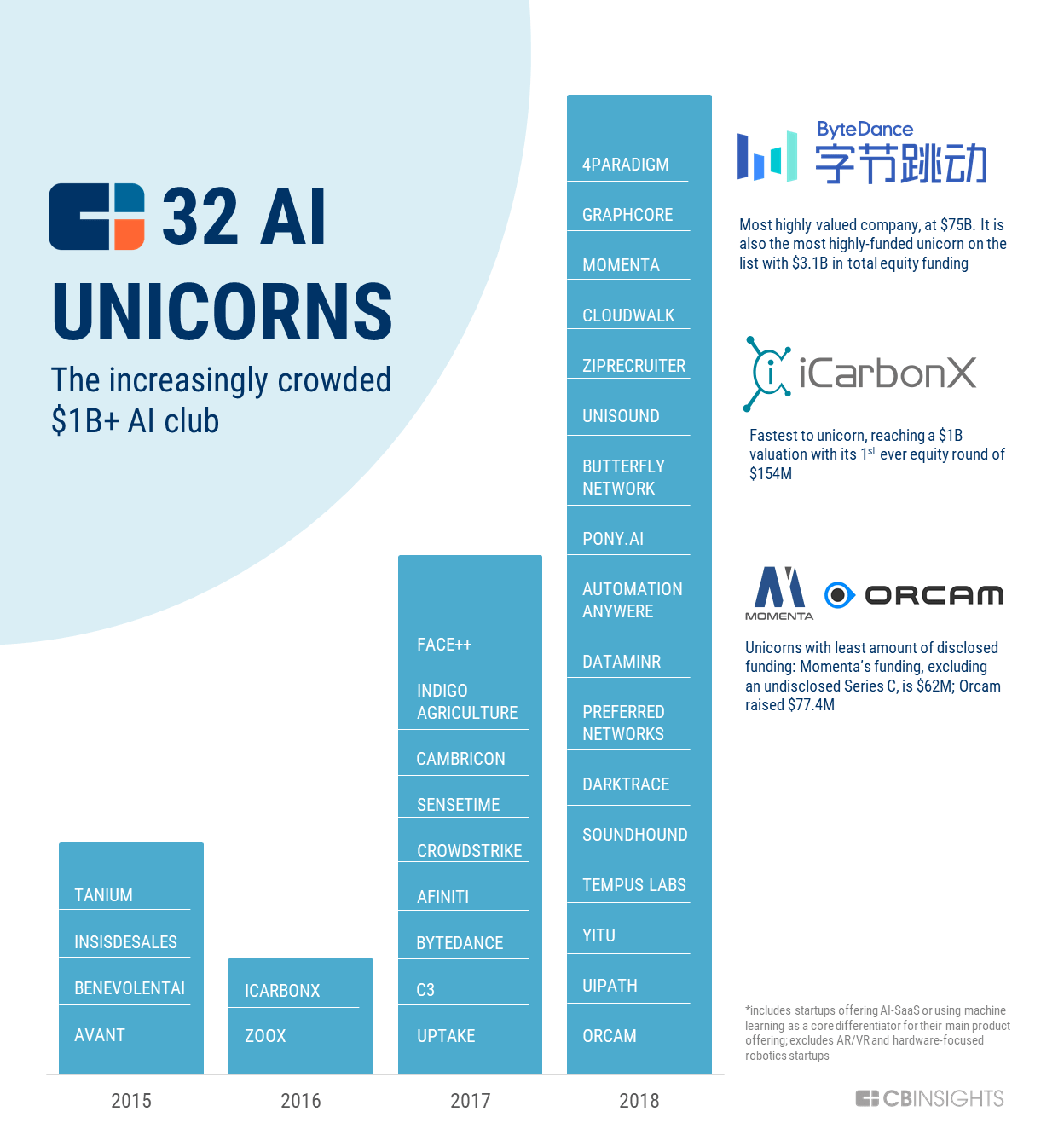
Cybersecurity is another industry where AI is driving investment into startups. Sporting imposing names like CrowdStrike, Darktrace, and Tanium, these cybersecurity companies employ different machine-learning techniques to protect computers and other IT assets beyond the latest software update or virus scan.
Darktrace, for instance, takes its inspiration from the human immune system. Its algorithms can purportedly “learn” the unique pattern of each device and user on a network, detecting emerging problems before things spin out of control.
All three companies are used by major corporations and governments around the world. CrowdStrike itself made headlines a few years ago when it linked the hacking of the Democratic National Committee email servers to the Russian government.
The Federal Communications Commission intends to move ahead with a plan to auction off wireless radio frequencies that scientists say could harm critical satellite data used in weather forecasting.
The FCC said the auction, scheduled Thursday, will proceed despite protests from the National Oceanic and Atmospheric Administration and NASA, as well as two committees in the U.S. House.
For months, the FCC, supporting the interests of advancing 5G wireless technology, has sparred with NOAA and NASA, which have fought to protect the wireless radio frequencies or “spectrum” along and adjacent to frequencies weather data is passed.
“There is great concern that the FCC’s noise threshold will allow interference with weather and climate assets,” the letter said.
VentureBeat reports that the courses “will include tools for things like evaluating a business’ AI maturity level to understand what’s required to successfully implement AI.” Azizirad pointed out that there’s much written about how AI will transform jobs, but much less so about how it will impact “enterprises and organizations.”
“AI Business School was born with this goal of helping business leaders drive AI transformation in their [companies], but also to redefine their role as leaders,” she said. Microsoft just completed a survey among business leaders considering implementation of AI; they “ranked motivating and inspiring employees as their first investment priority while growing their use of AI.”
The school’s strategy module was built in partnership with INSEAD, “a graduate business school with campuses in Europe, Asia and the Middle East.” With regard to culture and responsibility, the school focuses on data, since “companies that successfully embrace AI need to openly share data across departments and business functions.”
Finally, “building trust also comes from developing and deploying AI systems in a responsible manner, an area that Microsoft’s market research has found resonates with business leaders.” The school “showcases Microsoft’s own work in this area.”
Following the global success of its choose-your-own-adventure style “Black Mirror: Bandersnatch,” Netflix plans to produce more such interactive content. During his keynote at the FICCI-Frames conference in Mumbai, VP of content Todd Yellin explained that new interactive approaches could include, for example, a romantic comedy in which viewers determine whether characters get together. Yellin told the crowd that “Bandersnatch” is “a huge hit” in India and “around the world, and we realized, wow, interactive storytelling is something we want to bet more on.”
 The film, which stars Will Smith, Clive Owen, and Mary Elizabeth Winstead, tells the story of an aging assassin attempting to leave the lifestyle, but finds himself hunted by a younger clone of himself. Think “John Wick” but if Keanu Reeves was being stalked by a younger Keanu.
 “Since its inception, Spotlight Stories strove to re-imagine VR storytelling. From ambitious shorts like ‘Son of Jaguar,’ ‘Sonaria’ and ‘Back to The Moon’ to critical acclaim for ‘Pearl’ (Emmy winner and first-ever VR film nominated for an Oscar) the Spotlight Stories team left a lasting impact on immersive storytelling. We are proud of the work the team has done over the years.”
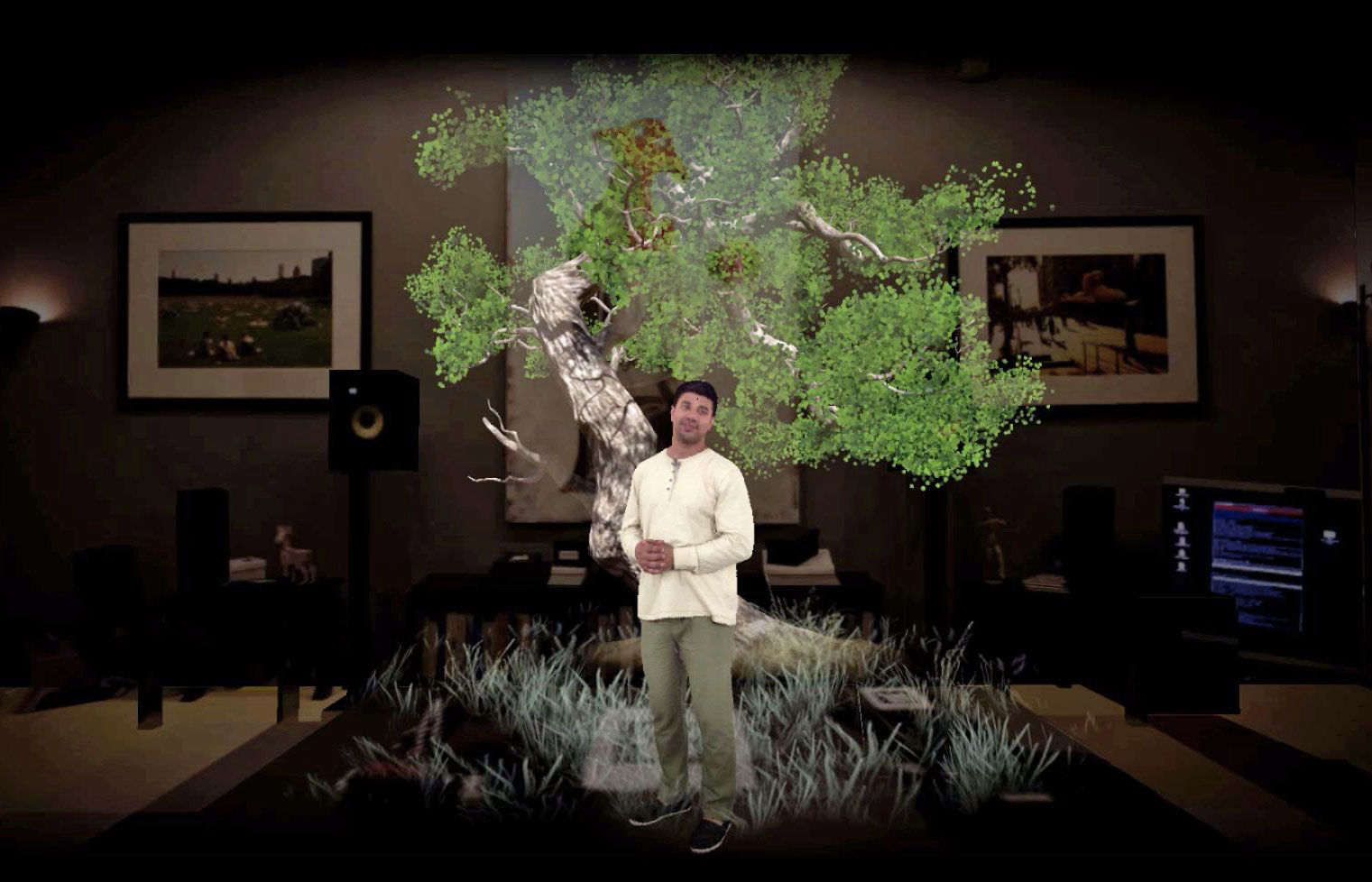 Magic Leap touted the idea that these experiences can immerse the audience better than a 2D screen, or allow the flexibility of watching from different angles. But the narrow field of view and small figures on a stage that's meant to be viewed from the front anyway hardly make it a TV replacement.