Inside the Facebook virtual reality lab building 3D video chat
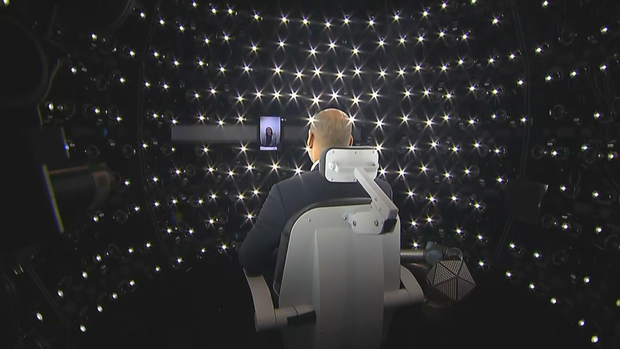 To create an avatar that looks, moves and sounds like you, 180 cameras and 500 lights capture your face from different angles, making all sorts of silly faces, reports CBS News' DeMarco Morgan, who got an exclusive look at the social media giant's new project.
"The reason is because we want to be able to understand exactly how you look from every different viewpoint," said Yaser Sheikh, who directs the Facebook reality lab in Pittsburgh creating these avatars. "Because in virtual reality, we might move and look at you from different perspectives, and it has to look as real as you do."
"It is impossible not to ask the question, is there a dark side to this?" said Peter Rubin, a senior correspondent at Wired who covers virtual and augmented reality. "It collects a lot of data about us and increasingly about the way that we look and the way behave and the way we react to things it feels much more invasive than just having our web serving monitored."
Facebook says security is a top priority. Asked if there are any concerns about hackers, Sheikh replied, "of course."
"It's something which I consider to be the existential threat to this kind of technology. If we're not mindful of this, and develop safeguards in the system itself … It really threatens the viability of this entire medium of communication," Sheikh said.
See the full story here: https://www.cbsnews.com/news/facebook-vr-video-chat-social-media-platform-is-creating-lifelike-replicas-of-real-people/
Nissan uses 5G to put an augmented reality co-driver in your passenger seat
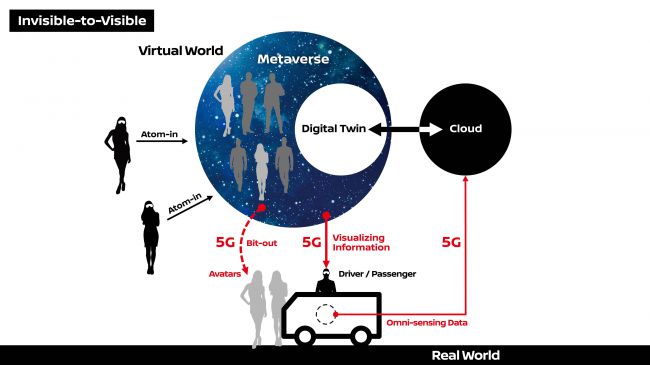 Nissan unveiled its Invisible-to-Visible technology at CES 2019 in January. The system combines data from the car's sensors with mapping and other information stored in the cloud, and presents it all in AR.
- Everything you need to know about autonomous cars
- Can we trust self-driving vehicles? We ask the experts
- Apple's self-driving car: all the details on Project Titan
You will be able to see this presented as a 3D map inside the car, but for the personal touch, you'll also have the option of interacting with a virtual co-driver, who'll sit beside you on your journey.
Nissan has also elaborated on the idea of a 'Metaverse', which it has now defined as "a virtual world where people can interact through avatars", providing company and assistance on long journeys. Think Ready Player One, but with less fighting and more virtual back-seat driving.
See the full story here: https://www.techradar.com/au/news/nissan-uses-5g-to-put-an-augmented-reality-co-driver-in-your-passenger-seat
Microsoft Has Been Quietly Working on the Future of Consumer AR
 But there seemed to have been another reason why Microsoft had invited Sweeney on stage. “In the years to come, Epic will support Hololens in all of our endeavors,” Sweeney promised, all but confirming that Microsoft had planned a gamer-ready Hololens device for the near future. Microsoft executives have since repeatedly said that the journey to consumer AR will take years, not decades, further underlining the company’s commitment to the space.
Hololens 2 is an all-in-one AR headset, capable of overlaying holograms over your view of the real world. It’s significantly more comfortable than the original — three times as comfortable, if we can believe Microsoft’s oddly specific math. And it features more than double the field of view of the original Hololens.
Microsoft’s Hololens 2 also comes with integrated eye-tracking technology, which introduces a range of new interaction models.
But the biggest update may be advanced hand tracking, which makes it possible to touch and interact with Holograms in a whole new way.
With its new hardware, Microsoft has significantly expanded the capability of such gestures, and is now tracking 25 joints in each hand. The resulting experience feels a lot more natural, allowing users to press buttons, grab Holograms, and even have AR hummingbirds land on the palm of their hands.
The company also used its event last month to unveil what it calls Spatial Anchors, its take on the AR cloud. As part of Microsoft’s Azure cloud computing infrastructure, Spatial Anchors allow developers to build persistent, shareable AR experiences that are tied to specific locations.
This could be used, for instance, to build multi-player AR games for mobile devices. And ultimately, the same technology will also able to power Microsoft’s own AR experiences, including those running on future versions of the Hololens.
The final leg of the stool for Microsoft’s AR efforts are the company’s Mixed Reality Capture Studios, which can be used to capture high-quality 3D holograms. Microsoft runs its own capture studio in San Francisco, and its technology powers two studios operated by partners in Los Angeles and London.
But taken together, all of these efforts hint at a future in which Microsoft wants to be able to do everything: Build mass-market AR devices with proven interaction models, power them with the necessary infrastructure for planet-scale AR experiences, and have enough content available to make them enticing for consumers.
See the full story here: https://variety.com/2019/digital/news/microsoft-hololens-consumer-ar-glasses-1203161646/
HBO Crowns Snapchat as King of Its ‘Game of Thrones’ Augmented Reality Promotion at SXSW
The hype for HBO's Game of Thrones reached proportions as epic as the series itself this week with the latest release of the final season's official trailer, but it's a Snapchat promotion that will truly make fans at SXSW bend the knee.
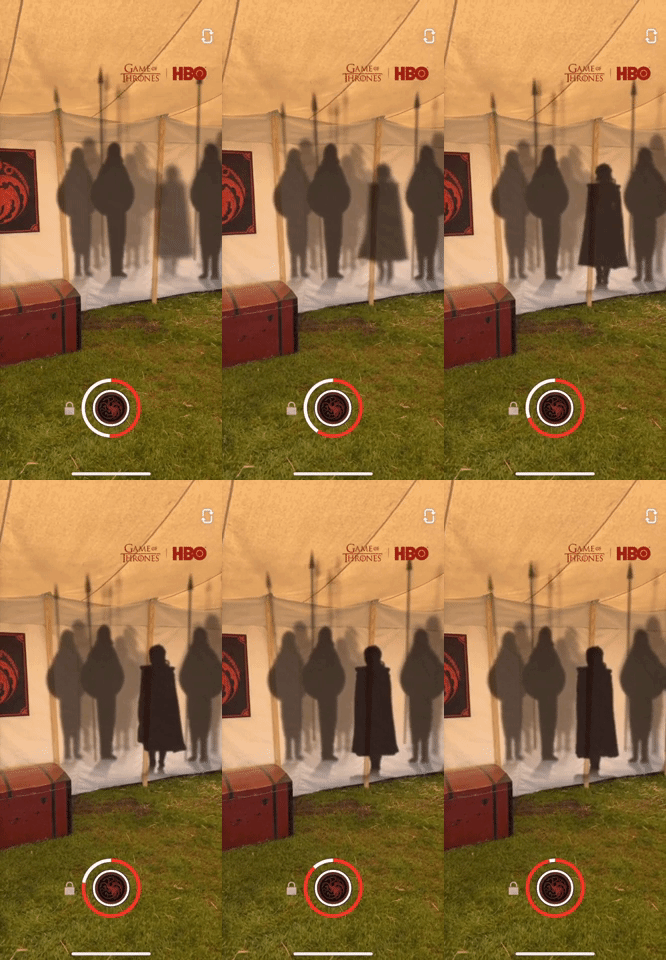
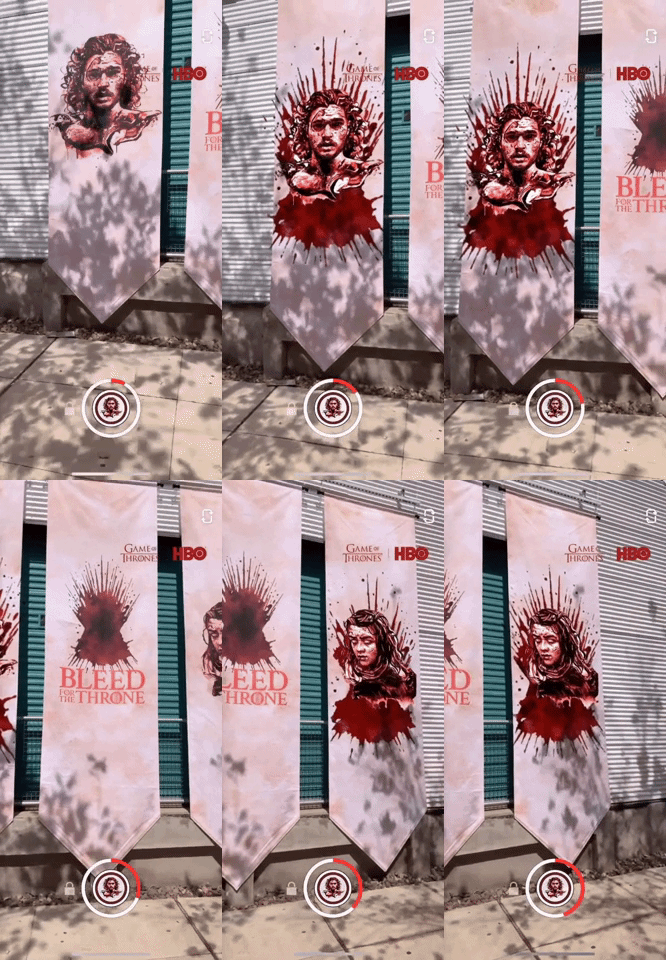
Using what Snapchat calls AR Marker Tech Lenses, HBO has installed a multi-room immersive experience at the festival called "Bleed for the Throne." While interacting with the experience, attendees find four AR experiences that are unlocked by images dispersed throughout the space.


 See the full story here: https://mobile-ar.reality.news/news/hbo-crowns-snapchat-as-king-its-game-thrones-augmented-reality-promotion-sxsw-0194601/
Meeting Old Masters, Rowing With Vikings — in Augmented Reality
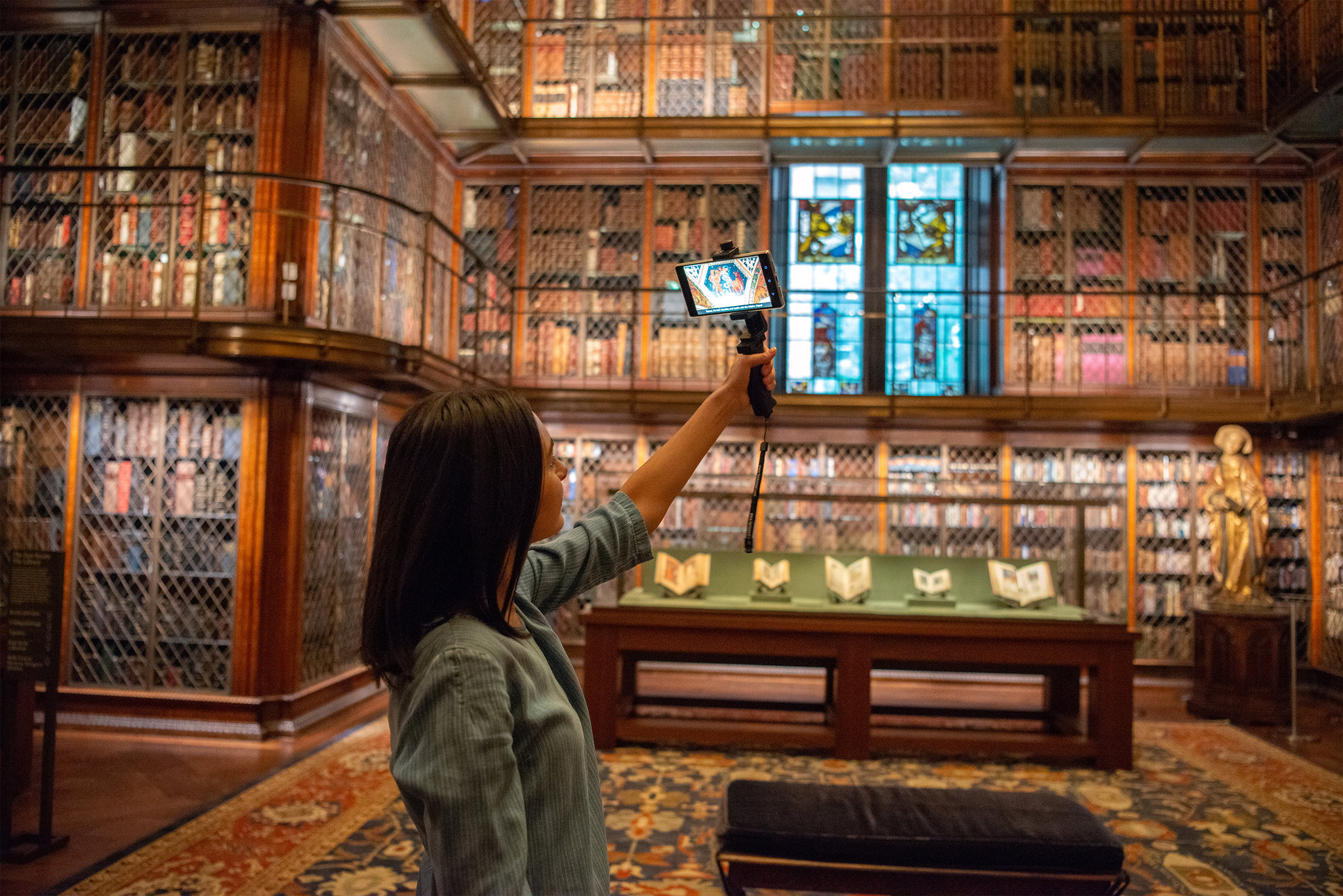 Walk through the doors of the Morgan Library & Museum in New York City these days and it’s possible to travel back more than 100 years.
Visitors can walk up to the original front doors no longer easily visible from outside the museum on East 36th Street, view a hidden staircase in its book-lined library that ascends to its upper tiers, and even meet Belle da Costa Greene, who died in 1950, having been the longtime librarian of the museum’s collector, J. Pierpont Morgan, and the museum’s first director, appointed by Morgan’s son in 1924.
Colin B. Bailey, director of the Morgan Library & Museum, said he loved that the museum’s new A.R. tour lets visitors “actually decode” the early 20th century decorative ceiling in its library by the muralist Henry Siddons Mowbray and get a close-up look at the 16th century tapestry over its grand fireplace.
Mr. Bailey said there was “no way” the Morgan could provide a written explanation of this decoration that visitors could read while simultaneously looking at it. The A.R. tour, he added, “is a wonderful way of imparting information about the history of the room, what the symbols mean.”
Referring to the museum’s entire A.R. experience, which makes 12 stops in the original, early 20th century library building, he added, “Nothing impedes the visual pleasure of stepping into these spaces.”
See the full story here: https://www.nytimes.com/2019/03/12/arts/augmented-reality-app-exhibits.html