Maryland iSchool researchers link virtual reality with sight and smell to better understand data
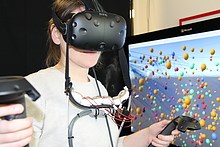 University of Maryland researchers in the Human-Computer Interaction Lab (HCIL) are linking virtual reality with sight and smell to help people better process information. HCIL is jointly supported by the UMD iSchool and the UMD Institute for Advanced Computer Studies.
HCIM student, Biswaksen Patnaik and PhD student, Andrea Batch are exploring ways to convey information with scent as a complement to the visual representation of data sets.
See the full story here: https://ischools.org/blog/2019/02/14/maryland-ischool-researchers-link-virtual-reality-with-sight-and-smell-to-better-understand-data/
“Information Olfactation: Harnessing Scent to Convey Data” lays out theories on the different ways people may perceive scent including intensity, direction and combined fragrances. The theories are based on benchmarks traditionally used in data visualization and previous literature in perceptual psychology, the researchers say.
The paper describes two prototypes the team has built—one for a desktop computer and one for a virtual reality headset—that disperse essential oils through diffusers. They also designed three different types of graph layouts in which smell can assist in conveying data visually to the user.
So far the researchers have been experimenting with ways to convey data via scent using the prototypes on themselves. They plan to recruit students for a user-study to test how effective their proposed olfactory encodings are in conveying and perceiving data with various scents.
See the full story here: http://www.umiacs.umd.edu/about-us/news/hcil-team-combines-smell-sight-better-understand-data
A VR ‘Doctor Who’ short film is coming to a headset near you
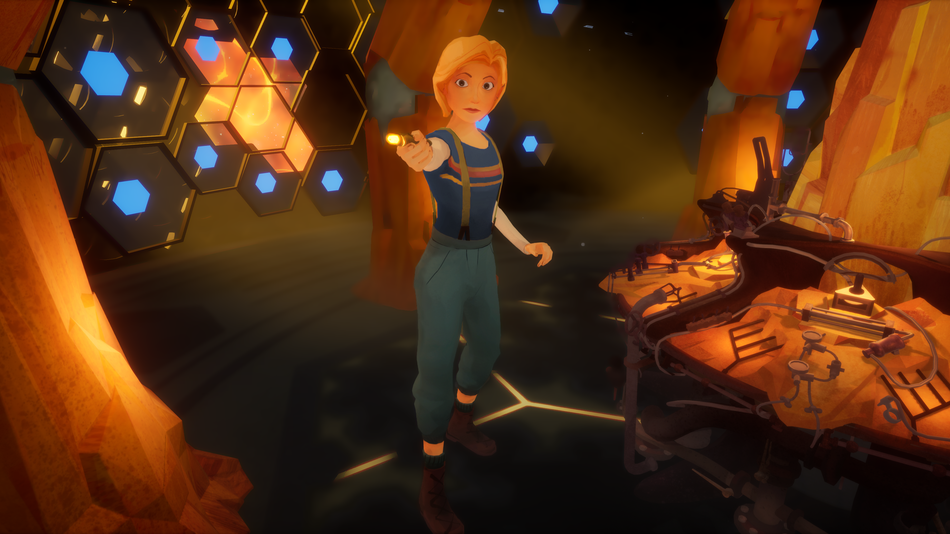 Doctor Who: The Runaway has a runtime of 12 minutes and will be an interactive virtual reality viewing experience, the BBC said in a press release. Fans will be put "at the heart of the story as they immerse themselves in this beautifully animated world," creative director for the BBC's digital drama team, Jo Pearce, said.
See the full story here: https://mashable.com/article/doctor-who-virtual-reality-experince/#hhcsrxBxjaqX
New LEGO augmented reality game has kids hunting ghosts
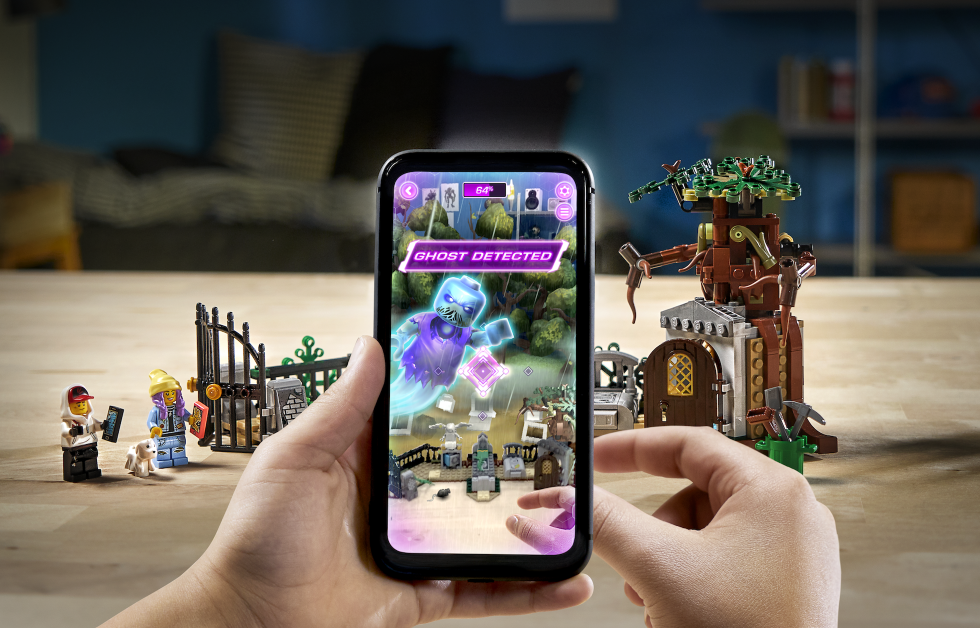 LEGO is asking kids to become ghost hunters with a new augmented reality app that will turn play sets into haunted spaces. Called Hidden Side, each of the eight kits will turn into a different item, a school, a bus and even, of course, a graveyard. But once you hold up a smartphone or tablet with the AR app launched, players will find ghosts milling about in a haunted scene only they can fix.
LEGO is launching the sets as part of New York Toy Fair, opening this weekend, where toy makers hawk their wares and show off what they hope will be the favorite play things of children for the coming year.
This new AR experience is designed for a specific group of sets, which together build a town called Newbury. In the app, players are teamed with two characters, Parker and Jack, both whom are from the town and need help to catch the ghosts that have taken over. The sets and the app are designed for children ages 7 and up, so the ghostly apparitions aren't expected to be too frightening for youngsters.
See the full story here: https://www.gearbrain.com/toys-lego-augmented-reality-2628961440.html
An AI that writes convincing prose risks mass-producing fake news
 A new algorithm that writes convincing prose could be used to automate the writing of fake news, Will Knight writes.
What it’s capable of: The program can make up realistic-seeming news reports on any topic you give it. It was developed by a team at OpenAI, a San Francisco-based research institute.
The dangers: This is a troubling example of just how good AI is getting at fooling us. It's so convincing that the researchers have chosen not to open source the code, to try and stall its weaponization as a way of automating and mass-producing fake news. “If this technology matures—and I’d give it one or two years—it could be used for disinformation or propaganda,” Jack Clark, OpenAI’s policy director, said.
How it was developed: Originally, the researchers aimed to create a general-purpose language algorithm to help translate text or answer questions. It could have beneficial uses, like summarizing text or improving chatbots’ conversational skills. But the potential for abuse could outweigh these for now.
See the full story here: https://www.technologyreview.com/s/612960/an-ai-tool-auto-generates-fake-news-bogus-tweets-and-plenty-of-gibberish/
HPA Tech Retreat: Take a Tour of the Netflix Media Database
 Puri defined the Netflix Media Database as “a multi-tenant data store for dynamic temporarily and spatially varying metadata for Netflix media assets.” The database supports “audio, video, text, images, and also answers spatio-temporal queries on the media timeline.”
User features include “authentication and authorization; content vault (e.g., firewalls for pre-release content); Datastore-based access control; and high read throughput.” “Every Datastore has a schema,” said Puri. “The developer defines the schema, which is a schema-on-write system. Schema updates can be applied on the fly; are capable of representing spatial (3D) and temporal metadata; and integer units for temporal and spatial dimensions enable full precision.”
Puri also showed an architectural view of the system, whereby the Netflix Media Database is depicted as implementing its features via a suite of micro-services, each of which has a specific responsibility. Those micro-services include validation, persistence, indexing and query, all of which can be orchestrated through a temporal plate.
See the full story here: http://www.etcentric.org/hpa-tech-retreat-take-a-tour-of-the-netflix-media-database/
Expanded Cinema (Stanford freshman course)
2019 COURSE INFORMATION
- Course Dates: September 3-20, 2019
- Arrive on Campus: September 2, 2019
- Housing Information
- Dining Information
COURSE DESCRIPTION
In this exploratory workshop, students will use VR tools such as 360 video and surround sound design to create immersive experiences for viewers. The conceptual framework of experimental cinema and documentary film serve to inform students' work. Over the course of two weeks, students will work in teams to create a series of short immersive pieces, using traditional tools (DSLRs and sound recorders) as well as 360 cameras, culminating in a 2-3 minute 360 video, with a keen emphasis on experimentation, pushing toward a new artistic language in this still-emerging form of VR "storytelling"/ Immersive cinema. The course is time intensive: requiring some nights and both weekends dedicated to production and editing, including several production field trips off-campus.
ASSOCIATE PROFESSOR OF ART AND ART HISTORY

Jamie Meltzer's feature documentary films have been broadcast nationally on PBS and have screened at numerous film festivals worldwide. He teaches and is the Program Director of the M.F.A. Program in Documentary Film at Stanford University. His current documentary project, True Conviction, broadcast on PBS in April 2018. The film premiered at the Tribeca Film Festival and was awarded a Special Jury Mention in the Best Documentary Category, the film is a co-production of ITVS and the recipient of a Sundance Institute grant and a MacArthur grant. Previous films include: Informant (2012), about a revolutionary activist turned FBI informant, Off the Charts: The Song-Poem Story (Independent Lens, 2003), about the shadowy world of song-poems, Welcome to Nollywood (PBS Broadcast, 2007), an investigation into the wildly successful Nigerian movie industry, and La Caminata (2009), a short film about a small town in Mexico that runs a simulated border crossing as a tourist attraction.
‘Mind-blowing’: Virtual reality PTSD treatment central to launch of consortium
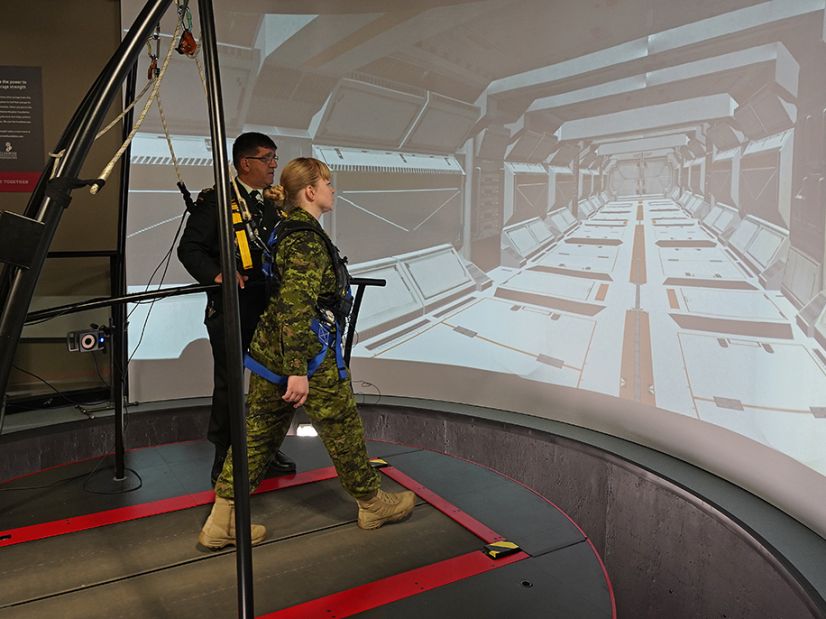 Heroes in Mind, Advocacy & Research Consortium (HiMARC) is made up of those who want “to serve the men and women in uniform who have served us and continue to serve us daily,” Bob Haennel, dean of the University of Alberta’s Faculty of Rehabilitation Medicine, said in a Wednesday news release.
See the full story here: https://edmontonjournal.com/news/local-news/mind-blowing-virtual-reality-ptsd-treatment-central-to-launch-of-consortium
A Crucial Step for Averting AI Disasters
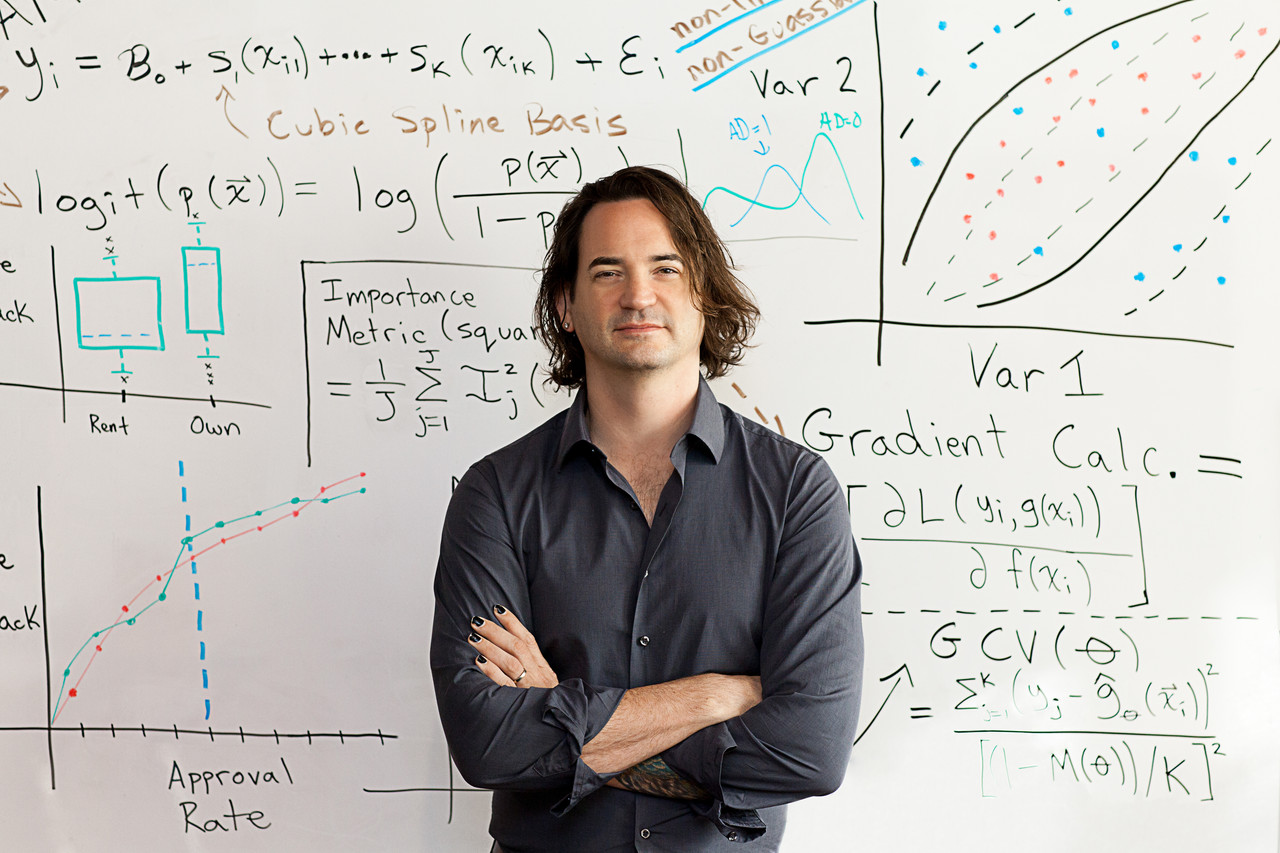
Tech companies working on artificial intelligence find that a diverse staff can help avoid biased algorithms that cause public embarrassments
At one point, Rana el Kaliouby, Affectiva CEO and co-founder says, women working in the company’s Cairo office asked, “Are there any people in here who look like us?” Engineers quickly added images of Muslim women wearing hijabs.
“You need diversity in the data, and more important, in the team that’s designing the algorithm,” Dr. el Kaliouby says. “If you’re a 30-year-old white guy who’s programming this algorithm, you might not think about, ‘Oh, does this data set include a woman wearing a hijab?’ ”
Beyond racial and gender diversity, Microsoft recruits employees with diverse creative and artistic skills to help write conversational language for its Cortana virtual assistant and Personality Chat, an AI program that handles small talk for bots developed by others. Team members have included a playwright, a poet, a comic-book author, a philosophy major, a songwriter, a screenwriter, an essayist and a novelist, whose professional skills equip them to write upbeat language for the bots and anticipate diverse users’ reactions, says Deborah Harrison, a senior manager and team leader. They also teach the bots to avoid, say, misusing ethnic slang or making sexualized remarks.
See the full story here: https://www.wsj.com/articles/a-crucial-step-for-avoiding-ai-disasters-11550069865