CES Panel: Industry Execs Discuss Ethical Implications of AI
Industry leaders gathered at CES to discuss the ethics of artificial intelligence. Isaac Asimov’s Three Laws of Robotics protect humans from physical harm by robots, moderator Kevin Kelly of BigBuzz Marketing Group started out, but how do we protect ourselves from other types of technology-driven harm? AI experts Anna Bethke from Intel, David Hanson from Hanson Robotics, and Mina Hanna from the IEEE had a wide-ranging discussion on how to identify, shape and possibly regulate aspects of AI development that can have ethical and moral ramifications.
Anna Bethke, head of AI for social good at Intel, discussed the concept of a “counterfactual check.” In brief, if you input a problem a second time and change only one or two input parameters, such as changing the person from a man to a woman, and if the AI outputs a different answer to the problem that cannot be rationally explained, then there probably is something untrustworthy in the AI design or training. (Counterfactual: A claim, hypothesis, or other belief that is contrary to the facts.)

Mina Hanna, chair of the IEEE-USA’s AI and Autonomous Systems Policy Committee, shared that the IEEE has published documents on ethically aligned design.
David Hanson, CEO of Hanson Robotics, pointed out that any AI today is a reflection of the ethics of the creators. He raised the question: What happens when the AI has agency? (When it can take actions that it chooses as right or wrong. That are maximally beneficial and minimally harmful.) With animals it is ultimately about survival, he said.
When it comes to regulating AI, Hanna said that he expects discussions in Washington this year on the topic of fiduciary responsibility for a number of areas including data protection, privacy and AI that could produce results that violate existing laws and regulations. The consideration of fiduciary responsibility would be important because it could potentially hold every employee of a company responsible for violations, motivating the organization to train everyone in ethical behavior and ‘if you see something, say something.’
Both Bethke and Hanson stressed the importance of diversity when developing AIs — diversity in data sources and data sets, diversity in the development team, diversity in testing.
Finally, Hanson commented that we project our own lives into the machine. We need to consider agency in AI. Some of the laws assume agency, and depend on motivational bias in the decision making. AI will need conscious creativity before we can depend on it to make ethical decisions, he said.
See the original post here: http://www.etcentric.org/ces-panel-industry-execs-discuss-ethical-implications-of-ai/
DeepRay Uses AI to Reconstruct Distorted Video in Real Time
Cambridge Consultants has trained artificial intelligence to reconstruct images from a highly distorted image or video feed in real time that is the AI’s best guess of what the source image originally looked like. The unique approach of their DeepRay product involves recognizing and correcting for a wide universe of distortion patterns. Cambridge Consultants’ first clients are self-driving car companies concerned with accurate object and risk detection, but DeepRay could also have a number of entertainment industry technical and story applications.
Cambridge Consultants used GANs (Generative Adversarial Networks) to train DeepRay on two separate problem domains. They trained the AI to recognize and correct for a huge body of image distortions such as images seen through broken glass, washboard glass, and glass with dirt and rain drops on it, images reflected off of crumpled metal, images seen through fog and smoke, etc.
They also trained the AI on real world images so it recognized real-world image characteristics, such as sharp or soft edges, high or low contrast images, motion blur, etc.
When a distorted still or streaming video is input, the two trainings are combined to produce a new image in real time. DeepRay is not recognizing shapes and pulling objects from a database. DeepRay is also not shifting pixels to create a clear image from the original distorted image.
Instead, DeepRay is creating an entirely new image based on the AI’s interpretation of what the pre-distortion image would look like. So, for example, if the distorted image looks like it is a capture of a sharp and bright image, then the AI will construct its best guess of the objections in the image and make them appropriately sharp and bright. But if there are indications that the source was a foggy image, then the AI will construct a soft, foggy image.
This technology could be used to detect and correct for lens distortions during production. This would be especially useful for live action 3D shoots, where any difference in lens distortion between the right eye and left eye could cause physical discomfort among viewers later on. DeepRay could also be used to clean rain, smoke, dirt and debris out of an image or video in real time on the set.
On the creative side, the technology could be a plot device. It could capture the reflection of activity around a corner from a distorted non-mirror surface like polished granite or a shiny car, and then clean it up to reveal useful information (as in a 21st century version of the film “Blow-Up”).
Cambridge Consultants will be demonstrating its neural network trained on Nvidia’s DGX-1 platform and running on a standard gaming laptop in the Eureka Park area of CES (Sands 44337).
You can learn more about DeepRay in this recent VentureBeat article or by visiting the Cambridge Consultantssite.
See the original post here: http://www.etcentric.org/deepray-uses-ai-to-reconstruct-distorted-video-in-real-time/
Marc Andreessen: audio will be “titanically important” and VR will be “1,000” times bigger than AR
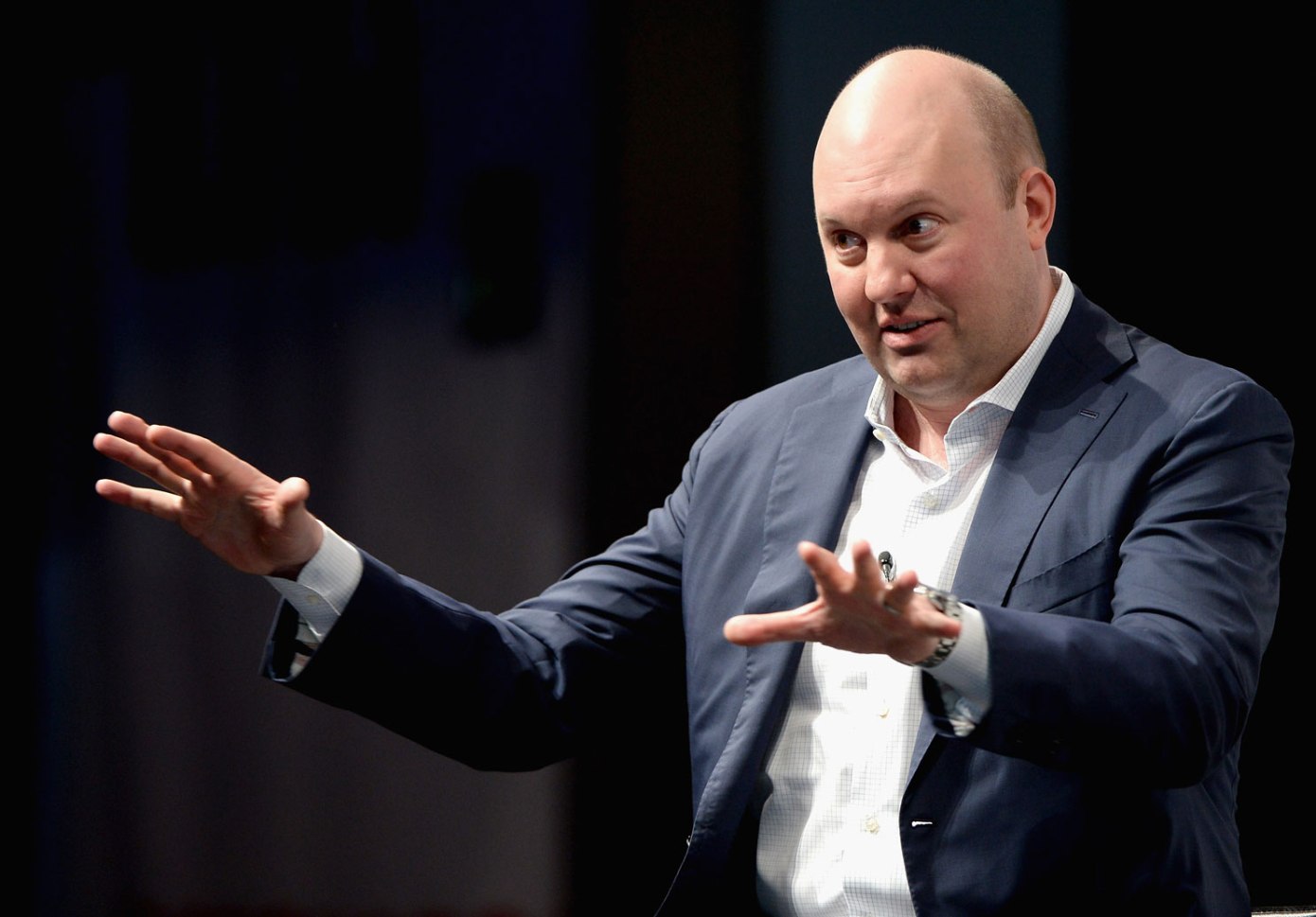 On audio:
“The really big one right now is audio. Audio is on the rise just generally and particularly with Apple and the AirPods, which has been an absolute home run [for Apple]. It’s one of the most deceptive things because it’s just like this little product, and how important could it be? And I think it’s tremendously important, because it’s basically a voice in your ear any time you want.
On sensors:
“The second thing I’d nominate for wearables is the concept of sensors on the body. Here, the Apple Watch is clearly in the lead with what they’re doing with the heartbeat sensor. But I think we’ll have a full complement of medical-grade sensors on our body — in a way that we have chosen to [have them] — over the next five or 10 years. I think we’ll be able to predict things like heart attacks and strokes before they happen. Talk about a killer app. [Laughs.] ‘Beep. I’m going to have a heart attack in four hours. Maybe I should drive to the hospital.’
On the future of AR/VR:
“I think optics are coming. It’s going to be a long road, but I think AR and VR are going to work, and that we’re going to have heads-up displays that are going to remove the need for what we have now, which is this little pane of glass that we’re expected to experience the whole world through. The whole world is going to open up around us.
I think AR has tons of potential applications, both at work and at home. [But] I think VR is going to be about 1,000 times bigger. In the Valley right now, this is a very contrarian view. The general theme that you hear is that AR will be bigger than VR, and obviously it should be. If you can do things overlaid over the real world, that should be inherently more interesting than having to construct a synthetic world.
I just think that’s only true for people who live in a really interesting place in the real world. But only something like .1 percent and 1 percent of people on Earth live in a place where they wake up every morning and think, Wow, there are so many interesting things to see.
See the full story here: https://techcrunch.com/2019/01/05/marc-andreessen-audio-will-be-titanically-important-and-vr-will-be-1000-times-bigger-than-ar/
Check out the OnePlus 6T McLaren Edition with its Augmented Reality (AR) booklet
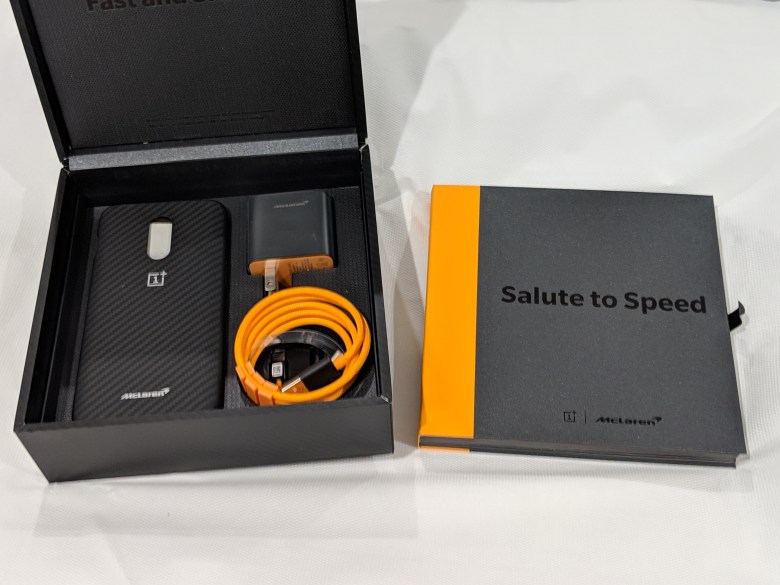 OnePlus have done that with their new OnePlus 6T McLaren Edition. Not only have OnePlus partnered with supercar and Formula 1 car manufacturer McLaren to produce a stunning phone that is FAST (with 10GB of RAM it would want to be) but they have once again packaged the phone in a stylish manner.
Unboxing the phone you can see that the packaging is incredibly stylish and is a long way from the plain boxes phones used to arrive in a few short years ago. There is a carbon fibre-styled, McLaren branded phone case, a collectable piece of carbon fibre set in a nice glass/plastic collectable dust collector, a brightly McLaren orange-coloured woven USB-C cable and WARP charger. There is also a booklet included within the box and the phone itself is housed within the last page of the booklet.
See the full story here: https://ausdroid.net/2019/01/06/check-oneplus-6t-mclaren-edition-augmented-reality-ar-booklet/
The Secret Sauce: How to Build a 21st Century Super Tank
 1. Active Protection Systems
2. More Cameras
3. Smart Ammunition
4. Autoloaders
5. UAVs
See the full story here: https://nationalinterest.org/blog/buzz/secret-sauce-how-build-21st-century-super-tank-40662
Location-Based VR: The Next Phase Of Immersive Entertainment
Why location-based VR and why now?
VR has one fundamental problem—not enough people have actually tried VR, much less good VR. This is a major problem because until you have tried VR, you don’t understand the immersive power of the technology. Most VR today is still relatively expensive and the best experiences cost too much for the average consumer. Because of this, I believe that location-based VR is the natural and necessary next step for VR and the immersive technology market on its way towards mainstream appeal and market.
Exit Reality
Exit Reality is different than other location-based VR companies because it does both fixed and mobile VR setups. Its expertise is in setting up different types of pods that can be used for VR experiences. I’ve seen the company demonstrate its setup many times. I first ran across it at GDC, where it demonstrated (in partnership with a casino gambling company) how its X Hub allows users to gamble on the outcome of competitive VR matches. Exit Reality has many different partners, but most of its business centers around setting up LBE hardware and locations and enabling virtually anyone that wants an LBE setup to have one temporarily or permanently at their business or event.
The VR Company – VRC
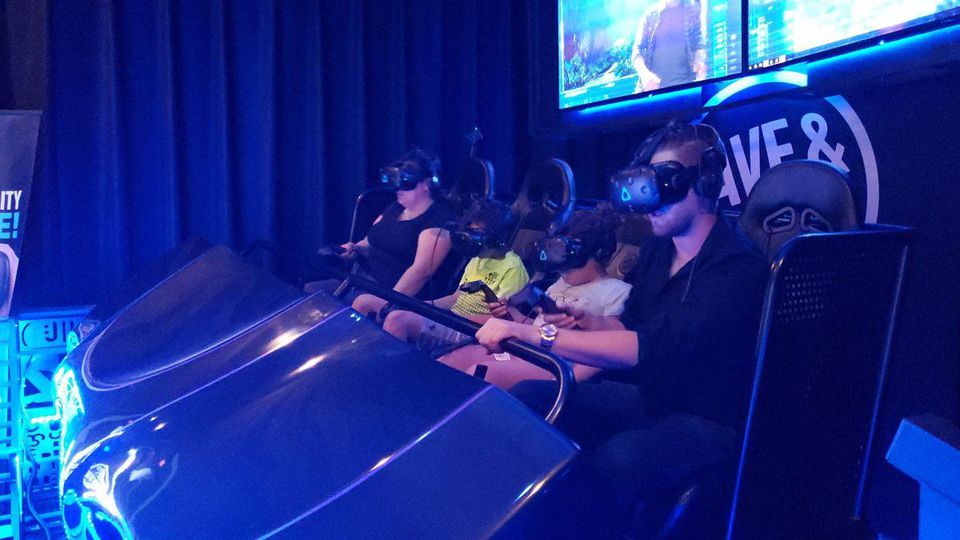 VRC is an interesting player because it is more of a content creation company than anything else. However, the company realizes LBE is where the market is today and is testing the waters. I got the chance to try out its Jurassic Park VR experience inside of a Dave & Busters, and I enjoyed it. There was a continuous line of people waiting to try out the experience while I was there, demonstrating that good IP paired with a good location is a solid recipe for success in LBE. I spoke to one of the operators and he said on a busy day they can run up to 500 people through the experience, which only seats 4 at a time. Dave & Busters says it loves the amount of attention, positive feedback, and added revenue the experiences bring to its locations.
See the full story with many other company profiles here: https://www.forbes.com/sites/moorinsights/2019/01/04/location-based-vr-the-next-phase-of-immersive-entertainment/#7769e7723f57
Xbox VP Mike Ybarra Says VR Isn’t “Worthwhile”
 Mike Ybarra, the corporate vice-president for Xbox, has said on Twitter that he thinks VR is not yet “worthwhile,” emphasizing the unlikely future of Xbox VR. Responding to a request for recommended VR games and applications, Ybarra wrote, “Google Earth is cool but not even close to what is needed to make the tech worthwhile. Sigh.”
Back at E3 2017, Phil Spencer was adamant there was a future for VR on the Xbox One X in particular, but since then has expressed similar doubts on the current capabilities of VR applications. In contrast, Sony invested in their own PSVR headset for the PS4, demonstrating their belief in the permanence of VR in the console sphere. This move appears to have been successful, with the PSVR headset selling 1.3 million units in 2018 alone, showcasing the demand for VR on modern consoles.
See the full story here: https://www.gamerevolution.com/news/478617-xbox-vr-virtual-reality-mike-ybarra
LA taps augmented reality for specialized repairs
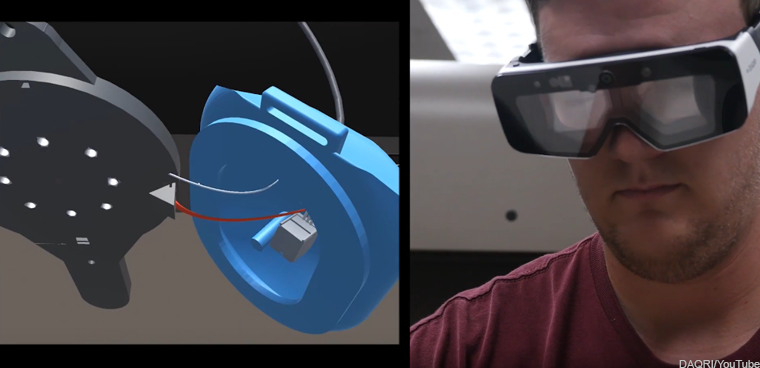 As workers in Los Angeles with specialized knowledge retire, the city is using augmented reality to transfer knowledge to younger employees.
Goggles from AR firm Daqri have reduced the time it takes to train someone to repair the $350 headsets firefighters use to communicate from 90 minutes to 30, and sometimes a few as five. That’s because in addition to seeing actual reality, trainees wearing the goggles can view additional information, such as notes on how to do the repairs.
Before LA adopted the AR goggles, its 105 fire stations spread across the city’s 469 square miles had to send broken headsets to the C. Erwin Piper Technical Center, where just one worker, who was getting ready to retire, knew how to fix them.
Joyce Edson, LA’s deputy CIO within the city’s Information Technology Agency, was looking for a way to apply AR and saw an opportunity with the headset repairs. An unpaid intern with interest in AR worked with ITA Applications Programmer Jeremy Stout for about eight weeks setting up 3D models of the firefighters' headsets. Using open source software from Unity and two AR helmets that Daqri donated to the city to use for research and development (the goggles came later), the city had a solution to test at a very low cost.
As workers repair the headsets, the goggles give them access to reference materials in the upper corner of their view. “They can also ask for the guy who really knows how to do this [repair] to sign in," Edson said. "He can see what they see, and he can annotate in their field of vision what it is that they’re missing, and then they can go off and fix it. … It’s been a really good training tool.”
The biggest savings is in the time, Edson said..
With nearly 40 percent of LA city workers eligible to retire in the next year, Edson hopes the program will help attract new talent to LA,
See the full story here: https://gcn.com/articles/2019/01/04/la-augmented-reality.aspx
Nissan’s freaky AR concept would project friends in your car, make it look sunny outside
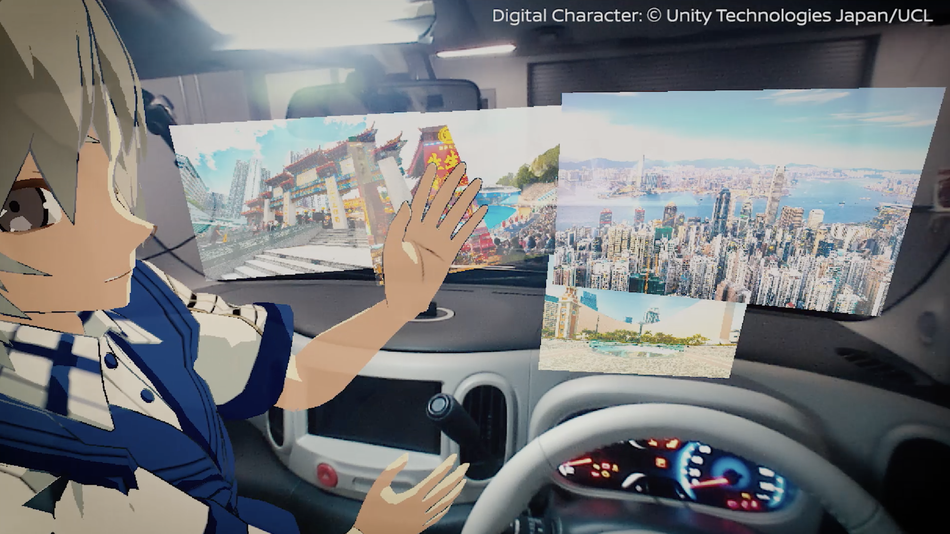 Nissan calls it Invisible-to-Visible, or I2V technology, but you can call it creepy.
The company wants to project the “invisible” virtual world onto car windshields and windows. The tech isn’t ready now. Instead, through a VR headset next week at CES in Las Vegas, Nissan will show off its concept to demonstrate what’s possible in future cars, especially self-driving vehicles.
Using information from sensors and cameras inside and outside of the car, paired with data stored in the cloud, the I2V tech shows a "mixed reality" world: some of it is really there but some of it is augmented reality (AR).
Another freaky concept? Interior cameras monitoring the real people inside the vehicle. Ideally, it would sense when you need a coffee break or are lost and need directions, but there are definitely privacy issues.
See the full story here: https://mashable.com/article/nissan-ar-virtual-reality-windshield-display/#BBQbLihijSqO
19 for ‘19: Augmented Reality Trends & How They May Play Out This Year
 Despite all this activity, I would say that 2018 was not THE year of AR and 2019 won’t be either. But don’t get me wrong, 2019 will be filled with a TON of important achievements which will act as critical stepping stones in AR’s journey to become the life changing computing platform we all know it will be when it grows up. And boy, it is growing up fast!
As it is the new year, I took some time to think about 19 trends I am looking at and how they might play out this year.