This Is How Snap’s Non-Creepy, Fashionable Spectacles Wearable Camera Proves We’re Ready for Mainstream AR Smartglasses
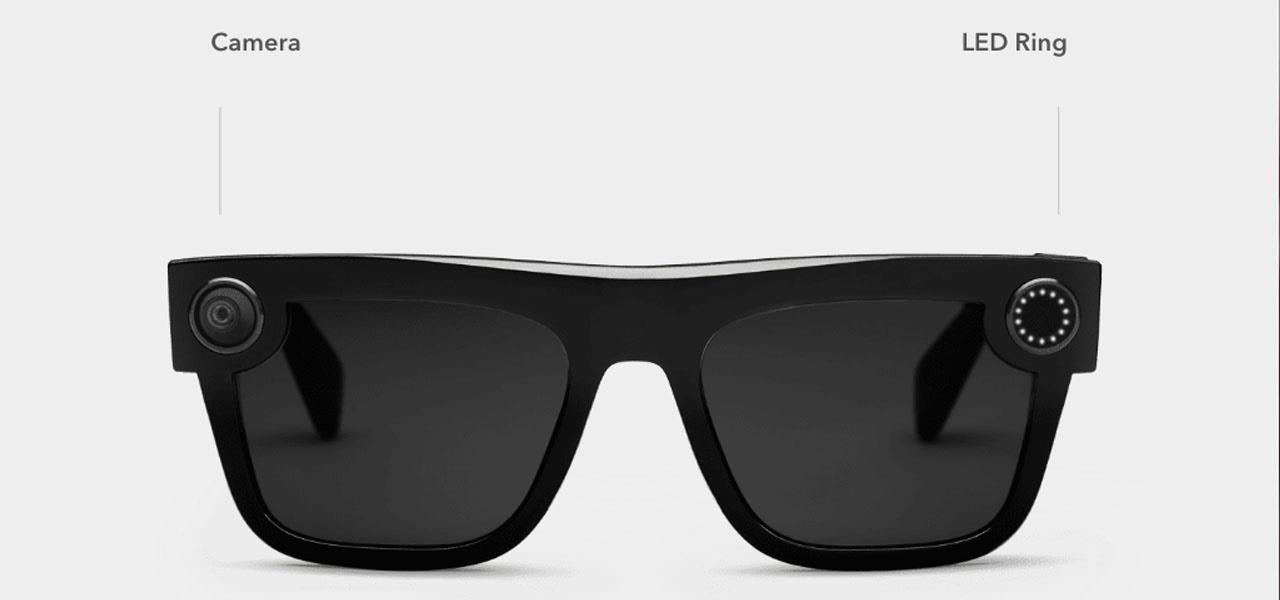 But then something interesting happened just a few months later: Snap unexpectedly released two new, significantly more stylish versions of Spectacles (Nico and Veronica), priced at $200. Paying that much for a wearable camera device, whose previous two iterations weren't incredibly popular, might seem like a lot — until you actually hold a pair in your hands. These feel like a premium pair of shades (this is coming from a shades fanatic with ten pairs of normal shades sitting on my shelf at home).
Wearing the Nico version of Spectacles in public doesn't feel like you're helping Snap experiment with its business model. No. These are cool shades that you'll like wearing even if you have no plans to take photos and videos. Beyond the great design and build quality, what makes the device easy to wear is the subtlety with which the camera sits on your face.
Street Cred Test
After wearing the Nico for weeks on crowded New York streets, in business meetings, and in coffee shops, I've only had a few occasions upon which someone did a double take and either looked at my Spectacles with special interest or asked me "what are those," after discerning the camera housing in the frame.
You can store up to 150 videos or 3,000 photos, and you can take around 70 videos per full charge (I rarely ran out of battery life), so the only real limitation is around how much editing you're ready to do. My own use mostly involved recording a bunch of footage throughout the week, syncing Spectacles with the Snapchat app on my iPhone, and then downloading the footage for editing in iMovie on the same device. I later posted these videos on Twitter, Instagram, and even YouTube. In years past, the Snapchat walled garden dynamic was my biggest problem with the app. But with this kind of freedom via Spectacles, there's no reason for me not to buy in. Which leads me to my next observations...
See the full story here: https://next.reality.news/news/is-snaps-non-creepy-fashionable-spectacles-wearable-camera-proves-were-ready-for-mainstream-ar-smartglasses-0192076/
You Can Finally Order the Vuzix Blade Smart Glasses for $1,000
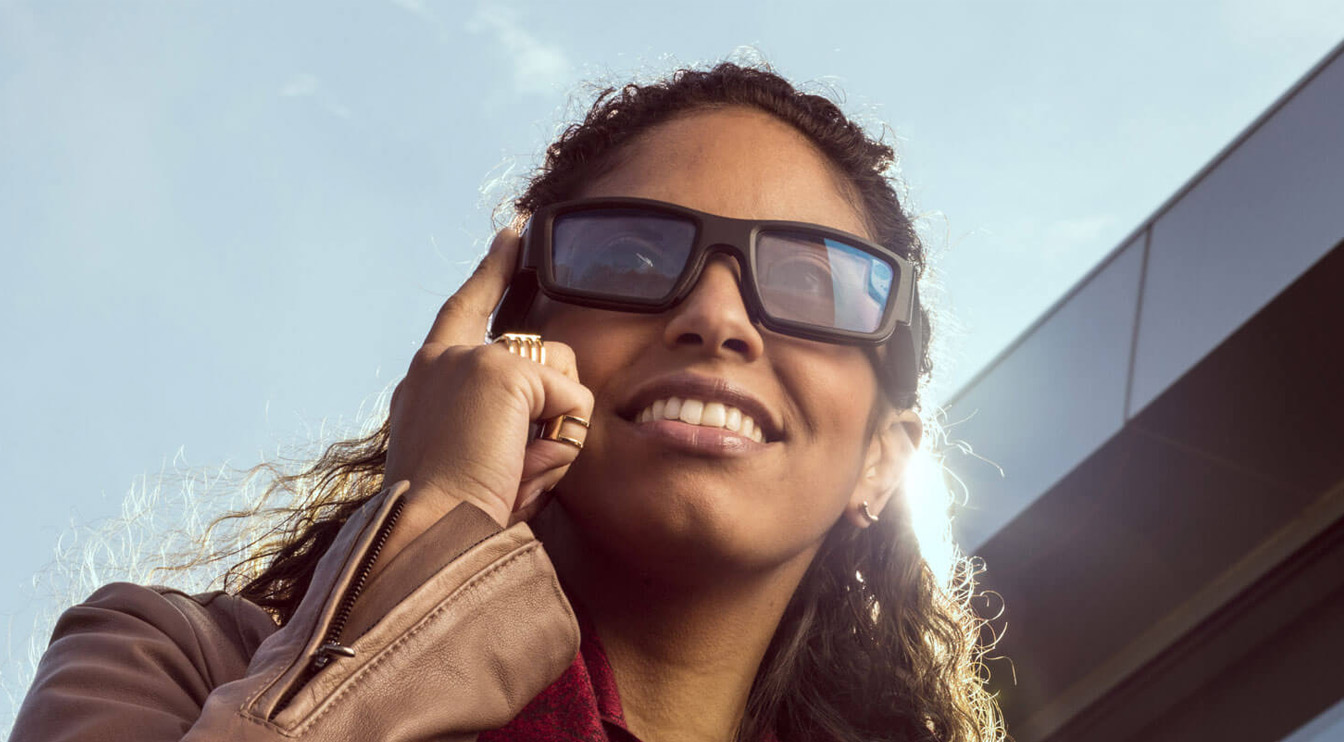 For $1,000, you can secure a pair of glasses for delivery in 4-6 weeks. You get access to the Blade Developer Center immediately. That includes support forums and documentation to make apps. Vuzix seems to expect aspiring developers to be the primary audience for this first run, but anyone can buy and use the Blade smart glasses.
The Blade smart glasses look like a standard pair of sunglasses at first glance, but the longer you look, the more apparent it becomes these are something more. The frame is a bit on the chunky side, and the temples are extremely tall to accommodate the electronics and batteries. You might also notice the small optical projector and camera peeking out at the edge of the lens.
Vuzix says it has several hundred developers ready to churn out apps for the Blade smart glasses, but it will have Amazon Alexa out of the box. It uses the Alexa Smart Screen SDK, so it’s like having a tiny Echo Show floating in front of your face. Alexa already has a ton of skills that will work with the Blade, as long as you don’t mind using mostly voice input (there’s also a touchpad on the temple for app control). It works standalone over Wi-Fi, but Vuzix expects most people to pair it with a phone.
See the full story here: https://www.extremetech.com/mobile/283118-you-can-finally-order-the-vuzix-blade-smart-glasses-for-1000
Sony Increases 3D Chip Supply to Meet Demand for Phones
 According to Yoshihara, “there will only be a need for two 3D chips on devices, for the front and back, despite a trend by smartphone makers to have three or more cameras.” Among the examples demonstrated with a custom phone with a 3D rear camera was an app where “the phone calculated the depth of the room and accurately displayed a virtual goldfish swimming in-front of and behind real-life objects.”
“The most important thing in the coming year will be to get people excited,” said Yoshihara.
Sony dominates about half of the camera chip market. According to sources, the company supplies Apple, Alphabet and Samsung Electronics, as well as Huawei Technologies.
Sony relies on the ‘time of flight’ method that “sends out invisible laser pulses and measures how long they take to bounce back,” which, said Yoshihara, “creates more detailed 3D models and works at distances of five meters.”
See the full story here: http://www.etcentric.org/sony-increases-3d-chip-supply-to-meet-demand-for-phones/
Cambridge Consultants’ DeepRay uses AI to reconstruct frames from damaged or obscured footage
 Rain. Smoke. Dirt. Debris-produced distortion would normally spell doom for a videographer, but researchers at global research and development firm Cambridge Consultants say they’ve harnessed artificial intelligence (AI) to reconstruct footage from damaged or obscured frames in real time. In one test on airfields and aviation stock video, it was able to accurately reproduce aircraft on a runway.
The AI system, dubbed DeepRay, will be fully detailed at the upcoming 2019 Consumer Electronics Show in January. It calls to mind Adobe’s distortion-correcting system for front-facing smartphone cameras, and an Nvidia technique that can “fix” corrupt images containing holes. But unlike most previous AI, DeepRay handles live video.
More recently, scientists at the University of Edinburgh’s Institute for Perception and Institute for Astronomy designed a GAN that can hallucinate galaxies — or high-resolution images of them, at least.
At CES, the DeepRay team will demonstrate a neural network trained on Nvidia’s DGX-1 platform that, running on a standard gaming laptop, can remove distortion introduced by an opaque pane of glass. The dataset consists of 100,000 still images, but Ensor said that the team hasn’t characterized the system’s performance with larger sample sizes.
See the full story here: https://venturebeat.com/2018/12/04/cambridge-consultants-deepray-uses-ai-to-reconstruct-frames-from-damaged-or-obscured-footage/
Magic Leap and other AR startups have a rough 2019 ahead of them Lucas Matney@lucasmtny / 17 hours ago Comment
Dead-on-arrival content plays
Magic Leap’s struggles are well-documented, but what plagues the overall AR industry seems less discussed.
The consumer appetite for phone-based AR content is obviously lacking. Even Apple’s reality distortion field isn’t enough to convince people that its ARKit releases have led to anything other than some weird experimentation for iOS users. Few Android OEMs are boasting about compatibility with Google’s ARCore platform anymore, suggesting that approachable hardware standards for device makers wasn’t all that was missing from the failed Tango brand.
Platform tech opportunities
Part of this broader content pain is the fact that some known platform fundamentals are still getting tackled. In 2018, the startups in AR that were raising the most buzz were so-called “AR cloud” startups, teams that were largely focused on solving more fundamental back-end problems around localization and mapping. It turns out “simple” problems like getting a bunch of users in a single session or keeping track of objects you’ve moved around between sessions are actually incredibly complex.
When you think of AR tech as a subset of vision problems, you realize that products today are being approached in a kind of bizarre manner.
 More conservative AR hardware
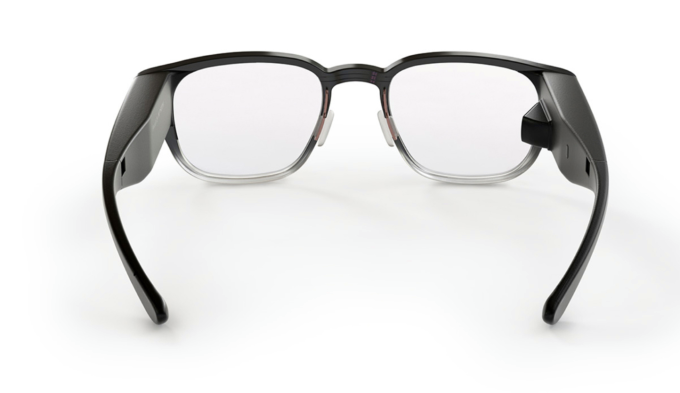
One trend that I am curious to see shake out is the more simplistic version of AR where the glasses basically just offer users a heads-up display for notifications and lightweight apps.
Companies like North and Vuzix have been talking a lot about their work here.
See the full story here: https://techcrunch.com/2019/01/02/magic-leap-and-other-ar-startups-have-a-rough-2019-ahead-of-them/
Virtual reality swing installation coming to Kimmel Center
 The virtual reality swings were designed by the "world's first thrill engineer," Dr. Brendan Walker. The experience combines art, aeronautical engineering and design. According to the Kimmel Center, it brings music to life in 3D and includes realistic landscapes.
See the full story here: https://www.phillyvoice.com/virtual-reality-swing-installation-kimmel-center/
My predictions for augmented reality in 2019
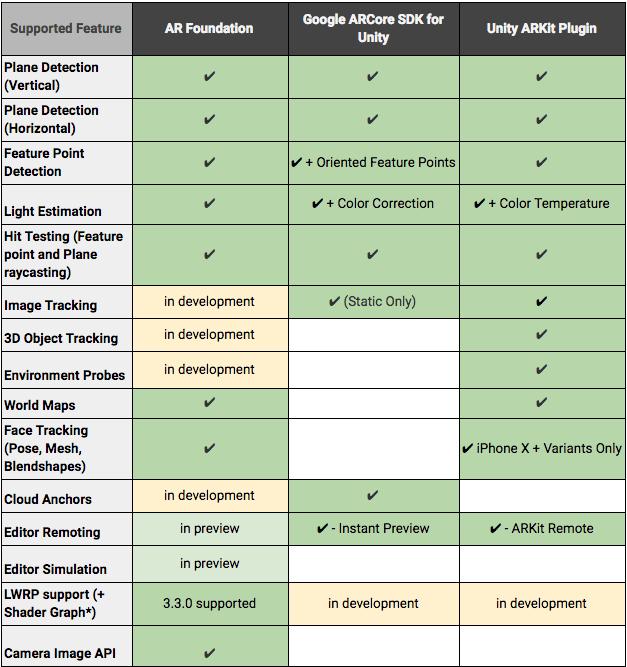 See the full story here: https://skarredghost.com/2019/01/02/my-predictions-for-augmented-reality-in-2019/?fbclid=IwAR0gli7jlPebn2D436U5rdJ0GjXYcc47DTs3cruU-EauN3eHfuyit8FhwmA
Feds Spend $1,788,748 on Virtual Reality Game for Young Gay Men
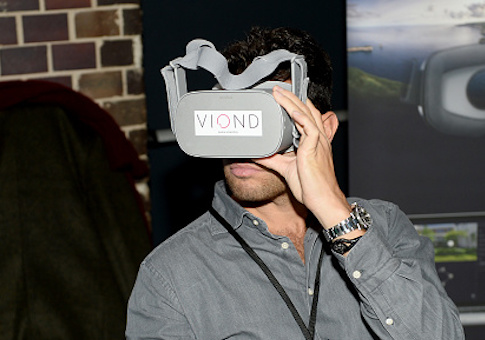
speaks on stage during TechCrunch Disrupt Berlin 2018 at Treptow Arena on November 30, 2018 in Berlin, Germany.
The National Institutes of Health is spending over $1.7 million on a virtual reality game for young men who have sex with men.
"Tough Talks" is a virtual simulation that allows young gay men to practice how to tell their partner they have HIV, using virtual reality technology. A technology training company—Georgia-based Virtually Better, Inc.—as well as the University of North Carolina at Chapel Hill and the University of Southern California Institute for Creative Technologies are creating the game.
Sixty-seven percent of young gay men do not disclose their HIV status to first-time sex partners, according to the grant behind the study. Researchers see virtual reality as a solution.
The virtual characters were given conversational skills that are "culturally sensitive to a variety of racial and ethnic backgrounds and sexual identities."
The characters are able to display a wide range of emotions, including "anger, fear, rejection, blame, ignorance, curiosity, confusion, support, concern, sympathy, empathy, acceptance, [and] love."
See the full story here: https://freebeacon.com/issues/feds-spend-1788748-on-virtual-reality-game-for-young-gay-men/
FCC greenlights Google’s radar-based gesture tech ‘Soli’
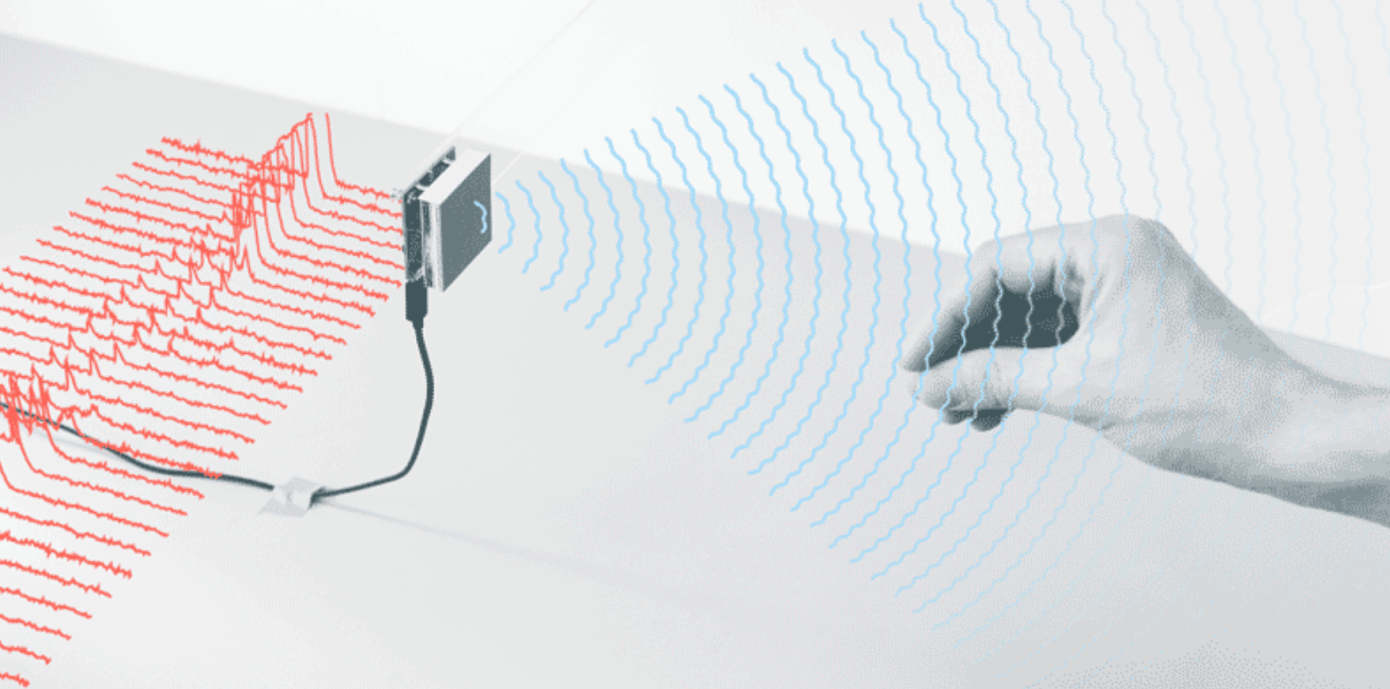 Google has won U.S. regulatory approval to go ahead with a radar-based motion sensor that could make touchscreens look obsolete in the coming years. Known as the Soli Project, the initiative began in 2015 inside Google’s Advanced Technology and Projects unit, a group responsible for turning the giant’s cutting-edge ideas into products.
We’ve seen a number of Soli’s technological breakthroughs since then, from being able to identify objects to reducing the radar sensor’s power consumption. Most recently, a regulatory order is set to move it into a more actionable phase. The U.S. Federal Communications Commission said earlier this week that it would grant Project Soli a waiver to operate at higher power levels than currently allowed. The government agency also said users can operate the sensor aboard a plane because the device poses “minimal potential of causing harmful interference to other spectrum users.”
Soli fits radar sensors into a tiny chip the size of an American quarter to track slight hand or finger motions at high speed and accuracy. That means instead of twisting a knob to adjust the volume of your stereo, you can rub your fingers over a speaker that contains a Soli chip as if sliding across a virtual dial. Under the regulatory order, you also would be allowed to air press a button on your Soli-powered smartwatch in the future.
Aside from clearing safety concerns, the FCC also found that the sensing tech serves the public interest: “The ability to recognize users’ touchless hand gestures to control a device, such as a smartphone, could help people with mobility, speech, or tactile impairments, which in turn could lead to higher productivity and quality of life for many members of the American public.”
See the full story here: https://techcrunch.com/2019/01/02/us-fcc-approves-google-soli-project/