Want to See All the Vermeers in the World? Now’s Your Chance
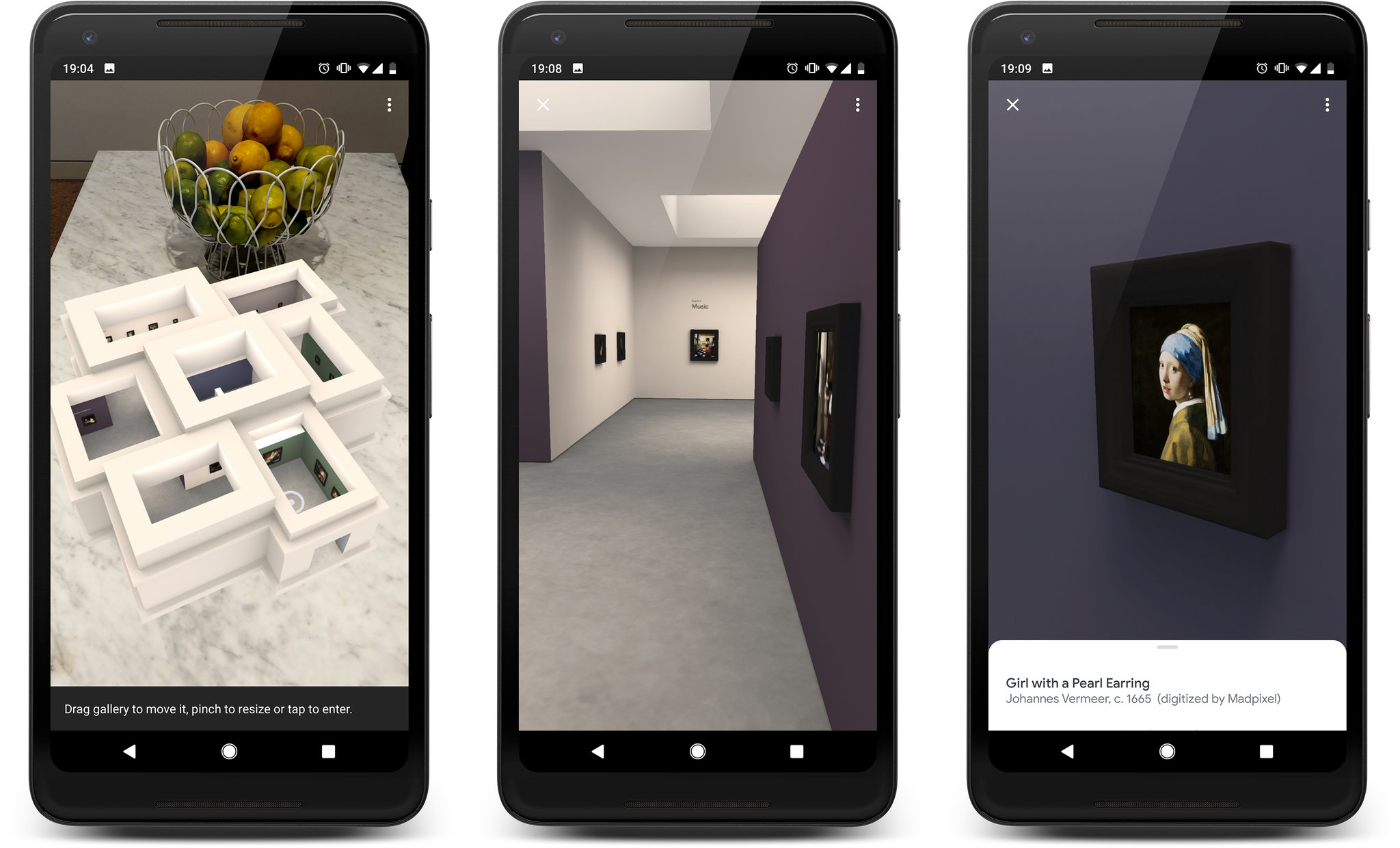 Meet Vermeer, a new augmented-reality app from the Mauritshuis museum and Google, is a virtual museum containing images of all authenticated Vermeer paintings. From left, an overhead view of the galleries in miniature; a look inside the space; and “Girl With a Pearl Earring” on the wall.
The Mauritshuis museum in The Hague, which owns what is perhaps Vermeer’s best-known masterpiece, “Girl With a Pearl Earring,” has teamed up with Google Arts & Culture in Paris to build an augmented-reality app that creates a virtual museum featuring all of the artist’s works.
“This is one of these moments when technology does something that you can never do in real life, and that’s because these paintings could never be brought together in real life,” said Emilie Gordenker, director of the Mauritshuis.
She explained that some of the 17th-century paintings were too fragile to travel, while some were in private collections, and the Gardner’s was lost.
See the full story here: https://www.nytimes.com/2018/12/03/arts/design/meet-vermeer-google-app-mauritshuis.html
MIT Open Learning launches Center for Advanced Virtuality
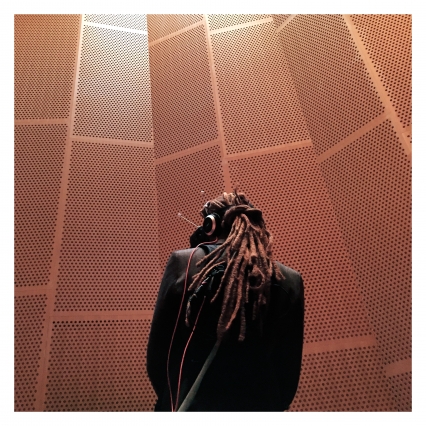 The new center will explore how MIT can use virtual reality and artificial intelligence and other technologies to better serve human needs.
Virtual reality (VR) technologies are having a growing impact on people's everyday lives. Sanjay Sarma, vice president for open learning, and D. Fox Harrell, professor of digital media and artificial intelligence in the Comparative Media Studies Program and the Computer Science and Artificial Intelligence Laboratory, have combined their efforts to launch MIT Open Learning’s new initiative, the MIT Center for Advanced Virtuality. The new initiative will help determine how MIT can use a group of technologies including virtual and mixed reality (collectively called extended reality or XR) to better serve human needs through artful innovation of virtual experiences, on-campus and beyond.
Harrell’s research explores the relationship between imagination and computation and involves developing new forms of computational narrative, gaming, social media, and related digital media based in computer science, cognitive science, and digital media arts.
The center — “MIT Virtuality” for short — will bring faculty, researchers, and VR professionals together to create new models for the deployment of impactful XR learning. The center will focus on creation, research, and innovation, through its Studio, Lab, Salon, and Hub functionalities.
MIT Virtuality aims to enhance the production, research, and innovation capacity of VR at MIT, while investigating the social and ethical impacts of technologies as they are being innovated. Anyone interested in more information is encouraged to visit MIT Virtuality online.
See the full story here: http://news.mit.edu/2018/mit-open-learning-launches-center-advanced-virtuality-1127
Google Play Gets A New Revamped UI: Focusing On User Experience
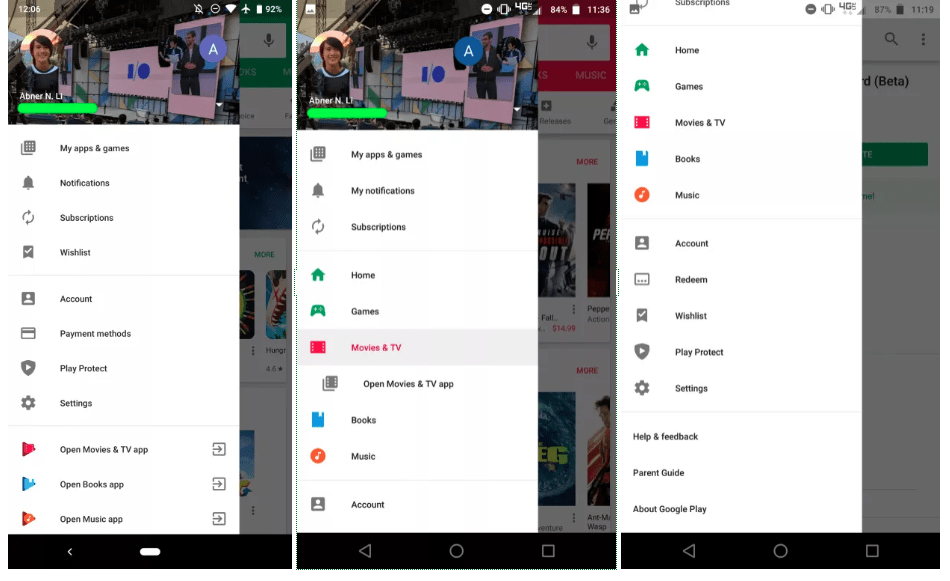 The all-new version of the Google Play comes with a more white-ish and simple UI which improves usability and the overall appearance of the app.
There are many small changes in the UI elements everywhere the app interface. However, the first thing we’ve noticed is that the navigation drawer is now exclusive to apps and games while shortcuts to the media apps like Play Movies & TV and Play Music are moved in the hamburger menu right underneath Settings.
The latest version of the app is 12.6.13, it contains several UI changes and improvements that focuses mostly on the user experience and many other UX factors.
See the full story here: https://www.androidhits.com/google-play-gets-a-new-revamped-ui-focusing-on-user-experience/
Cartier Plugs into Virtual Reality to Sell Historical Watch Story to China
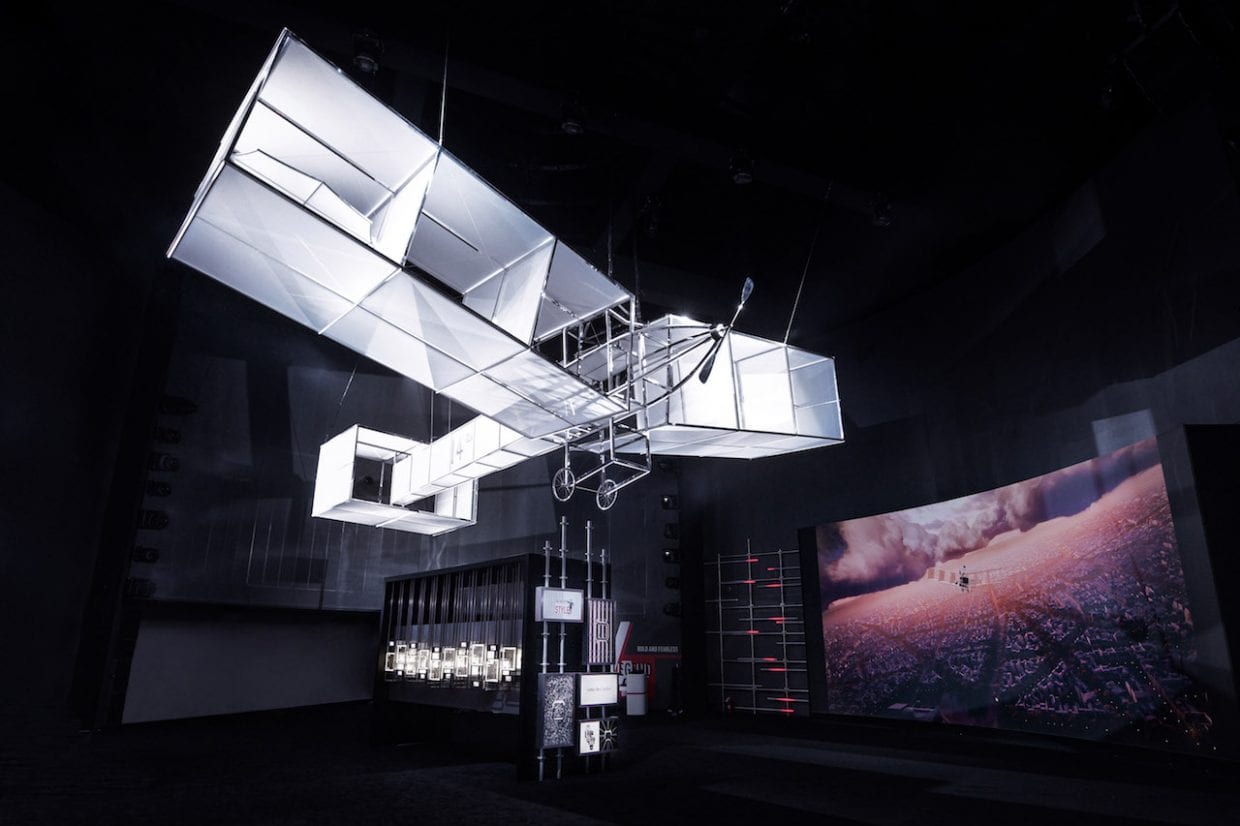 As luxury consumers increasingly seek meaningful purchases, it’s less about products they own than the story behind them.
With the help of virtual reality (VR) technology, Paris watchmaker Cartier, opened a 100-square-meter exhibition in Shanghai from November 22 to 25 that allowed consumers to immerse themselves in the narrative behind the company’s Santos watch collection; the watches cost up to about $57,800 (RMB 402,000).
See the full story here: https://jingdaily.com/cartier-vr-watch-china/
Augmented Reality Helps Pay Tribute to Deceased Veterans
 "I love these words: 'By strangers honored, by strangers mourned,' " said Scot French as he stood in the St. Augustine National Cemetery Thursday reading the gravestone inscription for a Dr. Charles Noyes, a 27-year-old Army surgeon interred at the site.
"In a way, we are those strangers," said French, an associate professor of history at the University of Central Florida in Orlando. "We are using data to create interactive visualizations that, at a glance, tell a story."
The effort is part of a major archiving project by UCF which just launched a website cataloguing nearly all the 1,227 grave sites at the St. Augustine National Cemetery.
Launched in 2016, the Veterans Legacy Program is funded by the U.S. Department of Veterans Affairs as a way to memorialize the lives of veterans and share their stories with the general public.
Faculty and students at the UCF researched and wrote biographies of the soldiers buried or memorialized at the cemetery. They used primary sources including government records, census data and newspaper accounts to discover information about veterans' lives, including their occupations, where and when they enlisted, how they were killed and other details.
There is also an "augmented reality" mobile application which allows smartphone users to hold their device up to a headstone and pull up matching background information on that specific veteran to create an interactive walking tour of cemetery.
"That's what we're doing in digital mapping, looking for patterns ... and you can't do that unless you lift it from the printed page," said French. "A whole new frontier of research is coming to us."
For example, Lyons pulled up a heat map that was formed from the data points showing how infectious diseases like malaria killed soldiers more often than warfare in the 19th century.
To access the Veterans Legacy Program and to learn more about the stories behind the veterans buried at the St. Augustine National Cemetery go online to www.vlp.cah.ucf.edu.
See the full story here: http://www.govtech.com/products/Augmented-Reality-Helps-Pay-Tribute-to-Deceased-Veterans.html
‘Ralph Breaks VR’ Is Brilliant, Game-Changing Virtual Reality Experience
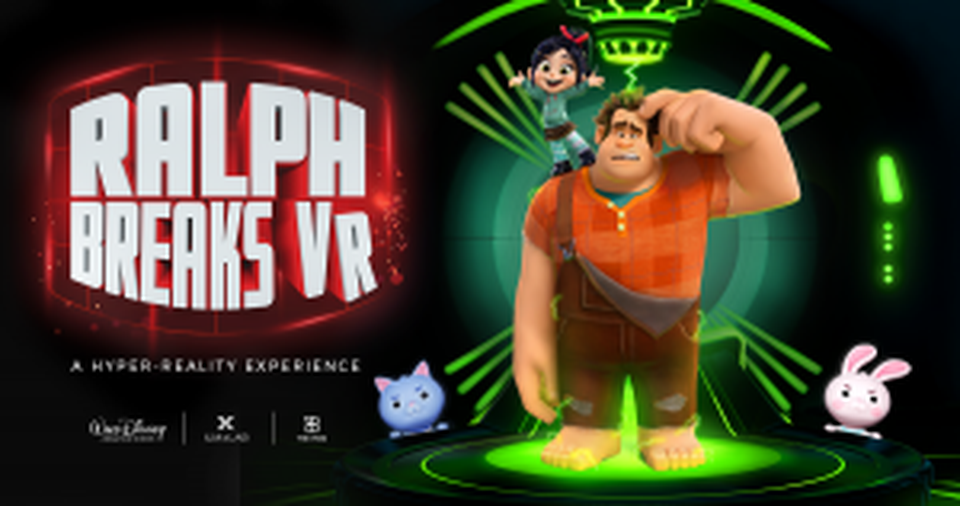 We are on the cusp of monumental changes to the way we think about and experience entertainment, as augmented reality and virtual reality continue to evolve and bring new opportunities for experiencing storytelling and gaming. I've written about this topic several times, and moderated a panel at SXSW a couple of years ago about the future of VR, but a few weeks ago I participated in something that has once again changed how I think about VR and the potential for crossover with various mediums and storytelling formats. The VOID and ILMxLAB developed the new virtual reality experience titled Ralph Breaks VR, to coincide with the release of Disney's animated blockbuster sequel Wreck-It-Ralph 2: Ralph Breaks the Internet, and what they've accomplished is a transcendent, game-changing virtual reality experience that is on the cutting edge of the next stage in VR evolution.
Augmented reality promises to rescue dying museums – so why don’t visitors want to use it?
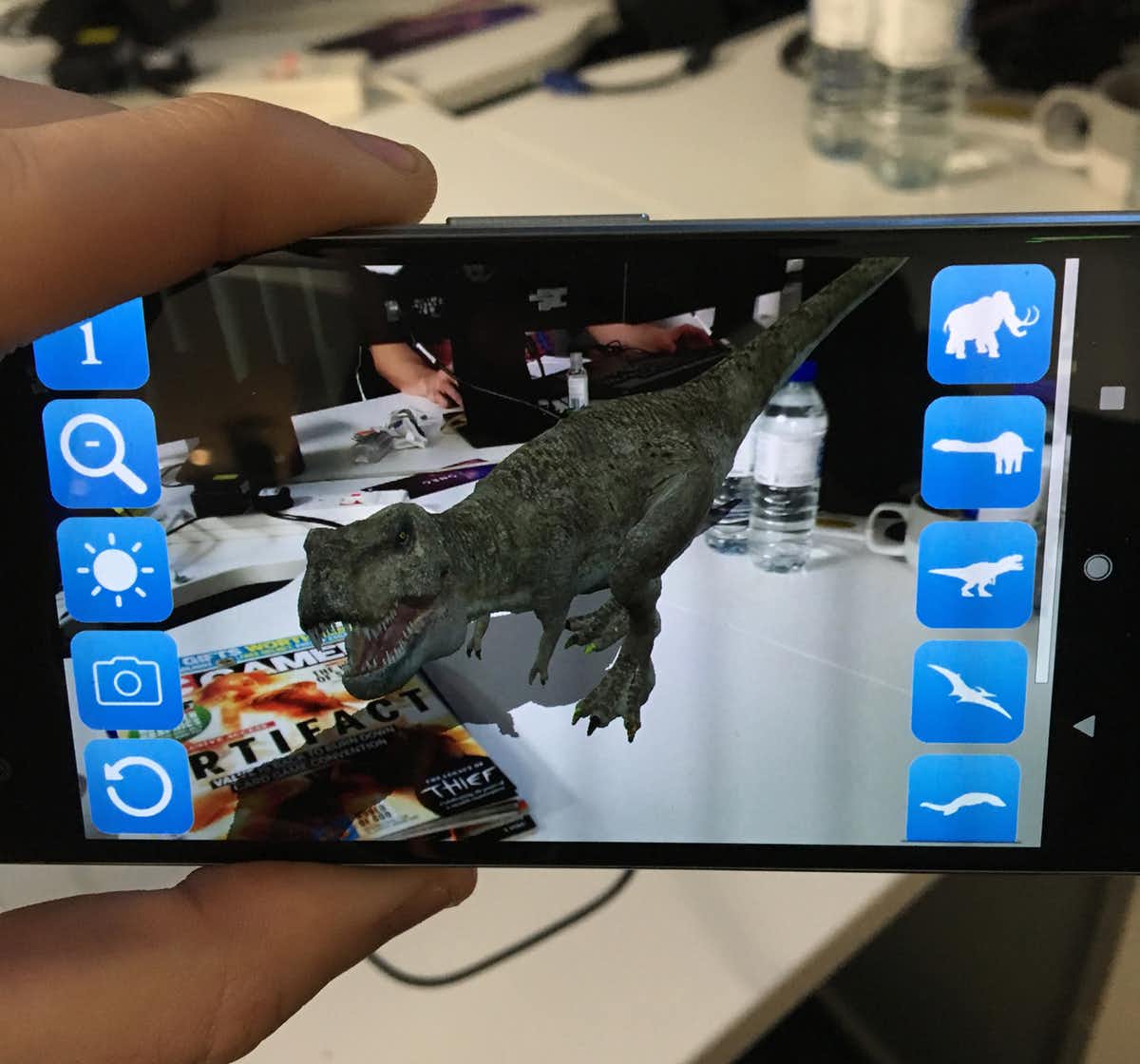 We failed at the first step, not due to a lack of interest in the technology or in the 3D dinosaurs deployed, but due to the fundamental reluctance of visitors to download museum apps. We have since found this experience to be shared by others, such as Skybox Museum, who also struggle to get visitors to download their app deployed at their site in Manchester. In fact, the feedback we’ve received so far suggests that simply getting people to download a museum app, rather than a problem with the underlying technology, is the biggest obstacle to its success.
It turns out that the characteristics of an app are less important when it comes to getting people to download it than whether they trust the makers, and that brand loyalty and familiarity help build this trust. We also know that the potential for social interaction and pure enjoyment are more important than the usefulness or educational value of an app. People want to be entertained, engage with others and are wary of potential risks to their phones and personal data.
So when you’re asked to download an app at the doors of a museum, the default position is to decline. It’s a hard sell, especially if you have children in tow. Promoting the app in advance helps but, even if you overcome this reluctance, people still want a guarantee of fun.
What’s the answer? Games are an obvious possibility.
The alternative is to make such resources available without an app, and we are exploring this. One solution might be to enable visitors to access it through their phone’s internet browser or via a standard QR code. Another idea we are trialling is to preload the technology onto a tablet hired like an audio guide at a museum’s entrance. As the software doesn’t need downloading it can be more complex, for example using locational technology such as GPS that can prompt the user to activate the device at a given spot and offer content tailored to their visit. But this would make social interaction and downloading those fun-filled selfies harder.
See the full story here: http://theconversation.com/augmented-reality-promises-to-rescue-dying-museums-so-why-dont-visitors-want-to-use-it-107845
Universal Studios Augmented Reality App Lets You Recreate a Scene from ‘Welcome to Marwen’ Film
 Based on a true story, the premise of the film makes it the ideal pairing for such an augmented reality experience. The main character, an artist played by Steve Carrell, is the victim of a violent attack that robs him of his memories. The incident leads him to create the imaginary world of Marwen, where he casts himself as a war hero, and builds an art installation based on it.
See the full story here: https://mobile-ar.reality.news/news/universal-studios-augmented-reality-app-lets-you-recreate-scene-from-welcome-marwen-film-0190695/