IAAPA: The 10 Biggest Insights From The World’s Largest Amusement Expo
[PhilNote: this is a good aggregation of obvious insights]
 Entertainment Center Operators Don’t Want VR Experiences

Redemption Games Are the Top Money Makers
Among the many attractions he purchased at IAAPA this year is the Willy Wonka & The Chocolate Factory experience pictured above. With simple mechanics and short game play, guests enjoy these experiences as they have the chance to win big on tickets or reward points that can then be used to redeem for prizes.
I have yet to see a VR attraction integrate redemption functionality, despite many of the games tracking individual and team points. But as large entertainment center operators start to purchase and invest in these attractions, I have no doubt that this will soon be done, and it will help to drive even more players to play.
Immersive Experiences That Leverage Familiar Game Play, Sell
see the full story here: https://uploadvr.com/iaapa-10-most-insights-amusement/?fbclid=IwAR1gAnS9srkGgFCH86fLlBqwSNBv8IAf0hBH2QrCC9J-25xjOim1mOUC6CU
Samsung Readies Onyx Cinema LED Motion Picture Screens
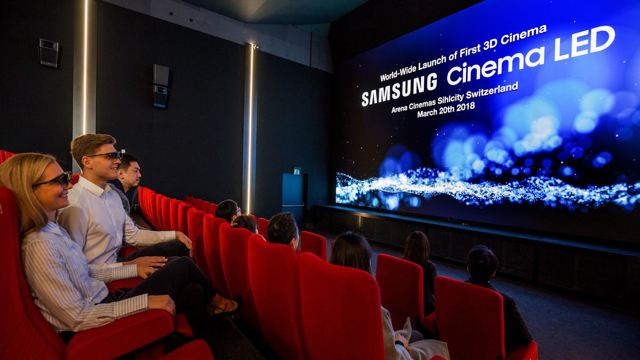 Last year, Samsung debuted a cinema LED screen, Onyx Cinema LED, to be offered in three sizes to accommodate different movie theaters. The 19-foot model will run at DCI 2K (2048 x 1080), and the 34-foot and 50-foot versions will run at DCI 4K (4096 x 2160). The 2K version has a peak brightness of 300 nits, and the other two support 500 nits, enabling 3D projection. The screens will support other resolutions with letterboxing as well as wide or flat DCI and several versions of HDR, including Samsung’s HDR10+.
“The Samsung Onyx screen is one of the most powerful pieces of equipment that allows us to display HDR content,” said Éclair general manager Pascal Mogavero. The screens are “based on its outdoor display tech that uses individual SMD (surface mount device) LEDs,” with each pixel “self-emitting with no backlight, so you can get true blacks simply by turning off individual LEDs.”
The reviewer calls the demo of switching one scene between SDR and HDR as “pretty eye-popping,” with colors appearing “punchy” and accurate. He adds that, “film directors and colorists will be able to optimize color timing for the screens knowing that subtle shadows will still be visible because of the extra brightness.”
“Some people don’t like it because they feel it will change the filmmaker’s initial intent,” said Mogavero “If you want to show your movie on a projector, you can still do it. But if you want to completely redesign your movie and think about a completely different way to tell the stories, then you can do that, too. It’s widening, not restricting or corrupting the possibilities.”
Samsung’s plans are to install the Onyx Cinema LED in 30 locations by the end of the year.
See the full story here: http://www.etcentric.org/samsung-readies-onyx-cinema-led-motion-picture-screens/
With Free Hollywood Films, YouTube Evolves into TV Network
 “YouTube serves ads to the movies from its usual pool of advertising demand that courses through the platform to its 19 billion monthly active users … [although] eventually, there could be a way for advertisers to pay to sponsor individual movies, giving users complimentary views and exclusive screenings.” But much of that depends on how studios evolve their strategies for “new digital streaming windows” which are still “up in the air.”
See full story here: http://www.etcentric.org/with-free-hollywood-films-youtube-evolves-into-tv-network/
THE DOCTOR PRESCRIBES VIDEO GAMES AND VIRTUAL REALITY REHAB
 AMID THE COUNTRY'S growing substance abuse crisis, last year the FDA cleared reSET, a mobile app that tracks substance use, cravings, and social triggers to treat dependency on alcohol, cocaine, and cannabis. The FDA's clearance makes reSET one of the first prescription “digital therapeutics”—an emerging class of evidence-based interventions that are predominantly driven by software rather than drugs.
Earlier this year, digital medicine company Akili Interactive announced that its video game for children with ADHD demonstrated a statistically significant improvement in a randomized, controlled clinical trial. That milestone paves the way for what could be the first prescription video game. And this summer, Apple announced an FDA- cleared algorithm and app combo that uses Apple Watch data to detect atrial fibrillation, an abnormal heart condition.
See the full story here: https://www.wired.com/story/prescription-video-games-and-vr-rehab/
Footwear Retailer DSW Inadvertently Imitates ‘Black Mirror’ with Augmented Reality Black Friday Ad


 According to a PadSquad spokesperson, as opposed to traditional banner ads and such, the DSW ad will show up in-line in around website content. While scrolling through the content, users can engage with the ad or continue scrolling.
Those who do interact with the ad will see a front-facing camera view within the ad (once camera permissions are accepted on a user's iOS or Android device). The ad then uses the smartphone's camera to measure the user's reaction via the app's "smile meter." Users who fill their meter get a 20% off coupon for purchases online, which can be applied to Black Friday and Cyber Monday sales.
A system that rewards users for smiling. Why does that sound familiar? Oh yeah...Black Mirror!
In the season three episode of the series called "Nosedive," the character Lacey, played by Bryce Dallas Howard, becomes obsessed with her rating in a social media-style smartphone app that enables users to rate others based on their shared content and interactions.
See the full story here: https://mobile-ar.reality.news/news/footwear-retailer-dsw-inadvertently-imitates-black-mirror-with-augmented-reality-black-friday-ad-0190258/
‘David Bowie Is’ Exhibition Will Become Augmented Reality App
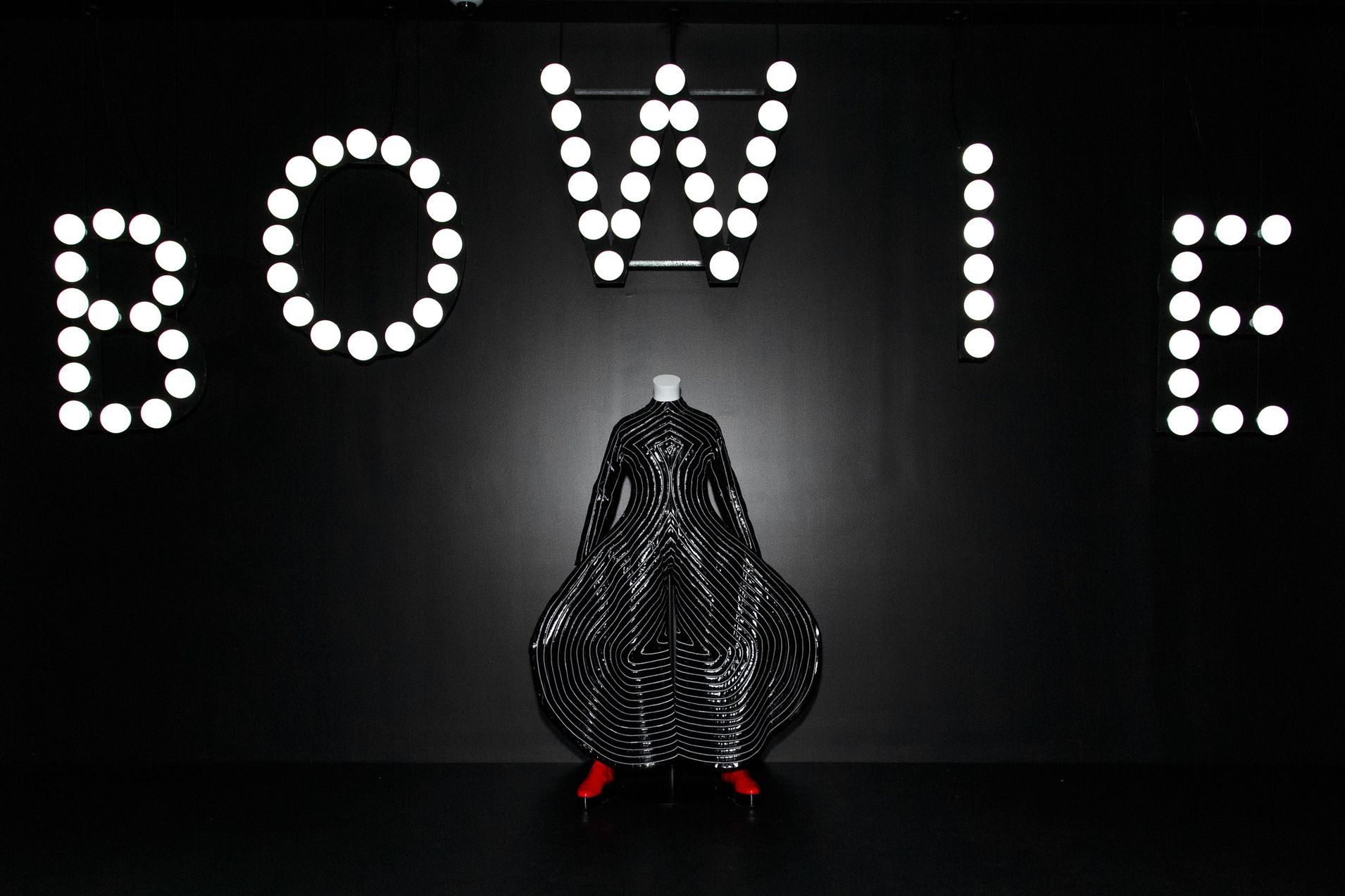 The David Bowie museum exhibition “David Bowie Is” will be released as an augmented reality mobile app for iOS and Android devices January 8th, 2019 – what would have been the late musician’s 72nd birthday. The app will allow fans to explore the hundreds of costumes, videos, handwritten lyrics and original artwork featured in the exhibit. It will also include dozens of items not featured in the original exhibit, including some that will be exclusive to the app.
In a review of the exhibit, Rolling Stone‘s Rob Sheffield wrote, “There’s something fitting about presenting Bowie’s life story as a vault full of artifacts, since he was an artist who always defined himself as a fan first and foremost. As he explains in a BBC interview heard in the exhibit, ‘I wanted to be thought of as someone who was very much a trendy person, rather than a trend.’ He might be the only rock star who ever aspired to be seen as ‘trendy’ – but as Bowie never tired of explaining, he saw himself as a creature of his book, record and art collections.”
See the full story here: https://www.rollingstone.com/music/music-news/david-bowie-is-exhibition-augmented-reality-mobile-app-758658/
LAX Unveils ‘Augmented Reality Wall’ for Midfield Satellite Concourse
 An "augmented reality wall" unveiled Wednesday at Los Angeles International Airport offers visitors a chance to view a 3-D rendering of the Midfield Satellite Concourse currently under construction.
The wall allows guests using Facebook or Snapchat on their smartphones to see what the concourse will look like upon completion, along with audio information. LAX said it is the only airport in the nation to use augmented reality to highlight new construction, and that the technology has the potential to revolutionize many aspects of the airport experience, including wayfinding, planning and security.
See the full story here: https://www.nbclosangeles.com/news/local/LAX-Augmented-Reality-Wall-500565491.html