European Parliament Advances Copyright Bill Despite Critics
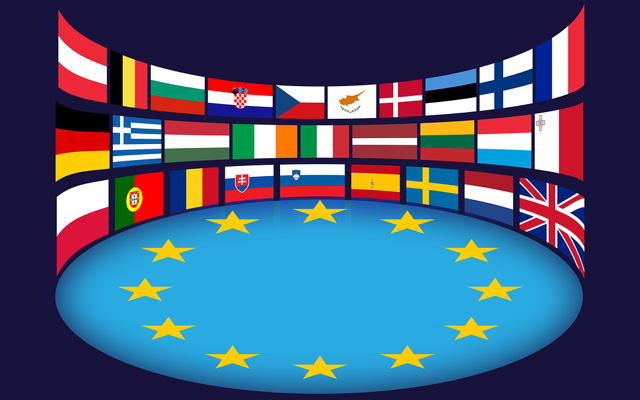 With the law’s provisions, news publishers would have “the right to negotiate payment for ‘digital use’ of their content by tech firms,” and “require online-video sites like Google’s YouTube to pay ‘proportionate remuneration’ for their works, and take measures to prevent uploads of content for which it doesn’t have a license.” Publishers say social media and aggregators undercut their own efforts to build a subscriber base.
The impact of such a law is unknown. WSJ notes that, “when Spain passed a similar law, Google shut down its local Google News service” and “when Germany passed a copyright law, publishers gave Google licenses for free rather than lose traffic.”
The tech industry argues that being responsible for “ensuring that no unlicensed copyright material is uploaded to their services would create a costly obligation that would discourage smaller companies from offering services,” but the bill’s supporters say the law’s language exempts “small and micro” platforms. The law will also “exempt noncommercial encyclopedias like Wikipedia from the rules.”
The law’s most controversial articles are Article 11, “which proposes a neighboring copyright for snippets of journalistic content — requiring news aggregators such as Google News to gain a license from the publisher to use this type of content … [and] Article 13; which seeks to shift liability for platform users’ copyright infringements onto the platforms themselves.” With regard to the latter, opponents say it will force them to use filters “to monitor all content before it’s posted, having a chilling effect on Internet expression.”
See the full story here: http://www.etcentric.org/european-parliament-advances-copyright-bill-despite-critics/
Dazzling projections will cover Walt Disney Concert Hall

 To celebrate the start of the Los Angeles Philharmonic’s new season, colorful patterns will be projected onto the metallic surface of the wavy concert hall for a little more than a week, courtesy of artist Refik Anadol.
Forty-two high-powered projectors will work together to create the images that will temporarily transform the concert hall’s iconic exterior nightly (7:30 to 11:30 p.m.) from September 28 to October 6.
It might not look like it, but the patterns come from the LA Phil’s archives.
Anadol took images, audio, and videos from the philharmonic’s archive and transformed the material into data points that he then reinterpreted as colorful and dynamic patterns.
See the full story here: https://la.curbed.com/2018/9/11/17846126/la-phil-frank-gehry-projections-art-refik-anadol
Inside Disney’s StudioLab, Where the Company Tests and Previews Cutting-Edge Technology
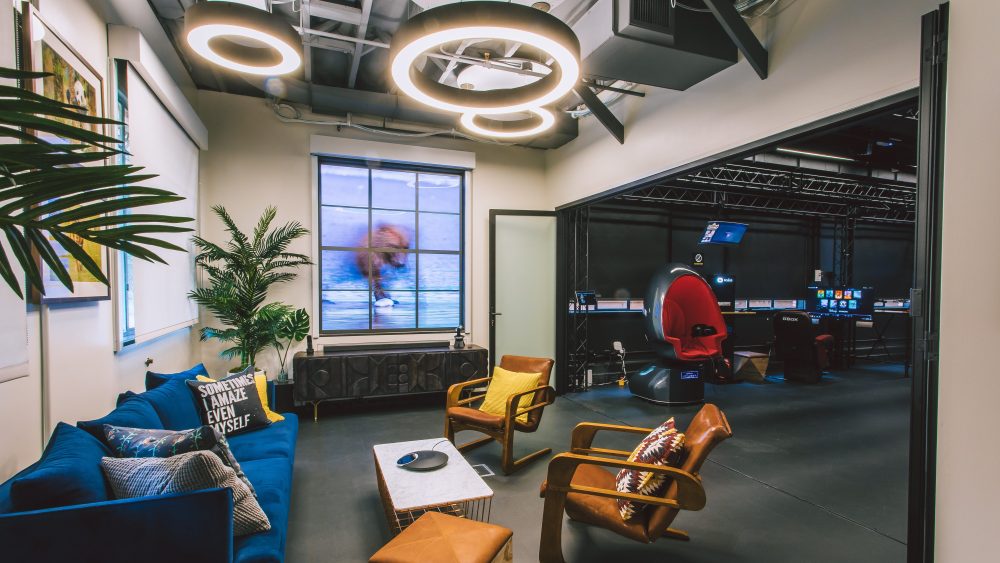

 “In many ways, the lab is a roadmap,” said Walt Disney Studios VP Benjamin Havey, whose Technology Innovation Group has been spearheading the development and launch of the facility. Disney Research has been toying with far-out tech for a long time. The StudioLab is committed to innovations that are being a bit closer to product stage, explained Havey.
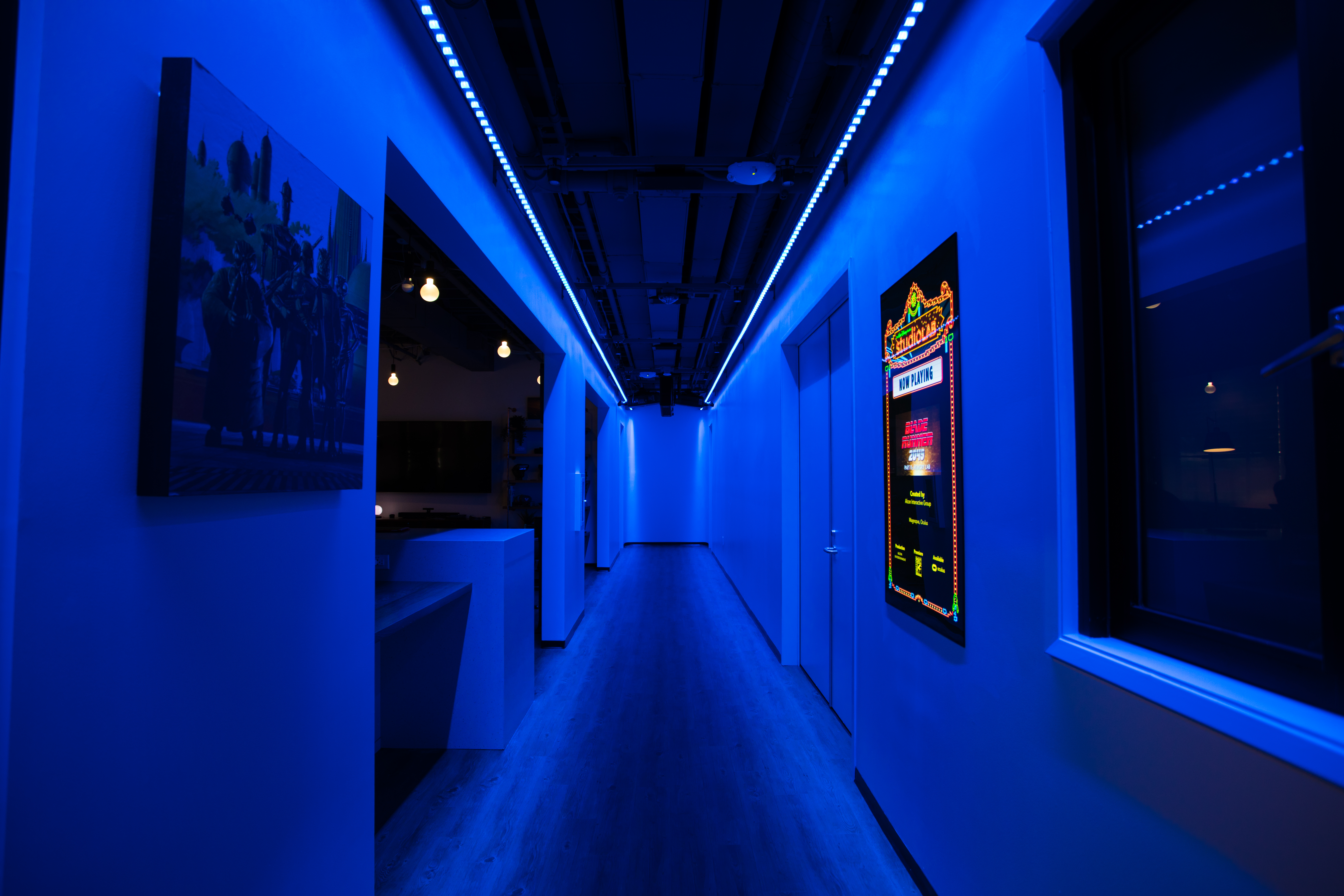
One example for this is Disney’s attempts to reinvent the good old movie poster, which has been hanging in theater foyers for decades. The StudioLab version is based on a pencil-thin LCD display that’s mounted flush to the lab’s wall and that can be controlled from an iPad to load new content. In the future, the poster could dynamically display movie recommendations based on who is looking at it, or invite consumers to interact with it, Havey said.
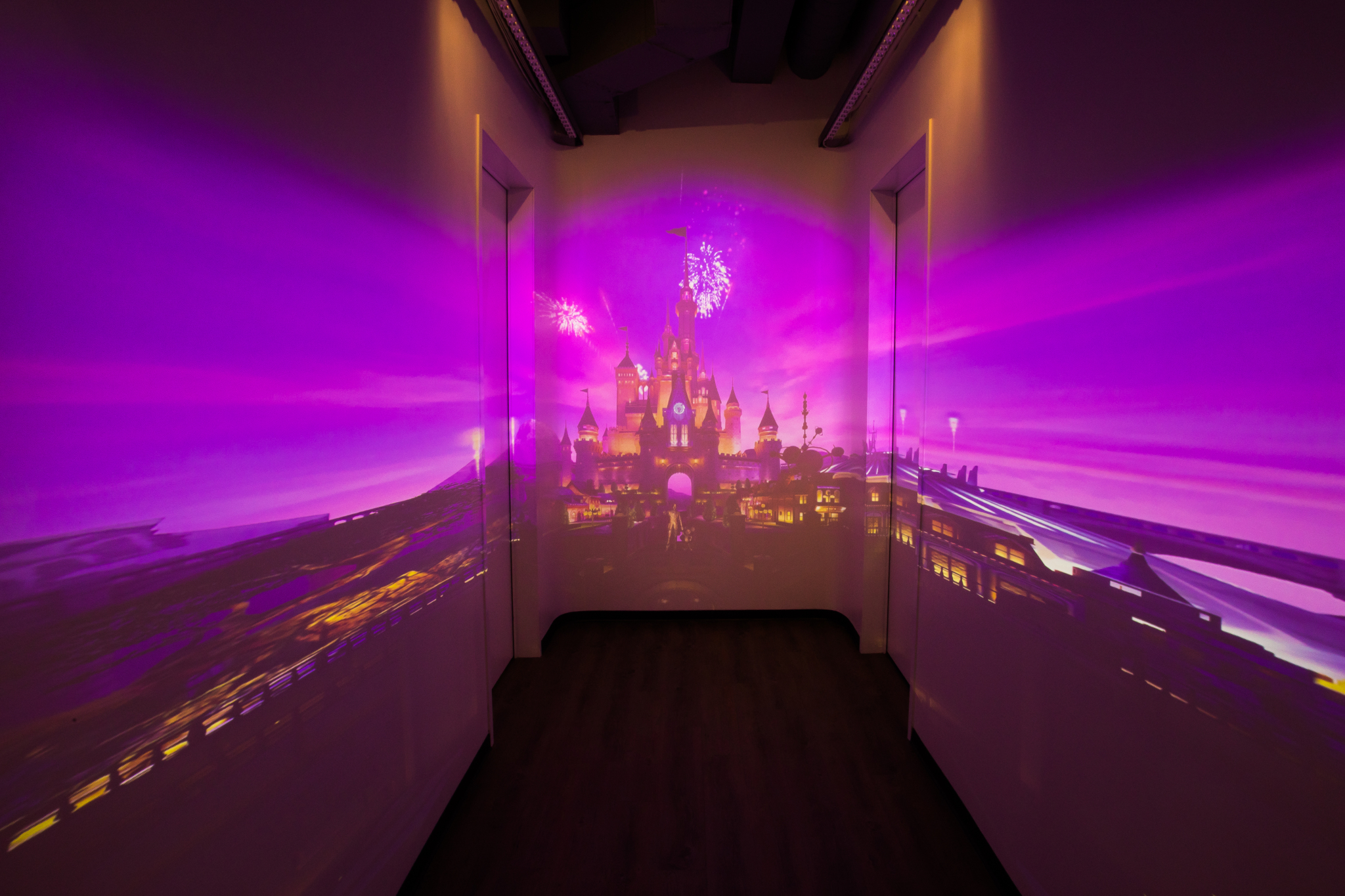
The lab is also using its hallway to prototype another cutting-edge technology: A combination of projectors and internet-connected light bulbs makes it possible to project 3D scenes on three walls for a kind of glasses-free virtual reality experience. The idea behind that project is to explore ways to use 3D and VR assets in the company’s theme parks, explained Havey.
Disney built the StudioLab in cooperation with Cisco, Accenture and Hewlett Packard Enterprise. These partners help with finance and staffing, but also each bring their own expertise to the table, and help the studio develop new solutions for filmmakers.
See the full story here: https://variety.com/2018/digital/news/disney-studiolab-inside-look-1202940482/
The BBC has ‘solved’ the lag between live streams and TV

Soccer Football - World Cup - Third Place Play Off - Belgium v England - Saint Petersburg Stadium, Saint Petersburg, Russia - July 14, 2018 England's Marcus Rashford in action with Belgium's Thomas Meunier REUTERS/Dylan Martinez TPX IMAGES OF THE DAY
The BBC might have licked the problem, however. Its researchers have developed a streaming method that could dramatically reduce the gap between online coverage (such as through iPlayer) and TV. The solution, according to the broadcaster, is to manage the rate at which you receive chunks of the video feed.
Livestreaming revolves around sending users media in segments, and the size of those is everything. Large segments introduce a lot of lag, since it takes longer to process them, but short segments can be wildly inefficient. The BBC's methods either shrink a given segment or create segments in a progressive format that can be sent down the pipeline the moment they're ready. This wouldn't completely eliminate the delay, but it might help you avoid spoilers.
You're not likely to see this method in use any time soon, since it would involve coordination with the industry at large to make it a standard. To an extent, it's also addressing an issue that has already been solved in certain cases. Microsoft's Mixer livestreaming service, for instance, has a near-zero latency feature. However, this does promise a day when you can safely watch a sports championship or season finale without dreading reactions around the neighborhood.
See the full story here: https://www.engadget.com/2018/09/13/bbc-solves-live-stream-lag/
Apple Teases New ARKit 2 Experiences At 2018 Keynote
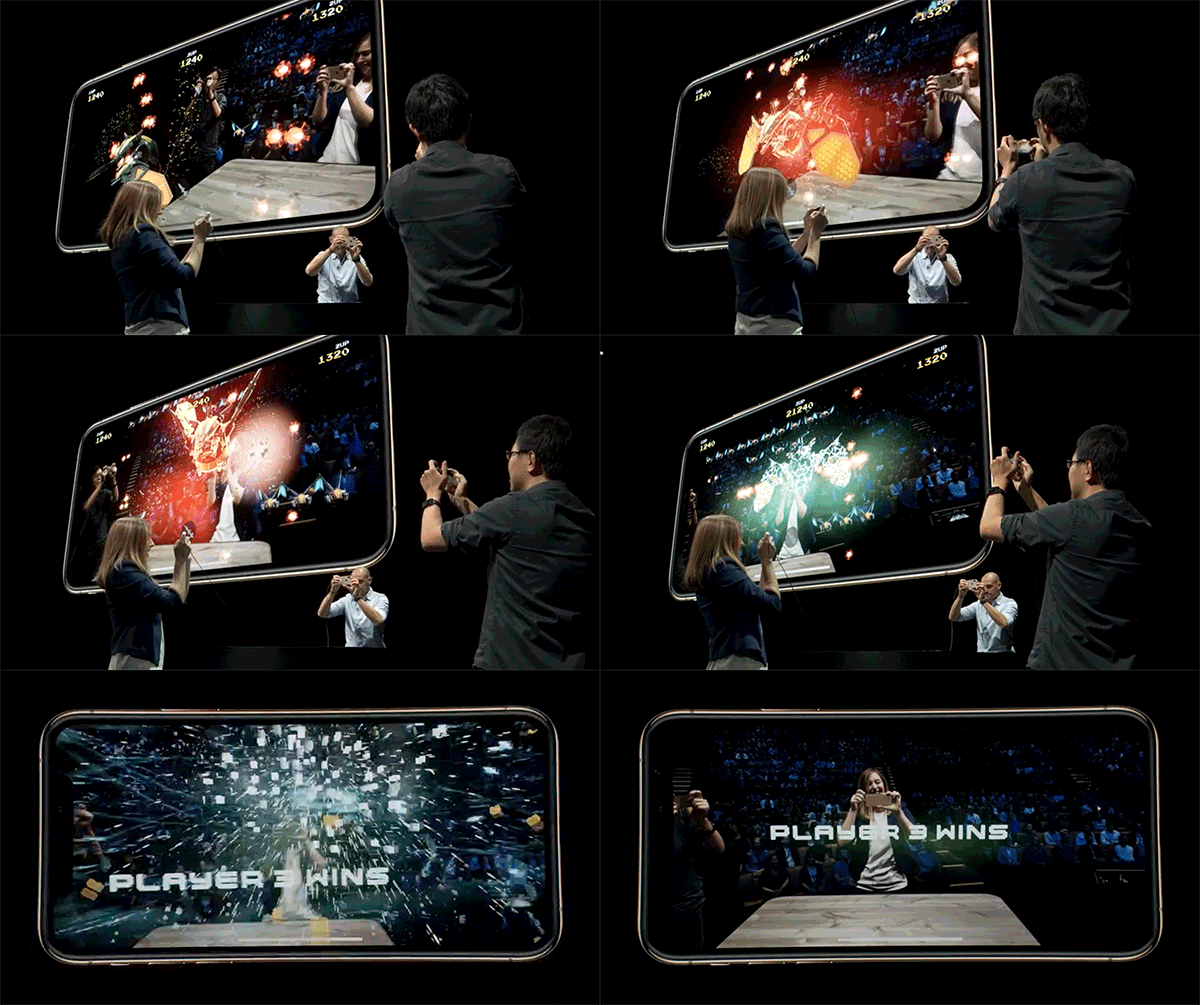
 Multiplayer functionality lets you and up to three friends shoot down baddies together as they battle for the highest score.
This is possible thanks to the uber-powerful A12 Bionic chip featured in their new iPhone Xs line-up.
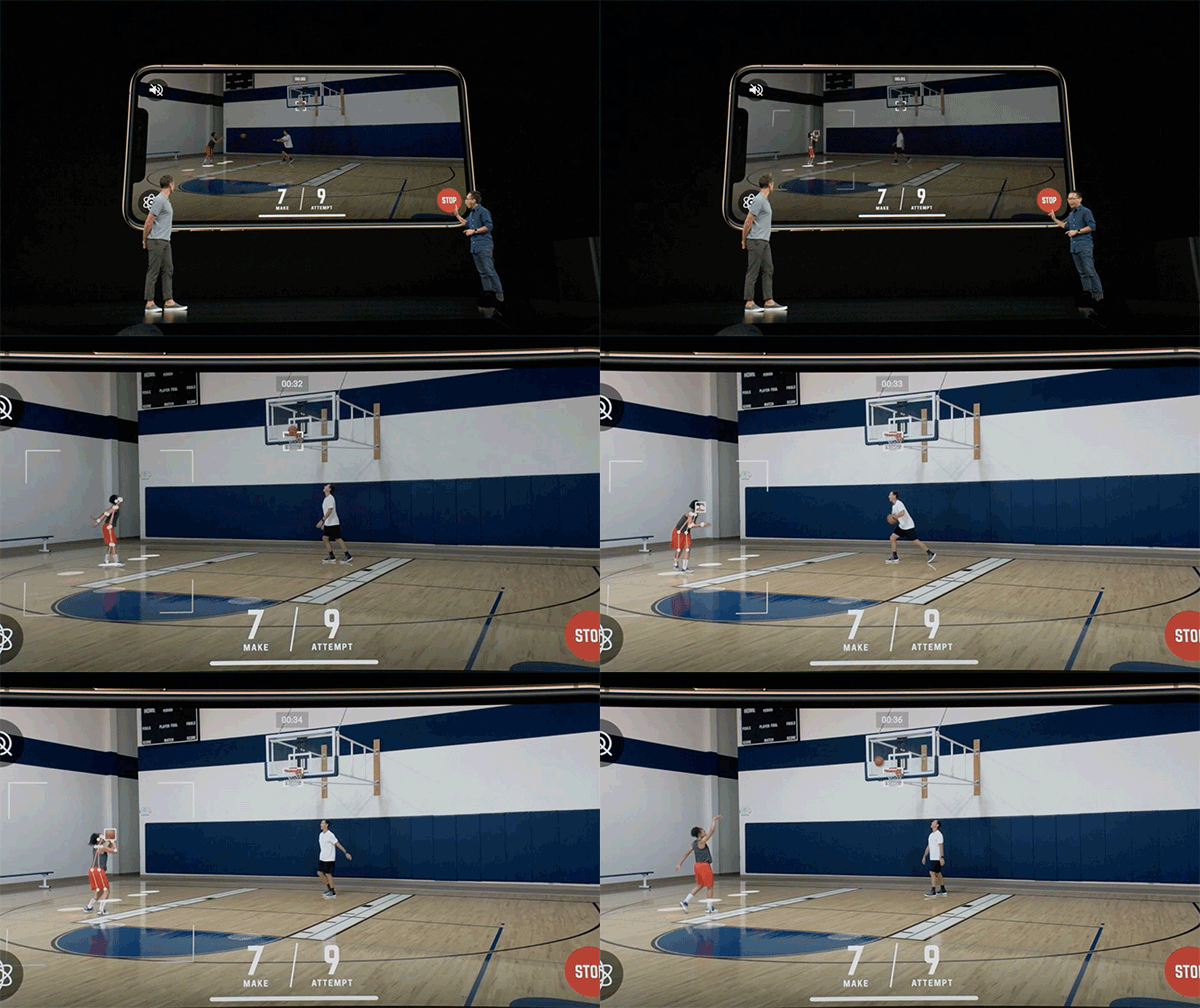
For a more productive AR experience, Homecourt is brings professional level basketball education to iOS users.
By pointing the smartphone camera at an athlete while they play, the app is able to monitor their stance, shot technique, and other crucial aspects of their performance to provide real-time feedback on how to improve. For example, while performing a “catch and shoot” technique, the app measures leg angle, release time, speed, release angle, and release height.
3 Ways a Virtual Reality Pioneer Is Rebranding the Art Form
 “The audience isn’t stupid, and they can tell that most of the content getting made is the afterthought of an ad agency with a little extra money to spend.
1. Diving into its essence
Now I know it’s about a feeling, not a narrative.”
“There’s never been a time in human history that we could share our inner worlds like this. It’s exciting.
2. Utilizing the latest tech
Unity and Unreal Engine are less expensive than a guitar or a can of spray paint! VR is going to explode when more artists get turned on to that. The DIY universe of VR is going to be weirder than we can imagine.”
3. Creating a standard
He decided that the best way to encourage creators to take ownership of their work and get their names out there was to establish a gatekeeper: a festival.
See the full story here: https://www.entrepreneur.com/article/320082
Waterford couple turn virtual reality into real-world success
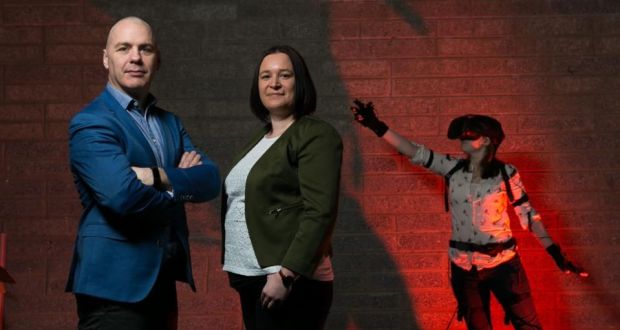 Situated in a business park on Waterford city’s outskirts, this nondescript venue is home to Immersive VR Education, the listed company Whelan, the chief executive, set up with his wife, Sandra.
Expansion has sneaked up on the Waterford couple, who brought their company public earlier this year. Their vision is to bring their platform, allowing virtual training and education, to a global audience.
With that in mind, they’ve released educational virtual reality content experiences and, more recently, David was nominated at the Venice Film Festival for his work on one of those experiences – Berlin Blitz.
But Whelan is keen to stress this company isn’t just about content. Its core focus is to develop an education system in virtual reality. The rationale is that online education is dated and tedious and that VR can better engage students.
The couple were initially looking to raise €5 million. By the end of the process, the IPO was oversubscribed with offers amounting to £9.4 million (€10.5 million). They ended up taking €6 million while holding a 40.04 per cent stake between themselves.
See the full story here: https://www.irishtimes.com/business/technology/waterford-couple-turn-virtual-reality-into-real-world-success-1.3628215